Amazon Web Services Expands Enterprise AI Portfolio with New GPT-6 and Claude 5.5 Offerings on Amazon Bedrock

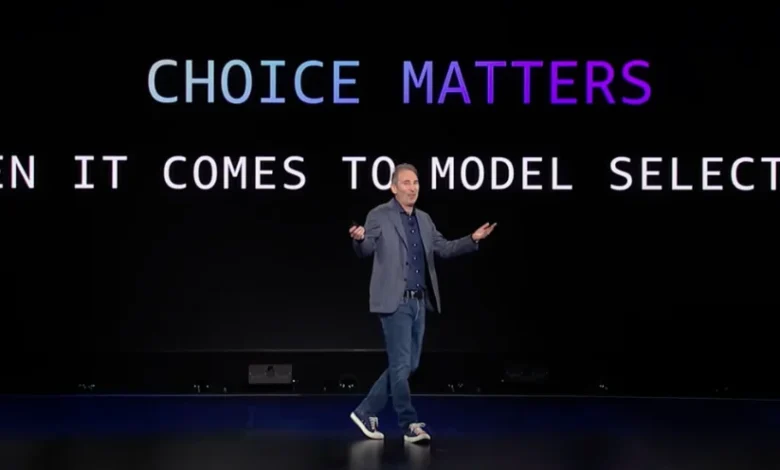
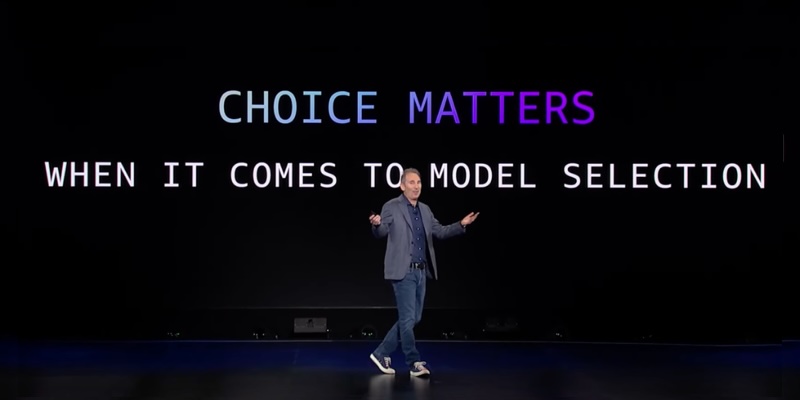
The landscape of enterprise artificial intelligence experienced a significant expansion last week as Amazon Web Services (AWS) integrated a powerful new suite of frontier models into its managed service, Amazon Bedrock. The latest updates introduce OpenAI’s GPT-6 Sol and GPT-6 Luna, alongside Anthropic’s Claude Opus 5.5, marking a definitive shift in how organizations select and deploy large language models. Rather than relying on a monolithic approach to artificial intelligence, enterprise developers and cloud architects are increasingly optimizing their workflows by matching specific operational workloads to models engineered for precise points on the intelligence-versus-efficiency curve.
The deployment of these advanced models via Amazon Bedrock underscores a broader industry evolution. The primary architectural question facing engineering teams has shifted away from raw capability toward granular resource management: balancing performance, latency, and capital expenditure for individual operational steps. By incorporating these next-generation models, AWS aims to provide enterprises with the granular control necessary to scale complex workflows without incurring unsustainable operational costs.
Background Context of the Multi-Model Enterprise Strategy
Amazon Bedrock was originally conceived as a flexible, secure gateway allowing organizations to experiment with and deploy foundational models from leading artificial intelligence developers without managing underlying infrastructure. Over the past several years, the service has evolved from a nascent experimentation sandbox into a critical backbone for enterprise-grade generative AI applications, powering everything from customer service automation to complex software engineering agents.
The introduction of OpenAI’s GPT-6 generation and Anthropic’s Claude 5.5 family represents a maturity milestone in the commercial AI sector. Historically, organizations utilizing generative AI faced a binary choice: deploy massively capable models that were prohibitively expensive and introduced unacceptable latency, or rely on smaller, cost-effective models that lacked the reasoning depth required for complex enterprise tasks. The new iterations available on Amazon Bedrock challenge this paradigm by decoupling capability from resource consumption, allowing for highly targeted deployments.
Chronology and Feature Breakdown of the New Model Releases
The rollout on Amazon Bedrock occurred across several days, bringing distinct architectural advantages tailored to specialized enterprise functions.
OpenAI GPT-6 Sol and GPT-6 Luna
OpenAI’s contributions to the platform—GPT-6 Sol and GPT-6 Luna—arrive with distinct structural profiles designed to address different tiers of operational demand.
GPT-6 Sol has been engineered explicitly for demanding, recurring software development and systems operations tasks. In enterprise environments, code refactoring, infrastructure-as-code generation, and automated incident triage require deep contextual understanding and sustained reasoning capabilities. Sol addresses these heavy workloads while introducing a pricing structure significantly lower than its GPT-5.6 predecessors, making continuous operational automation financially viable at scale.
Conversely, GPT-6 Luna is optimized for focused, repeatable tasks that must be executed at high volume. Examples include document classification, data extraction, automated content moderation, and transactional customer interactions. Luna provides the necessary speed and low latency required for high-throughput microservices, ensuring that applications processing millions of requests per day can maintain predictable performance envelopes.
Anthropic Claude Opus 5.5
Anthropic’s Claude Opus 5.5 represents the inaugural release of the Claude 5.5 model family on the AWS ecosystem. Building upon the strong reputation of its predecessor, Opus 5.5 introduces advanced token-efficiency metrics, achieving higher completion fidelity while consuming fewer input and output tokens than Opus 5.
Tuned specifically for agentic coding and long-running autonomous workflows, Claude Opus 5.5 is capable of maintaining coherent execution paths across extended interactions. This makes it particularly valuable for multi-step software engineering agents that must plan, execute, debug, and verify complex programmatic changes autonomously.
Supporting Data and Comparative Efficiency Metrics
While specific benchmark figures vary depending on the evaluation framework, early indicators from enterprise deployments highlight substantial efficiency gains across the new model tier.
- Cost Reduction: OpenAI’s GPT-6 Sol and Luna debut at pricing tiers estimated to be 30% to 50% lower per token compared to the peak pricing of the GPT-5.6 generation, drastically altering the return on investment calculations for large-scale enterprise automation.
- Token Utilization: Anthropic’s Claude Opus 5.5 demonstrates a measurable improvement in context window utilization, reducing redundant prompt overhead in long-running agentic loops by up to 25%.
- Latency Optimization: High-throughput models like GPT-6 Luna achieve sub-second response times under standard enterprise concurrency loads, addressing historical bottlenecks in real-time customer-facing applications.
These metrics support a growing consensus among cloud architects: the commoditization of artificial intelligence is driving a hyper-focus on operational efficiency and total cost of ownership rather than raw parameter counts.
Industry Implications and Technical Analysis
The expansion of Amazon Bedrock’s model catalog carries significant implications for software development methodologies and cloud infrastructure management.

From an architectural perspective, the ability to chain different models within a single application pipeline is becoming an industry standard. For example, an enterprise application might utilize GPT-6 Luna for high-volume initial data ingestion and classification, route ambiguous or complex edge cases to GPT-6 Sol for deeper operational analysis, and employ Claude Opus 5.5 to orchestrate autonomous backend remediation tasks. This heterogeneous approach to artificial intelligence engineering minimizes expenditure while maximizing task-specific accuracy.
Furthermore, the integration of these models within Amazon Bedrock ensures that enterprise security, data privacy, and compliance requirements are met. Because data processed through Bedrock does not train underlying foundation models without explicit consent, organizations operating in regulated sectors—such as finance, healthcare, and government—can adopt GPT-6 and Claude 5.5 with confidence regarding data governance.
Broader Ecosystem Trends and Observability
Beyond raw model intelligence, the broader enterprise AI ecosystem is rapidly addressing the operational complexities introduced by agentic workflows. As systems evolve from passive question-and-answering interfaces to autonomous agents capable of executing multi-step business processes, the demand for advanced observability tools has surged.
Monitoring agent execution paths, debugging non-deterministic failures, and auditing automated system modifications require specialized telemetry. AWS continues to expand its native monitoring and logging integrations to capture the nuanced telemetry generated by multi-model deployments, ensuring that engineering teams maintain operational visibility as their autonomous systems scale.
Conclusion and Future Outlook
The addition of GPT-6 Sol, GPT-6 Luna, and Claude Opus 5.5 to Amazon Bedrock signifies a mature phase in the enterprise adoption of artificial intelligence. By emphasizing choice, cost-efficiency, and workload-specific optimization, AWS provides developers with the precise instruments required to build resilient, scalable, and economically viable AI applications.
As the frontier model landscape continues to evolve at a rapid pace, the competitive advantage will increasingly belong to organizations that master the art of model orchestration—deploying the right intelligence, at the right cost, with the right latency, for every distinct step of the enterprise workflow.