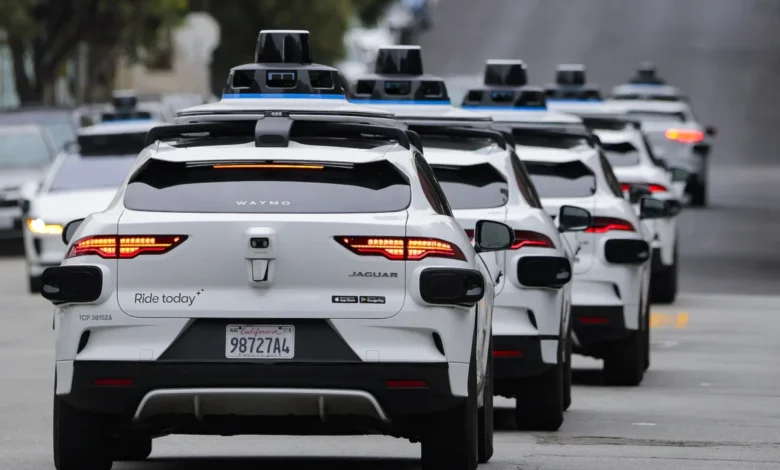
San Francisco’s burgeoning autonomous vehicle landscape faced another moment of disruption on July 18, 2026, when Waymo, the self-driving technology company owned by Alphabet, temporarily suspended its robotaxi service across parts of the city. The operational pause, which lasted approximately one hour, was a direct consequence of a significant power outage that affected an estimated 7,000 Pacific Gas and Electric Company (PG&E) customers in various San Francisco neighborhoods. This incident, while resolved relatively swiftly, once again brought to the forefront critical questions regarding the resilience of autonomous vehicle (AV) operations in the face of urban infrastructure failures and the ongoing need for robust regulatory frameworks.
The interruption to Waymo’s service was confirmed by the company itself, which initially communicated to its San Francisco riders via its app that service was "temporarily paused" and "freeway routes are unavailable." This immediate notification highlighted the company’s protocol for managing unforeseen circumstances that could compromise safe operation. A spokesperson for Waymo later elaborated, stating, "We are making temporary adjustments to our service while we monitor local conditions. We know riders depend on us, and we will return to normal operations as soon as possible." Following the initial publication of news regarding the pause, Waymo further clarified that the decision to halt service for about an hour was made "to assess the scale of the power outage affecting a large portion of San Francisco and coordinate with local officials." By early afternoon PDT, service had largely resumed, though the event left a lingering impression on both users and city officials.
Chronology of the Disruption
The sequence of events on July 18, 2026, unfolded rapidly, beginning with the power failure. Around midday, reports began circulating about a substantial power outage impacting several districts of San Francisco. PG&E confirmed the outage, attributing it to an unspecified equipment issue, and initiated repair protocols. These types of outages, while not uncommon in an aging urban infrastructure, can have widespread and immediate effects, disrupting traffic signals, streetlights, internet connectivity, and the operation of various businesses and services.
As the power grid began to fail in affected areas, Waymo’s autonomous vehicles, equipped with sophisticated sensors and real-time connectivity requirements, likely detected anomalies in their operating environment. Such anomalies could include dark traffic signals, altered traffic flows, and potential communication disruptions. In response, Waymo’s central command system, coupled with the on-board intelligence of its vehicles, would have triggered a safety protocol. This protocol typically involves either safely pulling over and stopping or returning to a designated safe zone, depending on the severity and nature of the detected issue.
At approximately 12:30 PM PDT, Waymo initiated its temporary service pause, sending notifications to customers attempting to hail a ride. The company’s immediate internal assessment would have involved evaluating the geographical scope of the outage, its potential duration, and the implications for its fleet’s ability to navigate safely and reliably. Coordination with local officials, including emergency services and transportation authorities, would also have been a critical step to ensure that Waymo’s paused vehicles did not exacerbate any existing traffic issues or impede emergency response efforts. By approximately 1:30 PM PDT, having assessed the situation and confirmed power restoration in many areas, Waymo announced the resumption of its services, signaling a return to normal operations. PG&E, for its part, reported that power was largely restored to the affected 7,000 customers within a few hours, though localized issues may have persisted longer.
Background: The Complex Landscape of Autonomous Vehicles in San Francisco
San Francisco has emerged as a critical proving ground for autonomous vehicle technology, particularly for companies like Waymo and Cruise. The city’s unique topography, dense urban environment, diverse weather patterns, and complex traffic scenarios present unparalleled challenges and opportunities for AV development. Waymo, a pioneer in the self-driving space, has progressively expanded its operations in San Francisco, moving from supervised testing to fully driverless commercial robotaxi services. This expansion has been met with a mix of enthusiasm for technological advancement and significant public scrutiny over safety, traffic impacts, and the integration of AVs into existing urban infrastructure.
The regulatory journey for AVs in California, and specifically in San Francisco, has been contentious and evolving. The California Public Utilities Commission (CPUC) and the Department of Motor Vehicles (DMV) are the primary state agencies responsible for regulating AV deployment. In recent years, these bodies have granted permits allowing companies like Waymo to operate and expand their services, often amidst strong opposition from city officials, first responders, and some residents. Proponents argue that AVs offer enhanced safety, reduced congestion, and increased accessibility. Critics, however, point to a series of incidents that have raised serious concerns about the readiness of this technology for widespread deployment, especially in high-stress, unpredictable urban environments.
Recurrent Incidents and the Push for Stricter Oversight
The July 18 power outage is not an isolated incident in the ongoing narrative of autonomous vehicles encountering unexpected challenges in San Francisco. Indeed, it follows a pattern of disruptions that have prompted increasingly urgent calls for stricter regulations from city leadership.
One notable precursor occurred in December of the previous year (2025), when a widespread blackout in San Francisco led to a number of Waymo vehicles stalling on city streets. This incident created significant traffic congestion and raised alarms among emergency services, who found their access routes potentially obstructed by inoperable AVs. The inability of these vehicles to self-resolve or efficiently be moved during a critical infrastructure failure highlighted a major operational vulnerability.
A similar, though contextually different, incident transpired during the Fourth of July celebrations, when a fireworks display near the Golden Gate Bridge resulted in a major traffic paralysis. In that scenario, autonomous vehicles, likely overwhelmed by the sudden influx of pedestrian traffic, road closures, and general chaos, contributed to the gridlock. While not directly caused by a power outage, it underscored the challenges AVs face in dynamically responding to large-scale, unplanned urban events.
These recurring disruptions have galvanized San Francisco Mayor Daniel Lurie, who has become a vocal advocate for more stringent state regulations governing autonomous vehicles. Following the December blackout and the Fourth of July fiasco, Mayor Lurie explicitly called for new rules that would "adequately address how autonomous vehicles operate during major incidents, planned or not." His concerns center on several key areas:
- Emergency Response Coordination: Ensuring AVs do not impede emergency vehicles or first responders during critical incidents.
- Operational Transparency: Demanding clearer communication and data sharing from AV companies regarding their vehicles’ behavior during unusual events.
- Fallback Protocols: Requiring robust and reliable mechanisms for AVs to safely exit operational areas or be remotely controlled/moved in the event of system failures or external disruptions.
- City-Level Control: Advocating for more authority for local municipalities to influence AV deployment and operational guidelines within their jurisdictions.
The July 18 power outage, despite its relatively swift resolution, will undoubtedly add weight to Mayor Lurie’s arguments and intensify the dialogue between the city, AV companies, and state regulators.

Supporting Data and Technical Considerations for AV Resilience
The interaction between urban power infrastructure and autonomous vehicle operations is multifaceted. Power outages can affect AVs in several critical ways:
- Traffic Signal Dependency: Modern traffic signals are crucial for AV navigation, providing predictable cues and right-of-way information. A power outage renders these signals inoperable, creating uncontrolled intersections that pose significant challenges for both human and autonomous drivers. While AVs are programmed to treat dark signals as four-way stops, a city-wide failure can lead to widespread confusion and congestion.
- Connectivity and Data Transmission: Waymo vehicles rely on constant communication with central command systems for updates, mapping data, and remote assistance. While vehicles possess significant onboard processing capabilities, prolonged or widespread communication blackouts can degrade their operational effectiveness and safety margins.
- Sensor Performance: While AV sensors (Lidar, radar, cameras) are designed to operate in various lighting conditions, a complete loss of street lighting during a nighttime power outage, or even significantly reduced ambient light during a daytime outage in dense areas, can impact perception systems.
- Charging Infrastructure: For electric AVs, which Waymo’s fleet largely comprises, widespread power outages can also affect charging capabilities at depots, potentially limiting the availability of vehicles once power is restored.
To mitigate these risks, Waymo and other AV developers incorporate various redundancy measures. These include:
- Onboard Power Systems: Vehicles have auxiliary power systems to maintain critical functions even if primary power is lost.
- Redundant Communication Channels: Utilizing multiple cellular networks and satellite communication to ensure connectivity.
- Robust Fallback Protocols: Programming vehicles to safely pull over, stop, or navigate to a safe zone if critical systems or environmental conditions become compromised. This is what was observed during the July 18 incident.
- High-Definition Maps: Pre-loaded, highly detailed maps allow vehicles to navigate even with limited real-time sensor input, though this capability is finite.
However, as the San Francisco incidents demonstrate, even with these redundancies, large-scale, simultaneous failures of urban infrastructure can still present unique challenges that necessitate human intervention or temporary operational pauses. PG&E, for its part, faces ongoing challenges in maintaining an aging electrical grid that serves a densely populated and geographically diverse region. The company has invested billions in grid modernization, including undergrounding lines and implementing smart grid technologies, but incidents continue to occur due to equipment failures, weather events, and other factors. Statistics indicate that San Francisco experiences an average of several significant power outages annually, ranging from localized disruptions to broader blackouts. Each incident, especially those coinciding with AV operations, adds to the pressure on both the utility and the autonomous vehicle industry.
Official Responses and Stakeholder Reactions
Waymo’s response to the July 18 outage was characterized by swift communication and a focus on safety. Their initial internal assessment and the subsequent decision to pause service demonstrated a commitment to preventing further complications. The clarification provided to TechCrunch underscored their process of monitoring conditions, coordinating with local officials, and prioritizing a safe return to service. This proactive stance is crucial for maintaining public trust, especially in a city where AVs have faced skepticism.
PG&E, in line with standard operating procedures, likely focused on diagnosing the cause of the outage (which they attributed to equipment issues) and deploying crews for repair and restoration. Their communications would typically center on estimated restoration times and safety advisories for affected customers. While PG&E’s primary focus is on power delivery, the ripple effect of their infrastructure reliability on emerging technologies like AVs adds another layer of complexity to their operational considerations.
While an immediate official statement from Mayor Lurie specifically addressing the July 18 incident was not available at the time of reporting, it is highly probable that this event will be cited in future discussions concerning AV regulation. The incident perfectly encapsulates his earlier calls for "tougher state regulations" that "adequately address how autonomous vehicles operate during major incidents, planned or not." Local advocacy groups, such as those concerned with pedestrian safety or traffic management, are also likely to leverage this incident to reinforce their arguments for more cautious AV deployment and enhanced city oversight. Residents who rely on Waymo for transportation may express frustration over the temporary service disruption, while others may view it as further evidence of AV fragility in complex urban environments.
First responders, including the San Francisco Fire Department and Police Department, have consistently emphasized the importance of seamless communication and coordination with AV operators. Incidents where AVs become disabled or behave unexpectedly during emergencies can consume valuable emergency resources and potentially delay critical response times. This latest event underscores the necessity for clearly defined protocols for AV companies to communicate with and defer to emergency services during widespread disruptions.
Broader Impact and Implications
The brief service halt by Waymo in San Francisco, triggered by a power outage, carries significant implications for various stakeholders and the future trajectory of autonomous vehicle deployment.
For Waymo and the Autonomous Vehicle Industry:
This incident serves as a stark reminder of the intrinsic link between AV operational stability and the robustness of urban infrastructure. While Waymo demonstrated effective immediate response protocols, the recurrence of such events highlights the need for even more sophisticated predictive capabilities and proactive mitigation strategies. The industry must continue to invest in systems that can anticipate, respond to, and gracefully navigate external disruptions, not just internal system failures. Furthermore, maintaining public trust is paramount. Each incident, regardless of its severity or swift resolution, contributes to the public’s perception of AV safety and reliability. Transparent communication and consistent safe operation are essential for winning over a skeptical public and securing further regulatory approvals.
For San Francisco and Other Smart Cities:
The incident underscores the dual challenge faced by cities embracing smart technologies. On one hand, there is a desire to foster innovation and leverage advancements like AVs for improved mobility. On the other, the foundational infrastructure—power grids, communication networks, road maintenance—must be robust enough to support these advanced systems. This event will likely prompt San Francisco to accelerate discussions on infrastructure resilience, potentially influencing investments in grid modernization and emergency preparedness. It also reinforces the city’s argument for a greater voice in AV regulation, advocating for local control over how these technologies interact with the urban fabric, especially during crises. The balancing act between innovation and public safety will remain a central theme.
For Regulators (CPUC, DMV, and Beyond):
The accumulating evidence from incidents involving AVs during urban disruptions will undoubtedly intensify pressure on state regulatory bodies like the CPUC and DMV. There will likely be renewed calls to review and potentially revise existing regulations to mandate stricter emergency protocols, enhance data sharing requirements, and ensure better integration with city emergency management systems. Regulators may consider imposing specific requirements for AV companies regarding their response to power outages, natural disasters, or large-scale public events. The goal will be to develop a regulatory framework that fosters innovation while prioritizing public safety and minimizing disruption to essential city services. This incident could serve as a catalyst for new policy discussions, potentially leading to a more standardized approach to AV operational resilience across jurisdictions.
In conclusion, Waymo’s temporary suspension of robotaxi service in San Francisco due to a power outage, though quickly resolved, is more than just a minor operational hiccup. It is a potent illustration of the complex interplay between cutting-edge autonomous technology and the often-fragile realities of urban infrastructure. While Waymo’s swift response highlighted its commitment to safety protocols, the event reignites crucial debates about the resilience of autonomous vehicles in unpredictable environments, the preparedness of cities for widespread disruptions, and the urgent need for comprehensive, adaptable regulatory frameworks. As autonomous vehicles become an increasingly integrated part of urban life, the lessons learned from such incidents will be vital in shaping their safe, reliable, and responsible deployment for the future.