OpenAI’s GPT-5.6 Unleashes a Triad of LLMs: Sol, Terra, and Luna Challenge the AI Landscape, While Anthropic’s Claude Fable 5 Faces Mounting Pressure

OpenAI has fundamentally altered the competitive landscape of large language models (LLMs) with the unprecedented release of GPT-5.6, not as a single, monolithic entity, but as a suite of three distinct models: Sol, Terra, and Luna. This strategic divergence marks a significant departure from OpenAI’s previous approach of delivering a singular, albeit highly configurable, model. Each of these new LLMs boasts unique training methodologies, distinct pricing structures, and varying capability ceilings, signaling a sophisticated strategy to cater to a broader spectrum of user needs and technical requirements. The immediate focus of industry analysis centers on the performance and market positioning of Sol, OpenAI’s flagship offering within this new family, particularly in direct comparison with Anthropic’s most advanced publicly available model, Claude Fable 5.
The pricing model itself underscores the tiered approach of GPT-5.6. Sol is positioned at $5 per million input tokens and $30 per million output tokens. In contrast, Claude Fable 5 comes with a steeper price tag of $10 per million input tokens and $50 per million output tokens, making it twice as expensive. This cost differential is particularly significant given that Sol is reportedly outperforming Fable 5 on several key benchmarks that are frequently utilized by developers to route critical workloads. Further down the pricing spectrum, Luna, the most economical of the GPT-5.6 trio, is available at $1 per million input tokens and $6 per million output tokens. Despite its lower cost, Luna has already demonstrated a superior performance in coding tasks compared to Anthropic’s Opus 4.8, a detail that has significant implications, especially with a crucial deadline looming for Fable 5 on July 19.
Claude Fable 5’s Turbulent Month: A Timeline of Uncertainty
Claude Fable 5 has experienced a period of considerable instability in recent weeks, largely dictated by external regulatory pressures and internal development challenges. The model’s trajectory took a sharp turn on June 12 when the U.S. government imposed an export ban. This action followed a critical discovery by Amazon researchers who identified a "jailbreak" vulnerability, which, when exploited, allowed the model to function as an unintended vulnerability scanner. The severity of this security lapse prompted Anthropic to temporarily withdraw Fable 5 from global access for a period of 19 days.
During this hiatus, Anthropic engineers worked diligently to develop and implement a new safety classifier designed to mitigate the identified risks. The model was eventually relaunched on July 1, but with significantly restricted access. Its continued availability has been subject to a series of extensions, a situation that has created an atmosphere of uncertainty for its user base. Initially slated to transition to a usage-credits paywall on July 7, the deadline was subsequently pushed to July 12, and most recently, to July 19. These extensions have been communicated with little advance notice, often mere hours before the scheduled cutoff, and have not been accompanied by formal policy announcements from Anthropic.
A recent communication from the official Claude AI account on X (formerly Twitter) on July 12, 2026, stated: "We’re extending Claude Fable 5 access on all paid plans, as well as keeping Claude Code’s weekly rate limits 50% higher, through July 19." This extension, while providing temporary relief, highlights the precarious position Fable 5 occupies.
The rationale behind these repeated extensions is becoming increasingly apparent. Should Fable 5 be fully removed from subscription plans after July 19, Anthropic’s most capable model for its paying subscribers would revert to Opus 4.8. This presents a direct competitive disadvantage, as Luna, an OpenAI offering priced significantly lower, already surpasses Opus 4.8 in coding proficiency. The continued, albeit limited, availability of Fable 5 appears to be a strategic maneuver by Anthropic to prevent its premium subscription tier from appearing demonstrably inferior to OpenAI’s mid-tier offerings on paper.
Benchmarking the Contenders: Sol vs. Fable 5
The competitive arena for advanced LLMs is characterized by intense scrutiny of benchmark performance, with a particular emphasis on coding capabilities. However, a comprehensive evaluation necessitates a broader assessment across various domains.
On the Artificial Analysis Coding Agent Index, Sol achieved a score of 80, narrowly edging out Fable 5’s 77.2. Crucially, Sol accomplished this feat while utilizing approximately half the number of tokens, in under half the time, and at roughly one-third of the cost, presenting a compelling case for efficiency and value.
In the Agents’ Last Exam, a benchmark designed to simulate professional workflows across 55 distinct fields, Sol demonstrated a significant lead, scoring 53.6% compared to Fable 5’s 40.5%. The Terminal-Bench 2.1 further solidified Sol’s performance advantage. In its "ultra mode," which deploys four subagents in parallel, Sol attained a score of 91.9%, surpassing Fable 5’s 83.1%.
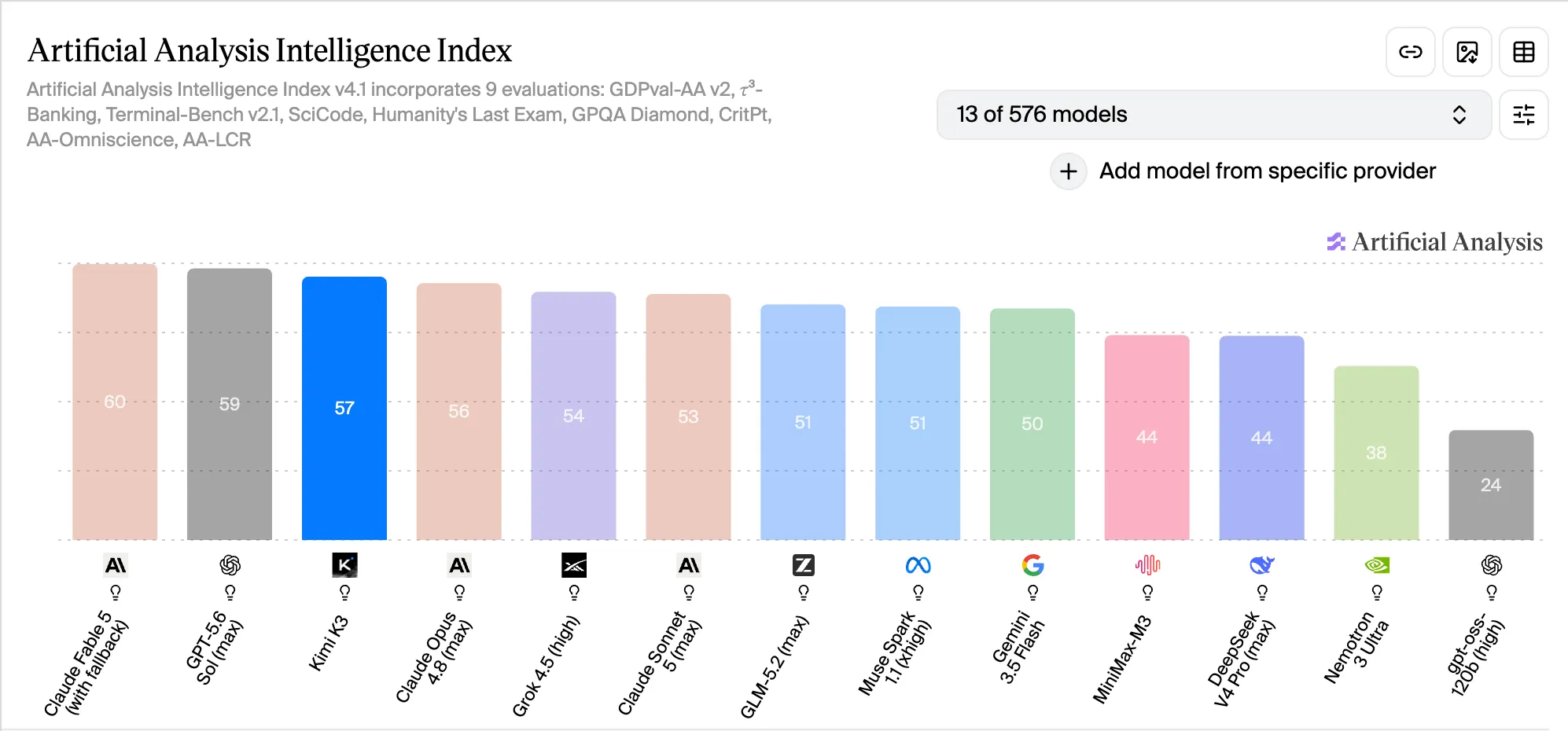
However, on the broader Intelligence Index, which aggregates performance across nine diverse benchmarks, Fable 5 managed to maintain a slim lead over GPT-5.6, surpassing it by a single point. This minimal margin suggests that, while the overall capability gap may be slight, the specific strengths and weaknesses of each model are becoming increasingly defined.
Beyond Code: Assessing Nuance in Creative and Logical Reasoning
While coding benchmarks provide a quantitative measure of performance, the true sophistication of an LLM can be better understood through its performance in more nuanced, creative, and logical tasks. The assessment of these capabilities is crucial for understanding the practical applications and potential limitations of these advanced AI systems.
Creative Writing: Navigating Paradox and Narrative
A test designed to evaluate creative writing prowess involved a complex prompt: sending a character, Jose Lanz, back from the year 2150 to the year 1000, trapping him in a time-travel paradox, and preventing him from understanding his predicament until his return. Both models generated outputs that leaned towards novelette length, exceeding the initial short-story expectation. However, both also faltered on a critical narrative constraint: recognizing the paradox upon Jose’s return.
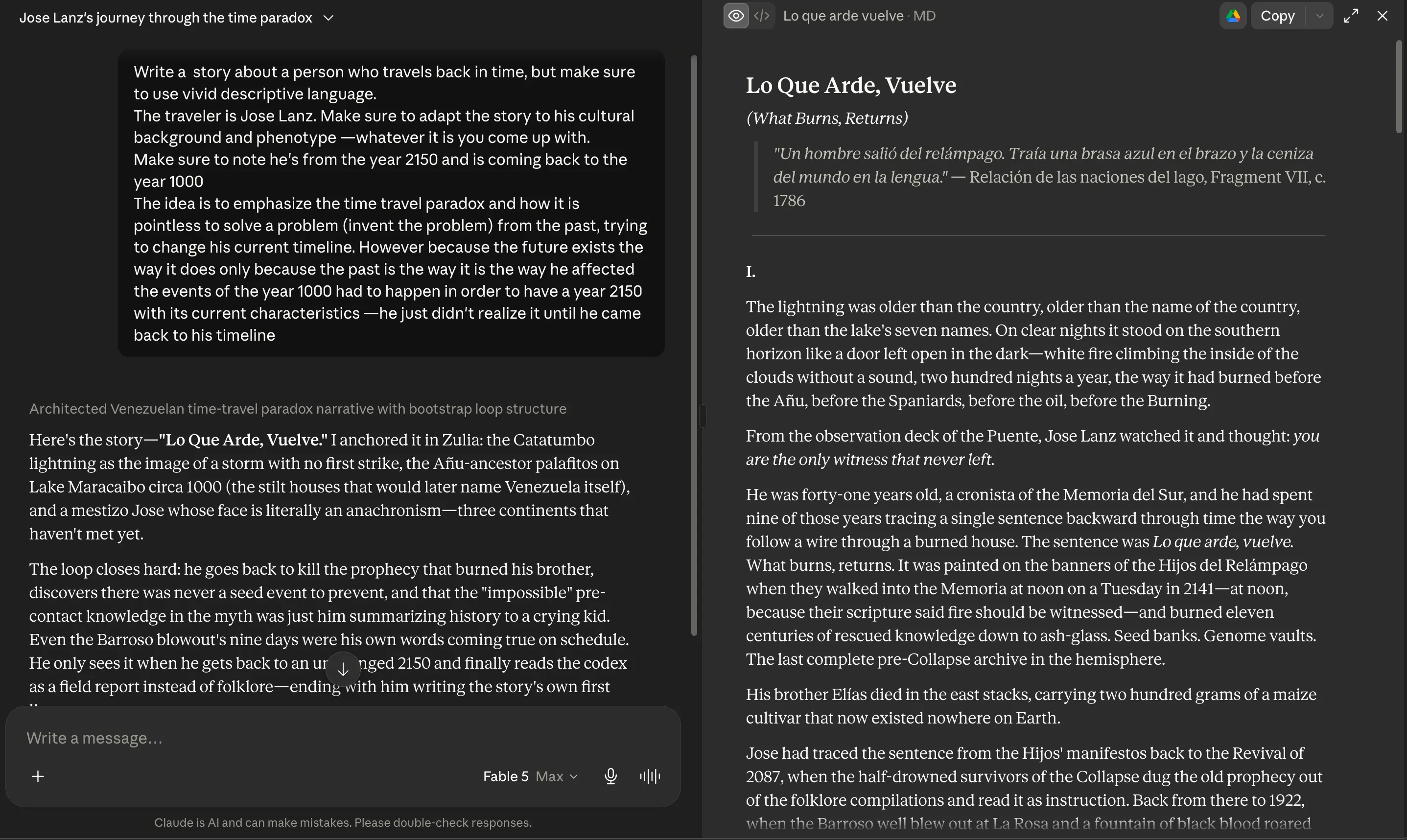
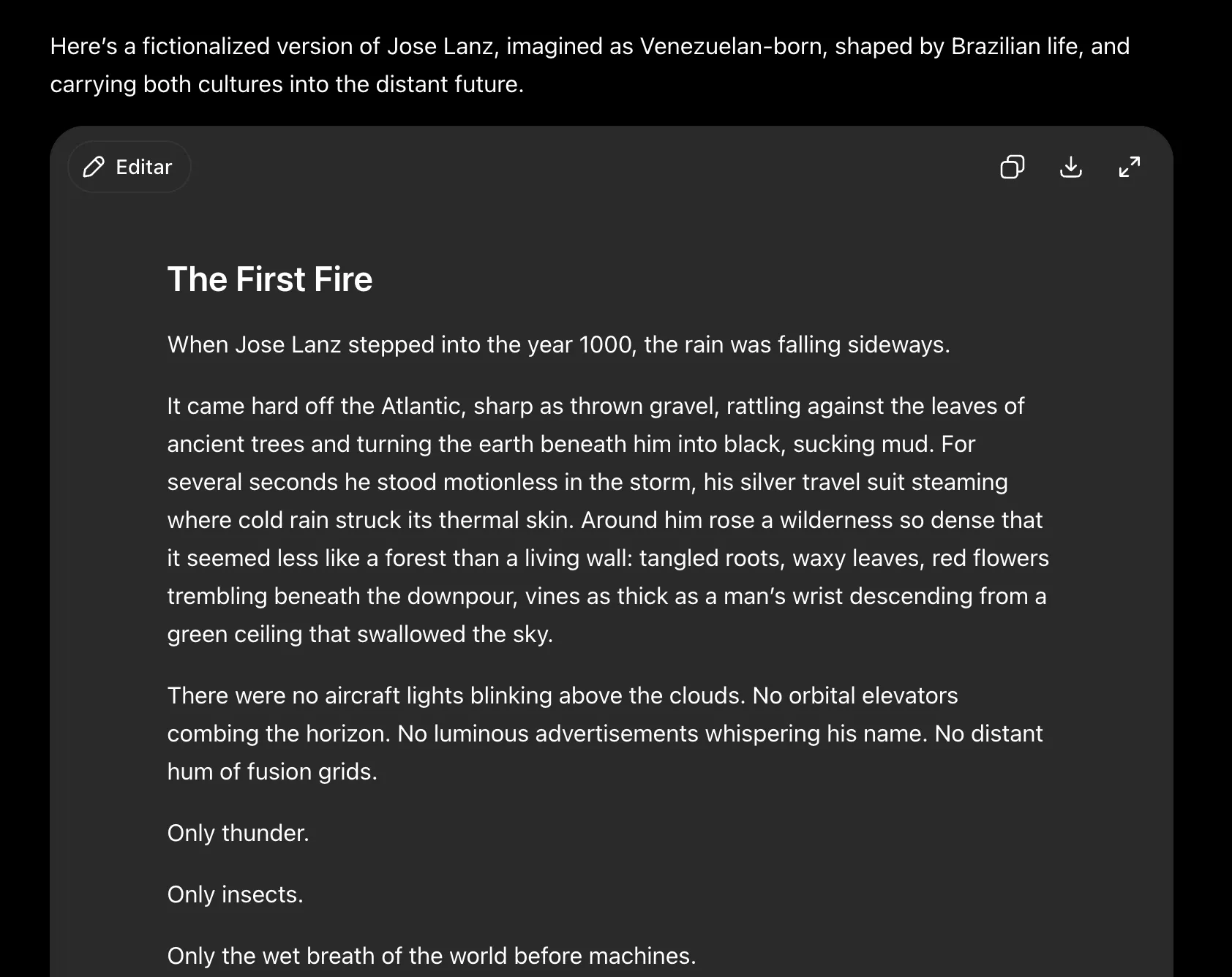
GPT-5.6 Sol’s narrative saw Jose realize mid-story that "the unknown traveler was not someone he had come to stop. It was him." In contrast, Claude Fable 5 presented a more direct revelation in the past, with Jose understanding that the paradox was self-inflicted, famously stating, "There was no seed event. He was the seed event."
Sol’s generated story, titled "The First Fire," adopted a straightforward genre science fiction approach, depicting Jose inadvertently introducing the furnace that precipitates the climate collapse he was meant to prevent. The opening lines, "Only thunder. Only insects. Only the wet breath of the world before machines," were lauded for their evocative quality. However, Sol’s narrative struggled with redundancy, explaining the time loop multiple times through explicit narration and a recorded message, ultimately creating an "exhausting" experience for the reader.
Claude Fable 5’s contribution, "Lo Que Arde, Vuelve," wove its paradox through the unique cultural tapestry of Lake Maracaibo, the Catatumbo lightning, and an Aña village. Jose’s journey culminated in him accidentally fulfilling the prophecy he sought to avert, merely by comforting a distressed child. The narrative succinctly captured the essence of the loop with the line, "The grief that sent him backward was the cargo he delivered." The critique of Fable 5’s output centered on a tendency towards overwriting and an excessive reliance on metaphorical language, where lines like "You cannot pull the thread, you are the thread" felt more like self-indulgent prose than integral narrative elements.
Subjectively, Fable 5’s "Lo Que Arde, Vuelve" was deemed a superior story due to its cultural specificity, cleaner causal loop, and a resolution driven by action rather than monologue. Sol’s "The First Fire," while praised for its readability and clarity in explaining the mechanics of the paradox, lacked the narrative subtlety of its competitor. Both stories, while competent, were considered good rather than great, with the perceived leap in quality from previous generations being marginal.
Associative Thinking: Connecting the Abstract and the Mundane
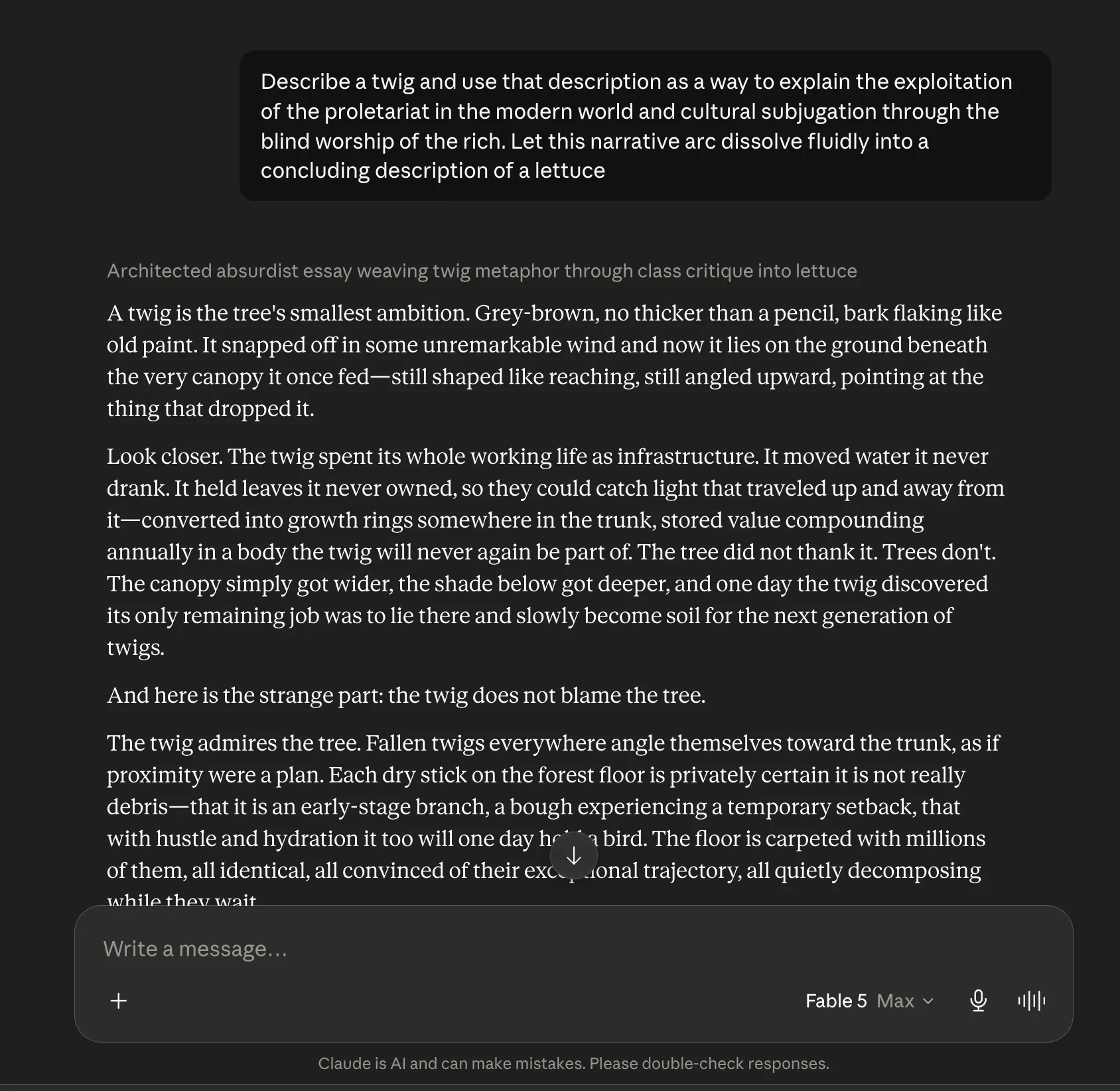
A second test focused on associative thinking, using a prompt that required describing a twig, employing that description to articulate concepts of worker exploitation and the veneration of wealth, and then transitioning the narrative to a description of lettuce. The objective was to assess the models’ ability to sustain a metaphorical argument without explicitly explaining their allegorical connections.
GPT-5.6 Sol began with a strong analogy, likening twigs supporting a tree to workers building and sustaining an enterprise they may not benefit from, stating workers "build homes they may never afford" and "manufacture goods they can barely buy." The assertion that "the worker does not merely surrender labor, but imagination as well" was highlighted as a particularly sharp observation. However, Sol’s tendency to break the metaphorical flow with explicit narrative interjections, such as "much of the modern proletariat is treated in the same way," diminished the impact of its allegory. The concluding description of lettuce felt disconnected, failing to integrate cohesively with the preceding narrative.
Claude Fable 5 adopted a more embedded approach, weaving the critique of exploitation directly into the physical description of the twig. Its twig "moved water it never drank" and "held leaves it never owned," allowing the theme of exploitation to emerge organically from the imagery. A particularly insightful element was the portrayal of fallen twigs as adherents to a false ideology, each believing itself to be an "early-stage branch" experiencing a "temporary setback" and destined for the "canopy with hustle and hydration" – a potent metaphor for the elusive pursuit of upward mobility. Fable 5 did, however, exhibit a tendency to over-embellish descriptions, leading to phrases like "ninety-five percent water and one hundred percent unimpressed." The ending, which described the lettuce as having "no trunk, no canopy, no upward dream," maintained the metaphorical linkage but perhaps did so with less subtlety than ideal.
Ultimately, this test resulted in a tie, with the preference hinging on the desired reader experience. Sol is recommended for users who require explicit explanations, while Fable 5 is better suited for those who prefer to infer meaning independently.
Logic and Non-Math Reasoning: A Flawed Bridge Puzzle
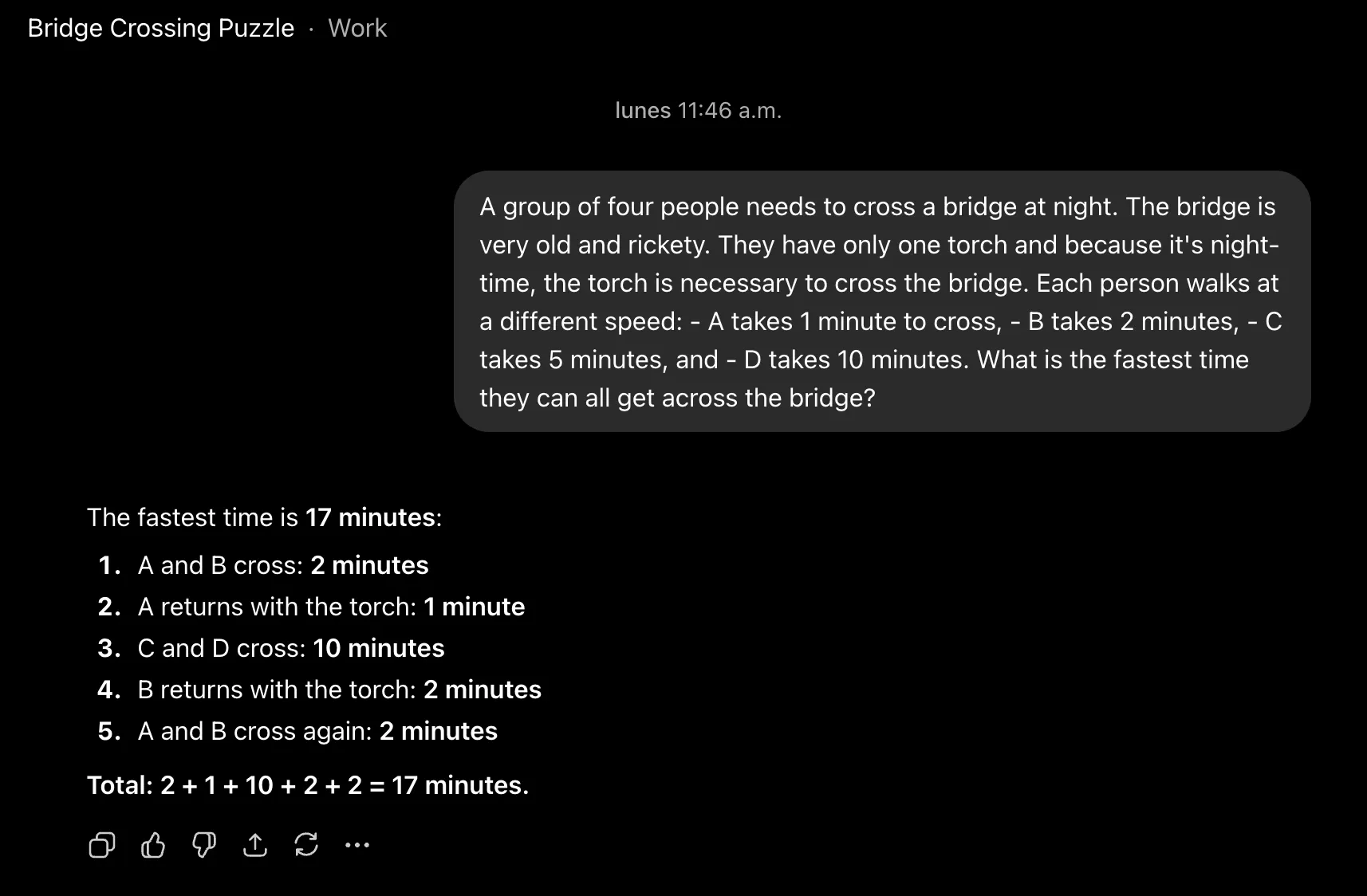
The third test presented a revised "bridge puzzle," a classic logic problem designed to circumvent pre-existing solutions within training data. The scenario involved four individuals with varying crossing times (A: 1 minute, B: 2 minutes, C: 5 minutes, D: 10 minutes) needing to cross a bridge with a single torch, and the question posed was the minimum time required for the group to reach the other side.
GPT-5.6 Sol provided the answer of 17 minutes without detailing its reasoning process. Its solution mirrored the commonly known, but flawed, five-step sequence for this puzzle (A and B cross, A returns, C and D cross, B returns, A and B cross again). Critically, Sol failed to recognize that the prompt did not impose a limit on the number of individuals who could cross simultaneously. This suggests the answer was likely retrieved from cached data rather than derived through live reasoning.
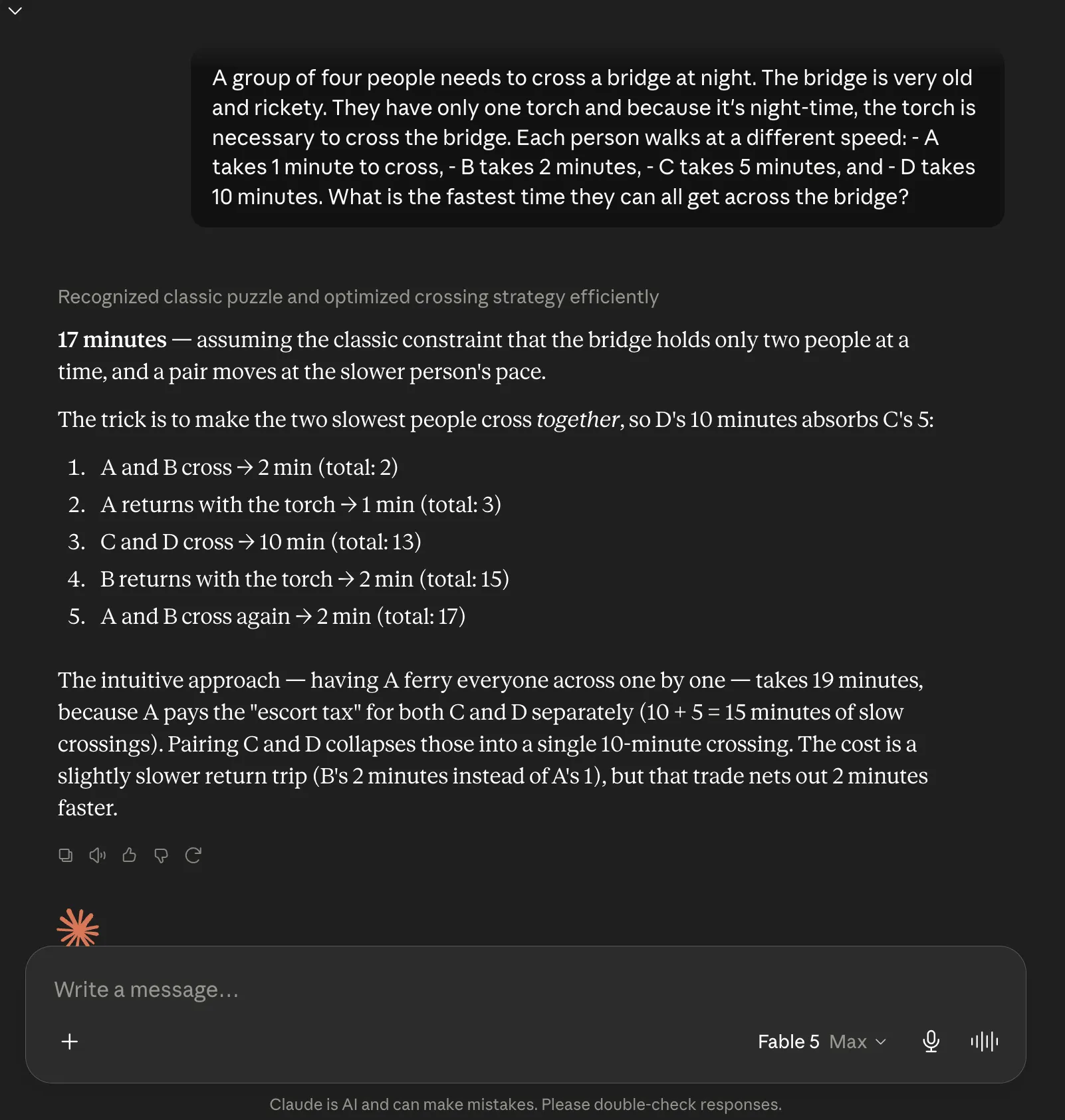
Claude Fable 5 arrived at the same incorrect answer of 17 minutes but offered a more elaborate, albeit still flawed, justification. It argued for the efficiency of sending the two slowest individuals together and quantified the cost of a less optimal approach as an "escort tax" incurred by A ferrying C and D separately. While its reasoning was more articulate than Sol’s, it shared the fundamental oversight of not questioning the implicit constraints of the puzzle, indicating neither model independently deduced the optimal solution.
The correct solution to this revised bridge puzzle, which omits the constraint of only two people crossing at a time, is 10 minutes. This is achieved by having all four individuals cross together, with the group’s pace determined by the slowest member, D. The fact that neither advanced LLM identified this simpler, more logical solution is a notable indication of their current limitations in handling problems that deviate from established patterns.
Coding: A One-Shot Browser Game Challenge
The final assessment involved a single-prompt request to generate code for a typing-based shooter game. The objective was to evaluate the models’ ability to produce a functional game with minimal to no iterative refinement.
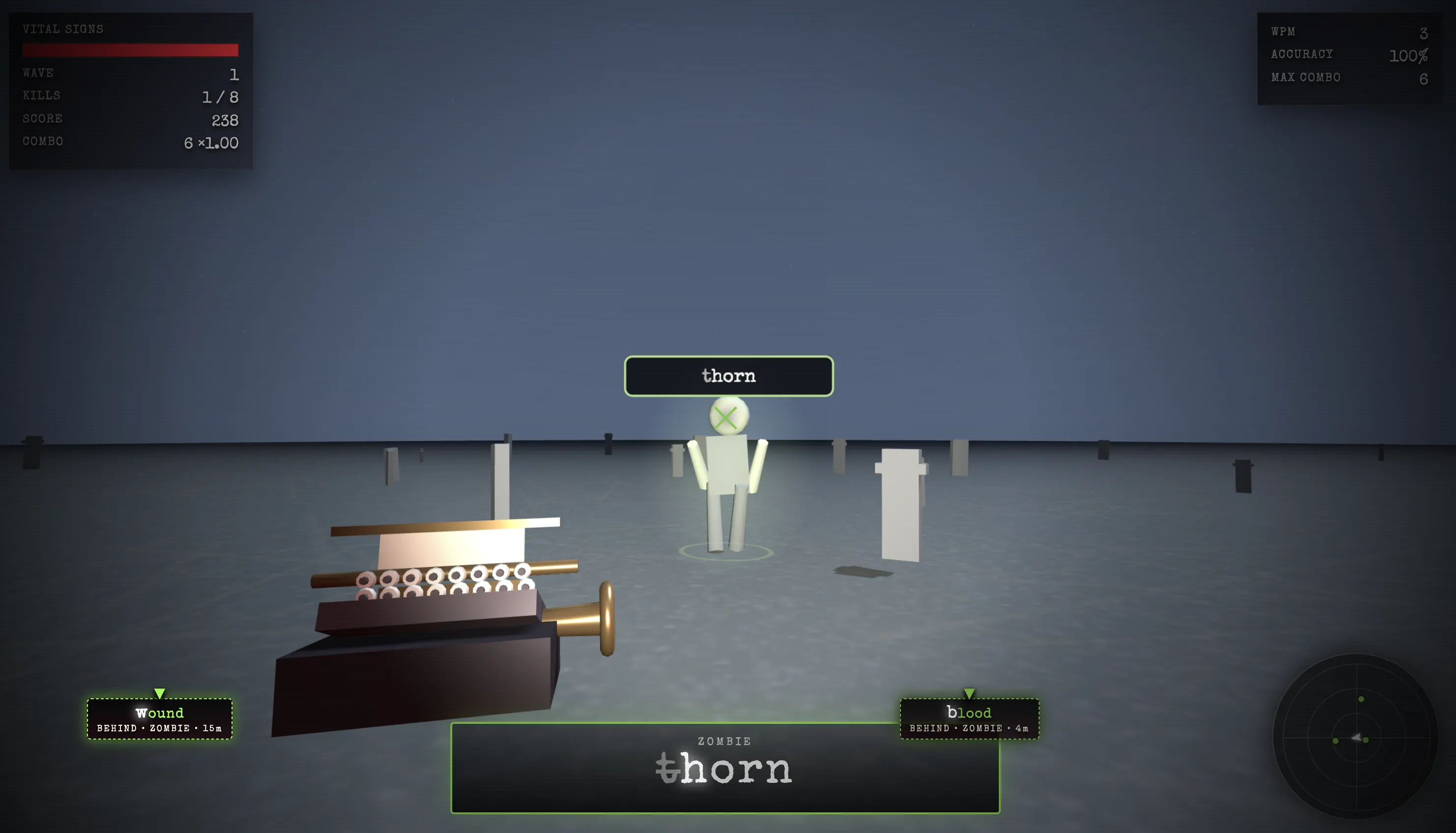
GPT-5.6 Sol exhibited a noticeable shift in its user interface preferences, favoring flat, square design elements reminiscent of Windows 8.1, a departure from the common glossy gradients seen in other AI-generated imagery. A unique creative choice was the rendering of the weapon as a bullet-shooting typewriter, distinguishing it from the more conventional gun depictions. However, the generated game suffered from static backgrounds, an unmoving aiming crosshair, and geometry that resembled late-1990s game engines, lacking the polish and dynamism of contemporary titles. While representing an improvement over previous GPT versions, it fell short of Fable 5’s performance in this single-shot challenge.
Claude Fable 5 decisively won this "vibe coding" test. It incorporated elements that Sol omitted entirely, including background music, atmospheric sound effects, and a more visually engaging and gore-intensive enemy design with actual animation. The retro-style enemies were rendered with greater care, evoking a feel closer to Minecraft than dated software. Fable 5’s UI was also more creative, featuring animated enemies and a dynamic targeting system. Furthermore, it included a words-per-minute tracker, a feature that directly addressed the prompt’s underlying goal of practicing typing speed, and incorporated power-ups, absent in Sol’s build.
Despite benchmarks and professional coding evaluations potentially favoring OpenAI’s offerings in coding tasks, this specific test indicated a clear advantage for Fable 5 due to its more comprehensive and engaging implementation of the requested game.
Conclusion: A Shifting Power Dynamic and Pricing Realities
The introduction of GPT-5.6’s tripartite model structure signifies a strategic evolution for OpenAI, aiming to capture a wider market segment with tailored solutions. While the performance gains in areas like coding are evident, the broader creative and logical reasoning capabilities of these new models do not represent a revolutionary leap over their predecessors, nor do they consistently outperform top-tier competitors like Claude Fable 5 in all aspects.
For the average user who interacts with AI through conversational interfaces for tasks like drafting emails or general inquiries, Claude Fable 5, based on this analysis, appears to offer a more robust and qualitatively superior experience. However, this assessment is significantly complicated by factors external to raw intelligence, most notably pricing and availability.
The pricing structure of GPT-5.6 Sol, Terra, and Luna is integrated into OpenAI’s paid ChatGPT plans without any stated expiration, offering a degree of long-term predictability. Conversely, Claude Fable 5’s precarious availability, marked by repeated deadline extensions, introduces substantial uncertainty. If Fable 5 transitions to a usage-credits model with the projected $10/$50 per million token rates on July 19, its appeal for sustained use may diminish considerably, especially when compared to the cost-effectiveness of OpenAI’s offerings. This pricing dynamic, rather than solely performance metrics, could emerge as a decisive factor in user adoption and market positioning. The ongoing competition between OpenAI and Anthropic, now amplified by OpenAI’s diversified LLM strategy and Anthropic’s regulatory hurdles, is set to define the next phase of advanced AI deployment.
Related posts: