The Evolution of Enterprise Data Architectures: Integrating AI Agents and Autonomous Governance for Scale


The global corporate landscape is undergoing a fundamental shift as enterprises transition from utilizing artificial intelligence as a mere productivity enhancement tool to embedding it as a core component of their data architecture. While the initial wave of AI adoption focused on individual efficiency—streamlining emails, summarizing documents, and generating code—a new era of "Agentic AI" is redefining how organizations manage, analyze, and trust their proprietary data. As businesses move beyond simple chatbots, the focus has shifted toward autonomous systems capable of perceiving environments, making decisions, and executing multi-step workflows without constant human intervention.
The Transition from Chatbots to Autonomous Data Agents
The traditional workflow for data analysis has long been characterized by a significant "human bottleneck." In a standard e-commerce or retail environment, a business user requiring specific insights—such as identifying which product categories drove revenue growth in a specific region—must typically wait for a data analyst to write SQL queries, export data, create visualizations, and interpret the findings. This process can take hours or even days depending on the analyst’s backlog.
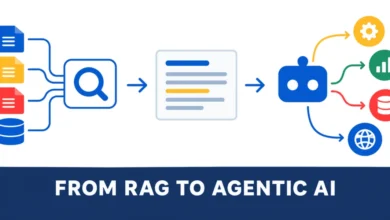
The emergence of AI data agents seeks to automate this entire lifecycle. Unlike standard chatbots, which are designed primarily for conversational responses based on pre-trained information, AI agents are defined as autonomous systems that take concrete actions to achieve a specific goal. In the context of enterprise data, these agents act as virtual analysts. They do not merely "talk" about data; they retrieve semantic information, generate and execute SQL queries against live databases, interpret the results, and deliver polished, actionable insights.
Major industry players have already integrated these capabilities into their platforms. Microsoft Fabric features built-in data agents, Snowflake has introduced Cortex Analyst, and Databricks offers the AI/BI Genie. For organizations seeking platform-agnostic solutions, tools such as Julius AI and Tellius have emerged to bridge the gap between disparate data silos. The objective is to allow human analysts to move away from repetitive retrieval tasks and focus on high-level strategic decision-making.

A Chronology of Enterprise Data Integration
To understand the current state of AI in the enterprise, it is necessary to examine the chronological progression of data management technologies over the last several decades:
- The Era of Traditional Warehousing (1990s – 2010): Organizations focused on structured data storage using SQL-based systems. Data Quality Assurance (QA) was entirely manual and rule-based.
- The Cloud and Big Data Revolution (2010 – 2020): The rise of Snowflake, Databricks, and AWS Redshift allowed for the storage of massive datasets. ETL (Extract, Transform, Load) pipelines became more complex, but the interaction remained human-to-machine via code.
- The Generative AI Explosion (2022 – 2023): The release of Large Language Models (LLMs) like GPT-4 introduced natural language interfaces. Enterprises began using AI for "sidecar" tasks like writing emails or basic code snippets.
- The Shift to Agentic Architectures (2024 – Present): AI is no longer an add-on but an integrated layer. The focus has moved toward "Agentic RAG" (Retrieval-Augmented Generation), where agents have the authority to query databases and perform QA autonomously.
Addressing the Reliability Gap in AI Data Systems
Despite the promise of AI agents, early adopters have encountered significant hurdles. Relying solely on a data agent often leads to three primary failures: hallucinated figures, lack of business context, and "data silence" (where the agent fails to find information that actually exists). If a business user asks for revenue growth percentages and receives an incorrect figure, the resulting decision could lead to millions of dollars in losses or regulatory non-compliance.
Industry experts argue that the solution is not to abandon AI agents but to redesign the enterprise data architecture to support them. A modern, AI-ready data platform must consist of three critical pillars: the Data Agent, the AI QA Agent, and an AI Governance & Observability layer. This structure acknowledges that while AI can be highly efficient, it requires a "checks and balances" system similar to a human workforce.
The Rise of AI-Powered Quality Assurance
Traditional Data Quality (DQ) methods are increasingly insufficient for the scale of modern datasets. In sectors like healthcare, where processing millions of patient records is a daily requirement, manual rule-setting is a "nightmare" for maintenance. Traditional checks—ensuring there are no null values or that data formats are correct—only catch "known unknowns."
AI-powered QA introduces a layer of machine learning that learns what "normal" data looks like from historical patterns. For instance, in a healthcare database, a traditional check might pass a lab result that is within a valid numerical range. However, an AI QA agent could flag that same result if it is ten times higher than the historical average for a specific clinic, identifying a potential upstream pipeline error or sensor malfunction.

Tools such as Soda, Great Expectations, and AWS Glue Data Quality are now incorporating ML-powered anomaly detection. This allows for:
- Anomaly detection without predefined thresholds: The system adjusts its expectations as data evolves.
- Root cause investigation: AI can trace a data drift back to a specific ingestion point.
- Contextual understanding: Recognizing that a spike in retail data is normal during "Black Friday" but anomalous in mid-February.
Establishing Trust Through AI Governance and Observability
The "black box" nature of AI remains the largest barrier to widespread enterprise adoption. To counter this, organizations are implementing rigorous governance frameworks that go beyond simple security and access control.
Prompt Versioning and Tracing
In a professional journalistic or financial environment, reproducibility is mandatory. Prompt versioning involves treating the instructions given to an AI as software code, stored in Git and tagged with release versions. This ensures that if an AI agent provides a different answer to the same question a month later, engineers can determine if the change was due to a shift in the underlying data or a modification in the agent’s internal logic.
Hallucination Detection and Grounding
Hallucination detection has become a specialized field within AI engineering. Techniques such as "results grounding" involve the agent providing the specific SQL code and source table references used to generate an answer. By forcing the agent to cite its sources and validate its output against raw data, enterprises can mitigate the risk of fabricated insights.
Security and Injection Risks
The integration of AI agents introduces new security vulnerabilities, such as "prompt injection," where a malicious user could potentially trick an agent into bypassing row-level security or exporting sensitive PII (Personally Identifiable Information). Robust governance must include strict "least privilege" access for AI agents, ensuring they can only query the data necessary for their specific function.

Market Analysis and Economic Implications
According to recent industry reports from Gartner, by 2026, over 80% of enterprises will have used generative AI APIs or deployed generative AI-enabled applications in production environments. The economic impact is expected to be profound. By automating routine data retrieval and QA, organizations can theoretically reduce the "time-to-insight" by up to 90%.
However, this transition requires significant upfront investment in "data cleaning." As the saying goes, "garbage in, garbage out" applies even more strictly to AI. Organizations with messy, unorganized data warehouses will find that AI agents only serve to amplify existing errors. Consequently, the role of the data engineer is not being eliminated but rather elevated to that of an "AI Architect," focusing on building the reliable pipelines that feed these autonomous systems.
Future Outlook: The Human-AI Collaboration
The consensus among technology leaders is that the goal of an AI-driven data architecture is not the total removal of human oversight but the creation of a "trustworthy collaborator." Human feedback remains the final piece of the puzzle. By implementing "Human-in-the-loop" (HITL) systems—where users can provide thumbs-up/thumbs-down feedback and detailed comments—AI engineers can continuously refine the evaluation datasets used to train agents.
As enterprise AI matures, the distinction between "data platforms" and "AI platforms" will likely disappear. The data platforms of the future will be inherently agentic, self-healing, and governed by autonomous observability stacks. For organizations, the path forward is clear: treat AI not as a flashy interface for existing systems, but as a fundamental redesign of how data is validated, queried, and transformed into business value.
In conclusion, while the adoption of AI agents presents challenges regarding accuracy and governance, the integration of AI-powered QA and robust observability frameworks provides a viable roadmap for the future. By moving beyond the chatbot, enterprises can finally tap into the transformative potential of their data ecosystems, ensuring that AI-driven decisions are both rapid and reliable.