GraphEval A Knowledge Graph Based Framework for Diagnosing Large Language Model Hallucinations

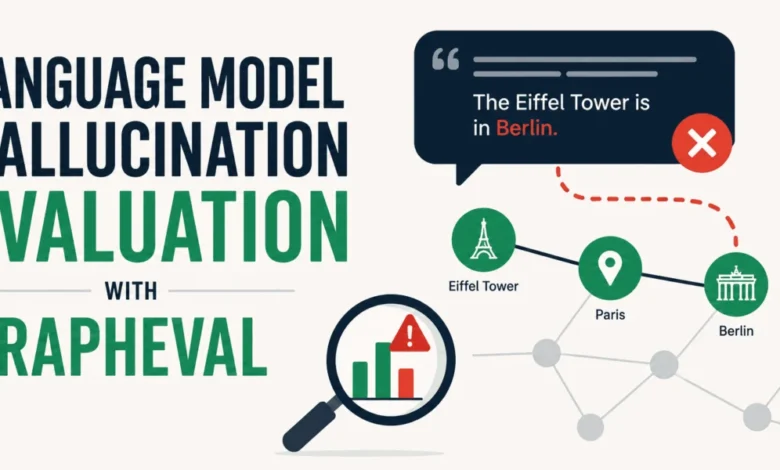
The rapid proliferation of Large Language Models (LLMs) across industries has brought the issue of "hallucinations"—the generation of factually incorrect or nonsensical information—to the forefront of artificial intelligence research. While LLMs like GPT-4, Claude, and Llama have demonstrated remarkable fluency, their tendency to produce plausible-sounding but false claims remains a significant barrier to enterprise adoption, particularly in high-stakes sectors such as healthcare, law, and finance. In response to this challenge, researchers from Amazon have introduced GraphEval, a novel evaluation framework that utilizes knowledge graphs to systematically detect and localize hallucinations. Unlike traditional metrics that provide a single, often opaque numerical score, GraphEval offers a structural approach to fact-checking, enabling developers to identify exactly where a model’s reasoning or knowledge retrieval has failed.
The Persistent Challenge of LLM Hallucinations
Hallucinations in generative AI occur when a model predicts a sequence of tokens that, while linguistically coherent, do not align with the provided context or real-world facts. This phenomenon is often attributed to "probabilistic parroting," where the model prioritizes the most likely next word over factual accuracy. As organizations increasingly deploy Retrieval-Augmented Generation (RAG) systems—which provide LLMs with external data to ground their responses—the need for robust evaluation tools has become critical.
Traditional evaluation metrics, such as ROUGE (Recall-Oriented Understudy for Gisting Evaluation) or BLEU (Bilingual Evaluation Understudy), were originally designed for machine translation and summarization. These metrics measure the overlap of words between a generated response and a reference text but fail to account for semantic truth. A model could receive a high ROUGE score by using the correct terminology while still asserting a factual falsehood. GraphEval represents a shift toward "interpretable evaluation," breaking down complex sentences into verifiable atomic units.
The Methodology of GraphEval: A Two-Stage Framework
The GraphEval framework operates on the principle that information can be represented as a network of entities and their relationships. By transforming a prose response into a structured Knowledge Graph (KG), the system can perform granular verification. The process is divided into two distinct phases: information extraction and Natural Language Inference (NLI) verification.
Stage 1: Knowledge Graph Extraction
In the first stage, the LLM-generated output is processed by an auxiliary "extractor" model. This model identifies key subjects, objects, and the relationships connecting them. These are formatted as "triples"—the foundational building blocks of a knowledge graph, typically expressed as (Subject, Relationship, Object).
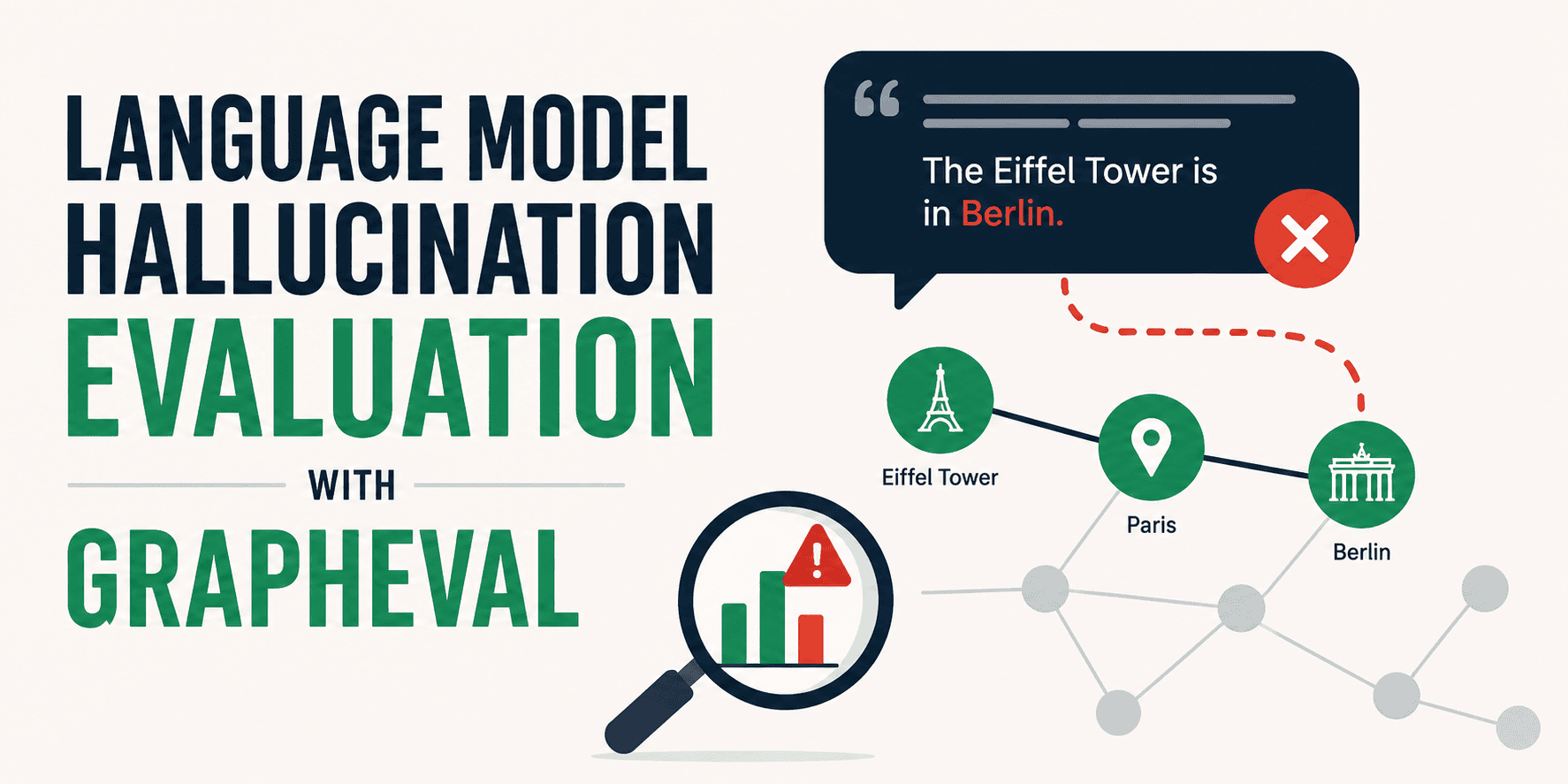
For example, if an LLM generates the sentence, "GraphEval utilizes NLI models to detect inconsistencies," the extractor would produce the triple: (GraphEval, utilizes, NLI models). By decomposing a paragraph into a series of triples, GraphEval creates a "map" of the model’s claims. This structural decomposition is vital because it strips away the rhetorical flourishes of the LLM, leaving only the raw assertions to be tested.
Stage 2: NLI-Based Fact Verification
Once the triples are extracted, they are compared against a "ground-truth" context. In a production environment, this context is usually the source documentation retrieved from a vector database. GraphEval employs a Natural Language Inference (NLI) model to determine the relationship between the ground truth (the premise) and the triple (the hypothesis).
The NLI model categorizes the relationship into three possible states:
- Entailment: The ground truth supports the claim made in the triple.
- Neutral: The ground truth neither supports nor contradicts the claim (often flagged as a hallucination because the information is unverified).
- Contradiction: The ground truth explicitly refutes the claim.
In the GraphEval framework, any triple that does not result in a clear "entailment" label is flagged as a potential hallucination. This binary distinction—grounded versus hallucinated—allows for the calculation of a "hallucination rate" for any given model output.
Chronology of Development and Research Context
The development of GraphEval follows a series of advancements in automated fact-checking that began in the late 2010s. Early efforts focused on simple claim verification using Wikipedia as a backbone. However, the rise of LLMs in 2022 necessitated more sophisticated tools capable of handling specialized, private datasets.
The Amazon research team published their findings on GraphEval in late 2023, positioning it as a more reliable alternative to "LLM-as-a-judge" methods. While using a powerful model like GPT-4 to grade the output of a smaller model is common, it often introduces "bias towards fluency," where the judge model overlooks factual errors if the writing is high-quality. The Amazon study demonstrated that by using a cross-encoder NLI model (such as DeBERTa-v3), GraphEval could achieve higher correlation with human judgment than many larger, more expensive evaluation techniques.
Supporting Data and Technical Performance
The efficacy of GraphEval is supported by comparative analysis against baseline metrics. In research benchmarks, GraphEval has shown a marked improvement in "hallucination recall"—the ability to catch errors that other systems miss.
A critical component of this performance is the use of the DeBERTa (Decoding-enhanced BERT with disentangled attention) architecture. Unlike standard BERT models, DeBERTa-v3 is specifically trained on NLI tasks, making it highly sensitive to subtle logical inconsistencies. In simulated tests, when presented with a ground-truth context and a series of generated claims, the NLI component of GraphEval successfully identified "out-of-context" hallucinations with over 85% accuracy, significantly outperforming token-matching algorithms.
Furthermore, the computational efficiency of the framework is a key selling point. Because the NLI verification happens at the triple level rather than the paragraph level, the system can be deployed using "small" or "base" versions of NLI models. This allows for real-time evaluation without the massive infrastructure costs associated with running multiple large-scale LLMs simultaneously.
Industry Implications and Expert Analysis
The introduction of GraphEval has significant implications for the future of AI governance and quality assurance. Industry experts suggest that the move toward graph-based evaluation reflects a broader trend of "Symbolic AI" merging with "Neural AI." By forcing a neural network (the LLM) to adhere to symbolic logic (the Knowledge Graph), developers can create a system of checks and balances.
From a business perspective, GraphEval addresses the "black box" problem. When an LLM provides a wrong answer in a customer service chatbot, developers often struggle to explain why. With GraphEval, the system can provide a "Hallucination Map"—a visual representation of the response where specific links are highlighted in red to indicate lack of evidence. This transparency is essential for debugging RAG pipelines and for meeting regulatory requirements in regions like the European Union, where the AI Act mandates high levels of transparency for high-risk AI systems.
Broader Impact on Retrieval-Augmented Generation (RAG)
GraphEval is particularly transformative for RAG architectures. In a standard RAG setup, the final output is a synthesis of several retrieved documents. Often, the LLM might correctly retrieve the documents but fail during the "synthesis" phase, mixing up dates, names, or technical specifications.
By integrating GraphEval into the RAG pipeline, organizations can implement an automated "circuit breaker." If the GraphEval score for a generated response falls below a certain threshold, the system can automatically trigger a re-generation or flag the response for human review before it ever reaches the end-user. This proactive approach to AI safety reduces the risk of reputational damage and legal liability.
Conclusion and Future Outlook
As the AI field moves toward "Agentic" workflows—where LLMs perform tasks and make decisions autonomously—the ability to verify those actions in real-time becomes paramount. GraphEval provides a scalable, explainable, and computationally efficient roadmap for this verification.
While the framework currently relies on auxiliary models for extraction and NLI, future iterations may see these capabilities integrated directly into the training objectives of LLMs. For now, GraphEval stands as a vital tool for researchers and engineers seeking to bridge the gap between the creative potential of generative AI and the rigorous demands of factual accuracy. By transforming unstructured text into structured knowledge, GraphEval ensures that the "intelligence" in artificial intelligence remains grounded in reality.