OpenAI Launches GPT-5.6 Series Featuring Multi-Tier Reasoning and Enhanced Code Synthesis Capabilities

The artificial intelligence sector has reached a new milestone with the official release of OpenAI’s GPT-5.6, a model series designed to bridge the gap between rapid-response utility and deep-reasoning computational tasks. Following the successful tenure of GPT-5.5, this latest iteration introduces a restructured architectural hierarchy and a granular "reasoning effort" system that allows users to modulate the model’s cognitive intensity. Early technical evaluations and developer feedback suggest that while the model represents an incremental rather than revolutionary leap over its predecessor, its specialized performance in code review and autonomous browser navigation sets a new benchmark for frontier AI systems.
The release comes at a time of intense competition in the LLM (Large Language Model) market, specifically as Anthropic continues to gain ground with its Opus 4.8 and Fable 5 models. OpenAI’s strategy with GPT-5.6 appears to be a direct response to the demand for more reliable enterprise-grade tools, focusing on precision, recall, and the integration of Model Context Protocol (MCP) standards to streamline cross-platform workflows.
Architectural Overview: The Sol, Terra, and Luna Tiers
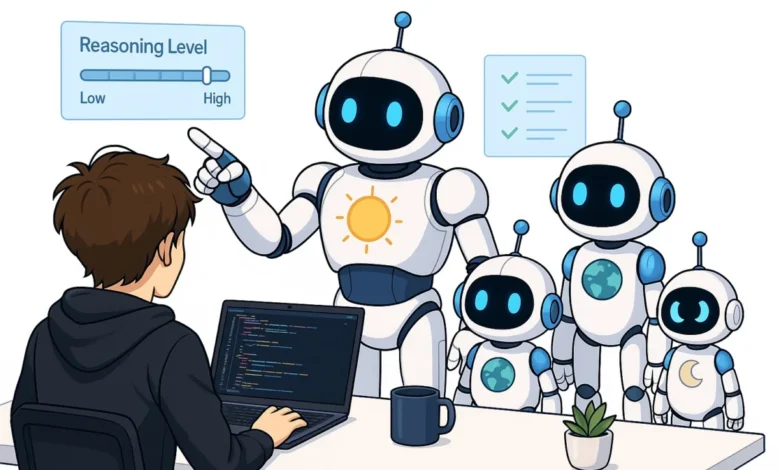
OpenAI has departed from its traditional singular model naming convention, instead adopting a celestial-themed hierarchy to categorize the sizes and capabilities of the GPT-5.6 suite. This tiered approach is designed to provide cost-efficiency and performance optimization across varying hardware and API constraints.
The flagship of the series, Sol, is the frontier-class model. Named after the Sun to signify its central role and massive scale, Sol is optimized for the most complex reasoning tasks, including architectural planning and advanced scientific modeling. Technical documentation indicates that Sol utilizes a significantly expanded parameter count compared to GPT-5.5, though OpenAI has maintained its recent policy of not disclosing exact architectural figures.
The mid-tier model, Terra, is positioned as the "workhorse" for the majority of professional applications. It aims to provide a balance between the high-level reasoning of Sol and the speed required for real-time interaction. Benchmark comparisons suggest that Terra, when paired with high reasoning settings, can occasionally outperform Sol at lower reasoning settings in specific logic-based puzzles, offering a unique efficiency-to-power ratio.
Finally, Luna represents the lightweight, high-speed iteration. Designed for edge computing, basic summarization, and low-latency chat applications, Luna is the most accessible model in terms of token cost and processing speed. While it lacks the deep-reasoning depth of its larger counterparts, its responsiveness makes it ideal for simple administrative automation.
The Reasoning Effort Paradigm: Accuracy vs. Velocity
One of the most significant features introduced in GPT-5.6 is the "Reasoning Effort" selector. This allows users to choose between various levels of internal processing—ranging from "Low" to "Ultra"—before the model generates a final output. This system functions by allowing the model more "thought cycles" to verify its own logic and explore multiple potential solutions internally.
Data from initial stress tests indicate a direct correlation between reasoning levels and output quality in high-stakes environments. In code implementation tasks, "Ultra" reasoning levels showed a 15% increase in "first-pass" success rates compared to standard GPT-5.5 responses. However, this increased accuracy comes with a substantial trade-off in both latency and resource consumption.
Under "Extra High" or "Ultra" reasoning modes, the model’s response time increases significantly, often taking several minutes to complete complex multi-step instructions. Furthermore, these modes utilize a vastly higher number of tokens, which can rapidly deplete user usage limits. For subscribers on the standard $200-per-month enterprise or pro tiers, the management of these reasoning levels has become a critical aspect of workflow optimization.
Performance in Software Engineering and Code Review
GPT-5.6 has demonstrated particular prowess in the field of software engineering, where it is being positioned as a direct competitor to specialized tools and Anthropic’s Opus 4.8. Technical reviewers have noted that the model shows marked improvements in both precision and recall when performing code reviews. Precision, the ability to correctly identify genuine bugs without flagging false positives, and recall, the ability to find all existing vulnerabilities in a codebase, are both reported to be superior to GPT-5.5.
In practical applications, GPT-5.6 is being utilized to automate the vetting process for production-level code. While some developers still advocate for human oversight in critical infrastructure, the model’s ability to catch subtle logic errors and security flaws has led many to adopt it as a primary reviewer.

Interestingly, a hybrid workflow has emerged among early adopters. Many engineers report using Anthropic’s Fable 5 for the initial planning and "brainstorming" phase of software development, then switching to GPT-5.6 for the final code review. For the actual execution or "boilerplate" generation, some still prefer Opus 4.8, suggesting that while GPT-5.6 is a powerful generalist, the AI landscape remains a multi-model ecosystem where specialized tasks benefit from specific model strengths.
Browser Navigation and Computer Use Capabilities
Beyond text and code generation, GPT-5.6 features enhanced "Computer Use" and "Browser Use" capabilities. These features allow the model to interact with web browsers in real-time, navigating complex UI elements to perform actions such as data scraping, end-to-end testing of web applications, and administrative task fulfillment.
OpenAI has optimized the model’s speed in these scenarios, particularly when used at "Medium" reasoning levels. This allows GPT-5.6 to act as a highly efficient digital agent. Its ability to verify code implementations by actually running them in a sandboxed browser environment and checking the visual output represents a significant step toward fully autonomous AI agents.
Subscription Economics and the "Banked Reset" Feature
The launch of GPT-5.6 has brought changes to OpenAI’s usage policies. To manage the high computational costs of the Sol model and its Ultra reasoning mode, OpenAI has introduced a "banked reset" system. Traditionally, users were subject to strict five-hour or weekly limits that reset on a fixed schedule. The banked reset allows users to trigger a manual refresh of their token limits once they have been exhausted, providing greater flexibility for intensive projects.
However, industry analysts point out that this system is not without its caveats. Triggering a banked reset also resets the countdown for the next scheduled limit refresh, meaning users must strategically time their resets to avoid long periods of downtime. This move is seen as an attempt to balance the needs of high-power users with the physical limitations of OpenAI’s server clusters.
The cost of maintaining these frontier models remains a topic of discussion in the tech industry. With the Ultra reasoning mode consuming resources at an accelerated rate, some analysts speculate that OpenAI may eventually introduce even higher-tier subscription levels or a "pay-as-you-go" credit system for Sol-class reasoning.
Integration and Ecosystem Compatibility
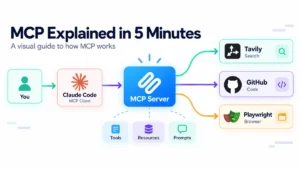
A key factor in the adoption of GPT-5.6 is its support for the Model Context Protocol (MCP). By allowing the model to connect seamlessly to external tools such as Gmail, Google Calendar, Slack, and various developer environments through MCP, OpenAI has ensured that GPT-5.6 can function as a central hub for professional productivity.
Early feedback suggests that the model’s performance is heavily dependent on the quality of these integrations. When given full access to a user’s suite of tools, GPT-5.6 can perform cross-platform tasks—such as scheduling meetings based on Slack conversations and then drafting a summary in a shared document—with a high degree of autonomy.
Chronology of Development
The path to GPT-5.6 was marked by several key developmental milestones:
- Late 2025: The release of GPT-5.0, which established the foundational architecture for the current generation.
- Early 2026: GPT-5.5 was introduced, focusing on reducing hallucinations and improving mathematical reasoning.
- Mid 2026: Beta testing for the "Sol/Terra/Luna" tiered system began under the codename "Project Celestial."
- Current Release: GPT-5.6 is officially launched, integrating the "Reasoning Effort" selector and the banked reset tokenomics.
Broader Implications and Industry Impact
The release of GPT-5.6 reinforces the trend of AI development moving toward "System 2" thinking—a psychological term referring to slow, deliberate, and logical thought processes. By giving models the ability to "think" longer before speaking, OpenAI is addressing one of the primary criticisms of earlier LLMs: their tendency to rush toward a plausible but incorrect answer.
Market analysts suggest that GPT-5.6 will likely solidify OpenAI’s position in the enterprise market, particularly for companies that require high-precision auditing and coding tools. However, the incremental nature of the improvement over GPT-5.5 suggests that the industry may be approaching a period of diminishing returns for standard transformer architectures, prompting a shift in focus toward efficiency, tool integration, and specialized reasoning modes.
As Anthropic and other competitors prepare their responses, the focus is expected to shift toward which company can provide the most "reasoning for the dollar." For now, GPT-5.6 stands as a versatile, if resource-intensive, tool that offers a glimpse into a future where the intensity of an AI’s thought process is a user-configurable setting. Developers and enterprises are encouraged to test the different model sizes and reasoning levels to find the optimal configuration for their specific needs, as the "one size fits all" era of AI appears to be coming to an end.