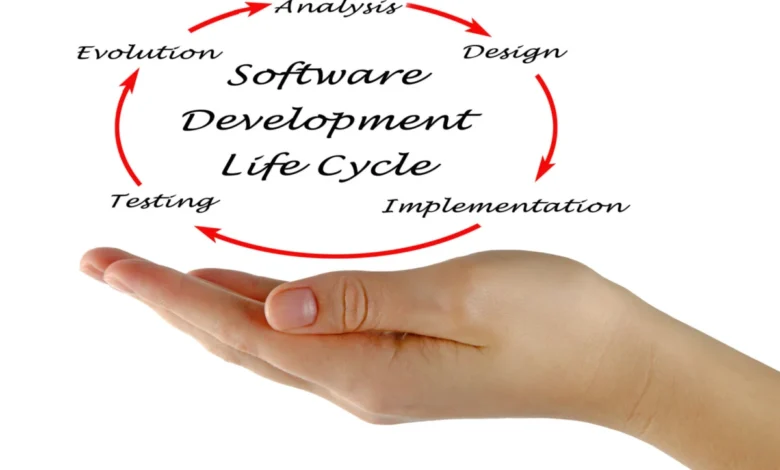
The established Software Development Life Cycle (SDLC), a bedrock of responsible software creation for decades, is undergoing a profound transformation. Its sequential stages – planning, analysis, design, coding, testing, deployment, and maintenance – were meticulously crafted to safeguard code integrity, ensure stability, and rigorously manage risks from initial conception to final delivery. However, the very rigidity that once guaranteed these outcomes now presents a significant hurdle in the era of artificial intelligence. The SDLC’s fixed assumptions and inherent constraints, while beneficial in a pre-AI landscape, now contribute to elongated software delivery pipelines. This, in turn, stifles engineers’ capacity for flexible thinking and innovation, and critically, limits organizations’ agility in responding to the accelerated pace that AI technologies enable.
This is not a call to abandon the foundational principles of robust software engineering. Instead, it signals an imperative to evolve these practices, recognizing and leveraging the distinct strengths of both human developers and AI. The goal is to forge a symbiotic relationship where engineers can achieve a dynamic equilibrium between delivering secure, high-quality code and embracing the rapid, iterative development cycles that define the modern enterprise. The anticipated outcome of this paradigm shift is a significant compression of delivery timelines, achieved without compromising the stability and customer-centricity that remain paramount.
A New Division of Labor: AI as an Augmentation, Not a Replacement
For years, the SDLC has served as a critical framework for risk mitigation, team coordination, and the scaled delivery of dependable software. AI does not negate the necessity of this structured approach; rather, it fundamentally reshapes the mechanics of software creation. The true value of AI in this context lies in its ability to augment the efforts of often-overworked engineers, not to supplant them entirely. AI-powered tools excel in areas such as synthesis of information, sophisticated pattern recognition, rapid iterative development, and the efficient execution of routine tasks.
The transformative impact of AI is poised to be most pronounced across five key domains within the SDLC:
-
Automating Boilerplate Code and Maintenance Toil: AI can autonomously generate foundational code structures, significantly reducing the manual effort required for initial development. Furthermore, it can efficiently manage repetitive maintenance tasks. This includes orchestrating dependency upgrades, implementing security patches across vast codebases spanning dozens or even hundreds of repositories simultaneously. This capability liberates engineers from time-consuming, low-value activities, allowing them to focus on more complex and strategic challenges before the core building phase even commences. For instance, a typical enterprise might have thousands of dependencies that require regular updates for security and performance. Manually tracking and updating these across multiple projects is a monumental task that AI can now automate, potentially reducing weeks of work to hours.
-
Accelerating Testing and Debugging: AI can significantly enhance the efficiency and effectiveness of software testing. By analyzing historical bug data, code complexity, and potential failure points, AI can intelligently prioritize test cases, identify regressions, and even suggest potential solutions for detected bugs. Tools like GitHub Copilot and similar AI assistants are already demonstrating the ability to generate test cases and identify common coding errors during the development process, reducing the time spent in the traditional testing phase. Early studies suggest that AI-assisted testing can reduce bug detection time by up to 30% in certain scenarios, leading to faster release cycles and improved software quality.
-
Streamlining Documentation and Knowledge Management: The creation and maintenance of comprehensive documentation are often burdensome but essential aspects of software development. AI can assist by automatically generating code documentation based on the code itself, summarizing complex code sections, and even drafting user manuals or API specifications. This ensures that knowledge is more readily accessible and up-to-date, a critical factor in large, distributed teams. This can also help in onboarding new developers, who can quickly understand existing systems by leveraging AI-generated summaries and explanations.
-
Enhancing Code Quality and Security: AI tools can act as intelligent code reviewers, identifying potential security vulnerabilities, code smells, and deviations from best practices. By continuously scanning code and comparing it against established security standards and coding guidelines, AI can proactively flag issues that might otherwise be missed by human reviewers, especially in large or complex projects. For example, AI can be trained to detect common injection vulnerabilities, insecure API usage, or data leakage risks, providing developers with immediate feedback and reducing the likelihood of security breaches in production. Industry reports indicate that AI-powered security tools can identify up to 60% more vulnerabilities than traditional static analysis tools.
-
Facilitating Rapid Iteration and Feature Development: The ability of AI to quickly generate code snippets, refactor existing code, and even suggest alternative implementations allows development teams to iterate on features much faster. This is particularly valuable in agile environments where rapid feedback loops and continuous delivery are key. For a startup needing to quickly validate a new feature, AI can generate an initial version for testing in a matter of hours, rather than days or weeks. This rapid prototyping capability can dramatically shorten the time to market for new products and services.

While AI dramatically alters how code is delivered, the fundamental motivations behind software development remain constant. The needs of customers, the problems engineers are tasked with solving, and the value delivered are enduring. The core principles of sound engineering, robust architecture, clear ownership, and unwavering reliability do not diminish; in fact, they become more critical. As AI democratizes code generation at an unprecedented pace, the potential for errors and security risks escalates, placing a greater premium on human oversight and judgment.
The Enduring Human Advantage: Judgment, Context, and Empathy
As AI takes on a larger share of the manual and repetitive tasks inherent in software development, the role of human engineers shifts towards more strategic responsibilities. Humans bring to the table capabilities that AI, in its current form, cannot replicate: nuanced judgment, deep contextual understanding, and empathy. These are skills that are indispensable at the system level. They are crucial for breaking down organizational silos, making critical architecture decisions, enforcing production discipline, and strategically allocating engineering resources. In practical terms, this means an engineer’s day will increasingly involve defining complex problems, meticulously evaluating trade-offs, and making informed decisions that draw upon real-world experience and a profound understanding of business context.
In this emerging human-AI collaborative model, the most valuable engineers will be those who possess strong oversight capabilities concerning AI tools. They will operate in strategic roles, leveraging their judgment and understanding of subtle complexities. Critically, these individuals will retain accountability for the ultimate outcomes. Their responsibilities will include rigorously reviewing AI-generated code to assess its quality, identifying potential security vulnerabilities, catching edge cases that AI might miss, and ensuring overall production reliability. This human-in-the-loop approach ensures that AI serves as a powerful assistant, guided by human expertise and ethical considerations.
Crafting a New Gold Standard for Software Delivery
Modern software delivery is not simply a matter of handing off manual tasks to AI. Organizations that approach this transition with such a limited perspective are likely to be met with disappointment. Treating AI as an ancillary tool, automating existing processes without fundamentally rethinking the underlying development model, will yield at best incremental gains. The true opportunity lies in a more profound transformation: rebuilding the SDLC from the ground up, weaving together the capabilities of humans and AI to create a new benchmark for excellence that maximizes the unique strengths of each.
The benefits of successfully navigating this evolution will extend far beyond the confines of engineering teams. As humans and AI collaborate – with AI accelerating execution and humans providing the essential judgment, context, and accountability that technology cannot yet replicate – the entire business landscape will be transformed. Products will reach the market more rapidly, systems will achieve higher levels of reliability, and engineering resources will be strategically focused on addressing genuine customer problems. Organizations that embrace and rebuild around this human-AI integrated model will not only achieve greater speed but will also fundamentally enhance the quality and impact of their software.
Frequently Asked Questions: Navigating the AI-Driven SDLC
How is the Software Development Life Cycle (SDLC) being reshaped by Artificial Intelligence?
AI is fundamentally altering the SDLC by compressing delivery timelines through the automation of previously labor-intensive tasks. This includes the generation of boilerplate code, the orchestration of dependency updates and security patches, the creation of documentation, and the handling of repetitive maintenance activities. Consequently, the role of the software engineer is evolving. Instead of focusing on manual coding, engineers are increasingly directing their expertise towards architectural decisions, defining intricate problems, and providing strategic oversight. While the SDLC framework itself persists, its operational model is being rebuilt. It is transitioning from a series of sequential, manual handoffs to a dynamic, human-AI collaborative ecosystem. This shift aims to leverage AI’s speed and efficiency while retaining human judgment and accountability.
What specific SDLC tasks can AI agents perform autonomously, without direct human intervention?
AI agents are demonstrating significant proficiency in a range of high-volume, low-judgment tasks that have historically consumed substantial engineering time. These include:
- Generating Foundational and Boilerplate Code: AI can quickly produce the initial structures and repetitive code segments needed for new features or projects, providing a solid starting point for developers.
- Batch Processing of Updates and Fixes: AI can efficiently manage dependency upgrades and apply security fixes across numerous repositories simultaneously, ensuring that systems remain current and secure with minimal manual effort.
- Drafting Specifications and Tickets: AI can assist in creating initial drafts of project specifications, user stories, and bug tickets based on provided requirements or existing code, streamlining the planning phase.
- Automated Status Reporting: AI can gather information from various development tools to generate automated status reports, keeping stakeholders informed without requiring manual compilation.
- Shipping UI Changes: AI can translate design inputs directly into production-ready UI code, significantly accelerating the front-end development process.
These capabilities allow engineers to delegate routine work, freeing up cognitive bandwidth for more complex problem-solving and innovation.
What are the potential risks associated with "code drift" in AI-generated code within the SDLC?
A significant challenge in widespread AI code generation is the risk of "code drift." This occurs when AI-generated code begins to diverge from established quality, security, and compliance standards across different teams and projects. Without a robust standardization layer – one that embeds approved patterns, libraries, and security requirements into every AI agent session – the resulting code can become inconsistent. This introduces new forms of technical debt, making codebases harder to maintain and increasing the overall security exposure for an organization, especially as more developers adopt AI code generation tools. The lack of standardization can lead to a fragmented and potentially vulnerable codebase.
Will AI ultimately replace human software engineers in the SDLC?
The prevailing perspective within the industry is that AI will function primarily as an augmentation tool rather than a direct replacement for human software engineers. The human role is expected to evolve, shifting towards tasks that demand significant judgment, strategic thinking, and accountability. These include high-level system architecture design, the evaluation of complex trade-offs, thorough security reviews of AI-generated code, and ultimate responsibility for production outcomes. Engineers who develop the skills to effectively oversee and direct AI toolchains are anticipated to be the most valuable assets in this evolving landscape. The human capacity for critical thinking, ethical reasoning, and creative problem-solving remains indispensable.