Google Developing Revolutionary Sign-to-Text Feature for Gboard to Enhance Android Accessibility

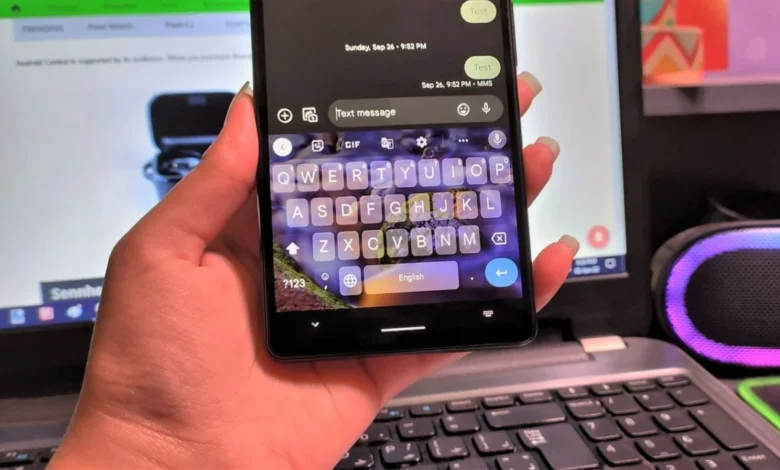
Google is currently in the process of developing a transformative accessibility tool for its flagship virtual keyboard, Gboard, aimed at bridging the communication gap for the Deaf and Hard of Hearing (DHH) community. According to technical findings within recent application code, the company is prototyping a "Sign-to-text" feature that leverages a smartphone’s camera and advanced artificial intelligence to translate sign language into written text in real-time. This development represents a significant leap forward in mobile accessibility, moving beyond audio-based transcriptions to address the visual-spatial nature of sign languages.
The discovery was first reported after an analysis of a recent Gboard APK (Android Package Kit) revealed hidden strings of code and a welcome splash screen dedicated to the feature. The interface describes a system capable of converting manual signing into text for various applications, including instant messaging, web searches, and email composition. While the feature is not yet available to the general public, its presence in the codebase suggests that Google is deep in the experimental phase of what could be one of the most complex accessibility features ever integrated into a mobile operating system.
The Mechanics of Sign-to-Text Translation
The operational framework of the Sign-to-text feature relies on a sophisticated synergy between hardware and cloud-based machine learning. According to the leaked documentation, the process begins with the user positioning their phone’s front-facing camera to capture their upper body and hands. As the user signs, the software utilizes computer vision to identify key skeletal landmarks—a technology Google has refined through its MediaPipe framework, which is widely used for hand and gesture tracking.
Privacy remains a central pillar of this implementation. The early descriptions indicate that the actual video footage captured by the device never leaves the local hardware. Instead, the software extracts "points representing the movement of your body." These mathematical coordinates, which contain no identifying visual information from the video itself, are then transmitted to Google’s servers. The cloud-based AI processes these movement patterns, translates them into the corresponding written language, and sends the text back to the device to be inserted into the active text field. Once the translation is complete, the movement data is reportedly deleted from Google’s servers, ensuring a minimized data footprint.
A Chronology of Android’s Accessibility Evolution
The development of Sign-to-text is the latest chapter in a long-standing effort by Google to make the Android ecosystem more inclusive. To understand the significance of this move, it is essential to look at the timeline of accessibility milestones that have defined the platform over the last several years.
In 2019, Google introduced "Live Transcribe," a tool developed in collaboration with Gallaudet University. This feature provided real-time, speech-to-text transcriptions for the DHH community, allowing users to follow conversations in noisy environments. Following this, "Sound Amplifier" was released to help users filter and augment ambient noise via their headphones.
In 2020 and 2021, the focus shifted toward computer vision with "Lookout," an app designed to assist people with visual impairments by identifying objects and reading documents aloud. Around the same time, "Project Euphonia" was launched to help people with non-standard speech patterns—such as those caused by ALS or stroke—train AI models to understand their specific vocalizations.
The release of Android 15 and the early previews of Android 16 have further refined these capabilities. Recent updates have focused heavily on hearing aid integration. Android 16 introduced significant enhancements for Bluetooth LE (Low Energy) Audio, allowing users to stream audio directly to hearing aids with lower latency and improved battery efficiency. Furthermore, the integration of "Fast Pair" for hearing aids has streamlined the setup process, moving toward a single-tap experience that mirrors the convenience enjoyed by users of mainstream wireless earbuds.
Technical Challenges and Global Linguistic Diversity
While the prospect of Sign-to-text is groundbreaking, it faces immense technical and linguistic hurdles. One of the primary concerns highlighted by industry analysts is the sheer diversity of sign languages. Contrary to common misconceptions, sign language is not universal. American Sign Language (ASL) is distinct from British Sign Language (BSL), French Sign Language (LSF), and hundreds of other regional variants. Each has its own unique syntax, grammar, and idiomatic expressions.
Furthermore, sign language is not merely a collection of hand gestures. It involves "non-manual markers," including facial expressions, mouth movements, and the tilt of the head or shoulders, which can completely change the meaning of a sign. For Google’s AI to be truly effective, it must be trained on a massive, diverse dataset that accounts for these nuances across various lighting conditions and camera angles.
There is also the challenge of processing speed. For a keyboard feature to be useful, the translation must be near-instantaneous. Any significant lag between signing and the appearance of text could disrupt the flow of communication, making the tool feel cumbersome rather than empowering.
Supporting Data: The Growing Need for Accessible Tech
The push for better accessibility tools is backed by global health data. According to the World Health Organization (WHO), over 5% of the world’s population—approximately 430 million people—require rehabilitation to address ‘disabling’ hearing loss. By 2050, it is estimated that one in every ten people will have some degree of hearing loss.
In the United States alone, data from the National Institute on Deafness and Other Communication Disorders (NIDCD) suggests that roughly 15% of American adults report some trouble hearing. For many within this demographic, sign language is a primary or preferred method of communication. However, the digital divide remains a barrier, as most modern software interfaces are designed with a "voice-first" or "touch-first" philosophy. By integrating sign language support directly into Gboard—the most used keyboard on the Android platform—Google is positioning itself to address a massive underserved market.
Potential Reactions and Industry Implications
While Google has not officially commented on the timeline for a public rollout, the reaction from the tech community and accessibility advocates has been one of cautious optimism. If successful, Gboard’s Sign-to-text could set a new standard for the industry, prompting competitors like Apple and Microsoft to accelerate their own gesture-recognition research.
Advocates for the DHH community have long called for "inclusive design," where features are built with the input of the people who will use them. The success of this Gboard feature will likely depend on how closely Google collaborates with sign language experts and native signers during the testing phase. There is a risk that an AI-only approach might miss the cultural and grammatical depth of the language, leading to "robotic" or inaccurate translations.
From a broader industry perspective, the underlying technology used for Sign-to-text has implications beyond accessibility. The ability of a mobile device to accurately interpret complex human gestures in real-time could pave the way for new forms of human-computer interaction (HCI). This could include gesture-based navigation for smart home devices or enhanced motion tracking in augmented reality (AR) environments.
Broader Impact and the Future of Communication
The introduction of Sign-to-text represents a shift in how we view the "smart" in smartphones. It suggests a future where devices are no longer passive recipients of input but are active interpreters of human expression. For a user who communicates through ASL, the ability to search the web or send a text without having to switch to a secondary language (written English) is a matter of linguistic autonomy.
As Google continues to refine its AI models, the integration of Gemini—Google’s latest large language model—could further enhance the Sign-to-text feature. A generative AI layer could help smooth out translated sentences, ensuring they are grammatically correct and contextually appropriate, rather than just a literal string of translated signs.
In conclusion, while the Gboard Sign-to-text feature is currently confined to the realm of experimental code, its potential impact is undeniable. It stands as a testament to the power of AI when directed toward solving fundamental human challenges. By turning the smartphone camera into a bridge for communication, Google is moving closer to a world where technology truly speaks everyone’s language, regardless of how that language is expressed. The coming months will likely reveal whether Google can overcome the formidable technical barriers to bring this vision to the pockets of millions of users worldwide.