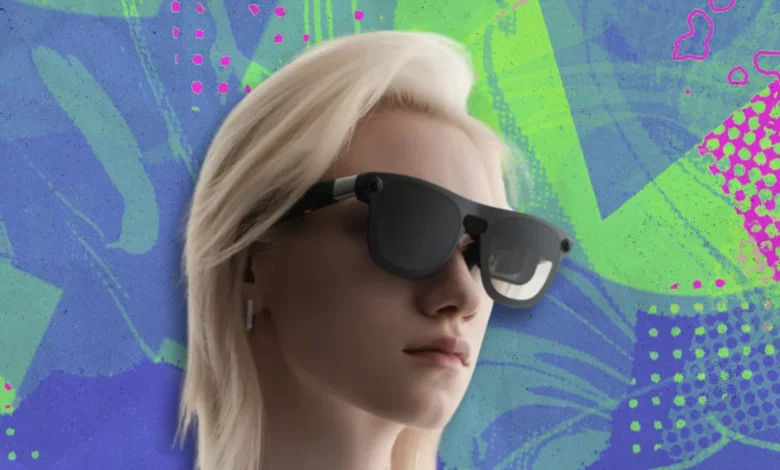
The intersection of augmented reality and virtual reality has long promised a new era of personal computing, one where digital interfaces seamlessly blend with the physical environment without isolating the user behind bulky headsets. That promise takes a significant step toward commercial reality today as Xreal opens preorders for the Xreal Aura. Developed in close partnership with Google and Qualcomm, the Aura represents a landmark achievement in the consumer electronics sector: it is the first wired smart glass system to run natively on Google’s specialized Android XR operating system.
Originally unveiled to the public earlier this year at the Google I/O 2026 keynote, the Xreal Aura has quickly become one of the most anticipated hardware releases in the spatial computing landscape. Designed for early adopters, tech enthusiasts, and professionals seeking mobile productivity enhancements, the device bridges the gap between traditional lightweight AR glasses and immersive VR headsets. With preorders officially live on the Xreal website, the company has announced that early buyers can secure the hardware ahead of its mid-November shipping date while taking advantage of a limited-time promotional discount.

Bridging Augmented and Virtual Realities
For years, the wearable technology market has been sharply divided into two distinct categories. On one side are lightweight augmented reality glasses, which offer transparent lenses and subtle designs but typically project limited, two-dimensional heads-up displays. On the other side are standalone virtual reality and spatial computing headsets—such as the Apple Vision Pro—which deliver breathtaking 360-degree immersive environments and true spatial tracking, but often suffer from heavy chassis designs, enclosed peripheral vision, and high social friction in public settings.
The Xreal Aura attempts to harmonize these competing philosophies. According to Xreal co-founder and CEO Chi Xu, the device was engineered specifically for consumers who desire the robust power of spatial computing without being visually or physically disconnected from the physical world around them.
"Xreal Aura is finally here, and we’re so proud to unlock new ways for people to work, watch, play, and build," Xu said in an official statement accompanying the preorder launch. "We built AURA for people who want the power of spatial computing without being removed from the world around them. With transparent lenses, a category-leading lightweight design, Gemini by your side, and access to the Android ecosystem from day-one, the promise of XR is more approachable than ever."

By maintaining transparent lenses, the Aura ensures that users never lose their peripheral vision or situational awareness, making it vastly superior for multi-tasking in dynamic environments like offices, airplanes, or bustling city streets.
Hardware Engineering and Display Capabilities
Achieving a lightweight form factor while packing high-end spatial computing power requires cutting-edge hardware engineering. At the core of the Xreal Aura’s visual delivery system are dual Sony Micro-OLED displays. These micro-panels are renowned for their deep contrast ratios and pixel density, enabling the glasses to project a crisp, expansive virtual canvas featuring a wide 70-degree field of view.
Furthermore, the optics are engineered to support up to 1,050 nits of peak brightness. This high luminance threshold is critical for outdoor usability, ensuring that virtual screens and holographic UI elements remain legible even under bright ambient lighting conditions. Gamers and media consumers will also appreciate the display’s support for up to a 120Hz refresh rate, which drastically reduces motion blur and latency during high-speed visual interactions.

Unlike traditional smart glasses that rely entirely on processing hardware built directly into the temple arms—which often results in a thick, ungainly aesthetic—the Xreal Aura utilizes a dedicated external compute module, often referred to in the industry as a "puck." This tethered accessory houses the heavy-duty battery and the primary computing architecture required to drive complex spatial environments. By offloading the thermal load and heavy computation to the puck, Xreal successfully kept the glasses themselves remarkably lightweight and comfortable for extended wear.
Powered by Qualcomm and Google Android XR
The true differentiator for the Xreal Aura lies in its software ecosystem. Running on Google’s newly minted Android XR platform, the glasses benefit from an operating system built from the ground up for spatial computing. This integration guarantees day-one access to a massive library of familiar applications, developer frameworks, and cloud services native to the Android ecosystem.
Performance is driven by Qualcomm’s advanced Snapdragon Reality Elite Platform. This specialized chipset provides the low-latency sensor fusion necessary to track hand gestures, spatial movements, and voice commands accurately. Onboard cameras and high-precision sensors eliminate the need for physical controllers in many use cases, allowing users to interact with floating windows, navigate menus, and manipulate digital objects using intuitive hand pinches and gestures.

Moreover, the Xreal Aura deeply integrates Google’s Gemini artificial intelligence assistant. With Gemini embedded directly into the spatial interface, users can converse naturally with the assistant to contextualize their surroundings, manage daily tasks, cross-reference data across multiple applications, and receive real-time contextual information projected directly into their field of view.
Immersive Entertainment and Spatial Media
The convergence of Google Photos and Android XR introduces transformative ways for users to interact with their personal media libraries. Standard flat photographs and videos can be converted into 3D spatial formats on the fly, adding depth and dimension to cherished memories. Panoramic images taken on smartphones are expanded into full 360-degree interactive vistas, placing the user directly inside the captured environment.
For navigation and geographical exploration, the integration with Google Maps allows users to scout destinations in immersive 3D. Whether reviewing an overhead aerial model of a metropolis or dropping down into an immersive Street View representation of a neighborhood, the interface provides unprecedented spatial context. Entertainment enthusiasts are similarly accommodated through native support for 360-degree and VR180 video content streamed via platforms like YouTube.

Xreal confirmed that the Aura launches with a curated catalog of more than 150 dedicated XR experiences available right out of the box, with additional enterprise applications, productivity tools, and immersive gaming titles scheduled to roll out over the coming months.
Market Positioning and Pricing Strategy
The launch of the Xreal Aura positions the company at the vanguard of a fiercely competitive new wave of spatial hardware. Industry analysts are closely watching how consumer sentiment shapes up around this emerging tier of lightweight spatial devices, especially as legacy tech giants stake their own claims in the market.
For context, Snap recently introduced its own iteration of standalone smart specs, albeit featuring a bulky design and a steep $2,195 price tag. Meanwhile, Meta has announced forthcoming virtual reality glasses slated for a spring 2027 release with a targeted price point of $1,299.

Against this backdrop, the Xreal Aura commands a standard retail price of $1,279. However, to incentivize early adoption and capture market share during the crucial holiday launch window, Xreal is offering a promotional preorder discount. Customers who order the glasses directly through the official Xreal online storefront can save $180, reducing the initial purchase price to $1,099. Preorders placed today are slated to begin shipping to consumers by mid-November.
Broader Industry Implications
The commercial debut of the Xreal Aura marks a critical inflection point for the spatial computing industry. For years, the sector struggled with an "all-or-nothing" dichotomy: consumers were forced to choose between highly limited information-display glasses with minimal utility or heavy, isolating headsets that failed to achieve mainstream consumer adoption due to comfort and social stigma.
By leveraging Google’s robust Android XR software framework and partnering with industry leaders like Qualcomm and Sony, Xreal has charted a viable middle path. If the Xreal Aura successfully proves that consumers are willing to embrace tethered spatial glasses for daily productivity and immersive entertainment, it could fundamentally alter the product roadmap for smartphones and personal computers over the next decade. As the first units prepare to land in the hands of consumers this November, the broader tech world will be watching closely to see if Android XR and lightweight glasses can finally deliver on the long-promised future of spatial computing.