A New Chapter in Mobile Hardware
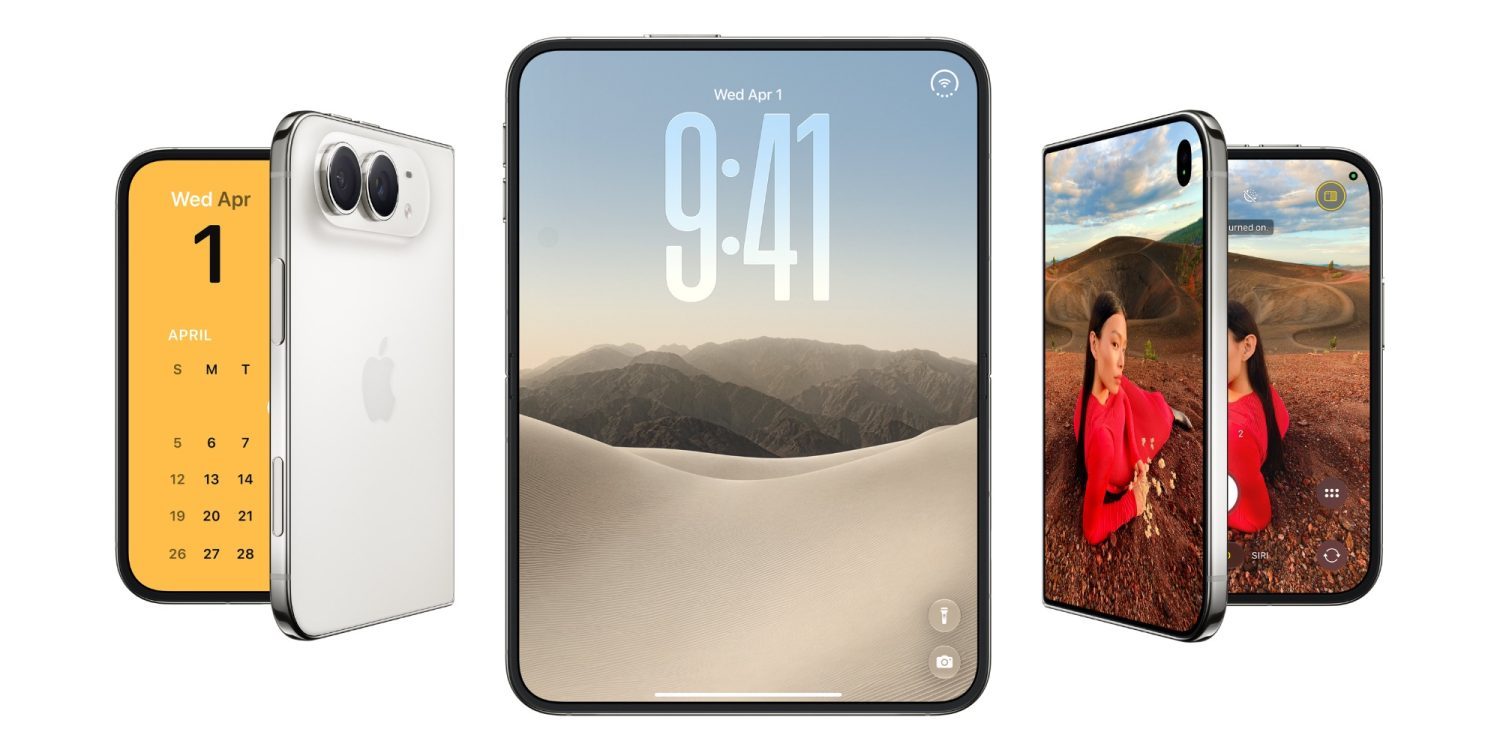
The launch of the iPhone Duo marks a pivotal moment for Apple, which has spent years observing the maturation of foldable technology from the sidelines. While competitors like Samsung, Google, and various Chinese manufacturers experimented with complex hinge mechanisms and flexible OLED panels, Apple’s wait-and-see approach allowed the company to refine its internal standards for hardware durability and software optimization.
According to TrendForce, the initial reception of the iPhone Duo has been robust. Within the first week of consumer availability, the device has demonstrated strong sell-through rates, suggesting that brand loyalty combined with the novelty of a premium foldable experience has successfully converted a significant portion of the existing high-end iPhone user base.
Chronology of the iPhone Duo Market Entry
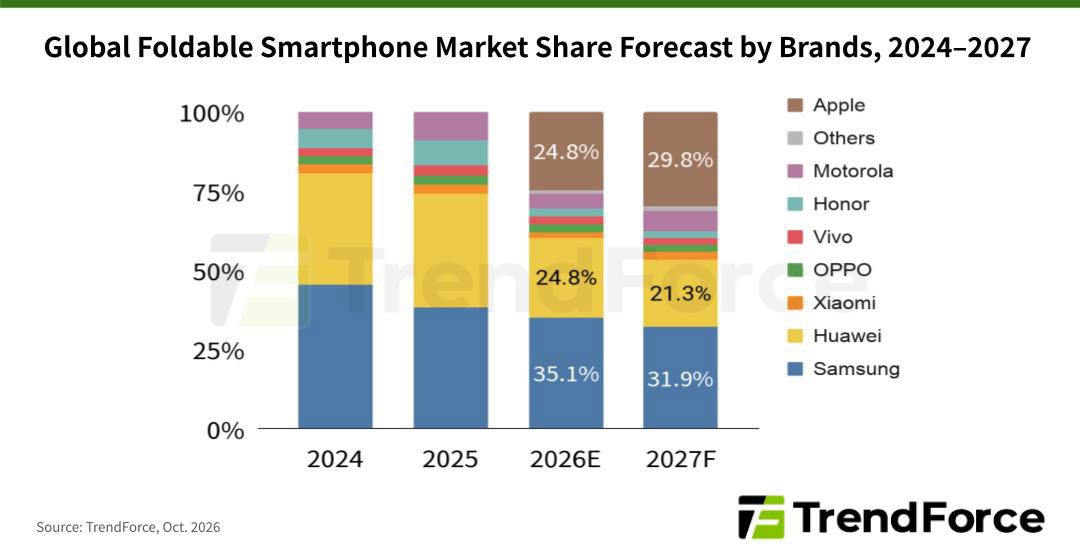
The trajectory of the iPhone Duo’s market impact can be traced back to the weeks immediately following its announcement last month. On September 10, 2026, initial projections indicated that Apple would ship approximately 5 million units by the end of the year, securing roughly 24.8% of the foldable market segment. At that time, the overall foldable market was facing stagnation, with analysts predicting a mere 0.5% growth for 2026.
In the subsequent weeks, supply chain reports confirmed that Apple had prioritized high-yield, durable display panels, a move that addressed the primary consumer complaint regarding foldable devices: longevity. By the time the device reached store shelves in late October, the early data prompted TrendForce to adjust its long-term forecasts. The current report, released on October 28, 2026, confirms that the initial momentum is expected to accelerate, pushing Apple’s market share to 29.8% by the end of 2027.
Supporting Data and Competitive Analysis
The foldable smartphone sector has historically struggled to achieve mainstream penetration, largely due to concerns over screen creasing, software bugs, and limited multitasking capabilities. TrendForce’s data highlights a stark contrast between Apple’s trajectory and that of its competitors.
In 2026, the foldable market was characterized by a 20% year-over-year decline in shipments from Android manufacturers. As the industry looks toward 2027, total market volume is projected to reach 23.5 million units—a 16.3% increase driven almost entirely by the adoption of the iPhone Duo.
The competitive hierarchy is projected to shift significantly:
- Samsung: Expected to see its market share contract from 35.1% in 2026 to 31.9% in 2027.
- Apple: Projected to ascend to a 29.8% market share, positioning it as the second-largest player in the sector within its first full year of competition.
- Huawei: Forecasted to decline from 24.8% to 21.3% as the market becomes increasingly crowded and consumers migrate toward the integrated Apple ecosystem.
The Ecosystem Advantage: Why Apple is Succeeding
The primary differentiator for the iPhone Duo, according to industry analysts, is not the hardware itself, but the synergy between Apple’s custom silicon, the iOS/iPadOS hybrid operating system, and the App Store’s developer ecosystem.
Craig Federighi, Apple’s senior vice president of Software Engineering, has emphasized that the company’s focus has been on "computational harmony." By providing developers with robust APIs for adaptive layouts and split-screen multitasking, Apple has ensured that the most popular applications on the App Store are optimized for the Duo’s unique folding state from day one. This stands in contrast to the fragmentation often seen in the Android foldable space, where developers have struggled to create a consistent user experience across different aspect ratios and hardware manufacturers.
TrendForce notes that Apple’s ability to force app compatibility is a "moat" that other manufacturers cannot easily replicate. As hardware reliability improves, the Duo is expected to move the conversation from "can it fold?" to "how does it improve my workflow?" This shift toward multitasking efficiency is likely to be the primary driver of consumer interest through the next two years.
AI Integration and Future Growth
Beyond the hinge and the display, the iPhone Duo is being marketed as a cornerstone of Apple’s AI strategy. With the increased screen real estate provided by the unfolded state, Apple’s integrated AI features—including advanced image editing, context-aware writing tools, and complex data visualization—are far more usable than on standard slab smartphones.
The integration of these AI use cases is expected to act as a catalyst for future demand. Analysts at TrendForce suggest that as Apple continues to refine its AI offerings, the "practical value" of the foldable form factor will become undeniable for power users, essentially turning the foldable iPhone into a portable workstation.
Broader Industry Implications
The emergence of the iPhone Duo as a market leader in the foldable category has broader implications for the smartphone industry at large. For years, the foldable category was viewed as a niche segment reserved for early adopters and enthusiasts. With Apple’s entry, the technology is now effectively being branded as the "next standard" for flagship devices.
This shift will likely force Android manufacturers to pivot their strategies. Rather than focusing on radical, experimental designs—such as rollable displays or tri-fold screens—competitors are expected to double down on software stability, battery life, and ecosystem integration to compete with the iPhone Duo’s value proposition.

Furthermore, the supply chain is likely to see a significant investment in component quality. As Apple sets a high bar for screen durability and hinge lifespan, suppliers are being pushed to improve the overall quality of materials used in foldable manufacturing. This "Apple effect" historically trickles down to the rest of the industry, potentially resulting in more reliable foldable devices across all price points in the coming years.
Challenges and Outlook
Despite the optimistic projections, challenges remain. The price point of the iPhone Duo remains a significant barrier to entry for the average consumer, and it remains to be seen whether Apple will eventually introduce a "Lite" version of the device to capture the mid-market segment.
Moreover, the long-term environmental impact of manufacturing high-complexity, foldable hardware is a growing concern for regulators and consumers alike. Apple’s ability to balance its aggressive growth targets with its environmental, social, and governance (ESG) goals will be a critical metric to watch as the company scales production of the Duo.
In summary, the landscape of the smartphone market is undergoing a fundamental transformation. By entering the foldable space with a focus on cohesive software integration and developer support, Apple has managed to legitimize a product category that was previously defined by its inconsistencies. As we move into 2027, the success of the iPhone Duo will serve as a bellwether for the future of mobile computing, signaling that the era of the foldable smartphone has finally arrived in the mainstream.
For investors and consumers alike, the data provided by TrendForce serves as a reminder that in the technology sector, the first to market is rarely as important as the one who best integrates the technology into the daily lives of its users. With Apple poised to capture nearly a third of the market, the coming year promises a fierce battle for dominance in the high-end smartphone arena, with the foldable form factor at the very center of the conflict.