Apple Faces $634 Million Blow as Judge Upholds Patent Infringement Verdict in Ongoing Legal Battle with Masimo

The United States District Court for the Central District of California has dealt a significant blow to Apple Inc., as Judge James V. Selna denied the tech giant’s motion to overturn a $634 million jury verdict in favor of medical technology firm Masimo Corporation. This ruling marks a pivotal moment in a multi-year legal saga that has fundamentally altered the feature set of the Apple Watch in the United States and raised critical questions regarding the intersection of consumer electronics and regulated medical technology. The decision reaffirms a November 2025 jury finding that determined Apple’s heart-rate monitoring and notification features infringed upon Masimo’s patented pulse oximetry technology.
In his comprehensive ruling, Judge Selna rejected Apple’s request for judgment as a matter of law or, alternatively, a new trial. The core of Apple’s defense rested on a narrow interpretation of the term "patient monitor," a phrase central to Masimo’s patent claims. Apple argued that the Apple Watch, as a consumer-oriented wearable device, should not be classified under the same legal definitions as specialized, clinical-grade medical equipment used in hospitals. However, the court found that the jury’s conclusion was supported by the evidence, noting that the broader, everyday meaning of the term could reasonably encompass a wearable device designed to monitor physiological data such as heart rate and blood oxygen levels.
The Genesis of the Conflict: A Battle Over Innovation and Talent
The legal friction between Apple and Masimo began in January 2020, but the roots of the dispute trace back even further. Masimo, a global leader in non-invasive monitoring technologies based in Irvine, California, accused Apple of orchestrating a strategic campaign to acquire its proprietary secrets. According to court filings, Apple reportedly initiated discussions with Masimo about a potential partnership or acquisition in 2013, shortly before the development of the original Apple Watch. During these meetings, Masimo alleges that Apple gained deep insights into its pulse oximetry technology, which uses light sensors to measure oxygen saturation in the blood.
Instead of forming a partnership, Masimo claims Apple began a targeted effort to "poach" key personnel. This included the hiring of Masimo’s Chief Medical Officer and several high-level engineers who were intimately familiar with the company’s intellectual property. Masimo’s subsequent lawsuit alleged that Apple used these employees to integrate Masimo’s trade secrets and patented technologies into the Apple Watch Series 6 and later models. While a separate trade secret trial in 2023 ended in a mistrial, the patent infringement claims moved forward, leading to the massive financial judgment currently upheld by the court.

The ITC Ruling and the US Import Ban
Parallel to the federal court proceedings, Masimo sought relief through the International Trade Commission (ITC). In early 2023, the ITC ruled that Apple had indeed infringed on Masimo’s patents related to light-based pulse oximetry. This led to a historic enforcement action: a ban on the importation of Apple Watch models featuring the blood oxygen monitoring sensor, specifically the Series 9 and Ultra 2.
The ban took effect in late 2023 after the Biden administration declined to veto the ITC’s decision. To keep its flagship wearables on store shelves during the critical holiday season and into 2024, Apple was forced to disable the blood oxygen feature via software updates for all new units sold in the United States. This move represented a rare retreat for a company that prides itself on its "all-in-one" health and wellness ecosystem. In 2025, Apple attempted to circumvent the ban by introducing a redesigned feature that processed sensor data on a paired iPhone rather than the watch itself, a move that prompted further legal challenges from Masimo and scrutiny from U.S. Customs and Border Protection.
Technical Analysis: The Patent at the Heart of the Dispute
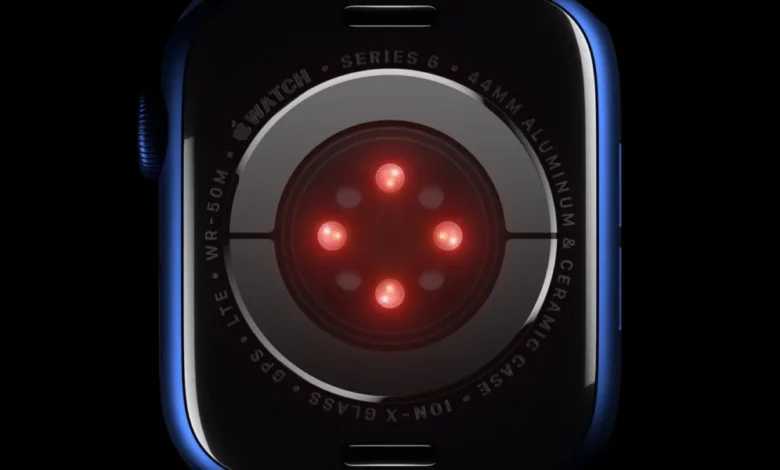
The specific patent at the center of the $634 million verdict involves pulse oximetry—a technology that Masimo pioneered for clinical settings. Pulse oximeters work by emitting light of specific wavelengths through the skin and measuring the amount of light absorbed by hemoglobin. Because oxygenated and deoxygenated blood absorb light differently, the device can calculate the user’s oxygen saturation (SpO2).
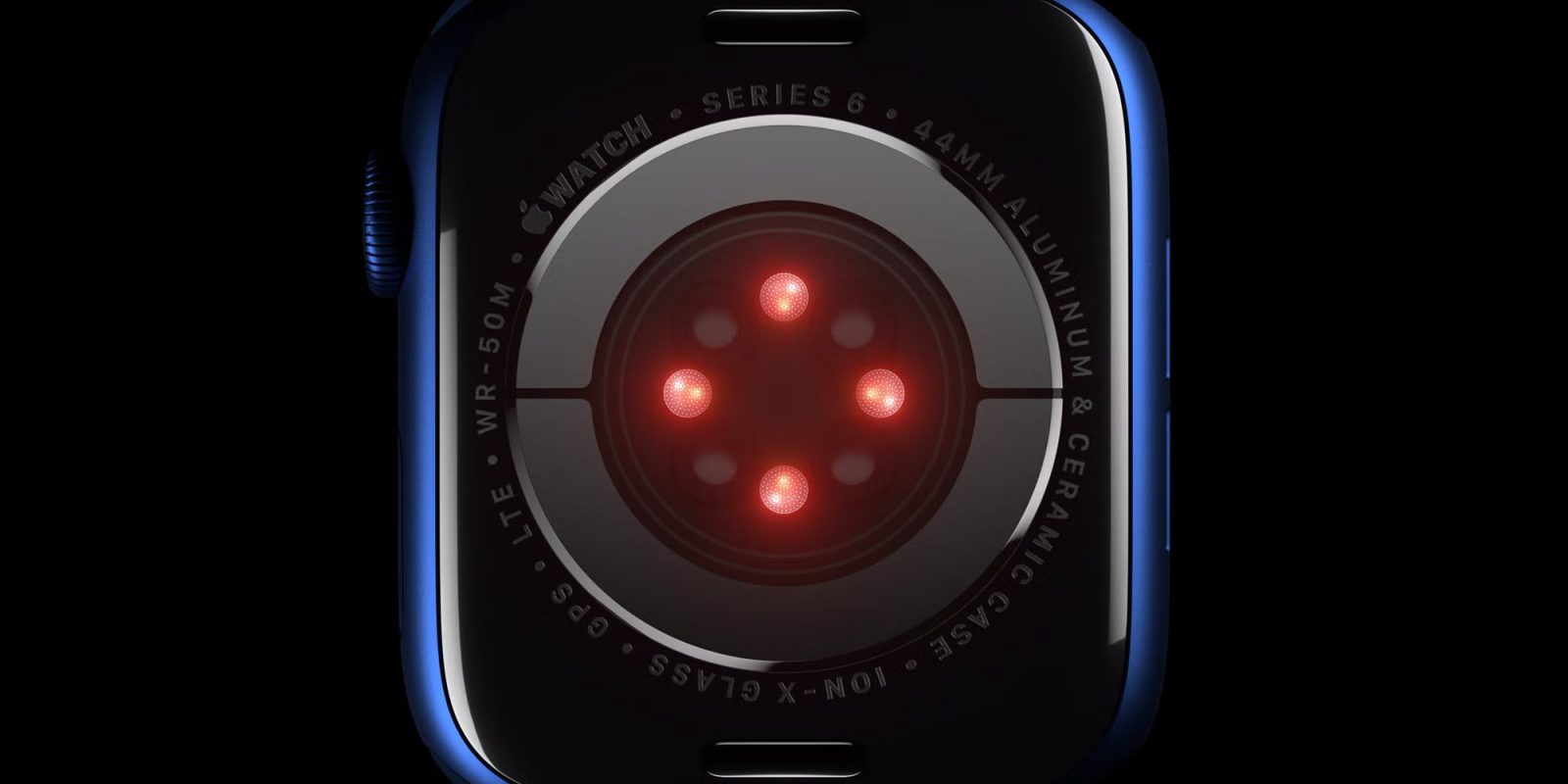
Apple’s implementation in the Apple Watch utilized a similar array of green, red, and infrared LEDs, along with photodiodes on the back of the device. Apple argued that its technology was a "historic" application of basic science that had been in the public domain for decades. However, the jury found that Apple’s specific methods for heart-rate monitoring and notifications—features that rely on the same optical sensor architecture—infringed on Masimo’s specific patented innovations. The judge’s refusal to grant a new trial underscores the legal weight given to Masimo’s claims that their specific refinements and signal-processing techniques were misappropriated.
Chronology of the Apple vs. Masimo Legal Timeline
- 2013: Apple and Masimo hold initial meetings regarding potential health technology collaboration.
- 2013–2014: Apple hires several top executives and engineers from Masimo and its spinoff, Cercacor.
- January 2020: Masimo files its initial lawsuit in California, alleging trade secret theft and patent infringement.
- September 2020: Apple launches the Apple Watch Series 6, the first model to feature blood oxygen monitoring.
- May 2023: A California jury is unable to reach a verdict in the trade secret portion of the case, resulting in a mistrial.
- October 2023: The ITC issues an exclusion order, banning imports of infringing Apple Watches.
- December 2023: Apple briefly pauses sales of the Series 9 and Ultra 2 before a temporary stay is issued, then eventually begins selling models with the SpO2 feature disabled.
- November 2025: A jury finds Apple liable for $634 million in damages for infringing a pulse oximetry patent related to heart-rate monitoring.
- July 2026: Judge James V. Selna denies Apple’s motions to toss the verdict, finalizing the $634 million obligation at the district court level.
Financial Implications and Market Impact
While $634 million is a staggering sum for most companies, it represents a fraction of Apple’s annual revenue, which exceeded $380 billion in the previous fiscal year. However, the implications extend beyond the immediate fine. The "Wearables, Home, and Accessories" segment is one of Apple’s fastest-growing divisions, contributing over $40 billion annually. The inability to offer a fully functional blood oxygen sensor in the U.S. market—a feature standard on many competing devices from Garmin, Samsung, and Google—puts Apple at a competitive disadvantage in the health-tech space.
For Masimo, the verdict is a validation of its intellectual property. The company, which has a market capitalization of approximately $6 billion to $8 billion, sees this as a defense of its core business model. Masimo CEO Joe Kiani has been a vocal critic of Apple’s business practices, often stating that the legal battle is a "David vs. Goliath" struggle to prevent large tech companies from stifling innovation by smaller medical firms.
Official Responses and Next Steps
Apple has remained steadfast in its intent to fight the verdict. In a statement following the judge’s decision, the company reiterated its stance that Masimo’s litigation is an attempt to hinder a superior consumer product. "Masimo is a medical device company that does not sell any products to consumers," an Apple spokesperson noted. "Over the past six years, they have sued Apple in multiple courts and asserted over 25 patents, the majority of which have been found to be invalid. The single patent in this case expired in 2022 and is specific to historic patient monitoring technology from decades ago. We plan to appeal."
Masimo, conversely, viewed the judge’s ruling as a victory for the rule of law. The company has argued that Apple’s "expired patent" defense is a mischaracterization of the legal timeline, as the infringement occurred while the patents were active, and the damages reflect the value stolen during that period.
The case is now expected to move to the U.S. Court of Appeals for the Federal Circuit. This appellate court specializes in patent cases and will review Judge Selna’s legal interpretations, particularly the definition of a "patient monitor." If the appellate court upholds the decision, Apple will be forced to pay the $634 million plus interest, and the precedent could embolden other medical technology companies to challenge the encroachment of Big Tech into the healthcare sector.
Analysis of Broader Industry Consequences
This case highlights the growing tension between the "move fast and break things" culture of Silicon Valley and the highly regulated, patent-heavy world of medical devices. As companies like Apple, Amazon, and Alphabet (Google) expand further into health diagnostics, they are increasingly running into the intellectual property moats built by established medical firms.

The ruling also serves as a warning regarding employee recruitment. The "poaching" allegations central to Masimo’s narrative suggest that tech giants must be increasingly cautious when hiring specialized talent from competitors or potential partners. For the consumer, the immediate impact remains a fragmented product experience, where the world’s most popular smartwatch remains functionally limited in its home market due to a complex web of legal disputes.
As the appeal process begins, the tech industry will be watching closely. A final victory for Masimo would signal that even the world’s most valuable company cannot bypass the traditional patent system when integrating specialized medical sensors into consumer gadgets. For now, the $634 million verdict stands as a testament to the high cost of legal and technical brinkmanship in the age of the wearable health revolution.