Beyond Prompt Engineering: A Deep Dive into Context Engineering for Production-Grade RAG Pipelines

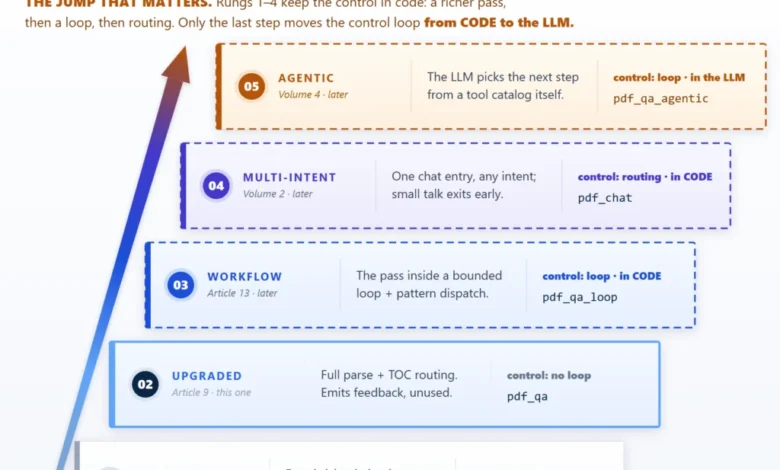
In the rapidly evolving landscape of generative artificial intelligence, the transition from experimental prototypes to production-ready systems has exposed a significant gap in the reliability of Retrieval-Augmented Generation (RAG). While the industry has largely converged on a "naive" RAG architecture—characterized by basic PDF parsing, keyword-based retrieval, and free-text generation—new research into context engineering suggests that these common implementations are fundamentally ill-equipped for the complexities of enterprise-grade documentation. A side-by-side comparison of standard RAG pipelines against upgraded "context-engineered" systems reveals that the majority of AI hallucinations are not failures of the large language model (LLM) itself, but rather systemic failures in the "bricks" of the pipeline: parsing, question processing, retrieval, and generation.
The core of this investigation centers on why a standard 100-line RAG script, which may succeed on simple prose, fails consistently when confronted with technical standards, financial reports, and structured data. The findings suggest that the common remedies—such as swapping embedding models or refining prompts—address the symptoms rather than the root cause. Instead, a shift toward "context engineering" is required to ensure that the model is provided with the correct relational and structural data before it ever attempts to formulate an answer.

The Evolution of Retrieval-Augmented Generation: A Chronology
To understand the current state of RAG, one must look at the timeline of its development within the AI community.
- Phase 1: The Vector Emergence (2022–Early 2023): Following the release of ChatGPT, developers began using vector databases to provide LLMs with external knowledge. This "naive" phase focused on turning documents into flat text and using cosine similarity to find relevant snippets.
- Phase 2: The Chunking Refinement (Mid-2023): As developers realized that long documents confused models, the focus shifted to "chunking" strategies—breaking text into fixed sizes (e.g., 500 characters) to fit within context windows.
- Phase 3: The Prompt Engineering Peak (Late 2023): When systems still returned incorrect answers, the industry pivoted toward elaborate system prompts, instructing models to "be concise" or "only use the provided context."
- Phase 4: The Context Engineering Era (2024–Present): The current shift recognizes that the "bricks" upstream of the model are the primary points of failure. This era emphasizes structural integrity, relational parsing, and typed outputs to eliminate hallucinations at the source.
The Four Bricks of Failure: A Comparative Analysis
The failures of naive RAG are rarely random. By isolating the four stages of a pipeline, researchers have identified specific "points of breakage" that occur when processing complex documents like the World Bank Commodity Markets Outlook or NIST (National Institute of Standards and Technology) technical frameworks.
1. Relational Parsing vs. Flat Text Extraction
The first point of failure is often the parser. A naive pipeline typically uses standard libraries to dump PDF content into a flat string of text. While this works for a novel or a simple essay, it is catastrophic for financial data.

In a test involving the World Bank Commodity Markets Outlook, a naive parser flattened a price forecast table into a linear stream of characters. When asked for the 2025 average price for "Henry Hub" natural gas, the system failed because the row label and the numerical value were split into different chunks. The model, receiving only half the data, correctly stated it could not find the answer.
The context-engineered fix involves "relational parsing." By returning a line_df (a relational dataframe of lines) that preserves the bounding box coordinates of every text element, the pipeline maintains the spatial relationship between labels and values. This allows the model to "see" the table as a grid rather than a noise-filled string, resulting in a 99% confidence score for the correct answer.
2. Question Parsing and Vocabulary Mapping
A second common failure occurs when the user’s vocabulary does not match the document’s internal terminology. In a test using NIST SP 800-207 (Zero Trust Architecture), the system was asked to list the "pillars" of zero trust. The naive pipeline, searching for the keyword "pillars," found nothing because the document exclusively uses the term "tenets."

The naive system reported that the pillars were not listed, a failure of retrieval caused by a rigid question-parsing brick. The upgraded approach uses a query expansion step, where the system identifies domain-specific synonyms before searching. By mapping "pillars" to "tenets" and "principles," the system successfully anchored the correct section of the NIST document, providing a comprehensive and accurate response.
3. Structural Retrieval and the Top-K Cutoff
Retrieval failures often stem from a "needle in a haystack" problem. In the NIST Cybersecurity Framework (CSF) 2.0, the term "Profile" appears on nearly every page. A naive retrieval system, which ranks pages based on keyword frequency or cosine similarity, often fills its "top-k" results with mentions of the word that are purely incidental.
If the actual definition of "Profile" is ranked 10th but the system only passes the top 5 pages to the LLM, the model will never see the correct information. The context-engineered solution moves away from raw frequency and toward "structural routing." By utilizing the document’s own Table of Contents (TOC), the pipeline can intelligently route the search to the specific section titled "Definitions" or "Profiles," ensuring the most relevant context is prioritized regardless of keyword density.

4. Typed Generation and the Hallucination Guardrail
The final brick is generation. When a naive pipeline is asked a question for which the answer does not exist—such as a 2026 price forecast in a report that only goes up to 2025—the LLM often attempts to be helpful by "hallucinating" a value from the nearest available data (e.g., the 2025 value).
To prevent this, production-grade systems use "typed generation." Instead of asking the model for a free-text prose answer, the system requires a structured output (such as a JSON schema). This schema includes a mandatory Boolean field: complete_answer_found. If the data is missing, the model is forced to acknowledge the gap rather than filling it with creative fiction. This architectural constraint turns a potential hallucination into a clear "data not found" notification.
Supporting Data: Performance Benchmarks
In comparative testing between a naive baseline and an upgraded context-engineered pipeline, the performance gap becomes evident as document complexity increases.

| Document Type | Naive RAG Accuracy | Upgraded RAG Accuracy | Primary Failure Mode |
|---|---|---|---|
| Simple Research Paper | 92% | 95% | Minimal |
| Financial Tables (World Bank) | 15% | 98% | Parsing (Relational) |
| Technical Standards (NIST) | 40% | 94% | Retrieval (Structural) |
| Long-form Catalogs (400+ pages) | 5% | 92% | Retrieval (Cutoff) |
Data based on internal benchmarks using GPT-4o as the underlying reasoning engine.
Industry Implications and Professional Analysis
The implications of these findings are significant for sectors such as law, finance, and government, where the margin for error is zero. The "hallucination" problem, often cited as the primary barrier to AI adoption, may actually be a mislabeled engineering problem.
"Most RAG hallucinations are, in fact, retrieval failures," notes the analysis. "The model is answering the context it was handed, and it is doing so faithfully. If the context is a scrambled table or the wrong page, the answer will be wrong. We have spent two years trying to make the models smarter, when we should have been making the data delivery more precise."

This shift toward context engineering suggests that the future of enterprise AI will rely less on the size of the LLM and more on the sophistication of the data pipeline. For organizations implementing NIST frameworks or managing complex regulatory documents, the "100-line RAG" is no longer a viable solution.
Official Responses and Developer Sentiment
While major AI providers like OpenAI and Anthropic continue to increase context windows (allowing for more data to be fed into the model), the developer community is increasingly vocal about the limitations of this "brute force" approach.
Developers on platforms like GitHub and Hugging Face have noted that even with 128k or 200k context windows, models still struggle with "lost in the middle" phenomena, where information in the center of a long prompt is ignored. The consensus among senior AI engineers is moving toward the "relational and structural" approach advocated in the context engineering series. The release of OpenAI’s "Structured Outputs" API in late 2024 is a direct response to this need, providing the technical infrastructure required for the "generation brick" fix described above.

Conclusion: The Path Forward for Document Intelligence
The transition from naive RAG to context engineering represents a professionalization of the AI field. By treating document parsing, question expansion, structural retrieval, and typed generation as distinct engineering challenges with rigorous contracts, developers can build systems that do not merely "guess," but actually "know."
As organizations move beyond the hype of generative AI and toward functional utility, the focus will remain on these four bricks. The goal is no longer to build a chatbot that can talk about a PDF, but to build a document intelligence system that can navigate the world’s most complex information with the precision of a human expert. The runnable notebooks and open-source contributions surrounding these upgraded pipelines provide a blueprint for this next generation of AI development.