The intricate world of data engineering is often characterized by a post-deployment operational reality, commonly referred to as "Day 2." This phase, where the focus shifts from building robust data platforms to their continuous maintenance and optimization, can become a significant drain on valuable engineering resources. For the Data Platform team at Checkout.com, a global payment processor, this challenge manifested as the substantial time commitment required to manage a self-hosted Apache Airflow environment hosted on another hyperscale cloud provider. The complexities of server management, ongoing patching, and reactive incident response were diverting their attention from core objectives: innovating and expanding their data pipeline capabilities.
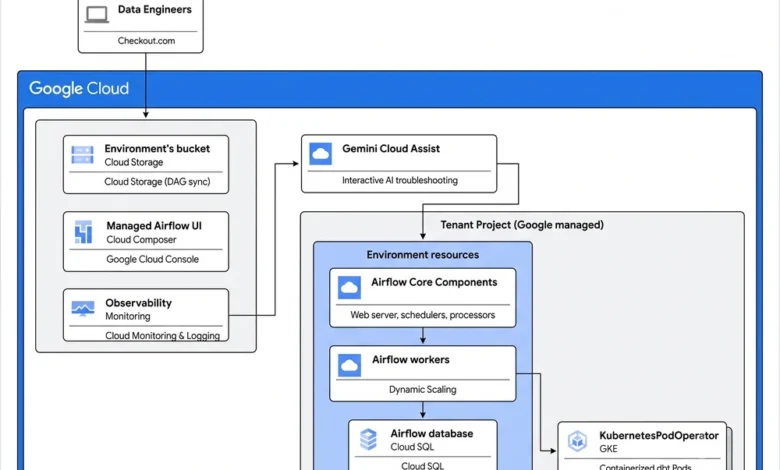
In response to these operational hurdles, Checkout.com undertook a strategic migration to Google Cloud’s Managed Service for Apache Airflow (Gen 3), a fully managed Airflow service. This pivotal move has demonstrably transformed the company’s data platform’s reliability, significantly optimized its cost structure, and empowered its engineers to operate with greater agility and focus. The transition represents a broader industry trend towards managed services, allowing organizations to leverage specialized cloud infrastructure without the burden of its underlying management.
The Pre-Migration Landscape: The Burden of Self-Managed Airflow
Prior to adopting Google Cloud’s managed solution, Checkout.com’s data infrastructure relied on a self-managed Apache Airflow deployment. While this approach provided the foundational capabilities for orchestrating their data workflows, the operational overhead was substantial. The team found themselves perpetually engaged in the meticulous tasks of maintaining the underlying compute and storage resources. This included regular system patching to address security vulnerabilities, performing complex software upgrades to stay current with Airflow versions, and the constant vigilance required for server management. These activities, while critical for system stability, were disruptive and consumed a significant portion of the engineers’ time, directly impacting their capacity for proactive development and feature enhancement.
Operational data from the year preceding the migration highlighted the recurring challenges. These included an unquantifiable but significant amount of engineering hours dedicated to routine infrastructure upkeep, unexpected downtime incidents stemming from patching or upgrade failures, and the inherent difficulty in scaling resources dynamically to meet fluctuating workflow demands. The need for manual intervention was a constant, and the team’s ability to respond to performance bottlenecks or failures was often hampered by the time it took to diagnose and resolve infrastructure-level issues. This environment, while functional, was becoming a bottleneck to Checkout.com’s ambitious data strategy.
The Strategic Pivot: Embracing Managed Service for Apache Airflow (Gen 3)
The decision to migrate to Managed Service for Apache Airflow was driven by a clear objective: to offload the burdensome responsibility of infrastructure management and to harness the inherent scalability and reliability benefits offered by Google Cloud. This transition was not merely a technical upgrade but a strategic reorientation, aiming to unlock greater efficiency, reduce operational costs, and accelerate developer productivity. The impact of this migration has been profound and measurable across three critical dimensions: enhanced reliability, optimized cost structures, and a significant boost in developer velocity.
Dynamic Scaling in Action: Optimizing Resource Utilization and Cost
One of the most immediate and impactful benefits of the migration was the realization of dynamic scaling capabilities. In their previous setup, an elastic container service was configured with a pre-allocated maximum number of workers designed to handle peak operational loads. This approach, common in self-managed environments, necessitated paying for peak capacity around the clock, irrespective of the actual, often lower, day-to-day usage. This resulted in a persistent over-provisioning of resources and, consequently, inflated operational expenses.
Google Cloud’s Managed Airflow, however, provides sophisticated, built-in dynamic scaling. This feature intelligently adjusts the number of workers allocated to the Airflow environment based precisely on the real-time demands of the workload. When the volume of data processing tasks spikes, the system automatically scales up to accommodate the increased computational needs. Conversely, during periods of lower activity, it scales down, releasing resources and significantly reducing consumption. This elasticity eliminated the need for manual resource management and the associated costs of over-provisioning. The transition from a fixed provisioning model to this dynamic scaling approach resulted in an estimated reduction of monthly operational costs by approximately 30%, a substantial saving that directly contributes to the company’s bottom line and frees up budget for other strategic initiatives.
Fortifying Stability: Reliability and DAG Isolation
A primary driver for Checkout.com’s migration was the imperative to achieve a higher level of stability within their data orchestration layer. In their previous self-managed environment, a single misconfigured or resource-intensive DAG (Directed Acyclic Graph) had the potential to impact the stability of the entire Airflow instance. This domino effect could lead to widespread disruptions, affecting multiple critical data pipelines and requiring extensive troubleshooting to pinpoint the root cause. The interconnected nature of the self-managed system meant that an issue in one area could cascade, creating a fragile operational environment.
Managed Airflow introduced several critical architectural improvements that directly addressed these reliability concerns. The platform’s design inherently segregates DAGs and their execution environments, preventing a single problematic DAG from destabilizing the entire system. This isolation ensures that even if a particular workflow encounters an issue, other, unrelated DAGs can continue to run without interruption. Furthermore, Google Cloud’s managed infrastructure benefits from robust underlying services, including automatic failover, load balancing, and managed networking, all of which contribute to a more resilient and fault-tolerant system. The platform’s ability to automatically handle infrastructure failures and manage resource contention significantly reduces the likelihood of unexpected downtime and enhances the overall predictability of data processing operations. This architectural shift provides a much-needed foundation of stability, allowing the team to build and deploy pipelines with greater confidence.

Accelerating Innovation: Faster Developer Workflows
The migration to Managed Airflow has also profoundly impacted the day-to-day workflows of Checkout.com’s data engineers, significantly enhancing their productivity and enabling faster iteration cycles. The reduction in time spent on infrastructure maintenance has freed up engineers to concentrate on their core responsibilities: designing, building, and optimizing data pipelines. This shift in focus allows for more time dedicated to complex data modeling, feature engineering, and the development of new analytical capabilities that drive business value.
The managed service streamlines several key aspects of the development lifecycle. Deployments are faster and more predictable, as the underlying infrastructure is managed and optimized by Google Cloud. This means engineers can focus on their code rather than worrying about deployment configurations or environment inconsistencies. The improved observability and monitoring tools provided by Managed Airflow offer deeper insights into pipeline performance and resource utilization, enabling quicker identification and resolution of bottlenecks. This enhanced visibility contributes to a reduced mean time to detection (MTTD) and mean time to recovery (MTTR) for any operational issues that may arise.
Furthermore, the integration with Google Cloud’s ecosystem of services, such as BigQuery for data warehousing and Cloud Storage for data lakes, provides a seamless and efficient experience for data engineers. This interoperability simplifies data ingestion, transformation, and analysis, reducing the complexity of integrating disparate systems. The team can now leverage these powerful tools in conjunction with their Airflow orchestration, creating a more cohesive and productive data engineering environment. The ability to quickly iterate on pipelines, deploy changes with confidence, and benefit from a stable and scalable platform empowers Checkout.com’s engineers to deliver data-driven insights and solutions to the business at an accelerated pace.
A Transformative Impact on Checkout.com’s Data Foundation
The strategic decision by Checkout.com to migrate to Google Cloud’s Managed Service for Apache Airflow (Gen 3) represents a significant evolution in their data operations. This move has transcended a simple platform upgrade, fundamentally reshaping the team’s operational efficiency, financial outlook, and capacity for innovation. By abstracting away the complexities of infrastructure management, the Data Platform team has reclaimed invaluable engineering hours. These hours are now strategically reinvested in core competencies such as developing sophisticated data models, architecting advanced analytical solutions, and driving the continuous improvement of their data pipelines.
Keisi Mancellari, a Data Platform Engineer at Checkout.com, articulated the transformative impact of this transition: "With Managed Service for Apache Airflow, we’ve achieved significant improvements in efficiency, scalability, and reliability. Managed infrastructure, automated scaling, faster deployments, and isolated execution environments have transformed how we operate." This statement underscores the multifaceted benefits realized, from the foundational stability of the infrastructure to the accelerated pace of development.
The implications of this shift are far-reaching. With a data orchestration layer that is not only stable and scalable but also cost-efficient, Checkout.com is now exceptionally well-positioned to address the evolving demands of its data landscape. This robust foundation provides the confidence that their orchestration layer can readily adapt to future challenges and opportunities, whether it involves processing larger data volumes, supporting more complex analytical workloads, or integrating new data sources. The ability to focus on strategic data initiatives, rather than being consumed by operational minutiae, allows Checkout.com to further leverage its data as a strategic asset, driving business growth and innovation in the competitive payments industry.
The move to a fully managed Airflow service exemplifies a broader industry trend where organizations are increasingly prioritizing managed cloud solutions to streamline operations, reduce TCO (Total Cost of Ownership), and empower their technical teams to focus on value-generating activities. For companies like Checkout.com, this strategic adoption of cloud-native services is not just about optimizing current operations but about building a future-ready data infrastructure capable of supporting sustained growth and technological advancement.
For organizations facing similar challenges with self-managed orchestration tools, the experience of Checkout.com serves as a compelling case study. By embracing managed services like Google Cloud’s Managed Service for Apache Airflow, businesses can unlock significant improvements in reliability, cost-effectiveness, and developer productivity, ultimately building a more agile and impactful data platform.
This initiative was supported by contributions from Serge Bouschet and Keisi Mancellari.
Related posts: