Google Expands Gemini Spark Availability to AI Pro Subscribers in the US as Personal AI Automation Reaches New Milestones

Google has officially commenced the rollout of Gemini Spark to Google AI Pro subscribers within the United States, marking a significant expansion of its most advanced personal AI agent capabilities beyond the initial limited release. Following its debut in May alongside the high-tier AI Ultra model, Gemini Spark represents Google’s strategic pivot toward "agentic AI"—systems designed not merely to answer questions but to execute multi-step workflows across a variety of applications. According to an official announcement from the Gemini team, the service will soon be available to AI Pro members in international markets, signaling a global push to integrate autonomous AI productivity tools into the standard consumer experience.
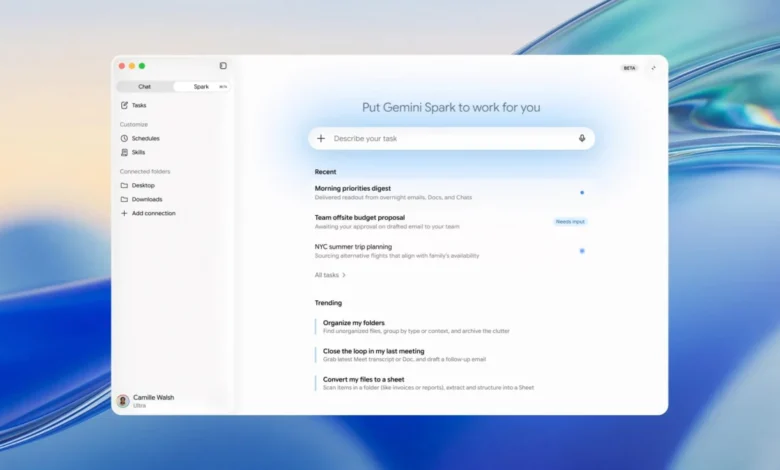
Gemini Spark is positioned as a comprehensive automation engine capable of managing complex, cross-platform tasks that previously required manual intervention. Unlike standard chatbots, Spark operates as a persistent assistant. On the web interface, users will find a dedicated tab within the primary navigation drawer, while mobile users on Android and iOS will see a redesigned dedicated page. This structural change underscores Google’s intent to treat Spark as a primary workspace rather than a secondary feature.
The Architecture of Gemini Spark: Skills, Schedules, and Tasks
At the core of the Gemini Spark ecosystem is a new organizational framework that differentiates between various levels of automation: Skills, Schedules, and Tasks. This hierarchy is designed to provide users with granular control over how the AI interacts with their personal data and third-party tools.
A "Task" serves as the high-level objective provided by the user—for example, "Plan a business trip to New York and reconcile the expenses." To accomplish this, Spark utilizes "Skills," which are defined as reusable sets of instructions paired with specific contextual data. A Skill might involve knowing how to format a spreadsheet in a specific corporate style or how to filter through flight preferences based on past behavior.

The third pillar, "Schedules," introduces the element of temporal or conditional automation. Users can set triggers based on specific times or environmental conditions. For instance, a Schedule could be set to "summarize all unread emails from the ‘Project Alpha’ folder every evening at 6:00 PM and add the action items to Google Tasks." By combining these three elements, Gemini Spark moves away from the prompt-and-response model toward a "set and forget" productivity paradigm.
Integration with Google Workspace and Technical Capabilities
The power of Gemini Spark lies in its deep integration with "Connected Apps." This includes the entire Google Workspace suite—Gmail, Drive, Docs, Sheets, Slides, Keep, and Tasks—as well as Google Search and location services. Furthermore, Spark is equipped with a remote web browser and a computer environment capable of code execution. This allows the AI to perform complex data analysis, write and test snippets of Python code to solve mathematical problems, and navigate the live web to find information that is not present in its training data.
The Workspace functionality has received the most significant enhancements since the initial May launch. For example, the recently released Gemini macOS app enables a "cross-device" workflow where users can initiate tasks from their mobile phones that require the AI to browse or organize files stored on their desktop computers.
In Gmail, Spark can do more than just draft replies; it can manage entire threads, categorize correspondence based on urgency, and extract data from invoices to be placed directly into Sheets. In Google Drive, the AI can perform bulk file organization, summarize large PDF libraries, and identify inconsistencies across multiple documents. However, Google has implemented strict safety protocols for collaborative environments. To edit shared documents, spreadsheets, or presentations, Spark requires the user to review and confirm the planned edits before they are finalized. This "human-in-the-loop" requirement is designed to prevent accidental data loss or unauthorized changes in professional settings.
Privacy, Security, and Usage Constraints
As Google scales Gemini Spark to millions of AI Pro subscribers, the company has addressed the inherent privacy concerns associated with an AI that has access to personal emails and files. One notable distinction in the Spark permission model involves Google Tasks. The system is authorized to perform bulk actions on private tasks without explicit confirmation for every single item. While this increases efficiency, Google advises users to review their requests carefully before submission, as the AI can move, delete, or complete dozens of entries in seconds.
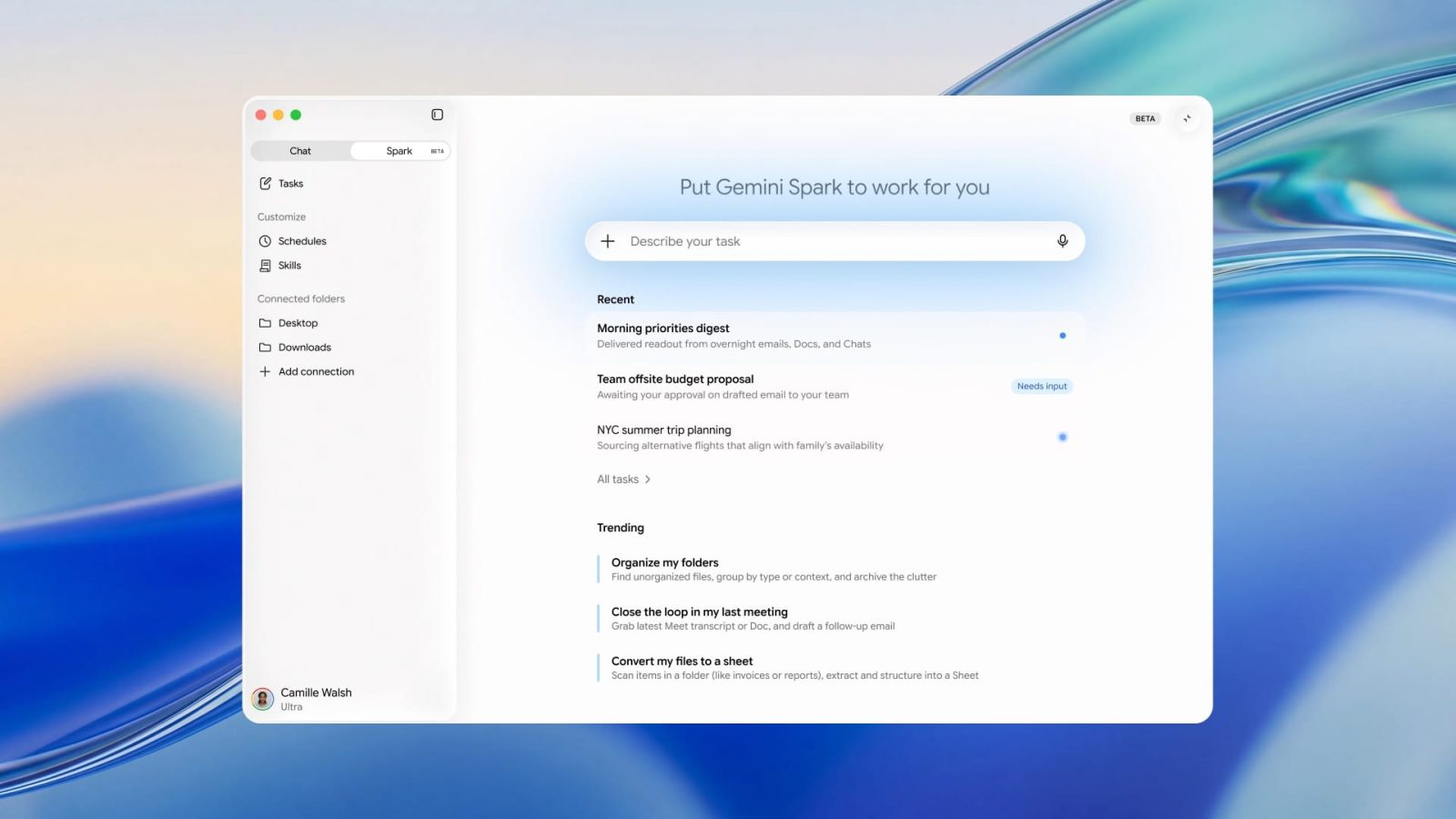
To manage the immense computational load required for autonomous agents, Google has implemented a "Task" limit. Users can have up to 15 active tasks running concurrently. Once a task is completed or paused, a slot opens up for a new objective. Furthermore, Spark is subject to the same compute-based usage limits as the standard Gemini Advanced models. This means that during periods of high demand, the speed of task execution may be throttled, or users may be reverted to a more efficient, albeit slightly less capable, processing model.
Chronology of the Gemini Evolution
The rollout of Gemini Spark is the latest step in a rapid development timeline that began with the rebranding of Google Bard to Gemini in early 2024.
- February 2024: Google introduces Gemini 1.5 Pro, featuring a massive 1-million-token context window, setting the stage for long-form data processing.
- May 2024: During the Google I/O period, the company announces "Project Astra" and Gemini Spark, initially exclusive to the AI Ultra tier.
- June 2024: The launch of the Gemini macOS app brings system-level integration to Apple’s desktop OS, allowing Spark to interact with local files.
- July 2024: Google begins the broad rollout of Gemini Spark to the "AI Pro" subscriber base in the United States.
- Late 2024 (Projected): International rollout across Europe, Asia, and South America, pending regulatory reviews regarding data privacy and AI governance.
Market Context and Industry Implications
The expansion of Gemini Spark comes at a time of intense competition in the generative AI sector. Competitors like OpenAI have introduced "GPTs" and are reportedly working on "Operator," a similar agentic system. Microsoft, meanwhile, continues to iterate on its Copilot agents within the Microsoft 365 ecosystem.
Google’s advantage remains its vertical integration. Because Google owns the browser (Chrome), the operating system (Android), and the productivity suite (Workspace), Gemini Spark can operate with a level of fluidity that third-party agents struggle to match. Analysts suggest that the "agentic" phase of AI is the true test of the technology’s ROI (Return on Investment). While chatbots are useful for creative brainstorming, agents that can handle administrative "drudge work" offer measurable time savings for enterprise and prosumer users.
The move to include Spark in the AI Pro tier—rather than keeping it locked behind the most expensive Ultra tier—suggests that Google is confident in the efficiency of its underlying models. It also reflects a desire to capture the "prosumer" market—freelancers, small business owners, and power users who require high-level automation but may not need the enterprise-grade features of the Ultra package.

Fact-Based Analysis of the "Agent" Shift
The transition from "Generative AI" to "Agentic AI" represented by Gemini Spark indicates a shift in how users will interact with computers. Traditionally, software required a "command-and-control" approach: a user opens an app, clicks a button, and receives a result. Spark flips this dynamic. The user provides a goal, and the AI determines the necessary steps, tools, and timing to reach that goal.
However, this shift is not without challenges. The "hallucination" problem inherent in Large Language Models (LLMs) takes on new risks when the AI is empowered to edit spreadsheets or delete emails. Google’s decision to mandate confirmations for shared documents is a direct response to this risk. Furthermore, the 15-task limit suggests that even with Google’s massive infrastructure, the "reasoning" required for autonomous agents is significantly more resource-intensive than simple text generation.
As Gemini Spark becomes more prevalent, the industry will likely see a decline in the "toggle tax"—the loss of productivity that occurs when workers switch between different applications. By centralizing the workflow within the Spark interface, Google aims to make the browser or the mobile app a singular "command center" for the digital life of the user.
Looking forward, the success of Gemini Spark will depend on its reliability. If the AI can consistently navigate the nuances of a user’s Calendar and Gmail without making scheduling errors, it could become an indispensable tool. If, however, the "Skills" and "Schedules" require too much manual troubleshooting, the system may struggle to move beyond the early-adopter phase. For now, the US rollout to AI Pro subscribers serves as a critical real-world test for the future of autonomous personal computing.