UGREEN Nexode Air 65W vs Rolling Square Supertiny: A Comparative Analysis of Modern GaN Charging Solutions

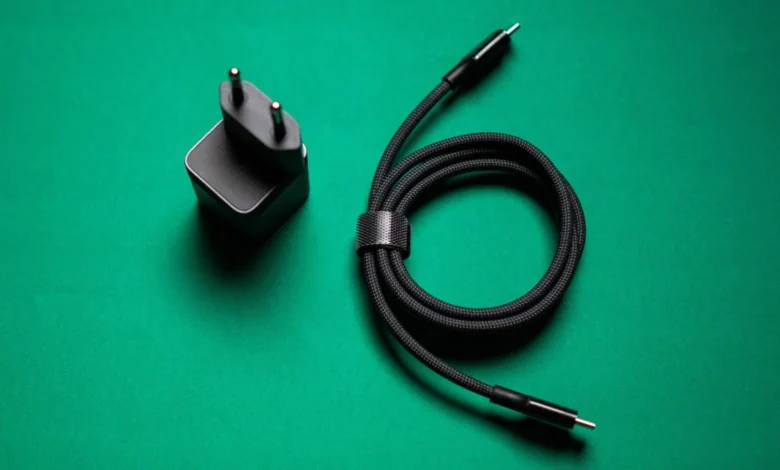
The evolution of consumer electronics toward higher performance and smaller form factors has necessitated a parallel shift in power delivery technology. As mobile devices, tablets, and lightweight laptops increasingly rely on USB Power Delivery (USB-PD) standards, the demand for compact, high-efficiency chargers has reached an all-time high. Central to this transformation is Gallium Nitride (GaN) technology, a semiconductor material that allows chargers to operate at higher frequencies and voltages while generating significantly less heat than traditional silicon-based components. Recent market entries from UGREEN and Rolling Square highlight the competitive landscape of this sector, offering users ultra-portable 65W solutions that challenge the necessity of bulky power bricks.
The Rise of GaN Technology in Consumer Power Adapters
Gallium Nitride has fundamentally altered the power adapter industry. Traditional chargers utilized silicon transistors, which required larger transformers and cooling systems to manage energy conversion. GaN components, by contrast, possess a wider bandgap, allowing electrons to move more efficiently. This physical property enables engineers to shrink the size of the charging circuit significantly.
The current market standard for versatile, daily-carry charging is 65W. This power threshold is widely considered the "sweet spot" for modern users, as it is sufficient to fast-charge most smartphones, tablets like the iPad Pro, and even thin-and-light laptops such as the MacBook Air or various ultrabooks. Both the UGREEN Nexode Air 65W and the Rolling Square Supertiny represent the current apex of this miniaturization trend.
UGREEN Nexode Air 65W: Market Positioning and Features
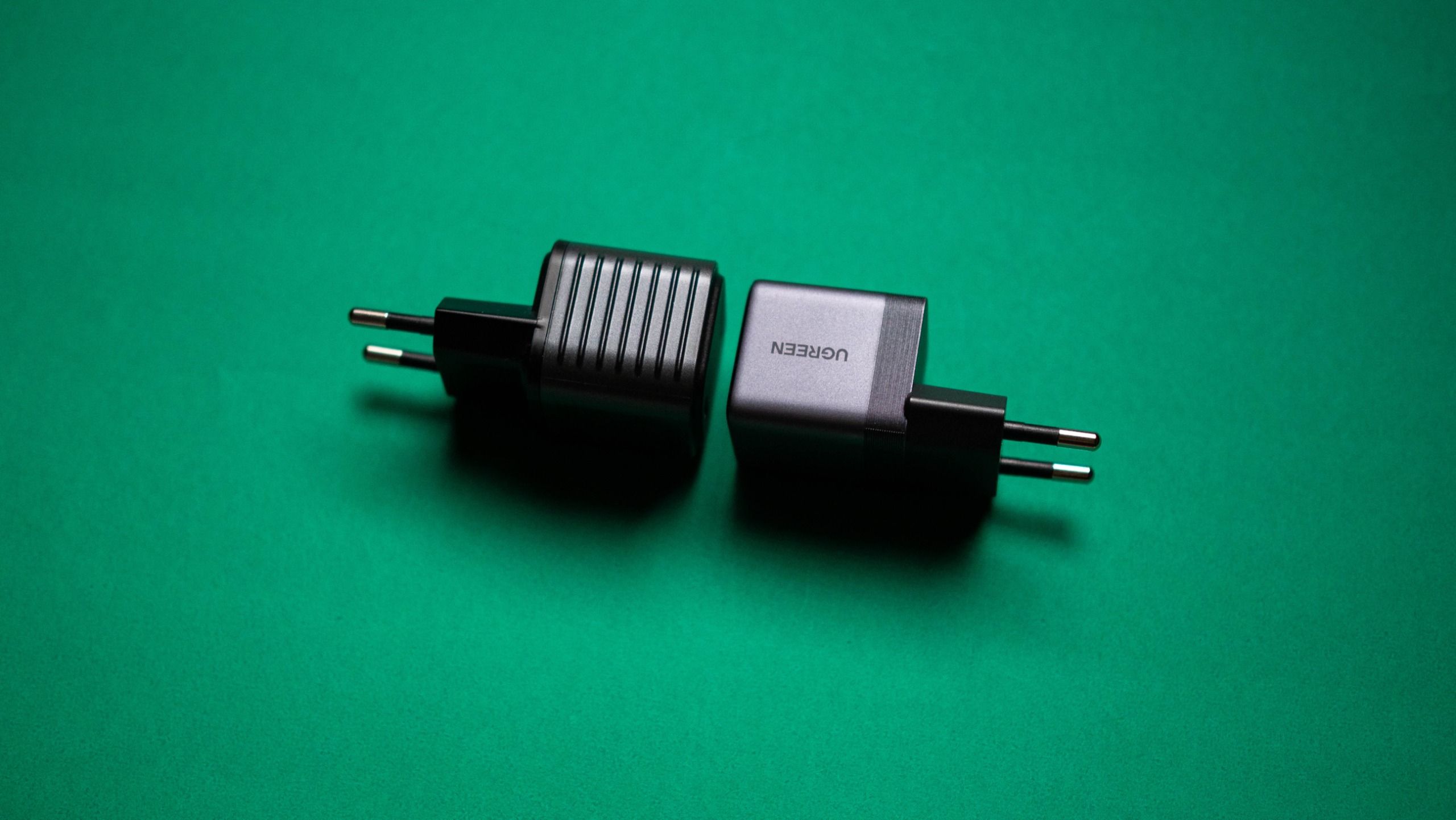
The UGREEN Nexode Air 65W enters the market with a focus on affordability and broad accessibility. Priced aggressively at approximately $24—down from a standard retail price of $39—it serves as a high-value entry point for consumers looking to upgrade from standard 5W or 20W "brick" chargers.
Key technical specifications for the Nexode Air include support for USB PD 3.0 and the newer USB PD 3.2 AVS (Adjustable Voltage Supply) protocol. This inclusion is significant for future-proofing, as it optimizes charging efficiency for devices that utilize sophisticated power management profiles. Furthermore, the charger incorporates Programmable Power Supply (PPS) technology, ensuring compatibility with the rapid-charging requirements of modern Samsung Galaxy handsets and other Android devices.
One of the more nuanced features of the Nexode Air is its intelligent thermal management and power distribution. During overnight charging, the device is designed to transition into a trickle-charge mode, which helps preserve long-term battery health—a critical consideration for users with flagship devices that support high-wattage input but require careful thermal regulation.
Rolling Square Supertiny: Design Philosophy and Ergonomics
While the UGREEN Nexode Air focuses on price-to-performance, the Rolling Square Supertiny, retailing at approximately $49, targets the premium accessory market. The device is characterized by a distinct, textured exterior design. While aesthetically distinct, this texture serves a functional purpose: it provides a tactile grip, making the charger easier to manipulate when plugging or unplugging from wall outlets, particularly in confined spaces or behind furniture.
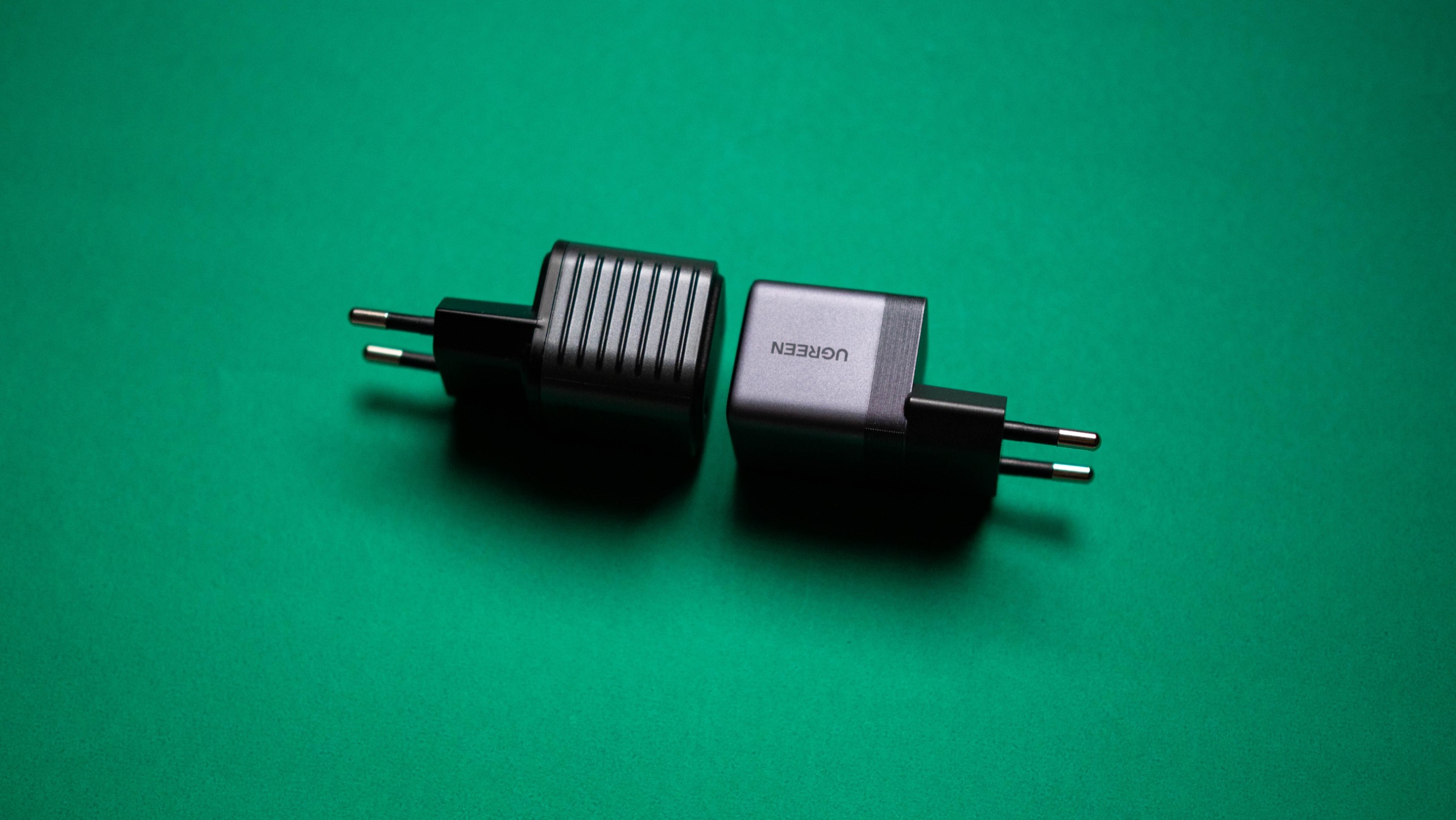
The Supertiny is highly compact, measuring 60.5mm in length and 35mm in height and width. Its weight is approximately 70g for the U.S. prong variant. While the European prong version is slightly heavier due to the fixed design of its pins, the unit remains substantially smaller than non-GaN alternatives. Rolling Square has emphasized that its chassis design facilitates passive heat dissipation, although testing indicates that, in practice, the thermal performance is comparable to the UGREEN Nexode Air when both are under maximum load.
Comparative Technical Benchmarks
To understand the efficacy of these chargers, it is necessary to examine their performance across diverse hardware. Testing both devices with a suite of current-generation hardware—including the iPhone 17 Pro, Pixel 11 Pro XL, Pixel 11 Pro Fold, Oppo Find X9 Ultra, and the iPad Pro M4—reveals consistent behavior across the board.
| Specification | UGREEN Nexode Air 65W | Rolling Square Supertiny |
|---|---|---|
| Max Output | 65W | 65W |
| Technology | GaN | GaN |
| Protocols | PD 3.0, PPS, PD 3.2 AVS | PD 3.0, PPS |
| Weight (US) | 77g | 70g |
| Approx. Price | $24 | $49 |
The power profiles for both devices are largely standardized to ensure safety and compatibility:
- 5V/3A (15W)
- 9V/3A (27W)
- 12V/3A (36W)
- 15V/3A (45W)
- 20V/3.25A (65W)
Both chargers successfully negotiated the 50W peak charging requirement for the Oppo Find X9 Ultra and maintained stable power delivery for the iPad Pro M4. The lack of a secondary charging port is a deliberate design choice in both models, prioritized in favor of maintaining the smallest possible footprint. While power users may find a single port limiting, the target demographic for these devices—frequent travelers and mobile professionals—generally values portability over multi-device charging capability.
Implications for the Charging Accessory Industry
The introduction of these high-efficiency, ultra-compact chargers has broader implications for the electronics ecosystem. As OEMs (Original Equipment Manufacturers) continue to omit chargers from the retail boxes of smartphones, a secondary market for reliable, third-party power adapters has become essential.
The competitive pricing of the UGREEN Nexode Air suggests that GaN technology is no longer a niche, high-cost luxury but is quickly becoming a commodity. The ability to produce a 65W charger for under $25 indicates that manufacturing processes have reached a level of maturity that allows for economies of scale, benefiting the end consumer.
Conversely, the presence of premium-priced competitors like the Rolling Square Supertiny indicates that the market still places value on industrial design, tactile quality, and branding. For consumers, the choice between these two devices effectively boils down to a cost-benefit analysis. The Nexode Air offers nearly identical electrical performance for half the price, making it the practical choice for most users. The Supertiny, however, appeals to those who prioritize build aesthetics and ergonomic handling.
Conclusion
The shift toward GaN-based power delivery has fundamentally improved the portability of mobile technology. Both the UGREEN Nexode Air 65W and the Rolling Square Supertiny demonstrate the maturity of this technology, providing 65W of power in a form factor that is significantly smaller and lighter than traditional charging solutions. While both devices excel in providing reliable, fast charging for a wide array of modern hardware, the Nexode Air’s aggressive price point and inclusion of newer protocols like PD 3.2 AVS make it a compelling choice for the average consumer. Ultimately, as mobile devices continue to push the boundaries of performance and power, the availability of such compact, efficient charging solutions remains a critical component of the modern mobile experience.