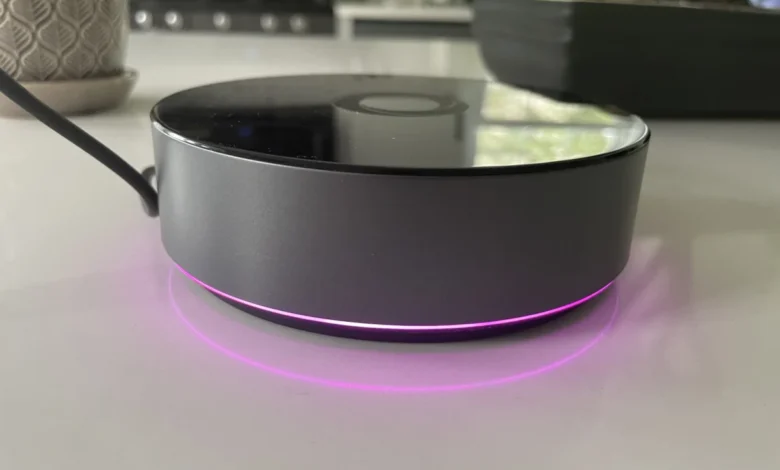
The smart home landscape has long been defined by a tension between the convenience of cloud-based ecosystems and the reliability of local control. With the official U.S. launch of the $399 Homey Pro, Athom, the Dutch manufacturer behind the platform, is attempting to bridge this divide. Positioned as a high-performance alternative to the entry-level $69 Homey Bridge, the Pro model seeks to offer a premium, privacy-focused experience for power users, though its success remains heavily tethered to the compatibility of a fragmented market of Internet of Things (IoT) devices.
A History of the Homey Ecosystem
The journey of the Homey platform began with a vision to unify the disparate protocols that currently govern the smart home. While the original Homey Pro, released in 2019, established a foothold in the European market, the 2023 iteration represents a significant hardware leap. Following the successful introduction of the Homey Bridge in March 2023—a device that emphasized affordability and cloud-based management—the Pro model arrives to cater to users who demand local processing power, lower latency, and a reduced reliance on subscription services.
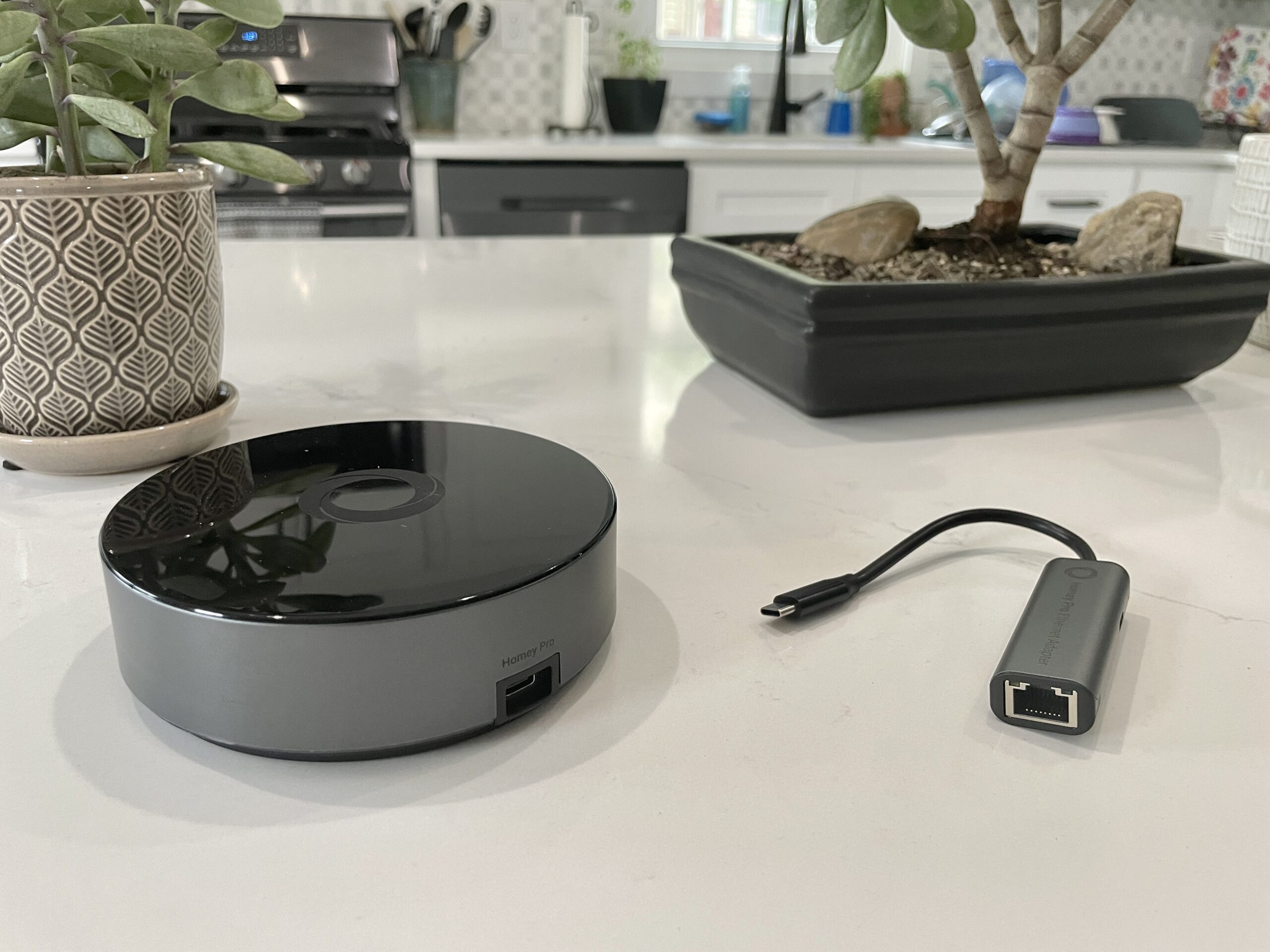
The transition to the new Homey Pro is marked by a substantial upgrade in internal architecture. The device boasts 3.5 times the CPU performance of its predecessor, alongside 8 GB of internal storage and 2 GB of RAM. These hardware specifications are not merely aesthetic; they are foundational to the device’s ability to handle complex local automations without the frequent round-trips to the cloud that characterize many competing hubs.
Connectivity and Protocol Diversity
One of the most compelling arguments for the Homey Pro is its radio density. The U.S. model comes equipped with a comprehensive suite of wireless protocols, including Wi-Fi (2.4 GHz and 5 GHz), Bluetooth Low Energy, Infrared (IR), Zigbee, and Z-Wave. Furthermore, the device includes an 833 MHz radio designed to maintain compatibility with legacy hardware, as well as a Thread radio to support the emerging Matter standard.
This hardware-heavy approach is designed to eliminate the need for multiple proprietary bridges. By consolidating control over various lighting, security, and climate systems into a single unit, the Homey Pro aims to reduce signal congestion in the 2.4 GHz spectrum and simplify the user’s software experience. However, as independent testing has demonstrated, the sheer presence of these radios does not guarantee universal interoperability with every device on the market.

The Challenge of Device Integration
The core value proposition of the Homey Pro—that it acts as a "universal translator" for the smart home—is frequently tested by the rapid evolution of IoT standards. While the platform claims compatibility with over 50,000 individual devices, real-world application reveals a more nuanced picture.
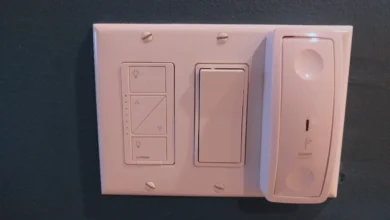
Initial testing indicates that while major brands such as Philips Hue, Lutron Caseta, and Sonos integrate seamlessly, other common devices often face connectivity hurdles. For example, specific models of smart locks and thermostats, despite being from supported manufacturers, may fail to initialize or report errors during the authentication process. This often stems from the specific implementation of cloud APIs or the current limitations of Matter integration.
Following reports regarding the inability of certain Thread-based devices to connect, representatives from Athom clarified that while the hardware is capable, software-side compatibility with specific Matter-over-Thread implementations is an ongoing development. The company continues to roll out updates to its "Apps" marketplace, which functions as a repository for integrations. Users are currently advised to consult the official Homey Apps portal before purchase to ensure their specific hardware revision is supported.

Privacy and Local Processing
The shift toward local control is the most significant trend in smart home infrastructure, driven by consumer demand for both privacy and resilience. Unlike the Homey Bridge, which delegates much of its processing to the cloud, the Homey Pro prioritizes local execution.
This architectural choice has two primary benefits. First, it ensures that basic smart home routines—such as motion-activated lighting or scheduled climate control—remain functional during an internet outage. Second, by minimizing data transmission to external servers, the Pro provides a higher standard of data privacy. The only optional subscription associated with the Homey Pro is a $0.99 monthly fee for cloud-based backups, a stark contrast to the subscription-based device limits found on the lower-cost Bridge model.
Automation and the Flow Engine
The software experience is centered around "Flows," a visual automation engine that eschews the simplistic "if-this-then-that" logic for a more granular "When… and… then…" architecture. This allows for complex conditional statements, such as checking the status of a window sensor before initiating a heating routine, or nesting multiple triggers to create sophisticated home scenes.

For the advanced user, the web-based interface provides an even deeper level of control. Developers can access the Homey Pro via API keys, allowing for custom scripting in Node.js. This capability transforms the device from a consumer-grade hub into a development platform for hobbyists who wish to write their own drivers or bridge unsupported devices through custom code. While this functionality is largely invisible to the average consumer, it provides a "ceiling" for the device that is significantly higher than that of most mainstream smart home controllers.
Data Management and Energy Monitoring
The Homey app also provides a robust dashboard for energy management. By allowing users to input the wattage of their connected appliances, the system provides real-time and historical energy consumption data. In cases where devices support energy reporting, the Homey Pro can track actual power draw, offering insights into home efficiency that are rarely found in standard smart home apps.
This data is visualized through clean, responsive graphs that can be accessed both on mobile devices and via the web dashboard, where additional environmental data such as barometric pressure and humidity levels are also aggregated.

Market Position and Future Implications
At a price point of $399—with an additional $29 required for an optional ethernet adapter—the Homey Pro occupies a premium space in the market. It is priced for the enthusiast who has moved beyond entry-level smart home kits and is looking for a consolidated, reliable, and private controller.
The device’s success will ultimately depend on the pace of its software development. The smart home market is currently in a state of flux as the industry transitions toward the Matter standard. If Athom can successfully navigate these integration challenges and continue to grow its repository of compatible apps, the Homey Pro could become the gold standard for local, hub-based control.
However, the current reality requires prospective buyers to perform rigorous due diligence. The absence of a "one-size-fits-all" compatibility list means that users with heavily customized or brand-specific setups should verify the status of their devices within the Homey ecosystem before committing to the investment.

Ultimately, the Homey Pro is a powerful, well-engineered piece of hardware that delivers on its promise of local control and sophisticated automation. For those whose device libraries align with its current compatibility list, it offers a level of stability and privacy that is increasingly rare in the IoT sector. For others, the decision to invest may be deferred until the software matures to match the potential of the hardware. As the industry continues to evolve, the Homey Pro stands as a testament to the ongoing desire for a cohesive, reliable, and user-controlled smart home experience.