Microsoft Named a Leader in the 2026 Gartner Magic Quadrant for Container Management

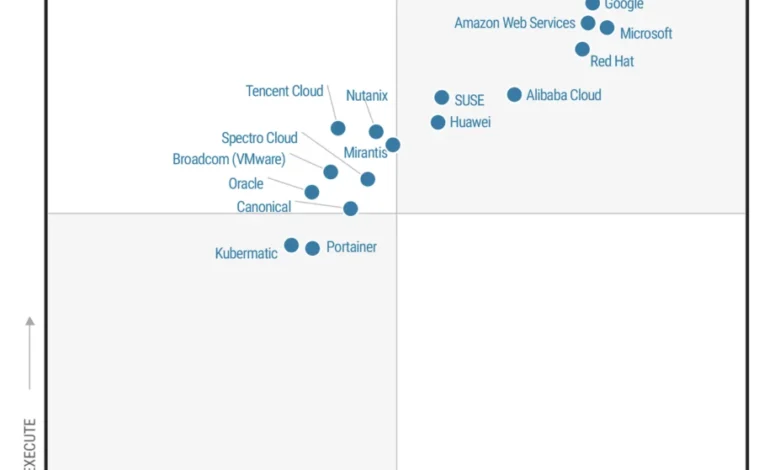
Microsoft has officially been recognized as a Leader in the 2026 Gartner Magic Quadrant for Container Management, with the company securing the furthest position to the right for "Completeness of Vision." This designation underscores Microsoft’s strategic evolution from a provider of basic infrastructure to an orchestrator of complex, AI-integrated distributed systems. The recognition arrives at a pivotal juncture for the enterprise technology sector, as organizations grapple with the increasing necessity of deploying containerized workloads across cloud, edge, and sovereign environments while managing the heavy computational requirements of generative AI.
The container management landscape has undergone a dramatic transformation over the last decade. When Kubernetes was first introduced to the open-source community—a project to which Microsoft has become a leading contributor—the primary goal was the democratization of distributed systems. The initial objective was to decouple workloads from their underlying hardware, allowing schedulers to optimize resource allocation without the constraints of specific infrastructure opinions. Today, that flexibility has become the foundation upon which modern, AI-heavy architectures are built.
A Decade of Evolution in Container Orchestration
The trajectory of containerization can be traced back to the mid-2010s, when microservices began to displace monolithic architectures. By 2018, Kubernetes had emerged as the industry standard for container orchestration. Microsoft’s investment in this space was solidified with the launch of Azure Kubernetes Service (AKS), which aimed to simplify the management of clusters by abstracting away the operational overhead.
In the years that followed, the complexity of container management shifted from mere deployment to fleet management. As enterprises began running thousands of containers across diverse geographic regions, the challenge evolved into one of consistency and compliance. The 2026 Gartner recognition reflects Microsoft’s response to this evolution, specifically through its integrated portfolio: Azure Kubernetes Service (AKS), Azure Container Apps, Azure Arc, and Azure Kubernetes Fleet Manager. Each of these tools addresses a specific pain point—from managing hybrid multi-cloud environments via Arc to enabling serverless container execution for unpredictable AI workloads via Azure Container Apps.
The AI-Driven Shift in Infrastructure Requirements
Artificial Intelligence has fundamentally altered the requirements for container management platforms. Unlike traditional stateless applications, AI workloads often require persistent serving layers, specialized GPU scheduling, and strict compliance boundaries. According to internal reports from Microsoft, enterprise users are currently segmenting their AI infrastructure into two primary architectural models.
The first model is characterized by platform-centric governance. In this scenario, dedicated platform teams maintain a persistent serving layer and manage the model lifecycle. This ensures that GPU resources are allocated efficiently and that the system remains compliant with regulatory standards. To support this, Microsoft has integrated open-source tooling, such as the AI toolchain operator, into AKS. By maintaining CNCF (Cloud Native Computing Foundation) AI Conformance certification, the platform ensures that the surrounding ecosystem remains interoperable as new models and libraries emerge.
The second model is driven by agility and elasticity, often utilized by developers building agentic workflows. These applications invoke inference on-demand, execute generated code, and terminate capacity once the task is complete. This model prioritizes isolation and rapid scaling. Azure Container Apps has been optimized for this use case, utilizing hardware-isolated sandboxes that allow for the hosting of agents while preserving state. The engineering challenge, which Microsoft claims to have prioritized, is the seamless movement of workloads between these two models without requiring teams to rewrite their applications or adopt fragmented operating models.
Addressing the Hybrid and Edge Frontier
As AI moves closer to the point of data collection, the traditional centralized cloud model is proving insufficient for many sectors, particularly in finance, healthcare, and manufacturing. Sovereignty requirements and bandwidth limitations necessitate that containers be managed at the edge.

The coordination of these distributed environments has historically led to "configuration drift," where clusters in different regions operate with inconsistent policies or outdated patches. Microsoft’s strategy to mitigate this includes AKS Everywhere, which brings a consistent Kubernetes runtime to edge environments. Furthermore, Azure Arc serves as the central control plane, allowing organizations to apply uniform identity, security, and observability models across both Azure-native clusters and those running in rival cloud environments.
For larger estates, the introduction of Azure Kubernetes Fleet Manager provides a systemic solution to the "cluster sprawl" phenomenon. By treating fleets as a single entity, platform administrators can automate upgrades, manage workload placement, and enforce policies across hundreds of clusters simultaneously. This focus on "platform-wide" rather than "cluster-specific" management is a core differentiator that contributed to the company’s placement in the 2026 Magic Quadrant.
Operational Efficiency Through AI-Augmented Management
A significant finding in the 2026 market analysis is that the number of container clusters in enterprise environments is currently growing at a rate that outpaces the growth of dedicated operations teams. This disparity creates a "scaling gap" that, if left unaddressed, leads to burnout and increased security risks.
To bridge this gap, Microsoft is moving toward what it describes as "agentic operations." By leveraging tools like the Azure SRE Agent and the AKS MCP Server, the company aims to automate the diagnostic process. Instead of human operators manually investigating every alert, these AI-driven agents can perform preliminary triage, identify root causes, and propose—or execute—remediation steps based on pre-set permissions. The intent is not to remove human oversight but to offload the repetitive, routine diagnostic tasks that consume the majority of an SRE’s time.
Market Impact and Future Outlook
The broader implications of this recognition are significant. As organizations continue to migrate legacy applications to containerized environments, the selection of a container management platform is becoming a long-term strategic decision. Microsoft’s commitment to staying close to upstream Kubernetes, rather than creating a proprietary fork, has been a key factor in its adoption among large-scale enterprises.
As a contributor to CNCF projects, Microsoft has demonstrated a commitment to maintaining an open ecosystem. This ensures that the APIs developers build against remain consistent, whether they are running on-premises, in a public cloud, or at the edge. Industry analysts suggest that this "open-first" strategy, combined with advanced operational automation, will remain a critical requirement for any vendor hoping to maintain a leadership position in the coming years.
The 2026 Gartner Magic Quadrant for Container Management serves as a validation of the shift toward integrated, AI-ready platforms. For organizations like CallRevu, which utilizes AKS to manage GPU-intensive workloads, the ability to scale resources based on call volume without disrupting production has provided a tangible competitive advantage.
Looking ahead, the next phase of container management will likely be defined by the maturity of these agentic operational models and the ability to maintain security and compliance as workloads become increasingly distributed. Microsoft’s current position suggests that it intends to remain the primary provider for enterprises looking to standardize their infrastructure across the increasingly fragmented landscape of global compute.
Disclaimer: Gartner does not endorse any company, vendor, product, or service depicted in its research publications, and does not advise technology users to select only those vendors with the highest ratings or other designation. Gartner research publications consist of the opinions of Gartner’s research organization and should not be construed as statements of fact. Gartner disclaims all warranties, expressed or implied, with respect to this research, including any warranties of merchantability or fitness for a particular purpose.