Governing the Economics of Agent Optimization: From Financial Oversight to Measurable Business Returns


The rapid proliferation of autonomous AI agents across the enterprise landscape has transitioned from experimental pilots to a fundamental pillar of digital operations. As these systems evolve to interact with sensitive data, execute complex workflows, and make high-stakes decisions, IT and finance leaders face a daunting reality: the traditional models for managing software costs are ill-equipped for the fluid, high-velocity nature of agentic AI. This final installment of the Economics of Agent Optimization series explores the critical necessity of governing agent spending as a managed investment system, ensuring that rapid innovation does not come at the cost of financial instability.
The Governance Gap in the Age of Autonomy
In the early stages of enterprise AI adoption, many organizations operated in a "sandbox" mindset where cost control was secondary to functionality. However, as agents move into production, they begin to span multiple teams, integrate with disparate third-party tools, and operate with increasing levels of autonomy. This shift creates a management challenge: how can organizations govern systems that act faster than human-managed processes?

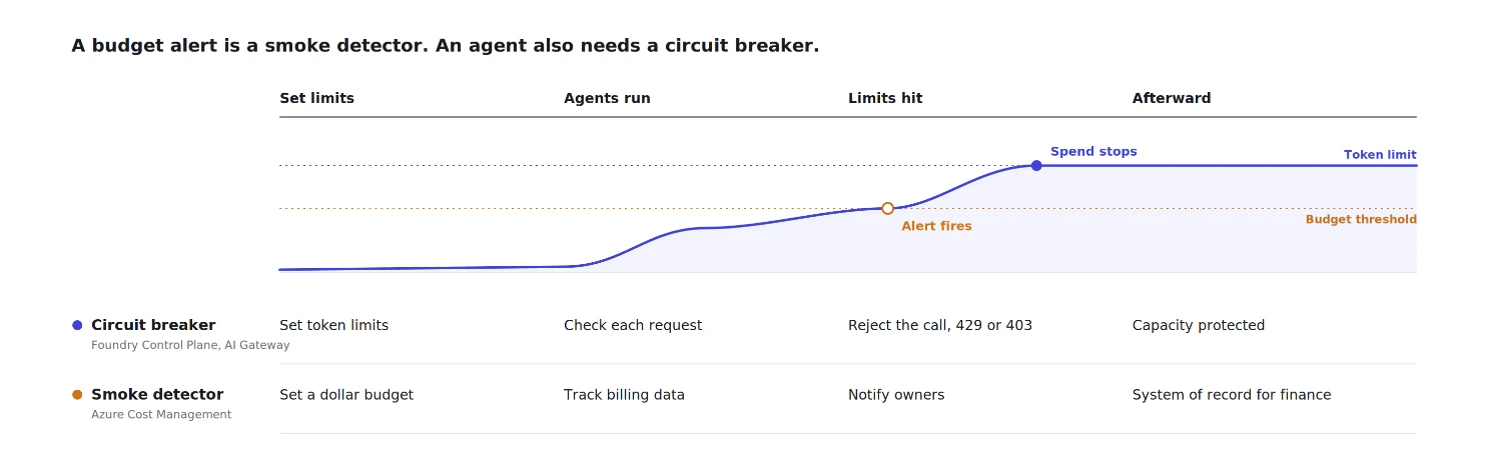
Standard IT governance often treats AI as a monolithic cost center. This approach fails to account for the "agentic drift"—the phenomenon where an autonomous agent might enter a recursive retry loop or over-index on expensive model calls to solve a minor task. Traditional financial tools, such as billing dashboards, act as "smoke detectors," notifying organizations of cost overruns only after the damage has been finalized on an invoice. Modern governance requires "circuit breakers"—real-time controls that exist within the request path to prevent runaway spending before it occurs.
A Chronology of Optimization: The Four-Part Strategy
The evolution of agent governance on platforms like Microsoft Foundry has followed a distinct four-phase progression over the past year.
In the first phase, organizations established the foundation of their AI systems, identifying the three core decisions that dictate success: model selection, infrastructure placement, and data integration. The second phase, occurring roughly mid-cycle, focused on runtime optimization, where engineers learned to intercept requests to optimize token usage. The third phase addressed the long-term lifecycle of workflows, implementing memory and context engineering to prevent redundant data processing.

This current, fourth phase represents the maturation of the ecosystem: the transition to a continuous governance model. By integrating observability with financial accountability, companies are now moving toward a framework where every AI interaction is tagged, measured, and assigned a projected business value.
Visibility as the Bedrock of Governance
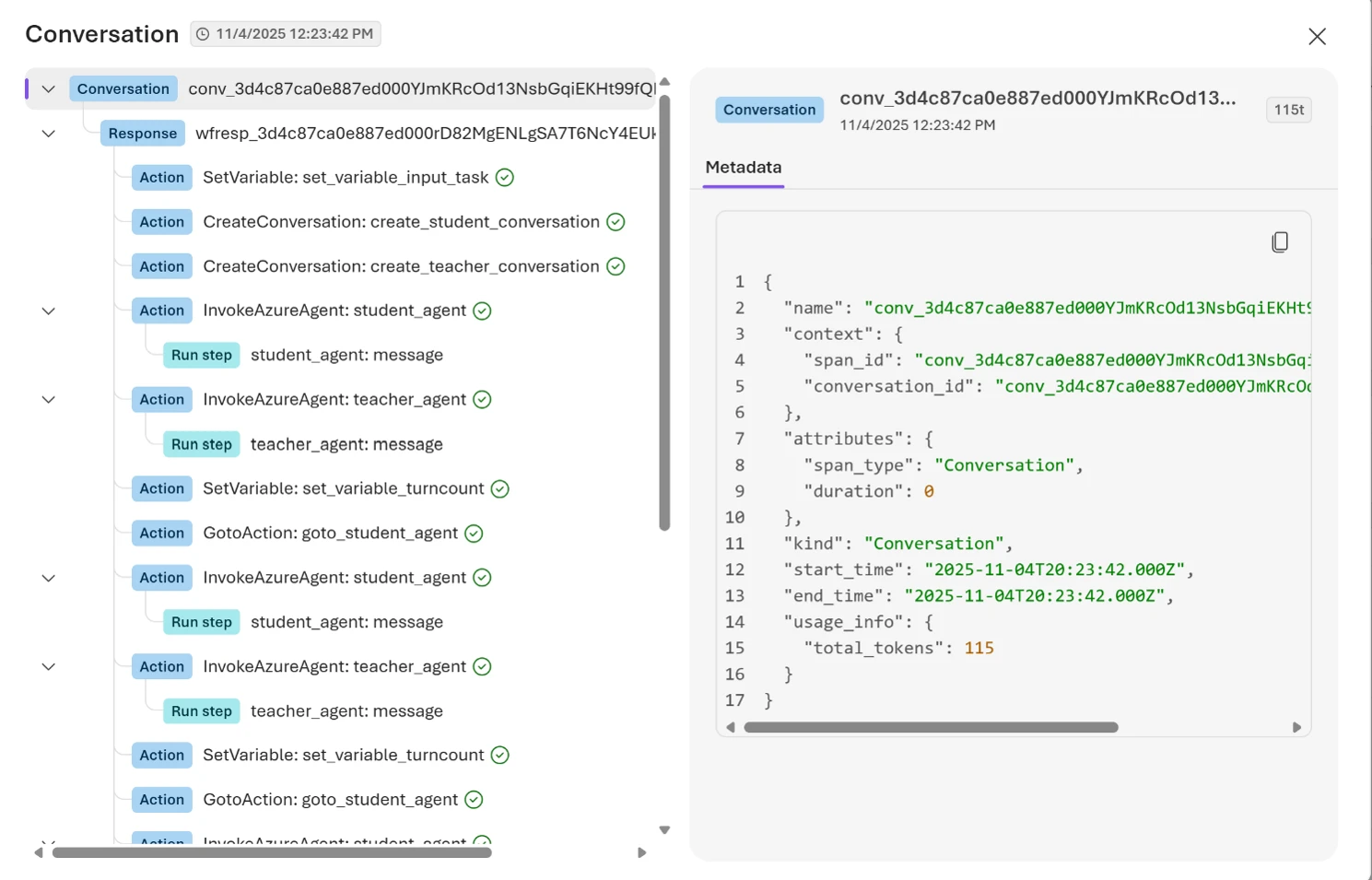
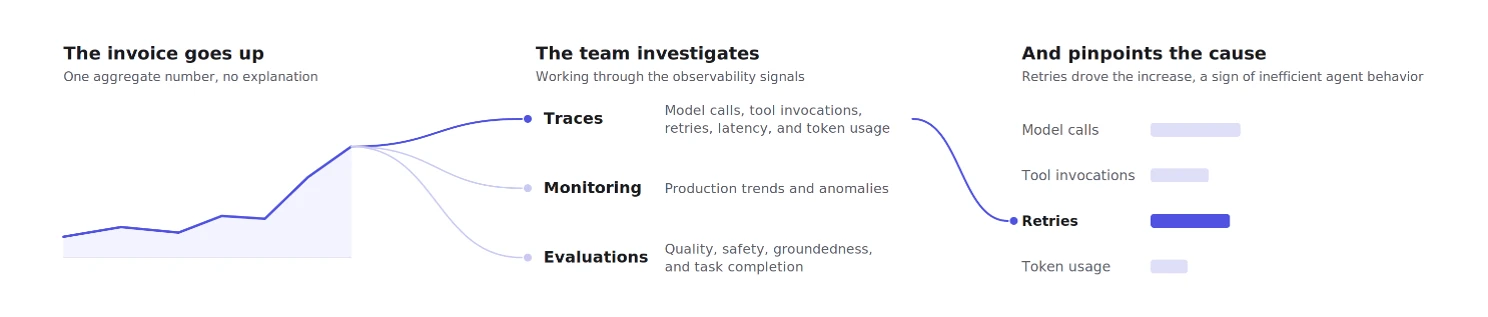
The primary hurdle in AI cost management is the aggregation of data. A single business outcome often involves a complex chain of events: a user request, multiple model prompts, tool interactions, and potential retries. When these costs are rolled into a single cloud bill, the context is lost.
To combat this, enterprise platforms are shifting toward granular attribution. By leveraging project-level tags, organizations can now map specific model usage—such as Azure OpenAI consumption—to individual business units or product teams. This transparency is crucial for FinOps teams, who must justify AI investments to stakeholders. By utilizing AI Gateways, developers can now emit token metrics that provide a forensic view of why an agent consumed a specific volume of tokens, effectively turning raw billing data into actionable business intelligence.
Three Layers of Control: From Limits to Accountability
Effective governance in the current enterprise climate is stratified into three distinct layers, each serving a unique purpose in maintaining fiscal health.
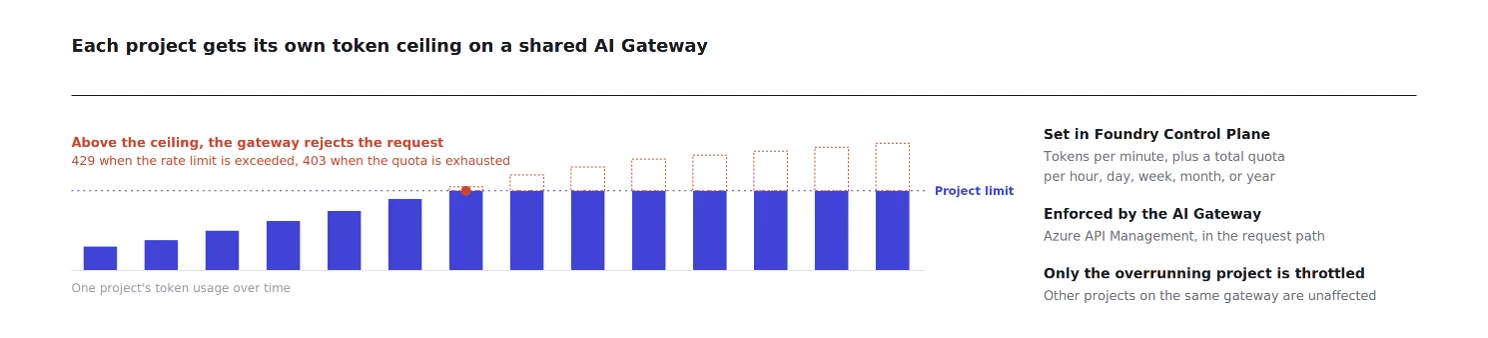
The first layer is the "Request-Path Enforcement" within platforms like Foundry. By setting hard token quotas and rate limits, organizations ensure that a single malfunctioning agent cannot monopolize the budget or performance capacity of an entire department. These limits are proactive; a 429 (Too Many Requests) or 403 (Forbidden) response serves as a surgical intervention, stopping the bleed immediately.
The second layer involves cross-model and cross-provider policy application. Using sophisticated tools like the llm-token-limit policy, administrators can apply uniform governance across a diverse array of providers, including OpenAI, Anthropic, and various open-source models hosted via Managed Content Provider (MCP) servers. This ensures that even as an organization diversifies its model portfolio, its fiscal guardrails remain consistent.
The third layer is the financial accountability framework. Using tools like Microsoft Cost Management, companies can link AI spend to formal budget thresholds. Unlike technical token limits, these budgets are integrated with organizational workflows. When an agent approaches its financial ceiling, it can trigger an automated response, such as notifying an engineering manager or opening a support ticket, thereby bridging the gap between technical operations and executive financial planning.
The ROI Metric: Beyond Cost Reduction
A common misconception in the current market is that the goal of agent optimization is to minimize costs. On the contrary, the goal is to maximize return on investment (ROI). An agent that costs significantly more to run but delivers a 10-fold increase in case resolution efficiency is a superior asset compared to a low-cost, low-utility agent.
To address this, emerging ROI dashboards allow teams to assign monetary values to specific business outcomes, such as "successful customer interaction" or "automated report generation." By calculating the net value (Total Value Generated minus Total Operating Cost), organizations can perform a defensible analysis of their AI portfolio. This shift in perspective transforms the dialogue from "How do we make this cheaper?" to "Is this agent delivering value that exceeds its operating cost?"
Implications for the Enterprise
The shift toward managed AI investment systems carries significant implications for the future of enterprise IT. As agentic systems become more sophisticated, the role of the developer is evolving to include "FinOps-aware" coding. Engineers are now expected to design workflows with cost-efficiency as a primary performance metric, equal in importance to latency or accuracy.
Furthermore, this systematic approach to governance reduces the "innovation friction" that often accompanies new technology. When business leaders are confident that their AI systems have built-in guardrails and clear ROI tracking, they are more likely to approve further investment in agentic technologies. It allows for a culture of "safe scaling," where teams can experiment with confidence, knowing that the platform will automatically contain costs that exceed defined operational boundaries.
A Roadmap for Implementation
For organizations looking to implement these governance strategies, the path forward is clear:
- Establish Visibility: Begin by tagging all agentic workloads. Without knowing which team or project is driving consumption, effective management is impossible.
- Implement Circuit Breakers: Deploy token-level limits at the gateway layer to ensure that unforeseen spikes in usage are contained before they impact the monthly budget.
- Define Value Metrics: Work with business stakeholders to determine what a successful agent interaction looks like in dollar terms.
- Iterate via Data: Use the traces and observability signals to identify low-ROI agents. Often, a minor architectural change—such as reducing redundant context or switching to a smaller, more specialized model—can significantly improve the net value of an agent without sacrificing performance.
In conclusion, the economics of agent optimization is not a static challenge but a dynamic, continuous process. By treating AI as a managed investment system—one that is observable, bounded, and value-oriented—enterprises can ensure that their AI agents remain sustainable, efficient, and, most importantly, profitable. As the technology continues to advance, the organizations that will lead the market are those that master the balance between the boundless potential of autonomous agents and the disciplined oversight required to keep them aligned with organizational goals.
Related posts: