HighScalability Hot Links: From Biological Complexity to the Evolution of Computing Infrastructure

The rapid evolution of modern computing—from the bulky, room-sized architectures of the mid-20th century to the intricate, invisible layers of contemporary cloud-native orchestration—mirrors the increasing complexity of the biological structures we strive to model. As we aggregate the most compelling technological milestones of the current era, it becomes evident that the distance between a single byte of memory and the high-density, multi-layered microservices of today is bridged by a relentless pursuit of efficiency, security, and visualization. This analysis examines the intersection of historical hardware constraints, current cryptographic methodologies, and the tools required to manage the modern distributed landscape.
A Chronology of Computational Density
The history of computing is defined by the exponential increase in data density. In 1946, the architecture of early mainframes necessitated massive physical footprints to house even the most rudimentary memory units. A single byte of Random Access Memory (RAM) during this era occupied a volume that would be considered astronomical by today’s standards. This physical reality dictated the limits of computation, restricting early programmers to binary operations that were functionally limited by the sheer lack of available storage.
By 1966, the technological leap was significant, yet the physical manifestation of storage remained cumbersome. Documentation of the era reveals that five megabytes of data—an amount now negligible enough to be consumed by a single high-resolution image—required hardware of immense proportions. This transition from magnetic core memory to early hard disk drive technologies marked the beginning of an obsession with miniaturization that continues to define the industry.
The implications of these advancements are profound. As physical storage evolved from room-filling cabinets to the microscopic transistors found in modern CPUs, the primary bottleneck shifted from hardware capacity to software orchestration. Today, the focus is no longer on how to store a single byte, but on how to manage the billions of events occurring across distributed clusters in real-time.
Cryptography and Entropy: The Lava Lamp Paradigm
Security remains the cornerstone of modern infrastructure, yet the pursuit of true randomness in cryptographic key generation often leads to unconventional solutions. Cloudflare’s well-documented use of lava lamps to generate cryptographic entropy is a testament to the necessity of physical-world randomness in a deterministic digital environment.
In a traditional computing environment, computers are inherently deterministic, making the generation of truly random numbers a significant challenge. By filming a wall of lava lamps, Cloudflare creates a source of high-entropy, visual noise. Because the movement of the viscous fluid within the lamps is influenced by complex, non-linear thermal dynamics, it provides a stream of data that is effectively impossible for an attacker to predict. This process illustrates a fundamental principle of cybersecurity: the most robust digital systems often rely on the unpredictable nature of physical phenomena.
The integration of such systems into modern data centers highlights a broader trend in high-performance computing (HPC): the marriage of physical environmental data with digital security protocols. As threats evolve, the reliance on purely algorithmic randomness is increasingly viewed as insufficient, pushing organizations toward hardware-based security modules that incorporate environmental entropy.
Kubernetes and the Complexity of Orchestration
As infrastructure moves to the cloud, the abstraction layers required to manage these systems have grown in complexity. Kubernetes, the industry-standard container orchestration platform, has become the backbone of modern software deployment. However, its power is matched by its operational complexity.
Troubleshooting Kubernetes deployments has become a specialized field within DevOps. Common failure points often involve misconfigurations in network policies, resource limits, or pod lifecycle management. Because Kubernetes operates on a declarative model—where the user specifies the desired state and the system works to maintain it—diagnostic processes require a deep understanding of the control plane.
The recent shift toward "observability-first" architectures suggests that developers are moving away from simple monitoring—which tells you that a system is down—toward deep observability, which provides the context necessary to understand why a failure occurred. This transition is essential as microservices architectures increase the number of moving parts in a single application, making manual debugging impossible without sophisticated visualization and logging tools.
Biological Complexity as a Computational Mirror
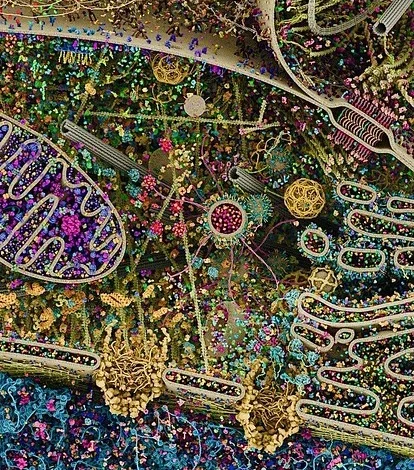
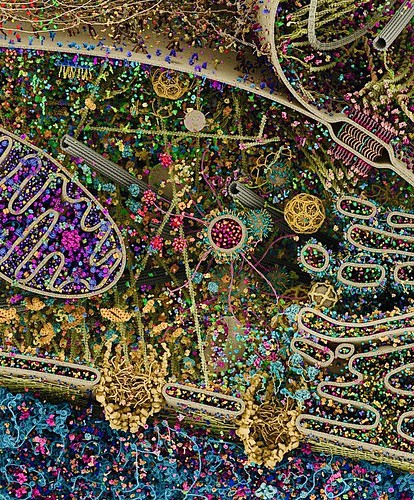
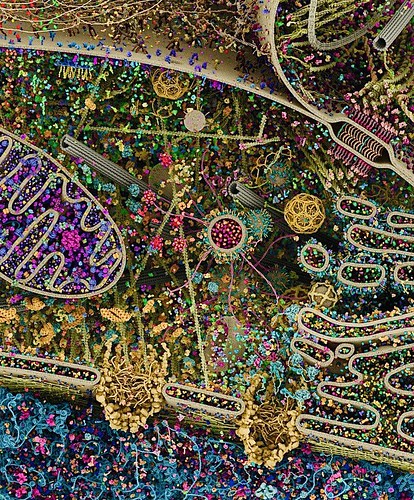
While the digital world struggles with data density, the natural world provides a blueprint for efficient, high-density information storage. Recent advancements in high-resolution microscopy have allowed researchers to capture the most detailed images of a human cell to date. These images reveal a level of internal organization and structural complexity that far exceeds any man-made computer.
The parallel between cellular biology and distributed systems is increasingly relevant to computer scientists. Cells function as independent, self-regulating units that communicate with their environment, manage resource allocation, and perform error correction—the very same tasks performed by Kubernetes pods or autonomous agents in a distributed system.
The study of cellular structures provides more than just aesthetic insight; it offers a conceptual framework for "biological computing." Researchers are now looking at how to replicate the resilience and self-healing properties of biological cells within artificial neural networks. The ability of a cell to maintain homeostasis despite external fluctuations serves as a model for "self-healing" infrastructure, a goal that many cloud architects strive to achieve in their own systems.
Data Analysis and Future Implications
The synthesis of these diverse topics—from the evolution of RAM to the entropy of lava lamps and the orchestration of containerized services—reveals a unified trajectory. We are currently in an era where the primary constraints on computing are no longer the physical size of the hardware, but the complexity of the systems we build upon it.
Data suggests that the demand for computational resources will continue to grow as we integrate artificial intelligence into standard infrastructure management. Current projections indicate that global data center power consumption will increase by a factor of three over the next decade. This growth necessitates a move toward more efficient hardware, better thermal management, and, crucially, more intelligent software that can optimize resource usage autonomously.
Furthermore, the integration of physical hardware security, such as entropy-based key generation, will become increasingly critical as quantum computing poses a threat to standard encryption methods. The shift toward post-quantum cryptography will likely require a complete overhaul of how we handle keys and secrets, further highlighting the importance of physical-world randomness in securing the digital future.
Conclusion: The Path Forward
The evolution of technology is not a linear march toward faster processors alone; it is a holistic expansion that encompasses how we store, secure, and manage information. From the 1946 mainframe that could barely hold a single byte to the modern data center that manages exabytes of data, the core mission has remained constant: to reduce the friction between human intent and machine execution.
As we look toward the future, the lessons provided by historical hardware limitations and the complex organizational structures of biological systems will be vital. The next phase of high-performance computing will likely focus on the convergence of these disciplines—creating systems that are as self-regulating as a human cell, as secure as physical entropy allows, and as observable as the most advanced cloud-native tools currently enable. For engineers and system architects, the challenge remains clear: to build systems that are not only capable of handling the scale of today’s data but are resilient enough to adapt to the unpredictable challenges of tomorrow.