Wasabi Technologies Appoints Industry Veteran Pinaki Mukherjee to Lead New Strategic AI Business Unit Amidst Surging Infrastructure Demand

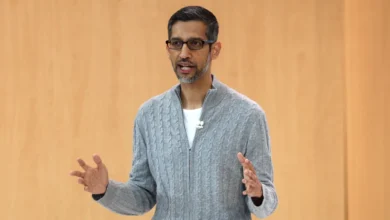
Wasabi Technologies, a prominent player in the cloud object storage market, has officially announced the formation of a dedicated business unit specifically focused on artificial intelligence. The new division will be spearheaded by Pinaki Mukherjee, a seasoned executive with over two decades of deep-rooted expertise in semiconductors, data storage, and AI infrastructure. This strategic pivot marks a significant milestone for the Boston-based company as it seeks to capture an increasingly lucrative share of the data management market fueled by the rapid proliferation of generative AI and large-scale machine learning models.
The decision to establish a standalone AI business unit comes at a time when enterprise demand for high-performance, cost-effective storage is undergoing a paradigm shift. As organizations move from experimental AI projects to large-scale production deployments, the traditional constraints of hyperscale cloud providers—namely high egress costs and vendor lock-in—have become significant friction points for developers and data scientists alike.
The Architect of Growth: Pinaki Mukherjee’s Strategic Mandate
Pinaki Mukherjee steps into the role of senior vice president and general manager with a formidable resume. Before joining Wasabi, he held pivotal positions at industry heavyweights including Fungible, Druva, and Western Digital. His career trajectory has been defined by his ability to bridge the gap between complex hardware architectures and market-facing business strategies. Furthermore, his tenure at the global consulting firm Alvarez & Marsal saw him leading major semiconductor strategy and AI infrastructure engagements, providing him with a unique bird’s-eye view of the supply chain and architectural bottlenecks currently facing the AI sector.
Wasabi’s leadership has been transparent about the expectations for this new division. The company noted that Mukherjee’s track record includes the facilitation of over $2 billion in partnership-driven revenue and the execution of more than $10 billion in strategic mergers, acquisitions, and investment outcomes. By leveraging this experience, Mukherjee is tasked with crafting a go-to-market strategy that moves beyond simple storage sales, focusing instead on building a robust ecosystem of technology partners and AI-native service providers.
The Evolution of Cloud Storage in the Age of AI
To understand the necessity of this strategic shift, one must analyze the recent evolution of the data storage landscape. For years, the cloud storage market was dominated by the "big three" hyperscalers—Amazon Web Services, Microsoft Azure, and Google Cloud. While these platforms provided integrated ecosystems, they also created silos that trapped data, making it prohibitively expensive to move information between different compute environments.
The rise of generative AI has fundamentally altered this calculus. Training a frontier AI model requires massive, multi-petabyte datasets that must be accessible to high-performance GPU clusters. If that data is tethered to a single cloud provider, the customer is effectively forced to use that provider’s compute services, regardless of whether those services are the most cost-effective or performant for their specific needs.
Wasabi’s infrastructure is designed to challenge this "walled garden" model. By providing a storage layer that is vendor-agnostic and free of egress or API fees, the company enables what industry analysts describe as "compute mobility." As organizations refine their AI workloads—shifting from massive training phases to inference and fine-tuning—they require the flexibility to port their data to the most efficient compute environment available. Wasabi’s current operational footprint, which spans 16 global storage regions, provides the physical backbone necessary to support this level of mobility.
Supporting Data: The Scale of the AI Storage Challenge
The scale of the data challenges facing modern AI labs is difficult to overstate. Recent deployments by Wasabi illustrate the sheer volume of data involved. For instance, the company recently supported an image- and video-generation laboratory in a successful effort to migrate 175 petabytes of data away from a traditional hyperscaler. This migration was completed within months, a feat that would have been financially and logistically impossible under traditional egress fee structures.
Similarly, a robotics data consortium currently leveraging Wasabi’s platform has moved several petabytes of sensor data into the company’s cloud. By utilizing Wasabi’s cost-predictable model, the consortium has projected annual savings exceeding JPY 100 million. These figures provide a clear economic argument for the "unbundling" of storage from compute, a trend that Mukherjee is expected to accelerate.
Official Perspectives and Market Strategy
Marty Falaro, president and COO of Wasabi, emphasized that the appointment of Mukherjee is a direct response to current market pressures. "AI workloads are pushing storage demand to a scale we’ve never seen," Falaro stated. "Mukherjee is the right person to build the partnerships that extend Wasabi’s position as the industry’s choice for cloud storage, at the exact moment inference is reshaping what that storage needs to do."
For his part, Mukherjee views his new role as an opportunity to redefine the relationship between storage and compute. "AI customers don’t need another hyperscaler," Mukherjee said in a recent statement. "They need the freedom to move their data wherever their workloads take them, without egress fees, API fees, or lock-in dictating their architecture."
His strategy will likely focus on three core pillars:
- Ecosystem Partnerships: Aligning with independent GPU cloud providers and AI infrastructure specialists to create seamless, "out-of-the-box" storage integrations.
- Vertical-Specific Solutions: Developing tailored storage architectures for sectors with high data-density requirements, such as life sciences, autonomous vehicle development, and generative media.
- Infrastructure Optimization: Enhancing the underlying Wasabi storage framework to further reduce latency and improve data retrieval speeds for real-time AI inference.
Broader Implications for the Channel and Cloud Industry
The launch of a dedicated AI business unit by Wasabi is also a signal to its massive network of 18,000 channel partners. By providing these partners with a specialized division to interface with, Wasabi is effectively "productizing" its expertise in AI. This allows managed service providers (MSPs) and resellers to offer more sophisticated storage solutions to their own clients, who are increasingly asking for guidance on how to build AI-ready data architectures.
Furthermore, this move positions Wasabi as a critical "neutral" participant in the AI gold rush. As the industry debates the merits of centralized vs. decentralized AI infrastructure, companies that provide the plumbing for data are becoming increasingly vital. By positioning itself as a platform-agnostic storage layer, Wasabi is essentially banking on the idea that the future of AI will be modular, decentralized, and highly competitive.
Future Outlook and Analytical Context
The success of Mukherjee’s new division will likely be measured by how effectively he can navigate the competing interests of hyperscalers and independent compute providers. If Wasabi can successfully convince more "frontier model labs" and large-scale AI enterprises that the cost of moving data is a strategic investment rather than an operational expense, the company could see its market share expand significantly over the next 24 to 36 months.
However, the challenge remains significant. Hyperscalers are continuously innovating, offering their own specialized storage and compute bundles that are deeply integrated into their software stacks. To compete, Wasabi must prove that its "storage-first" approach provides tangible, long-term performance benefits that outweigh the convenience of an integrated hyperscaler ecosystem.
As the AI industry matures, the focus is shifting from "how do we train the model" to "how do we manage the lifecycle of the data." With the appointment of Pinaki Mukherjee, Wasabi Technologies has signaled that it intends to be at the center of that conversation, betting that the need for data freedom will eventually outweigh the convenience of cloud silos. The coming quarters will be critical as the company attempts to operationalize this vision, turning its existing storage footprint into a comprehensive AI-first ecosystem.
Related posts: