LG Electronics USA to purge residential proxy software from smart TV app store following security revelations

LG Electronics USA has announced a significant policy shift regarding the software ecosystem of its smart television lineup, declaring that it will move to suspend any applications that function as residential proxy nodes. This decision follows a damning investigation by the security research firm Spur, which revealed that a substantial portion of the apps available on LG’s webOS platform were covertly repurposing consumer hardware as conduits for internet traffic. The move represents a rare instance of a major hardware manufacturer taking direct regulatory action against the "monetization of idle bandwidth" business model that has become increasingly pervasive in the consumer electronics sector.
The Anatomy of the Proxy Ecosystem
The controversy centers on Software Development Kits (SDKs) provided by residential proxy network operators. These kits, when integrated into seemingly innocuous applications—such as casual games, screensavers, or utility tools—transform the host device into a residential proxy node. By doing so, the television’s IP address becomes a tunnel for third-party traffic. These third parties, often data-scraping firms or entities seeking to bypass geographic content restrictions, pay the proxy network providers for the ability to route their traffic through legitimate, residential-grade connections, which are harder to detect and block than data center IP addresses.
According to the data released by Spur in early July 2026, the issue is not limited to a niche subset of apps. The research indicated that more than 42 percent of the applications available for download on LG’s webOS store contained these proxy SDKs. A similar, albeit less prevalent, trend was identified on Samsung’s Tizen operating system, where over 25 percent of apps were found to contain comparable components. The integration of these SDKs allows the proxy providers to monetize the home network of the user, often without the user fully comprehending the security and privacy implications of the "consent" they provided during the initial app installation.
Chronology of the Discovery and Response
The sequence of events leading to the policy change began in early July 2026, when security researchers began highlighting the proliferation of proxy SDKs. On July 2, the FBI intensified the scrutiny of this industry by seizing the domains of NetNut, a major player in the proxy space, as part of a wider investigation into botnet activities. This regulatory action underscored the potential for these networks to be weaponized for illicit activities beyond standard web scraping.
Following the publication of the Spur report, public scrutiny turned toward the major smart TV manufacturers. LG Electronics, facing questions regarding the security of its platform, acted within weeks. John Taylor, Senior Vice President at LG Electronics USA, confirmed that the company had initiated a review of its app store. "A residential proxy network is not an intended use for LG smart TVs," Taylor stated in an email, confirming that the company is actively working with developers to strip these components from their software. Developers who refuse to comply or fail to remove the proxy functionality will face the suspension of their applications from the webOS platform.
The Economics of Residential Proxies
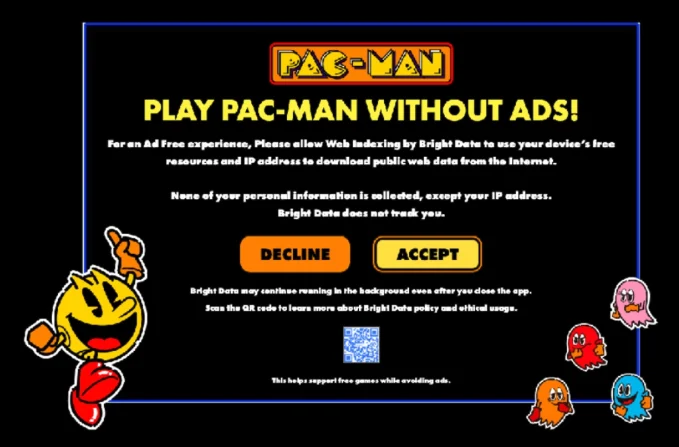
For app developers, the lure of integrating proxy SDKs is purely financial. These SDKs provide a passive income stream, often paying developers based on the amount of bandwidth their users’ devices route. In many instances, the app is presented as a free, ad-supported experience; however, the proxy SDK provides an alternative revenue model that allows developers to avoid showing ads while still generating profit from the device’s internet connection.
Bright Data, one of the primary proxy network providers identified in the Spur research, has maintained that its operations are built on a foundation of transparency and ethical usage. In a statement, the company noted that every "peer"—the end user—must opt in through a dedicated screen and receive value in return. Bright Data further stated that its practices have undergone independent audits by PwC and that it employs rigorous "Know Your Customer" (KYC) processes to vet its clients.

However, security experts remain skeptical. The primary concern is not necessarily the intent of the proxy provider, but the technical reality of the deployment. Once a device becomes a proxy node, the owner of that device loses control over the traffic originating from their IP address. This raises significant risks, including the potential for the device to be used in cyberattacks, fraudulent activity, or the distribution of prohibited content, all while masking the origin of the traffic behind the home user’s legitimate ISP account.
Broader Implications for IoT Security
The incident highlights a systemic vulnerability in the Internet of Things (IoT) landscape: the lack of robust auditing for third-party code in consumer appliances. Unlike smartphones, where app stores have become heavily regulated environments with strict permission models, smart TVs have historically had a more permissive development environment.
Trevor Sutter, a researcher at Spur, emphasized that the core problem is the scaling of these proxy networks into devices that consumers do not perceive as computers. "A one-time consent prompt buried in a TV app is not a substitute for meaningful transparency, ongoing control, and platform oversight," Sutter noted. The risk is significantly amplified in households where the primary user—the person who might understand the implications of a consent prompt—is not the only person interacting with the device. Minors or elderly family members may inadvertently consent to terms they do not understand, effectively turning their home network into an open proxy for unknown global actors.
A Pattern of Questionable Software Practices
While the decision to purge proxy SDKs has been lauded by privacy advocates, LG’s reputation for platform management has recently been complicated by other software-related controversies. Concurrent with the proxy issue, the company faced criticism following a report by the tech analysis channel Gamers Nexus. The report demonstrated that certain high-end LG monitors were silently installing third-party security software—specifically, a promotional application for McAfee antivirus—via Windows Update without providing a clear opt-in prompt to the user.
This pattern of "silent installation" or "bundled software" has fueled a growing sentiment among tech enthusiasts that hardware manufacturers are increasingly treating consumer devices as advertising and data-mining platforms. The inclusion of unwanted software, whether it is a security suite or a proxy SDK, shifts the relationship between the manufacturer and the consumer from one of product ownership to one of continuous, often non-consensual, service monetization.
Moving Toward a "Security-First" Ecosystem
The move by LG to clean up its app store is, in many ways, an admission that the previous "wild west" approach to smart TV applications is no longer tenable. As these devices become the primary hubs for home media and, increasingly, smart home management, the security of the underlying operating system becomes a matter of national and personal security.
The implication for the industry is clear: if LG and Samsung succeed in purging these SDKs, it will likely set a new industry standard. Manufacturers will be under increased pressure to implement stricter code-signing requirements, more transparent permission models, and continuous monitoring of app behavior. For consumers, the hope is that this marks a transition away from the commodification of their bandwidth and toward a model where privacy and device integrity are prioritized over the immediate monetization of the user experience.
As LG’s internal review continues, the tech community will be watching closely to see how many apps are ultimately pulled from the webOS store and whether other manufacturers follow suit. The incident serves as a critical reminder that in the modern digital age, the "free" or "ad-supported" software on one’s living room screen may have a hidden cost that is far higher than the price of a subscription. Moving forward, the burden of ensuring that these devices remain secure will rest not only on the developers but on the manufacturers who act as the gatekeepers of the software that powers our most personal spaces.