Nvidia CEO Jensen Huang Takes Surprise Call from President Donald Trump Onstage at the All-In Summit

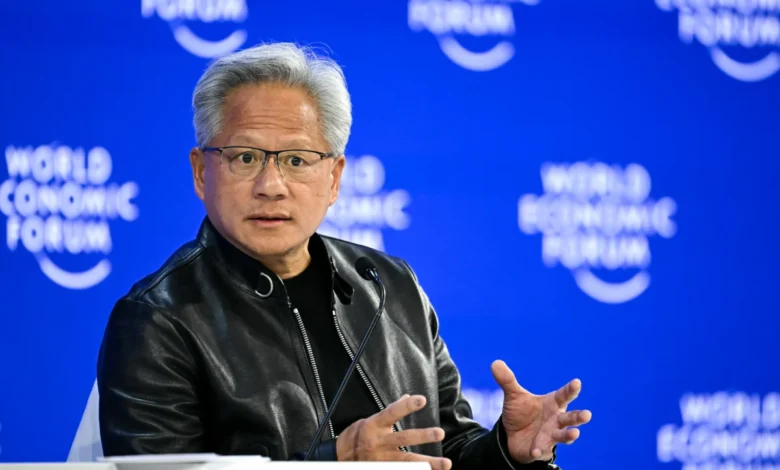
In an unexpected moment that immediately captured the attention of the global technology sector, Nvidia Chief Executive Officer Jensen Huang received an impromptu phone call from President Donald Trump while speaking live on stage. The incident occurred during a Monday morning session at the prominent All-In Summit in Los Angeles, transforming a standard fireside chat into a headline-making political and economic exchange. Huang, addressing an audience of tech leaders, venture capitalists, and policy influencers, chose not to let the call go to voicemail. Instead, he openly acknowledged the caller to the crowd before working with stagehands to broadcast the conversation live to the auditorium.
The live phone call bridges an ongoing debate in Silicon Valley regarding artificial intelligence development, regulatory oversight, national security, and the physical infrastructure required to sustain the booming tech sector. As artificial intelligence models scale in capability and power consumption, the intersection of federal policy, geopolitical competition, and public sentiment has grown increasingly complex. The unexpected dialogue between the nation’s chief executive and one of the world’s most influential semiconductor executives sheds light on the high-stakes alignment forming between the current administration and top figures in the technology industry.
The Onstage Exchange and the All-In Context
The morning panel at the All-In Summit featured Huang alongside the podcast’s high-profile hosts and tech investors, including Chamath Palihapitiya, Jason Calacanis, David Friedberg, and David Sacks. The conversation had initially centered on a recent proposal put forward by Anthropic CEO Dario Amodei, who advocated for slowing down the rapid pace of frontier artificial intelligence development to manage potential risks safely. This stance has found public agreement from other tech luminaries, including SpaceX and Tesla CEO Elon Musk as well as OpenAI CEO Sam Altman.
However, Huang’s philosophy on artificial intelligence progress has notably diverged from this cautionary approach, favoring rapid innovation and deployment to maintain technological dominance. It was against this backdrop that President Trump’s call came through. True to form, Huang greeted the president by telling him, "I’m onstage with the besties," referencing the moniker used by the All-In podcast hosts.
In a moment that amused the audience while likely inducing mild panic among corporate public relations teams, Huang managed to route the phone audio through the venue’s sound system. President Trump quickly addressed the crowd, quipping about Huang’s technological prowess relative to basic audio routing. "The great thing about life is Jensen can develop the most complex computer chip in the world… but he can’t figure out how to put you on speaker," Trump remarked, drawing laughter from the auditorium. Huang was actively coordinating with stagehands to secure an additional microphone to properly project the call for the large audience.
Geopolitical Competition and the AI ‘Slowdown’ Debate
The core of President Trump’s impromptu remarks focused heavily on the ideological split regarding artificial intelligence pacing. Addressing the audience via speakerphone, Trump sharply criticized industry proposals to curb the advancement of AI capabilities, framing such restraint as a strategic vulnerability.
"They’re just playing right in the hands of a lot of people that don’t want to see it happen," Trump stated over the phone. "That could be political people. It could also be China. And we’re not going to let that happen. It’s a hoax."
The reference to foreign adversaries underscores a persistent narrative within Washington and Silicon Valley that slowing American AI development would cede global leadership to international competitors, chief among them China. Huang readily concurred with the president’s assessment, responding, "You’re right. We’re not going to let that happen, sir," which prompted sustained applause from the summit attendees.
This alignment reinforces a broader policy shift within the administration, which has prioritized maintaining aggressive technological superiority. Figures allied with the administration, such as Y Combinator CEO Garry Tan, have frequently argued that resistance to domestic technology infrastructure is part of a coordinated campaign to undermine American economic and technological competitiveness.
The Reality of Public Pushback: Infrastructure and Communities
While federal leadership and tech executives often frame opposition to rapid AI scaling as foreign interference or political obstructionism, empirical data suggests that the resistance is heavily rooted in domestic, grassroots concerns. The physical realization of the artificial intelligence boom relies on massive data centers, which require unprecedented amounts of electricity, water, and land.
Recent polling data from Gallup illustrates a significant disconnect between executive ambitions and public sentiment. According to the findings, approximately seven in 10 Americans oppose the construction of data centers within their local areas. When asked about the primary drivers of this opposition, over 50% of survey respondents pointed directly to the strain these facilities place on local environmental resources, particularly regarding power grid reliability and water usage. Furthermore, roughly 20% of participants expressed acute concerns regarding rising utility costs and a general decline in their local quality of life.
Communities from Northern Virginia’s Loudoun County—historically known as "Data Center Alley"—to various municipalities across Massachusetts have increasingly pushed back against zoning approvals for new server farms. These local ordinances and environmental reviews frequently delay projects, creating a logistical bottleneck for tech companies racing to build the infrastructure necessary to train and run next-generation models.
Despite these widespread local concerns, President Trump signaled unwavering support for the industry’s physical expansion, provided it is managed prudently. "We have to be a little bit careful… We have to do things and we have to do them prudently, but that doesn’t mean we’re going to stop an industry," Trump told Huang and the audience. "So I’m with you all the way. I didn’t even know how you felt about it. I just hoped you felt the same way as me. We’re going to lead."
Broader Implications for Tech Policy and Industry Leadership
The live phone call at the All-In Summit serves as a microcosm of the current relationship between the federal government and the private technology sector. As artificial intelligence transitions from a speculative research frontier into a critical pillar of national infrastructure and economic power, the boundaries between public policy, corporate strategy, and geopolitical maneuvering continue to blur.
For Nvidia, the exchange highlights the company’s indispensable role at the center of the global AI ecosystem. As the primary supplier of advanced graphics processing units (GPUs) that power modern artificial intelligence training and inference, Nvidia’s corporate trajectory is deeply intertwined with national industrial policy. By publicly demonstrating a direct line of communication with the commander-in-chief, Huang reinforced Nvidia’s status not merely as a commercial hardware manufacturer, but as a vital instrument of American technological sovereignty.
At the same time, the administration’s vocal dismissal of environmental and community concerns regarding data center expansion sets the stage for potential friction between federal priorities and local governance. As local populations continue to voice anxieties over utility spikes and resource depletion, tech firms and policymakers will likely face mounting pressure to balance the imperative of global technological leadership with the tangible realities of domestic infrastructure strain.
Ultimately, the unexpected phone call in Los Angeles did more than provide a memorable moment for podcast listeners and conference attendees. It underscored a high-stakes consensus among key political and industrial figures: that the race for artificial intelligence supremacy leaves little room for hesitation, regardless of domestic friction or calls for caution from within the industry itself.