What is Blockchain: A Comprehensive Analysis of the Distributed Ledger Technology Revolution

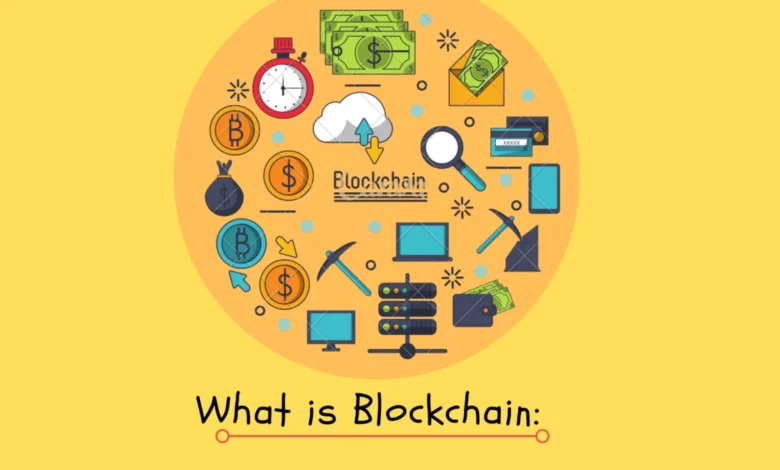
The modern digital economy currently relies on centralized intermediaries—banks, payment processors, and government institutions—to validate transactions and verify identities. This traditional framework necessitates the disclosure of sensitive personal data and often involves significant delays and transaction fees. However, the emergence of blockchain technology offers a transformative alternative: a decentralized, immutable ledger system that enables peer-to-peer verification without the requirement for a central authority. By functioning as a distributed database shared across a network of computer nodes, blockchain ensures that data integrity is maintained through cryptographic consensus, fundamentally altering how value and information are exchanged globally.
The Historical Genesis and Evolution of Distributed Ledgers
The conceptual framework for blockchain did not emerge overnight; it is the culmination of decades of research into cryptography and secure time-stamping. In 1991, researchers Stuart Haber and W. Scott Stornetta introduced a method to cryptographically secure documents, ensuring that timestamps could not be backdated or tampered with. Their work laid the foundation for the structural integrity of digital blocks.
The next major milestone occurred in 1998, when computer scientist Nick Szabo proposed "Bit Gold," a decentralized digital currency protocol. While Bit Gold was never fully implemented, it introduced the concepts of proof-of-work and distributed record-keeping that would later define the modern cryptocurrency era. The synthesis of these ideas arrived in 2008 with the publication of the Bitcoin whitepaper by the pseudonymous Satoshi Nakamoto. Nakamoto solved the "double-spending" problem—the risk that a digital token could be spent twice—by creating a peer-to-peer electronic cash system built upon a public, decentralized blockchain. Since the launch of the Bitcoin network in 2009, the technology has evolved from a niche interest among cryptographers to a core component of global financial infrastructure.
Technical Mechanics: How Blockchain Maintains Fidelity
At its core, a blockchain is a specific type of database that stores data in discrete units called "blocks." Each block contains a cryptographic hash of the previous block, a timestamp, and transaction data. This sequence creates a "chain," where the alteration of any single block would necessitate the recalculation of all subsequent blocks, making unauthorized tampering computationally infeasible.
The network functions through nodes—individual computers that hold copies of the entire ledger. When a transaction occurs, it must be validated by the network according to a predefined consensus mechanism, such as Proof of Work (PoW) or Proof of Stake (PoS). Once the network agrees on the validity of the transaction, it is recorded into a block and appended to the chain. This distributed nature is known as Distributed Ledger Technology (DLT). Because the ledger is replicated across thousands of nodes, there is no single point of failure. If one node experiences a technical error or a security breach, the rest of the network continues to function, using the majority-held, correct version of the ledger to rectify the discrepancy.
Beyond Cryptocurrency: Industrial Applications
While blockchain is synonymous with Bitcoin and Ethereum, its utility extends far into enterprise logistics and supply chain management. The technology’s ability to provide a "single source of truth" has been leveraged by global corporations to increase transparency and safety.
IBM’s Food Trust, for instance, utilizes blockchain to track the provenance of food products from farm to fork. This has significant implications for public health. During outbreaks of foodborne illnesses such as E. coli or Salmonella, traditional supply chain auditing can take weeks or months. With a blockchain-enabled system, retailers can pinpoint the exact origin of a contaminated batch in seconds, allowing for precise, surgical recalls rather than broad, costly product disposal. Companies such as Walmart, AIG, Siemens, and Pfizer have integrated blockchain to track shipments, verify the authenticity of pharmaceutical supplies, and streamline cross-border insurance claims.
Security, Decentralization, and Data Integrity
The primary value proposition of blockchain is its inherent resistance to data manipulation. In traditional systems, data is centralized, meaning a breach of the host server can compromise the entire database. In a decentralized blockchain, the information is stored in a public or private ledger across multiple locations.
This architecture offers two critical benefits:
- Irreversibility: Once a transaction is validated and recorded on the blockchain, it becomes a permanent part of the history. This makes it ideal for legal contracts, property deeds, and identity verification.
- Authenticity: Because every node in the network possesses a copy of the ledger, any attempt to inject fraudulent data is immediately identified and rejected by the consensus algorithm.
Critical Analysis: The Challenges of Adoption
Despite its promise, blockchain faces significant hurdles to mass adoption. The most prominent concern is scalability. Because every transaction must be verified by a distributed network of nodes, blockchain can be slower than centralized databases, which process requests through high-speed, localized servers. Additionally, the energy consumption associated with Proof of Work consensus mechanisms has drawn criticism, though newer models like Proof of Stake are significantly more environmentally sustainable.
Furthermore, the legal landscape remains fluid. Governments worldwide are still determining how to regulate decentralized entities that lack a traditional corporate headquarters. The tension between the anonymity provided by blockchain and the requirement for "Know Your Customer" (KYC) and Anti-Money Laundering (AML) regulations remains a focal point for policymakers in 2024 and beyond.
Frequently Asked Questions
Is Blockchain synonymous with cryptocurrency?
No. Cryptocurrency is a digital asset that uses blockchain as its underlying infrastructure. Blockchain is the broader technology, analogous to the internet, while cryptocurrencies are specific applications built upon that network, much like email or websites are built upon the internet.
Can a blockchain be hacked?
While theoretically possible, a successful attack requires a "51% attack," where an entity gains control of more than half of the network’s computing power. On established, decentralized networks like Bitcoin or Ethereum, the sheer amount of energy and hardware required to achieve this makes a successful hack practically impossible.
Who owns the blockchain?
Blockchain is inherently decentralized, meaning no single entity or government owns or controls the network. It is governed by the consensus of its users and the underlying protocol code.
How does blockchain differ from a traditional database?
A traditional database is managed by a central administrator who has the authority to edit or delete data. Conversely, a blockchain is an append-only system. Once data is written to the ledger, it cannot be modified, ensuring a permanent and auditable record that does not rely on a third-party intermediary for trust.
The Road Ahead
As technology continues to mature, the integration of blockchain into mainstream sectors is expected to accelerate. Analysts project that over the next decade, the technology will become a standard component of institutional infrastructure. From the automation of legal contracts via "smart contracts" to the digitizing of national identification systems, the impact of distributed ledgers will likely mirror the shift from paper-based records to digital databases seen in the late 20th century. While current hesitation persists, particularly in legacy industries, the efficiency, security, and transparency gains offered by blockchain suggest that it will remain a cornerstone of the future global digital economy. As enterprise adoption grows, the focus will likely shift from the novelty of the technology to the practical, daily utilities it provides in securing our digital future.
Related posts: