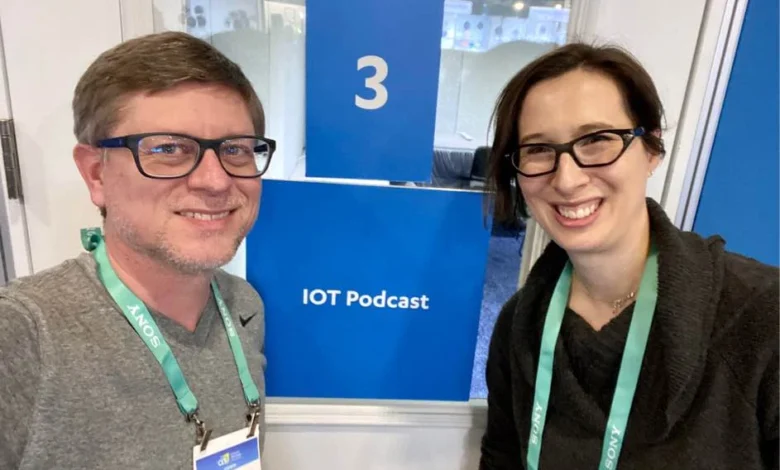
The landscape of technology journalism witnessed a significant shift in August 2023 when Stacey Higginbotham, a prominent voice in the Internet of Things (IoT) sector, announced her departure from the weekly podcasting and newsletter circuit that had defined her professional career for nearly a decade. After more than twenty years as a dedicated observer of the tech industry, Higginbotham’s decision to step back from her independent media venture, Stacey on IoT, signals a broader trend of burnout among long-term technology journalists who have witnessed the rapid, often volatile evolution of connected hardware.
A Career Built on Connectivity
Higginbotham’s career trajectory began long before the rise of the modern smart home. Having served as a senior editor at Fortune, she established herself as a trusted voice in the tech community. In 2016, she made the unconventional decision to leave the stability of an established publication to launch an independent media brand. At the time, the IoT industry was in its infancy, characterized by a proliferation of experimental devices and a lack of unified standards.
Her platform grew to become a central hub for industry analysis, bridging the gap between technical complexity and consumer impact. The podcast and newsletter served as a vital resource for both engineers and industry executives, providing deep dives into the social, economic, and security implications of embedding computation into every facet of daily life. Her work was instrumental in tracking the maturation of technologies like Zigbee, Z-Wave, and the eventual development of the Matter standard, which sought to harmonize the fractured smart home ecosystem.
Chronology of an Industry Observer
The evolution of Higginbotham’s coverage tracks closely with the rise and maturation of the IoT sector:
- 2012: Early coverage of smart home devices begins, highlighting the dual nature of convenience and potential privacy risks.
- 2016: Launch of the Stacey on IoT platform, signaling a shift toward independent, specialized journalism.
- 2017–2019: A period of rapid expansion in the sector, marked by the rise of voice assistants and the proliferation of low-cost connected sensors.
- 2020: Increased focus on data privacy and the security challenges inherent in mass-market connected devices, highlighted by her presence at CES 2020.
- 2023: The formal announcement of her departure from weekly production, citing a need to move away from the "daily and immediate" news cycle.
The Macro View: Market Saturation and Ethical Challenges
The decision to step back comes at a time when the IoT industry is facing significant headwinds. While the number of connected devices globally is projected to reach approximately 17 billion by the end of 2023, according to industry research firms like IoT Analytics, the quality of these connections remains a point of contention.
Higginbotham’s departure highlights a growing sentiment among industry analysts regarding the "subscription trap." As hardware margins have compressed, manufacturers have increasingly turned to recurring revenue models. This shift has forced consumers to pay monthly fees for features that were once considered standard, or worse, face the "bricking" of their devices when cloud support is withdrawn.
Furthermore, the integration of IoT into the workplace has raised significant ethical questions. The use of connected sensors for employee monitoring—often marketed as "efficiency optimization"—has drawn criticism from labor advocacy groups and privacy watchdogs. These developments have transformed the IoT narrative from one of futuristic convenience to one of surveillance, data extraction, and corporate overreach.
The Sustainability Paradox
A recurring theme in Higginbotham’s later work was the intersection of IoT and Environmental, Social, and Governance (ESG) criteria. While many corporations tout the use of smart sensors for carbon reduction and energy efficiency, there is a legitimate concern regarding the "greenwashing" of these initiatives. The electronic waste generated by the rapid turnover of consumer IoT devices—often designed with limited lifespans—frequently outweighs the marginal energy gains achieved by smart lighting or automated thermostats.
Industry data suggests that the average consumer device cycle has shortened, contributing to the global e-waste crisis. Estimates from the Global E-waste Monitor indicate that the world generates over 50 million metric tons of e-waste annually, a significant portion of which consists of discarded consumer electronics that are difficult to recycle due to their complex, integrated designs.
Transitioning to Consumer Advocacy
While Higginbotham is stepping away from the daily churn of news reporting, her engagement with the industry is not ending; rather, it is evolving. She has transitioned into a consulting role with the Consumer Reports Innovation Lab. This shift reflects a strategic pivot from documentation to advocacy. By focusing on cybersecurity and privacy, she intends to work on the structural problems that she spent years highlighting in her reporting.
The Innovation Lab at Consumer Reports has become an increasingly vital player in holding manufacturers accountable. By stress-testing devices for data leakage, insecure firmware, and opaque privacy policies, the Lab provides the empirical data necessary for regulatory scrutiny. Her involvement here suggests that the future of IoT regulation will likely be driven by rigorous, third-party testing rather than just journalistic critique.
Implications for Tech Journalism
The departure of an influential voice like Higginbotham serves as a case study for the sustainability of niche tech journalism. The demands of maintaining a weekly newsletter and podcast—in addition to conducting original research—are significant. The burnout she describes is common in an industry that demands constant, real-time commentary on a 24-hour news cycle.
This shift may lead to a more fragmented media landscape where deep, investigative work is increasingly conducted by NGOs, non-profits, or academic institutions rather than independent journalists. As newsrooms shrink and the complexity of technology increases, the need for deep subject-matter expertise becomes even more critical. Organizations like Consumer Reports, which have the resources to sustain long-term investigative projects, are poised to fill the void left by departing independent analysts.
Conclusion and Future Outlook
As Higginbotham pivots toward personal projects and cybersecurity advocacy, her legacy remains tied to her ability to synthesize the "bigger picture." The IoT sector is currently at a crossroads, caught between the promise of seamless automation and the reality of persistent security vulnerabilities and privacy erosion.
The industry’s next phase will likely be defined by regulation and standard-setting, as the "wild west" era of IoT gives way to more mature, policy-driven frameworks. For stakeholders, developers, and consumers alike, the lessons documented by Higginbotham over the last decade will remain essential reading. Her move from the journalist’s desk to the analyst’s lab underscores a broader reality: the most effective way to improve the future of technology is often to stop reporting on its failures and start building the safeguards necessary to prevent them.
The transition is a reminder that even in the hyper-connected world of IoT, the human element—the capacity for critical thinking, ethical judgment, and the courage to demand better—remains the most important component of the ecosystem.