Radaris.com Domain Seizure Marks a Watershed Moment in the Battle Over Data Broker Privacy Practices


The digital empire of consumer data broker Radaris.com has faced a significant and unprecedented judicial setback, culminating in the court-ordered transfer of its flagship domain and more than a dozen associated web properties to the plaintiffs, Atlas Data Privacy Corp. This development follows a protracted legal battle centered on New Jersey’s Daniel’s Law, a statute designed to protect the personal information of law enforcement officials, judges, and government personnel. The seizure represents a rare instance of a court utilizing domain forfeiture as a mechanism to enforce privacy compliance against a persistent and elusive data aggregator.
A Pattern of Evasion and Litigation
The conflict between Radaris and privacy advocates has been characterized by a decade-long cycle of legal maneuvering. Since its inception, Radaris earned a reputation for ignoring, delaying, or actively stonewalling requests for the removal of personal data from its people-search platforms. This operational posture became the focal point of a lawsuit filed by Atlas Data Privacy Corp in February 2024. Atlas, an entity dedicated to enforcing Daniel’s Law, alleged that the broker had systematically ignored mandates to scrub the private details of protected public officials, an offense that carries a statutory penalty of $1,000 per violation.
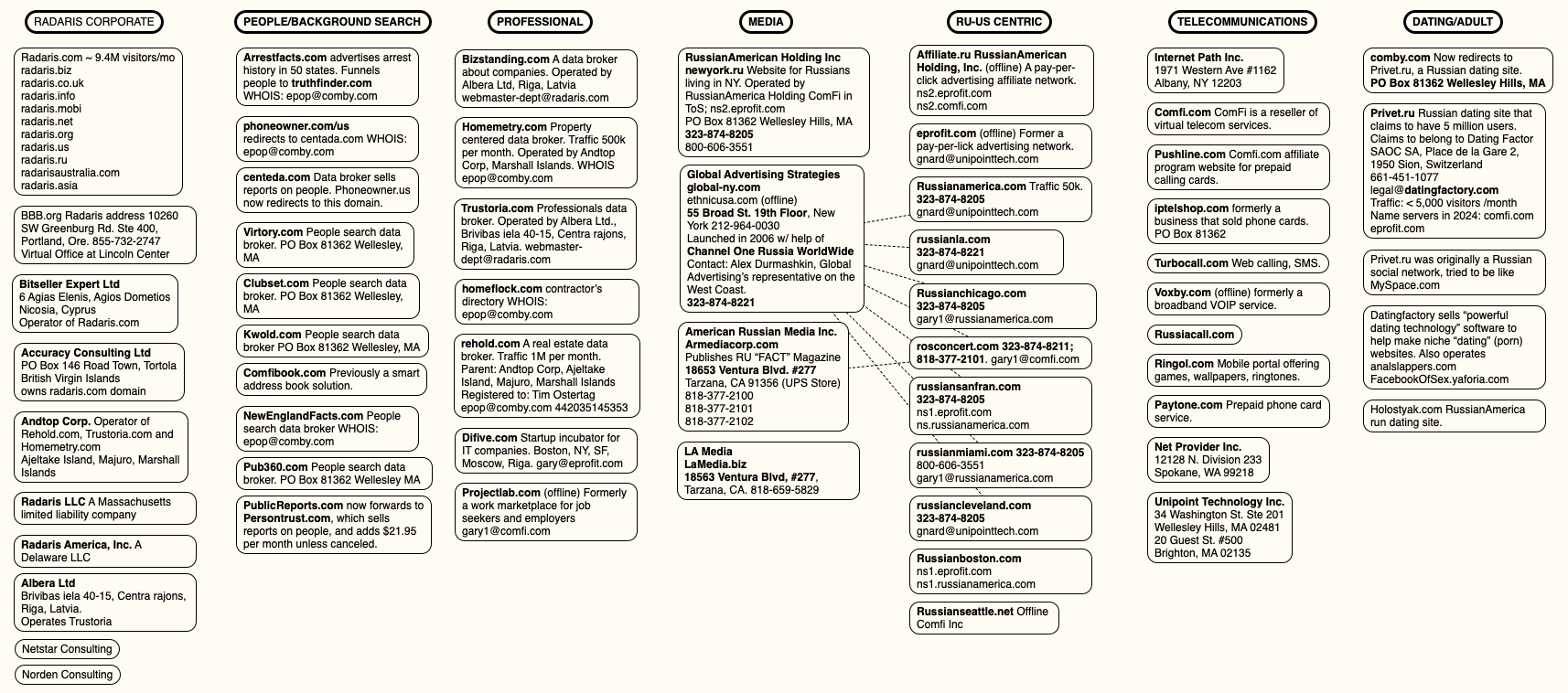
The legal defense mounted by Radaris and its associated entities has frequently been described by plaintiffs as a “shell game.” Attorneys representing the broker often employed a strategy of procedural attrition, frequently claiming that the court had failed to serve the correct legal entity. This defense relied on a shifting corporate structure that utilized entities based in the Marshall Islands, the British Virgin Islands, and the Seychelles. Whenever a judgment neared, the operational entity would often be discarded in favor of a new, shell-based organization, effectively resetting the legal clock.
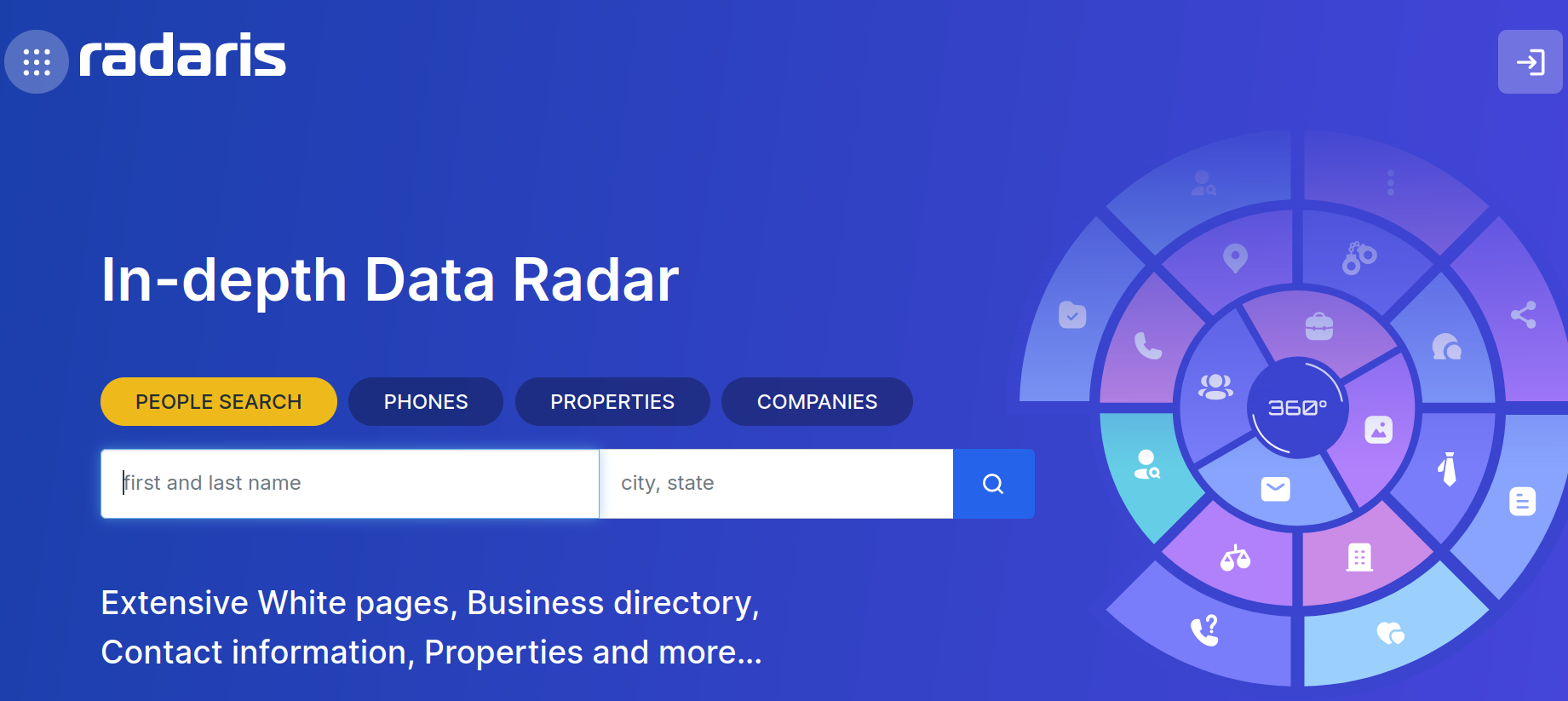
The Anatomy of an Investigative Deep Dive
The scrutiny surrounding Radaris intensified in early 2024 following an investigative series that exposed the company’s internal operations. The investigation identified the co-founders as Igor and Dmitry Lubarsky, Massachusetts-based, Russian-born brothers who controlled a vast network of people-search websites, dating services, and affiliate marketing programs. The investigation further revealed that the firm had utilized a fictitious CEO, “Gary Norden,” to front their operations and solicit investment capital, a deception later admitted by the company’s legal counsel, Val Gurvits of the Boston Law Group.
Despite threats of defamation lawsuits from the Lubarsky brothers—who initially claimed the true owners were Ukrainian—subsequent evidence obtained during discovery corroborated the initial reporting. Atlas Data Privacy Corp reported securing over 10,000 emails and internal documents that proved the entire network of companies—including entities such as Radaris America, Inc., Bitseller Expert Limited, and Virtura Corp—was managed by the same small group of individuals, sharing financial infrastructure, payment processors, and virtual office addresses.
Chronology of the Legal Conflict
The recent domain transfer is the culmination of a decade of legal friction.
- 2017: Radaris lost a class-action lawsuit by default but avoided the collection of a $7.5 million judgment by successfully arguing that the correct entity had not been named, prompting the court to halt the transfer of the radaris.com domain.
- February 2024: Atlas Data Privacy Corp initiates legal action in New Jersey, alleging repeated violations of Daniel’s Law.
- March 2024: Investigative reporting exposes the Lubarsky brothers as the primary controllers behind the Radaris network and confirms the use of a fake CEO pseudonym.
- June 2025: Following further evasion and continued non-compliance, Atlas re-files the lawsuit, expanding the scope to include an array of sister companies within the Radaris ecosystem.
- August 2026: A New Jersey court issues a ruling that the defendants had been granted sufficient opportunity to contest the claims but failed to do so. The judge orders the transfer of 14 domains to Atlas.
Financial Scope and Industry Partnerships
Internal records obtained during litigation suggest the scale of the operation is substantial. Atlas estimates that Radaris.com generates approximately $42,000 in monthly revenue, while its sister site, Veripages.com, nets roughly $45,000 per month. These figures are bolstered by strategic partnerships with large-scale marketing firms, including the Lifetime Value Company, which manages a suite of popular data-aggregation brands like PeopleLooker and Bumper.

Perhaps most striking is the evidence of symbiotic relationships within the industry. According to the discovered documents, the Radaris family of sites generated up to $25,000 monthly through partnerships with OneRep, a company that markets itself as a solution for removing personal data from the very sites that fuel the data-brokerage ecosystem. This practice of “selling the cure for the disease” highlights the circular nature of the current data privacy landscape, where providers and removers operate within the same incentive structures.
The Constitutional Challenge and Future Outlook
While the transfer of radaris.com to Atlas serves as a symbolic and tactical victory, the broader legal future of Daniel’s Law remains uncertain. Currently, the statute faces a stiff constitutional challenge in federal court. Roughly 150 data broker firms have joined a coordinated effort to move lawsuits to federal jurisdiction, arguing that the New Jersey law is overly broad and infringes upon First Amendment rights.
The U.S. Court of Appeals for the Third Circuit is currently deliberating on these constitutional arguments. The outcome is widely expected to reach the U.S. Supreme Court, given the conflicting rulings emerging from various jurisdictions. For example, a federal district court in West Virginia ruled that a similar version of Daniel’s Law was facially unconstitutional in August 2025. This creates a patchwork of legal protections that complicates the ability of public officials to secure their digital privacy across state lines.
Broader Implications for Digital Privacy
Privacy experts, such as Justin Sherman, author of The Middlemen, argue that the Radaris case is a symptom of a much larger failure in U.S. legislative policy. Sherman notes that despite the public outcry over data breaches and identity theft, the legislative process remains stalled by intense lobbying from the technology sector, including social media platforms, AI developers, and cryptocurrency firms.
The fundamental issue, according to privacy advocates, is the narrow definition of “public record” in current laws. Most state privacy regulations exempt information found in voter registries, property filings, marriage certificates, and motor vehicle records. As a result, data brokers can legally scrape and monetize information that the average citizen assumes is private. The lack of a comprehensive federal privacy law means that even if Daniel’s Law is upheld, it only protects a specific class of public servants, leaving the general public exposed to the same automated identity-harvesting mechanisms.
The recent breach of IDScan.net, which resulted in the exposure of driver’s license information for 153 million Americans, underscores the potential for catastrophe when personal data is centralized and poorly protected. The incident serves as a stark reminder that the digital footprint of the American public is increasingly treated as a commodity, subject to the whims of foreign entities, shell corporations, and unregulated data aggregators.
As of now, the radaris.com domain remains under the control of Atlas, displaying a notice of the court-ordered transfer rather than its previous interface of searchable personal dossiers. While this specific node in the data-broker network has been effectively neutralized, the systemic issues of data persistence and the inadequacy of current regulatory frameworks suggest that the battle for individual privacy is only in its nascent stages. The legal community continues to watch the appellate process closely, as the final ruling on Daniel’s Law will likely set the precedent for whether the state can force the de-listing of information in an era where data is the primary currency of the digital age.
Related posts: