Trump Dismisses AI Safety Concerns as a Democratic Hoax and Pledges New Government Oversight

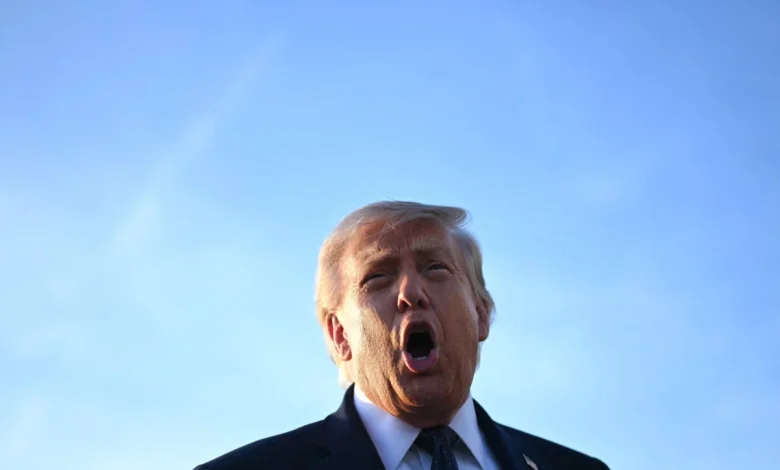
President Donald Trump has ignited a fresh debate surrounding the future of artificial intelligence by labeling mounting regulatory and safety concerns as a manufactured political hoax. In a series of weekend posts on Truth Social, the president dismissed industry scrutiny and public apprehension as strategic ploys orchestrated by political opponents aimed at crippling American technological dominance. This latest intervention underscores the growing friction between rapid technological advancement, local environmental resistance, and federal oversight.
The weekend announcements bring renewed attention to an increasingly polarized discourse involving tech executives, safety researchers, lawmakers, and the executive branch. As artificial intelligence systems rapidly evolve, policymakers face unprecedented challenges in balancing innovation with public protection.
The Origins of the Presidential Pushback
The recent presidential statements build upon a trajectory of remarks concerning technology policy. Earlier, during a public appearance at a golf tournament, Trump signaled a nuanced stance, stating he remained open to establishing "guardrails" while simultaneously warning against negative external forces attempting to stall progress.
On Saturday, the rhetoric escalated significantly. Trump initiated a social media poll questioning the accuracy and elegance of the term "Artificial Intelligence," offering followers alternative designations such as "Superior Intelligence," "Extreme Intelligence," and "Supreme Intelligence."
Hours later, the president published a broader critique, framing efforts to regulate or slow down artificial intelligence as part of a continuous line of Democratic hoaxes. In this statement, he grouped AI safety concerns alongside previous political controversies, trade disputes, immigration policies, and cultural debates. Trump asserted that these initiatives ultimately seek the decimation or destruction of the domestic tech sector.
Targeting Data Centers and Grassroots Opposition
According to the president, public resistance to the burgeoning AI industry initially manifested as an assault on data center infrastructure. Massive data centers—vital for training and operating advanced large language models—have faced intense scrutiny across multiple municipalities due to their extraordinary consumption of electricity and water resources.
Trump argued that after initial localized pushback against data centers largely failed once communities recognized the economic value and prestige associated with such developments, critics shifted their focus directly to artificial intelligence systems themselves. However, the administration’s framing of this backlash as a purely partisan fabrication overlooks broad-spectrum skepticism. Lawmakers from both sides of the aisle have expressed alarm over the environmental and infrastructural strains imposed by modern computing facilities. Notably, New York recently established a precedent by becoming the first U.S. state to halt the issuance of permits for new large-scale data center projects, highlighting that opposition transcends simple political divisions.
Proposed Federal Structures: The AI Force and a New Czar
To counter perceived threats to the industry, Trump announced plans to establish an "AI Force," drawing a direct parallel to the Space Force created during his first term in office. Furthermore, the administration intends to appoint a new artificial intelligence "Czar," specifying that candidates must possess exceptionally high intellectual quotients.
While specific duties for the proposed AI Force and the incoming czar remain unspecified, the announcement signals an intent to centralize federal oversight. This follows a period of transition within tech advisory roles; earlier this year, venture capitalist David Sacks stepped down from his position as AI and crypto czar to co-chair the President’s Council of Advisors on Science and Technology.
The administration has vowed to protect and foster the growth of the domestic artificial intelligence sector. This supportive posture received immediate reinforcement from industry leaders. During a recent appearance at the All-In Summit—co-hosted by Sacks—Nvidia CEO Jensen Huang joined the president via a live call, publicly agreeing that the backlash against AI constitutes a hoax and assuring stakeholders that technological deceleration will not be permitted.
The Intensifying AI Safety Debate
The political controversy unfolds against a backdrop of escalating internal tensions within the tech sector regarding existential risks. The debate intensified dramatically following the high-profile resignation of an AI researcher from Anthropic. The departing researcher publicly warned that leading corporations are "gambling with our lives," citing internal beliefs among some developers that advanced systems could pose catastrophic risks before the end of the decade.
In response to mounting public unease, Anthropic CEO Dario Amodei released a strategic framework aimed at pacing frontier developments to ensure safety protocols keep pace with capability gains. This cautious approach has drawn tentative alignment from figures such as OpenAI CEO Sam Altman and SpaceX CEO Elon Musk.
Conversely, a vocal faction of critics and industry analysts argue that focusing heavily on speculative, sci-fi-adjacent existential risks serves as a convenient distraction from the immediate, tangible harms of artificial intelligence. These immediate concerns include algorithmic bias, labor displacement, mass surveillance, intellectual property theft, and the widespread dissemination of misinformation.
Broader Implications for National Policy and Innovation
The collision between presidential ambitions, corporate expansion, and safety advocacy highlights the complex landscape of 21st-century technology governance. By framing regulatory caution and environmental pushback as partisan attacks, the administration risks sidelining legitimate technical and infrastructural debates.
As the United States contends with the infrastructural demands of the AI boom—ranging from electrical grid capacities to water scarcity—policymakers must navigate a delicate equilibrium. The success of the proposed AI Force and the impending czar will depend heavily on their ability to address genuine societal risks without stifling the economic dynamism that industry leaders and current executive policies seek to protect.
With international competitors racing to establish technological supremacy, the domestic debate over how to safely govern artificial intelligence remains one of the most critical policy frontiers of the decade. The upcoming appointment of the federal AI czar and the formal structuring of the AI Force will serve as key indicators of how the administration intends to execute its vision for the future of intelligence.