Meet Nexterity: The Startup Automating Industrial Pipefitting With Remote-Controlled Robotics

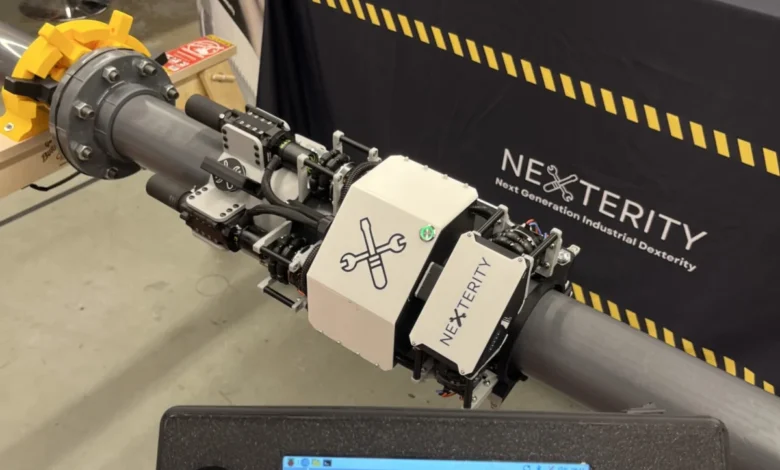
Industrial infrastructure forms the invisible backbone of modern civilization, safely routing billions of gallons of oil, gas, water, and chemicals through complex, interconnected networks of pipes. Yet, maintaining this critical infrastructure heavily relies on manual labor techniques that have remained largely unchanged for decades. Pipefitters frequently endure grueling physical labor, operating heavy tools in hazardous environments under demanding schedules. To address chronic labor shortages, declining productivity, and high injury rates across the trade industries, former ExxonMobil engineer and planner Lindsey Elliott founded Nexterity. Selected as one of the Startup Battlefield 200 participants at TechCrunch Disrupt, Nexterity aims to revolutionize pipe maintenance through a specialized, remote-controlled robotic system designed to handle the most physically demanding aspect of the trade: tightening and loosening bolted flange joints.
The Genesis of Nexterity and the Industrial Labor Crisis
The inspiration for Nexterity emerged from years of hands-on observation within the energy sector. Lindsey Elliott spent significant time analyzing the operational bottlenecks involved in maintaining the infrastructure responsible for moving oil, gas, and petrochemicals. A recurring point of failure and inefficiency centered on bolted flange joints—the connection points where separate sections of industrial piping are secured together using heavy bolts.
Traditionally, maintaining these joints requires pipefitters to perform strenuous manual labor, often working in cramped spaces, under adverse weather conditions, or inside complex industrial plants. The physical toll is immense. Workers routinely face repetitive strain injuries, muscle fatigue, and acute trauma from handling heavy pneumatic or manual torque wrenches. Furthermore, the industrial sector has faced a deepening labor shortage, driven by an aging workforce and a lack of younger talent entering the skilled trades.
Elliott highlighted the unsustainable demands placed on the existing workforce during peak maintenance seasons. Pipefitters are frequently asked to work 12-hour shifts for three consecutive months during plant turnaround cycles. Feedback gathered from trade professionals across the United States and Canada consistently points to a stagnant or declining rate of North American pipefitting productivity. Recognizing that human endurance has physical limits, Elliott conceptualized an automated solution that removes workers from the line of fire while accelerating maintenance timelines.
Decoding the Mechanics: How Nexterity’s Robot Works
The technological solution developed by Nexterity is a purpose-built, battery-powered robotic device specifically engineered to navigate industrial piping and manipulate flange bolts. Rather than requiring complex reprogramming or permanent installation, the system is designed for operational simplicity and rapid deployment in the field.
The robot is constructed in two primary modular pieces that easily clamp around standard industrial pipes. Once secured, the internal drive mechanism allows the unit to slide autonomously along the exterior of the pipe to the targeted flange joint. Equipped with specialized torque attachments, the robot can simultaneously loosen or tighten four bolts in a fraction of the time required by a human worker using standard manual tools.
A critical engineering constraint during the development phase was portability. Field technicians and pipefitters operate in diverse, often remote locations, making heavy, cumbersome equipment impractical. To solve this, Nexterity engineered the robot configurations to be compact enough to fit inside a standard Pelican case. A single technician can easily transport the entire unit to a job site, unbox it, and initiate operations within minutes.
This portability directly supports Nexterity’s overarching business strategy. Rather than selling the units outright as capital-intensive machinery, the startup utilizes a rental equipment model. This approach lowers the barrier to entry for industrial contractors and plant operators, allowing them to scale their use of robotics based on specific maintenance schedules and project demands.
Targeting Standardization: The "Torque Dorks" and Pipe Dimensions
The specific design specifications of Nexterity’s robots are the result of rigorous industry research and direct engagement with trade specialists. Over the past several years, Elliott immersed herself in the technical community, attending specialized industry gatherings such as the annual Bolting Symposium—where she noted the highlight was participating in "Bolting Bingo" alongside self-proclaimed "torque dorks"—and engaging with members of the Pressure Vessels & Piping Division of the American Society of Mechanical Engineers.
These interactions provided vital data regarding standard piping dimensions across global industrial facilities. Industry data revealed that approximately 80 percent of all industrial piping falls within a diameter of two to eight inches, technically categorized as Nominal Pipe Size 2 through Nominal Pipe Size 8 (NPS2 to NPS8).
This high degree of dimensional standardization presented an ideal use case for automation. By focusing initial engineering efforts on these specific, highly repeatable pipe sizes, Nexterity was able to design modular configurations that fit the vast majority of existing industrial infrastructure without requiring custom engineering for individual plants.
Broader Market Applications and Industry Implications
While Nexterity’s origins are rooted in the oil, gas, and petrochemical sectors, the potential market applications extend far beyond fossil fuels. Industrial piping infrastructure is ubiquitous across virtually all heavy manufacturing and utility sectors. Water and wastewater treatment plants, food and beverage processing facilities, mining operations, nuclear power plants, and emerging sustainable manufacturing plants all rely on identical flanged piping configurations.
The global market for industrial maintenance equipment and automation is vast, yet many outsiders remain unaware of its true scale because piping infrastructure is largely hidden from daily public view. By introducing robotics into this space, Nexterity is tapping into an underserved market segment ripe for digital transformation.
The implications of adopting technologies like Nexterity’s robotic bolting system are multifaceted, touching on safety, economics, and workforce sustainability:
- Enhanced Worker Safety: By delegating high-torque, repetitive fastening tasks to remote-controlled robots, industrial facilities can significantly reduce the incidence of musculoskeletal disorders, crush injuries, and fatigue-related accidents among pipefitters.
- Improved Productivity and Reduced Downtime: Industrial plants measure profitability heavily by uptime. Prolonged maintenance turnarounds cost operators millions of dollars in lost production. Automated bolting drastically accelerates the speed of flange maintenance, shortening turnaround windows and returning plants to operational status faster.
- Mitigation of Labor Shortages: With fewer skilled tradespeople entering the workforce, automation acts as a force multiplier. Existing crews can oversee robotic deployments, accomplishing the work of larger teams without burning out.
- Economic Efficiency via Rental Models: By offering the equipment through flexible rental agreements, plant operators can adopt advanced robotics without significant upfront capital expenditures, making technology adoption accessible to contractors of all sizes.
Conclusion and Future Outlook
As Nexterity prepares for its participation in the Startup Battlefield 200 at TechCrunch Disrupt, the company stands at the intersection of traditional blue-collar trade work and advanced automation. By listening closely to the engineering community—the "torque dorks" who understand the microscopic details of industrial fasteners—Elliott and her team have engineered a practical, highly scalable tool that addresses real-world industrial pain points.
The transition toward automation in heavy industries is rarely about replacing human expertise entirely; rather, it is about augmenting human capability, eliminating dangerous drudgery, and optimizing operational efficiency. For an industry as foundational yet physically demanding as pipefitting, Nexterity’s remote-controlled robotic solution represents a timely evolution toward a safer, more productive industrial future.