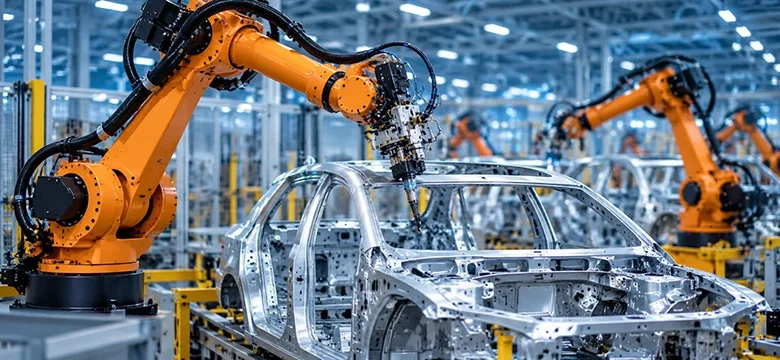
The global operational stock of industrial robots reached a historic milestone in 2025, scaling to a record-breaking five million active units worldwide. Driven by accelerating factory automation, ongoing labor shortages, and rapid technological advancements in artificial intelligence and machine vision, the industrial robotics sector has more than doubled its deployment volume over a remarkably brief seven-year period. However, fresh data released by the International Federation of Robotics (IFR) reveals a complex, highly fragmented global landscape, characterized by stark regional disparities where surging adoption in Asia contrasts sharply with slowing investment cycles across Europe and more moderate growth in North America.
This unprecedented acceleration highlights a fundamental transformation within modern manufacturing. Modern factories are no longer merely assembling discrete hardware components; they are increasingly orchestrating deeply integrated, connected digital ecosystems. As factory floors expand their automated fleets, manufacturers are tasked with harmonizing advanced robotics with machine vision systems, sensitive industrial sensors, enterprise production software, and robust edge-computing infrastructure. Consequently, the milestone of five million operating units signifies far more than a simple hardware achievement—it marks a critical evolution in the scale and complexity of the global Industrial Internet of Things (IIOT).
The Shifting Chronology of Global Automation: From Niche Machinery to Mass Deployment
To understand the magnitude of the five-million-unit milestone, it is necessary to examine the historical trajectory of industrial robotics over the past decade. For decades, industrial robots were predominantly utilized within heavy automotive assembly lines and specialized electronics manufacturing, constrained by rigid programming, high capital costs, and limited operational flexibility.
The turning point for mass deployment arrived in the late 2010s, catalyzed by improvements in actuator precision, falling hardware costs, and the convergence of robotics with cloud-based analytics. By 2018, the global operational stock hovered around the 2.4 million mark. Despite macroeconomic disruptions, supply chain bottlenecks, and geopolitical tensions caused by the global pandemic between 2020 and 2022, demand for automation proved resilient.
By 2024, annual installations had shattered previous records, paving the way for the monumental 2025 figures. In 2025 alone, factories worldwide installed over 600,000 new robots—an 11% year-over-year increase compared to 2024. This surge elevated the total active global fleet to precisely 5 million units, representing a 9% expansion in a single twelve-month window. The International Federation of Robotics projects this upward trajectory will maintain momentum, forecasting a 9% increase in installations to 655,000 units in 2026, with annual deployments projected to reach 806,000 units by 2029.
Regional Divergence: China Dominates While Other Markets Diverge
Behind the headline global figures lies a deeply uneven geographic distribution. The structural map of industrial automation is being redrawn, primarily driven by massive state-backed investments and hyper-competitive domestic supply chains in Asia.
Asia’s Uncontested Leadership and China’s Surge
China remains the undisputed engine of the global robotics market. In 2025, China accounted for an astonishing 59% of all global robot installations. The nation deployed 354,000 industrial robots during the year, marking a robust 20% increase from the prior period. Crucially, China’s domestic robotics industry has matured rapidly: Chinese manufacturers supplied 195,000 of those deployed units, capturing 55% of their home market. This self-reliance has insulated domestic producers against external trade friction while accelerating automation across light manufacturing, electric vehicle production, and electronics.
In contrast, other major Asian economies exhibited mixed trajectories. Japan, historically a pioneer and manufacturing powerhouse in robotics, installed 36,219 robots in 2025—representing a 19% decline. South Korea recorded approximately 30,000 installations, dipping slightly by 1%. Meanwhile, emerging manufacturing hubs like India continue to demonstrate explosive potential. Although smaller in absolute volume, India’s installations approached 10,500 units in 2025, up 15% year-over-year, following a compound annual growth rate of 27% between 2020 and 2025.
North American Resilience
The United States cemented its position as the world’s second-largest market for new installations in 2025, successfully overtaking Japan. Driven by corporate reshoring initiatives, supply chain hardening, and persistent structural labor shortages, U.S. manufacturers deployed nearly 38,500 new robots. This represented a 12% increase, securing the third-highest annual installation volume in the nation’s history.
Europe’s Cooling Investment Climate
The European manufacturing sector presents a distinctly more cautious picture. Germany continues to reign as Europe’s largest industrial robotics market and ranks fifth globally, representing 41% of all European Union installations. However, German installations fell by 8% in 2025, dropping to fewer than 25,000 units amid broader macroeconomic headwinds and challenges within the automotive sector.
Other key European markets echoed this downward trend. Italy recorded approximately 7,800 installations, an 11% reduction. France managed to reclaim third place among European markets with nearly 4,500 units installed, despite an 8% contraction. Spain followed a similar path, installing roughly 4,300 robots—a 15% decrease from the previous year.
This regional divergence poses significant strategic challenges for industrial technology vendors. Global growth in automation does not translate into uniform opportunities. System integrators and IoT providers must navigate radically different capital expenditure cycles, regulatory frameworks, and automation maturity levels depending on whether they operate in dynamic Asian markets or cautious European industrial corridors.
Technological Enablers: Artificial Intelligence, Machine Vision, and Edge Computing
The expansion of the global operational robot stock to five million units is intrinsically linked to simultaneous breakthroughs in digital technologies. Early generations of industrial robots required extensive, static programming and physical safety cages to operate safely alongside human workers. Today, modern industrial robots are heavily augmented by artificial intelligence, advanced machine vision, and sophisticated tactile sensors.
These technological integrations have dramatically broadened the operational scope of robotics. Robots are no longer confined to heavy, repetitive welding or painting tasks. They are now deployed in delicate assembly, intricate quality inspection, dynamic material handling, and complex logistics fulfillment centers. Machine vision allows robotic arms to adapt dynamically to variations in part orientation, surface defects, and random positioning, effectively bridging the gap between rigid automation and flexible manufacturing.
Furthermore, the integration of edge computing allows these automated assets to process high volumes of operational data locally, minimizing latency and ensuring instantaneous response times. As autonomous mobile robots (AMRs) and collaborative robots (cobots) proliferate alongside traditional articulated arms, the density of data generated on the factory floor increases exponentially.
Industry Perspectives and Official Reactions
Industry leaders and trade organizations emphasize that the transition toward automated manufacturing is no longer a matter of corporate preference, but an absolute operational necessity.
Representatives from the International Federation of Robotics have repeatedly highlighted that structural demographic shifts—most notably aging populations and shrinking domestic workforces in developed economies—are permanent structural pressures. Consequently, manufacturing relocation, labor deficits, and the continuous push for operational efficiency will sustain long-term demand for industrial robotics well into the next decade.
Industrial IoT (IIoT) system integrators note that the rapid expansion of physical robot fleets fundamentally alters enterprise software requirements. Manufacturers can no longer afford to manage robots as isolated, siloed islands of automation. Instead, enterprise leadership is demanding deep interoperability. Real-time monitoring of robotic health, predictive maintenance analytics, energy consumption tracking, and production throughput metrics must be seamlessly fed into broader Manufacturing Execution Systems (MES) and enterprise resource planning (ERP) platforms.
Broader Economic and Industrial Implications
The crossing of the five-million-unit threshold carries profound economic implications for the global industrial ecosystem.
On the production front, widespread automation enhances precision, reduces material waste, and enables manufacturers to maintain competitive domestic cost structures, thereby mitigating the vulnerabilities exposed by fragile international supply chains. However, this shift also reignites ongoing socioeconomic debates regarding workforce displacement and the urgent need for comprehensive vocational retraining programs. As robots take over dangerous, repetitive, and physically demanding tasks, the demand for skilled technicians capable of programming, maintaining, and overseeing connected robotic infrastructure is rising rapidly.
For OEMs, software developers, and industrial automation providers, the five-million-unit milestone serves as both a validation of past growth and a clear blueprint for future demand. The factory of the future will be defined by the convergence of physical machinery and advanced digital connectivity. As annual deployments climb toward the projected 806,000 units by 2029, the fundamental architecture of global manufacturing will continue to evolve, demanding increasingly intelligent, secure, and interconnected industrial networks to manage the next generation of automated production.