Bitcoin Rallied Through a Rate Hike: Can It Sustain Momentum Amidst a Bond Market Selloff?


The global financial landscape has experienced significant volatility throughout September, characterized by a complex interplay between central bank policy and shifting yields in the fixed-income markets. For Bitcoin, the month has served as a litmus test for its resilience as a non-sovereign asset. Following a period of intense uncertainty surrounding the Federal Reserve’s monetary policy, the leading cryptocurrency demonstrated a surprising capacity to weather a benchmark interest rate hike, only to find itself facing a more formidable adversary: a sharp, aggressive selloff in the United States Treasury bond market.
The September Policy Pivot and Initial Market Reaction
The mid-September period was defined by high-stakes anticipation. On September 15, the legislative failure of the CLARITY Act in the United States Senate contributed to a broader sense of market anxiety, leaving investors to recalibrate their expectations for regulatory and fiscal stability. This backdrop was compounded by the Federal Reserve’s decision on September 16 to raise interest rates by 25 basis points, bringing the federal funds rate to a range of 3.75% to 4.00%.
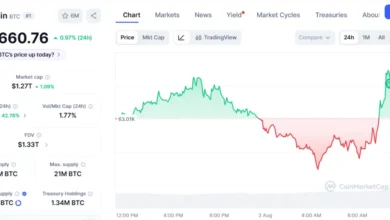
Initial market reactions were stark. Bitcoin briefly dipped below the $75,000 threshold as liquidity tightened and risk-off sentiment dominated trading desks. However, the anticipated "hangover" from the rate hike proved short-lived. By the following week, Bitcoin had staged a dramatic recovery, climbing past the $87,000 level. This rapid appreciation suggested that the rate hike had been largely "priced in" by institutional and retail participants alike. Futures markets, which had signaled a nearly 90% probability of the hike leading up to the Federal Open Market Committee (FOMC) meeting, served as a buffer, preventing the kind of systemic shock that might have otherwise triggered a prolonged selloff.
The Bond Market Catalyst: A Shift in Macroeconomic Pressure
While the rate hike was a known variable, the subsequent turbulence in the bond market caught many investors off guard. On September 23, the 10-year U.S. Treasury yield surged by more than 18 basis points, marking the most significant single-day increase since April 2025. This momentum continued into the following day, with yields breaching the 5.2% mark—a level of borrowing cost not observed since 2007. Simultaneously, the 30-year Treasury yield climbed toward 5.50%, echoing economic conditions last seen in 2004.
The drivers behind this bond market correction were multifaceted. A combination of robust Purchasing Managers’ Index (PMI) data, which signaled an unexpectedly strong economy, a lackluster five-year Treasury auction, and a spike in global oil prices created a "perfect storm" for bond sellers. Even an intervention by the U.S. Treasury, which executed a $4 billion buyback of long-dated bonds on September 24, failed to stem the tide of rising yields.

For Bitcoin, this presents a unique challenge. Unlike a central bank rate hike, which is a discrete, predictable policy action, a bond market selloff is an ongoing, market-driven phenomenon. When risk-free assets like U.S. Treasuries begin offering yields exceeding 5%, they present a direct, competitive alternative to non-yielding assets. Capital flows that had previously sought the speculative upside of digital assets began to face pressure to pivot toward the safety of high-yielding government debt.
Institutional Flows and ETF Performance
Data from Farside Investors provides a granular look at how institutional capital navigated this period of instability. Following the mid-September rate hike, spot Bitcoin ETFs witnessed an initial outflow of approximately $750 million. However, the subsequent recovery phase saw a massive reversal in sentiment; in the week ending September 25, these same products recorded inflows totaling $2.39 billion—the strongest weekly performance since October 2025.
Nevertheless, the character of these inflows changed as bond yields climbed. Daily data reveals a tapering effect: Monday began with robust inflows of $999 million, but by Friday, that daily figure had dwindled to $135 million. This cooling of demand suggests that while institutional interest in Bitcoin remains intact, the "opportunity cost" of holding crypto is rising in tandem with Treasury yields. Investors are now forced to reconcile the long-term potential of Bitcoin as a hedge against currency debasement with the immediate, high-yield reality of the current bond market.
Technical Analysis: The Breakout and Current Support
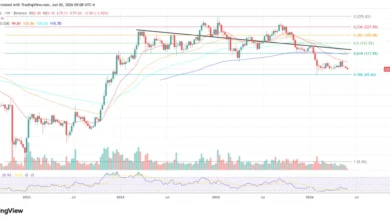
From a technical perspective, the current price action is highly significant. On the 3-day chart, Bitcoin’s breach of the $70,000 resistance level on August 20 initiated a consolidation phase near $80,000, which served as a springboard for the recent rally. This second breakout, pushing toward $87,000, is viewed by many analysts as the first confirmed "higher high" on higher timeframes since the onset of the bear market.
The moving averages further corroborate a structural shift in market momentum. The 20-period Exponential Moving Average (EMA) has crossed above the 50-period EMA on the 3-day timeframe—a development that has not occurred since November 2025. This crossover is historically regarded as a bullish signal, indicating that the short-term trend is realigning with the broader recovery.
Currently, the market is undergoing a natural retracement of its latest leg upward. Analysts are closely monitoring the $80,000 support level, which aligns closely with the 50% Fibonacci retracement level of the move from $75,000 to $87,000. As long as Bitcoin maintains its position above the $80,000 floor, the market structure remains constructively bullish. A sustained break below this level, however, would likely invalidate the recent breakout and invite further consolidation or a deeper retest of lower support zones.

Broader Implications and Market Strategy
The current macroeconomic environment has created a complex landscape for traders and institutional allocators. The rising cost of capital, reflected in bond yields, serves as a macro-headwind, while the structural technical recovery of Bitcoin serves as a micro-tailwind.
Market participants are increasingly utilizing sophisticated financial instruments to navigate this volatility. Platforms such as PrimeXBT have observed a shift in user behavior as traders look to manage risk across both traditional and digital asset classes. With the capacity to hedge against a potential pullback while simultaneously positioning for a resumption of the rally, traders are employing tools like Crypto Futures and CFDs to gain exposure without necessarily relying on long-only strategies.
The volatility seen in Bitcoin is also mirrored in gold, major currency pairs, and global equity indices. The correlation between these markets has intensified, as all are sensitive to the same inflationary and interest-rate pressures. For the modern trader, the ability to monitor these interconnected markets through integrated platforms is becoming essential. The shift in emphasis—from merely identifying the direction of the rally to actively managing trade execution and risk—reflects the maturation of the cryptocurrency market.
Conclusion: The Road Ahead
As the financial year enters its final quarter, the convergence of bond market instability and crypto-asset resilience will remain the primary focus of market participants. The "story" of the coming months will likely be defined by whether the U.S. Treasury can stabilize borrowing costs or whether the market will continue to demand higher premiums to hold long-term debt.
For Bitcoin, the ability to hold its recent gains despite a hostile bond market is a testament to its changing role in the portfolios of global investors. While the immediate effect of rising yields is visible in the tempering of ETF inflows, the underlying demand for digital assets as a hedge against fiscal deficit expansion persists. As evidence for the next market move emerges, the focus for the industry will remain on balancing the promise of long-term adoption against the immediate, high-pressure realities of the current macroeconomic cycle. Investors are advised to remain vigilant, as the combination of technical breakouts and macroeconomic headwinds suggests that the coming weeks will be pivotal in determining whether Bitcoin establishes a new, sustainable trading range or faces a period of renewed testing.
Related posts: