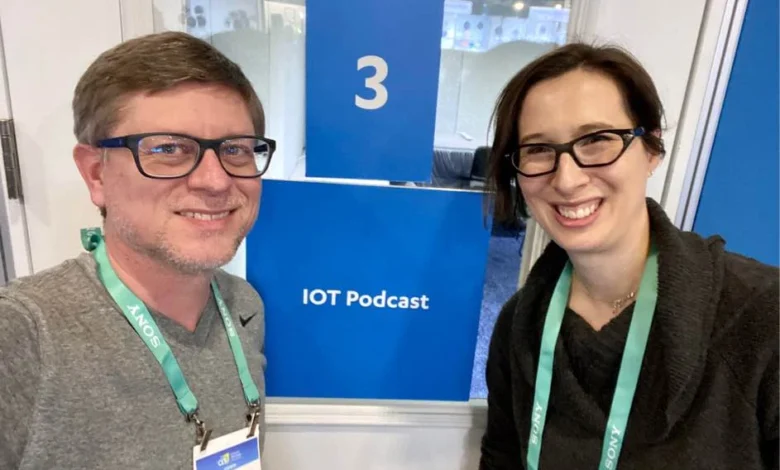
Stacey Higginbotham, a prominent voice in the technology journalism landscape and a long-standing authority on the Internet of Things (IoT), officially concluded her weekly newsletter and podcast series in August 2023. This transition marks the end of a seven-year independent venture that sought to demystify the complexities of an increasingly connected world. Higginbotham’s departure from the daily grind of tech reporting reflects a broader trend among long-form technology journalists who are shifting from immediate news cycles toward specialized research, advocacy, and consulting roles.
A Chronology of a Niche Media Empire
The journey that led to this announcement began in 2016. After a distinguished career as a senior editor at Fortune, where she focused on the intersection of technology and business, Higginbotham opted to strike out on her own. At the time, the independent media landscape was shifting toward subscription-based models, yet the decision to leave an established publication to focus exclusively on IoT was met with skepticism.
The subsequent seven years saw the creation of the Stacey on IoT brand, which grew into a foundational resource for engineers, enterprise architects, and tech enthusiasts. The timeline of her venture includes:
- 2016: Departure from Fortune and the launch of the Stacey on IoT newsletter and podcast.
- 2017–2019: Expansion of coverage as the smart home market matured, moving from early-adopter novelties to standardized ecosystems like Zigbee, Z-Wave, and the early whispers of the Matter protocol.
- 2020: A high-water mark for the industry, characterized by the CES 2020 conference, where the focus shifted toward AI-integrated home automation.
- 2021–2022: A period of intense scrutiny regarding privacy, security, and the "right to repair" movement within the connected device space.
- August 2023: The formal cessation of the weekly production schedule, signaling a pivot toward strategic consulting and project-based work at the Consumer Reports Innovation Lab.
The Macroeconomic Landscape of IoT
To understand why Higginbotham’s departure carries weight, one must examine the state of the IoT industry she covered. When she began in 2016, the "connected everything" movement was in its infancy. According to data from Statista, the number of IoT-connected devices worldwide was approximately 17 billion in 2016. By 2023, that number had surged to over 40 billion.
However, this explosive growth brought significant friction. The industry faced a "fragmentation crisis" that lasted nearly a decade, with proprietary ecosystems preventing interoperability. It was only in late 2022 that the Matter standard—a collaborative effort between Amazon, Apple, Google, and the Connectivity Standards Alliance—began to gain traction. Higginbotham’s work was instrumental in tracking these shifts, providing a bridge between the technical specifications of protocols and the practical realities of the consumer experience.
Analyzing the Shift in Technology Journalism
Higginbotham’s transition highlights a critical inflection point in professional journalism. The traditional news cycle, which demands immediate, high-frequency output, often struggles to accommodate the deep-dive analysis required to understand the long-term societal implications of emerging technologies.
Industry analysts suggest that we are seeing a migration of veteran reporters into "impact journalism" and policy-adjacent roles. By joining the Consumer Reports Innovation Lab, Higginbotham is moving from a role of observer and analyst to one of active participant in the setting of standards for cybersecurity and privacy. This move is consistent with the current industry focus on "Privacy by Design," an engineering philosophy that mandates the inclusion of data protection measures during the development phase of a product, rather than as an afterthought.
Implications for the IoT Ecosystem
The broader impact of this departure is twofold. First, it leaves a void in independent, critical analysis of the smart home market. While mainstream tech outlets cover IoT, few have the depth of institutional knowledge that Higginbotham cultivated over two decades.
Second, the industry is currently at a crossroads regarding its business model. For years, the standard path for connected devices was a transition from a one-time purchase to a subscription-based "service" model. This shift has been controversial, often leading to "bricked" devices when companies fold or terminate their backend support. Higginbotham’s recent work frequently highlighted these risks, arguing that the lack of long-term software support for consumer hardware constitutes a failure in corporate responsibility.
As she moves into her role at the Consumer Reports Innovation Lab, her focus on cybersecurity and privacy will likely influence how connected devices are tested and vetted for the mass market. Consumer Reports has historically acted as a gatekeeper for household safety, and integrating expert analysis of IoT vulnerabilities represents a significant evolution in how consumer advocacy groups address digital threats.
Official Perspectives and Future Directions
In her final newsletter, Higginbotham was clear about her motivations: a desire to escape the "daily and immediate news" cycle. Her burnout, which she acknowledged with candor, is a sentiment echoed by many in the technology reporting space who have witnessed the rapid acceleration of corporate surveillance and data-driven business models.
"I am increasingly cynical when it comes to new startups or research," Higginbotham noted in her final address. This cynicism is a common reaction among veteran journalists who have tracked the "hype cycle" of various technologies, only to see them fail to deliver on their promise of improving human life, instead prioritizing the optimization of the bottom line through invasive monitoring.
Despite stepping back from the weekly cadence, Higginbotham has signaled that she will remain active in the discourse via platforms like Bluesky and potential freelance contributions. Her outreach to the community remains open, specifically regarding the need for safer, more secure, and more transparent connected devices.
The Path Forward: Privacy and Regulation
The departure of a key voice like Higginbotham provides a moment for the industry to reflect on its trajectory. The next phase of IoT is likely to be defined by regulation rather than innovation alone. With the European Union’s Cyber Resilience Act and similar legislative efforts in the United States gaining momentum, the focus is shifting from "how can we connect this?" to "how can we secure this?"
Higginbotham’s transition to the Consumer Reports Innovation Lab places her at the heart of this regulatory and consumer-protection evolution. Her career arc—from generalist editor to technology specialist, and finally to consumer advocate—mirrors the trajectory of the technology itself: moving from the excitement of the "new" to the necessary work of ensuring that technology serves the user, rather than exploiting them.
As the industry moves toward a future defined by AI-driven environments and ubiquitous sensing, the expertise required to navigate these complexities will only become more vital. While the weekly newsletter may have ceased, the underlying issues—data privacy, the viability of subscription models, and the ethics of corporate surveillance—will remain at the center of the technology conversation for the foreseeable future. Through her new consulting work, Higginbotham will continue to shape that conversation, albeit from a different vantage point, ensuring that the critical questions she raised continue to find their way into the halls of innovation and the boardrooms of the companies that define our digital lives.