Google Unveils Agent Compute Engine and Expanded Governance Frameworks to Power the Global Era of Enterprise AI Agents


The rapid evolution of artificial intelligence from static, single-turn prompting to dynamic, highly autonomous multi-step agents has fundamentally transformed the architectural demands placed on modern data centers. As enterprises increasingly deploy intelligent agents to write and execute code, orchestrate complex enterprise workflows, manipulate web browsers, and interact with disparate corporate databases, cloud providers are forced to rethink foundational computing paradigms. Addressing this critical paradigm shift, Google has officially announced the upcoming preview release of the Agent Compute Engine, alongside an extensive expansion of its enterprise-grade agent governance capabilities. Unveiled at the AGNTCon and MCPCon developer conferences, these new tools are designed to provide the rigorous hardware isolation, rapid instantiation, and universal governance required to support planetary-scale AI deployments.
The announcement marks a pivotal milestone in a multi-year industry transition toward agentic computing. For decades, traditional cloud infrastructure primitives—such as standard virtual machines and stateless container services—were optimized for predictable, long-running software applications or transient web requests. However, the operational lifecycle of an autonomous AI agent is erratic, computationally intensive, and characterized by massive bursts of activity interspersed with periods of dormancy. Scaling Gemini to global production levels provided Google’s engineering teams with firsthand insight into these infrastructure bottlenecks. The transition from simple text generation to interactive agents requires an entirely new breed of execution runtime capable of supporting massive concurrent sessions without compromising security or responsiveness.
The Mechanics and Architecture of Agent Compute Engine
At the core of Google’s latest infrastructure rollout is the Agent Compute Engine, a purpose-built compute service specifically engineered to handle the unique demands of high-churn, iterative AI workloads. Unlike standard virtual machines, which can suffer from slow spin-up times and high overhead when managing thousands of parallel agent sessions, the Agent Compute Engine leverages advanced microVM technology to deliver extreme efficiency. Gautham Thambidorai, Vice President and Google Fellow for Gemini, emphasized the technical necessity of this approach, noting that scaling AI agents globally demands computing resources that can spin up rapidly while maintaining strict hardware isolation and high workload density.
The engine gives every individual agent its own high-performance, secure computing sandbox to act upon. This architecture is vital for use cases where agents must execute arbitrary code or utilize external tools on behalf of users. By isolating each session at the hardware level, the platform mitigates the inherent security risks associated with autonomous execution, preventing lateral movement or data contamination in multi-tenant environments. Furthermore, the underlying microVMs are optimized for the rapid lifecycle patterns typical of generative AI agents, ensuring that resources are allocated instantaneously when an agent receives a task and reclaimed efficiently when the workflow concludes.
Extending Kubernetes Flexibility with Agent Substrate
Recognizing that many enterprise platform teams and cloud-native organizations have already standardized their operations around Kubernetes, Google has simultaneously made Agent Substrate on Google Kubernetes Engine (GKE) available as an open-source execution runtime. This offering brings the same agent-first design philosophy found in proprietary Google systems directly to open-source infrastructure, granting platform teams unprecedented customization capabilities and multi-cloud portability.
Agent Substrate is built upon a zero-trust architecture that cleanly decouples agent execution from underlying machine management. One of the most innovative features of this architecture is its memory-snapshotting capability. When an autonomous agent becomes idle—waiting for human input or the completion of a background process—Agent Substrate captures its active memory state, snapshots it, and returns the host machine to the central resource pool. The moment the agent is required again, the system rapidly restores the memory state and resumes execution without missing a beat. This intelligent resource management prevents the chronic over-provisioning that traditionally plagues enterprise AI deployments, preserving valuable compute capacity while ensuring high availability.
Early adopters in the open-source and enterprise communities are already validating the efficacy of this approach. Hervé Bizira, Chief Business Officer at Nous Research, highlighted the practical advantages of the platform during its rollout, explaining how the company integrated Agent Substrate into its Hermes Enterprise solution. According to Bizira, the architecture successfully addresses per-agent isolation and extensible access control at the platform layer while preserving critical compute resources, offering strong confidence in its ability to scale alongside expanding enterprise workloads.
Tackling the Triple Challenge of Enterprise AI Governance
As organizations transition their artificial intelligence initiatives from isolated proof-of-concept pilots to expansive, multi-runtime production fleets, security architectures face an unprecedented convergence of threats. Industry analysts note that enterprise security teams currently grapple with a complex triple challenge when deploying autonomous agents at scale: securing dynamic, non-deterministic interaction paths across disparate models, tools, skills, and data repositories; maintaining a strict default-deny posture enforced through least-privilege access across distributed runtimes; and ensuring comprehensive, immutable audit trails for asynchronous agent actions that execute outside of direct human supervision.
Without robust governance frameworks, rapid agent proliferation inevitably introduces severe enterprise risks. These include the rise of unauthorized "shadow AI" deployments, dangerous data exfiltration pathways, and autonomous actions that cannot be easily reconstructed or audited during a compliance review. To combat these vulnerabilities, Google has systematically expanded the governance capabilities of its Gemini for business platform. Originally confined to centralized cloud environments, these security controls are now being extended across the entire enterprise ecosystem—spanning Google Cloud runtimes, third-party multi-cloud environments, on-premises data centers, and even edge client devices.
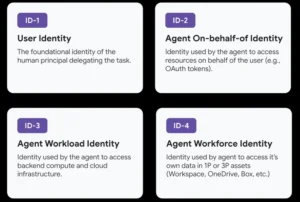
This expanded governance framework unifies identity management, enterprise security policies, and deep observability across diverse execution environments such as Cloud Run. Developers gain the speed and flexibility required to innovate rapidly, while security administrators retain absolute visibility and granular control over precisely which tools, datasets, and internal APIs each autonomous agent is permitted to access. Alexandre Frizzo, AI Lead Engineer at L’Oréal, underscored the operational impact of these controls, noting that Google Cloud’s unified agent governance provides the necessary foundation to scale the company’s Beauty Tech Agentic Platform with confidence, ensuring that innovation does not outpace security compliance.
Granular Cost Control and Intelligent Routing via Agent Gateway
Complementing the runtime and governance updates, Google also announced significant feature additions to Agent Gateway, scheduled to enter preview later this quarter. As enterprise agent deployments grow in volume and complexity, controlling operational expenditures and optimizing model performance have become top priorities for chief technology officers. The updated Agent Gateway addresses these concerns by introducing granular cost control mechanisms, intelligent model routing, and simplified customization pathways.
Intelligent model routing allows organizations to dynamically direct incoming agent prompts and tasks to the most cost-effective and capable large language model based on the complexity of the specific task. Simple summarization or data-formatting tasks can be routed to smaller, highly efficient models, while complex code generation or logical reasoning tasks are automatically elevated to flagship models like Gemini. This tiered approach prevents unnecessary token expenditure and optimizes overall infrastructure spend. Combined with simplified API integrations and customized policy enforcement, Agent Gateway equips enterprise architects with the financial and operational levers necessary to manage large-scale agent fleets sustainably.
Chronology and Timeline of the Agentic Infrastructure Evolution
The introduction of the Agent Compute Engine and Agent Substrate represents the culmination of a rapid technological acceleration that began taking shape in late 2022 and accelerated throughout 2023 and 2024.
- Late 2022 to 2023: The generative AI boom was defined primarily by single-turn user prompting, where human users interacted with standalone chat interfaces. Infrastructure demands during this phase focused heavily on high-throughput model inference, GPU cluster orchestration, and basic API rate-limiting.
- Late 2023 to 2024: Organizations shifted from simple conversational prompts toward multi-step agentic workflows capable of utilizing external tools, executing APIs, and chaining logical steps together. This transition exposed significant limitations in traditional serverless and virtual machine architectures, which struggled with the unpredictable lifecycles and security isolation requirements of autonomous agents.
- Early 2025: Cloud providers and enterprise platform teams began designing infrastructure purpose-built for agentic workloads. The release of open-source initiatives like Agent Substrate on GKE provided early validation for zero-trust, memory-snapshotting execution runtimes.
- Present (AGNTCon + MCPCon): Google formalizes this market evolution by unifying high-performance execution runtimes—via Agent Compute Engine and Agent Substrate—with universal, cross-cloud governance and intelligent gateway controls, establishing a comprehensive industrial baseline for the enterprise agent era.
Broader Economic and Industrial Implications
The commercial availability of purpose-built agent infrastructure signals a maturation phase in the enterprise adoption of artificial intelligence. For the past two years, the primary barrier to autonomous AI deployment was algorithmic capability—specifically, whether foundational models possessed the reasoning power to complete complex, multi-step tasks. Today, industry consensus suggests that while reasoning capabilities continue to advance rapidly, the primary bottleneck has shifted decisively to infrastructure, security, and governance.
By providing hardware-isolated sandboxes that spin up instantaneously and universal governance frameworks that enforce least-privilege security across multi-cloud topologies, cloud providers are effectively lowering the operational friction of deploying autonomous agents. This technological shift is expected to accelerate the replacement of legacy robotic process automation (RPA) tools and cumbersome enterprise software scripts with intelligent, self-directed AI agents capable of operating continuously across internal corporate networks and external web applications.
However, this transition also places heightened demands on corporate IT and compliance departments. As agents are granted the autonomy to execute business transactions, write code, and modify databases asynchronously, the reliance on immutable audit logs, strict identity verification, and automated cost management tools becomes non-negotiable. Platforms that successfully bridge the gap between high-performance execution and airtight governance—such as the newly announced Google ecosystem—are positioned to capture the lion’s share of enterprise IT budgets as the agentic era transitions from early experimentation to ubiquitous global deployment.