AWS Contributors Engage Global Open Source Communities at Open Source Summit Korea 2026 and MCP DevSummit Seoul 2026

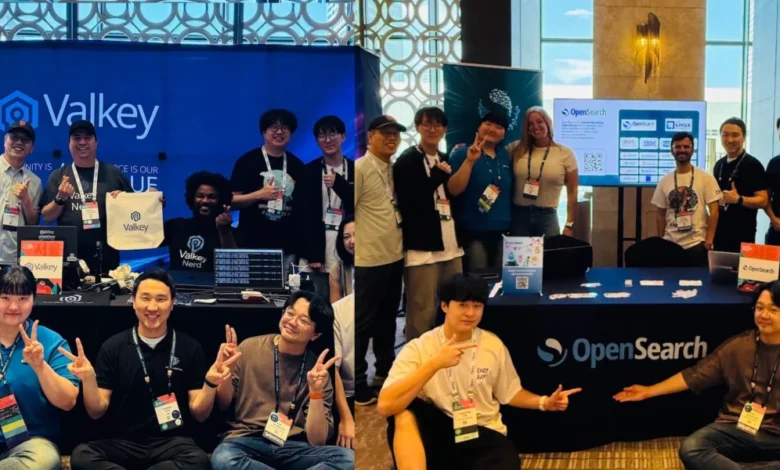
The global landscape of open-source software development continues to experience profound transformations driven by collaborative innovation, enterprise adoption, and community-led governance. Last week, Amazon Web Services (AWS) contributors converged upon Seoul, South Korea, to participate prominently in two of the region’s premier technology gatherings: the Open Source Summit Korea 2026 and the MCP DevSummit Seoul 2026. Over the course of four dynamic days, these high-profile conferences served as vital crossroads for developers, maintainers, enterprise architects, and technology leaders from across the Linux Foundation ecosystem. The primary objective of AWS’s participation was to foster direct engagement with the vibrant regional developer base, contribute engineering expertise to critical infrastructure projects, and highlight recent operational enhancements made to major open-source frameworks, specifically OpenSearch and Valkey.
The four-day dual-summit format provided an immersive environment for technical exchange, featuring keynote presentations, hands-on workshops, architectural deep dives, and collaborative hacking sessions. As modern enterprises increasingly rely on robust, scalable, and open data architectures to power complex applications, the significance of community-driven platforms has never been more pronounced. By actively participating in these forums, AWS reaffirmed its long-standing commitment to open-source stewardship, upstream contribution, and collaborative software development.
Background and Context of the 2026 Summits
Open Source Summit Korea 2026 stands as a premier regional nexus for the global open-source community, organized under the auspices of the Linux Foundation. Bringing together thousands of technologists, researchers, and enterprise stakeholders, the summit aims to advance the understanding and adoption of open-source technologies while cultivating a collaborative environment for cross-industry problem-solving. Co-located events, such as the MCP DevSummit Seoul 2026, further expanded the scope of discourse, zeroing in on specialized domains including Model Context Protocols, real-time data processing, high-performance caching systems, and modern observability suites.
South Korea’s technology ecosystem has historically maintained a reputation for rapid technological adoption, sophisticated digital infrastructure, and a highly active community of developers. Within this landscape, local user groups and regional open-source chapters play an instrumental role in bridging global upstream projects with domestic enterprise requirements. Recognizing this, AWS integrated its regional outreach strategy with the goals of the Linux Foundation events. Leaders from the Korean OpenSearch community volunteered extensively at the AWS-supported exhibition booths, facilitating hands-on demonstrations, answering complex architectural inquiries, and spearheading interactive networking sessions during a dedicated OpenSearch Project Seoul user group meetup.
Chronology of Recent Technical Milestones for OpenSearch and Valkey
To fully appreciate the significance of the discussions that took place in Seoul, it is necessary to examine the rapid pace of technological innovation that has characterized both the OpenSearch and Valkey ecosystems over the first half of 2026. Both projects have undergone major architectural revisions, introducing performance optimizations, security enhancements, and expanded feature sets that directly address the demands of modern cloud-native architectures.
The OpenSearch project, an open-source, enterprise-grade search and observability suite engineered to ingest, aggregate, and analyze unstructured data at scale, reached a major milestone on June 9, 2026, with the official release of OpenSearch 3.7. This iteration introduced a comprehensive suite of diagnostic and operational tools designed to streamline log analysis, trace tracking, and metric correlation through a unified interface. Crucially, OpenSearch 3.7 delivered significant performance gains for artificial intelligence and machine learning workloads, achieving vector retrieval speeds up to 5.5 times faster than previous versions. Building upon this upstream release, AWS made OpenSearch 3.7 generally available on Amazon OpenSearch Service starting July 30, 2026. This managed service integration empowered enterprise customers to harness advanced vector search capabilities, elevate search relevance, and leverage enhanced Query Insights without the operational overhead of managing underlying hardware infrastructure.
Simultaneously, the Valkey project—a high-performance, open-source key/value datastore engineered to support diverse workloads ranging from high-speed caching and real-time message queues to primary transactional data persistence—has achieved substantial maturation. On May 19, 2026, the project unveiled Valkey 9.1. This major release introduced a redesigned input/output (I/O) threading model that elevated overall system throughput by up to 17 percent while concurrently reducing memory footprint for string objects smaller than 128 bytes by up to 20 percent. Following this upstream milestone, Amazon Web Services integrated Valkey 9.1 into Amazon ElastiCache on June 23, 2026. This deployment model provided developers operating node-based clusters with dramatically higher throughput, optimized memory utilization, and granular access control features tailored explicitly for multi-tenant enterprise workloads.
Community Engagement and Localized Collaboration
The physical presence of AWS contributors at the Seoul summits underscored the fundamental philosophy of open-source software development: that sustainable innovation is born from active, face-to-face collaboration and shared ownership. Throughout the four-day event, technical sessions were characterized by deep dives into codebase optimization, operational troubleshooting, and architectural roadmapping.
A central highlight of the week was the active participation of Korean OpenSearch community leaders. Rather than acting merely as passive observers, local community organizers took leading roles in managing exhibition spaces, moderating technical discussions, and guiding newcomers through the intricacies of contributing to upstream repositories. This grassroots involvement culminated in a well-attended user group meetup hosted in Seoul, where developers shared localized use cases, discussed common engineering bottlenecks, and explored innovative ways to integrate OpenSearch with emerging cloud architectures.
Such localized interactions serve a dual purpose within the broader open-source ecosystem. First, they provide upstream maintainers with invaluable telemetry regarding real-world deployment challenges, edge cases, and feature requests that might otherwise go unnoticed in laboratory environments. Second, they empower regional developers by granting them direct access to core contributors and enterprise architects, thereby lowering the barrier to entry for prospective code contributors and documentation writers.
Statements and Industry Perspectives on Enterprise Open Source
While formal press statements from individual corporate executives at the event focused primarily on technical enablement, industry analysts and open-source advocates have increasingly emphasized the strategic importance of managed open-source services in modern enterprise architecture.
Observers note that the convergence of community-led innovation and hyperscale cloud delivery models has fundamentally altered how organizations evaluate infrastructure software. By participating in summits such as those held in Seoul, cloud providers like AWS demonstrate their commitment to open governance and prevent vendor lock-in, reassuring enterprise clients that their foundational data stores and search engines remain interoperable and community-driven.
Furthermore, independent software vendors and corporate IT leaders have voiced strong approval for the performance gains realized in recent iterations of Valkey and OpenSearch. The ability to achieve higher throughput in caching layers while simultaneously reducing memory consumption directly translates to lower capital and operational expenditures for organizations operating at web scale. Similarly, the dramatic acceleration of vector search performance in OpenSearch 3.7 addresses a critical operational bottleneck for enterprises deploying generative artificial intelligence and semantic search applications, allowing them to query massive vector embeddings with minimal latency.

Broader Economic and Technological Implications
The discussions and technical showcases at Open Source Summit Korea 2026 and MCP DevSummit Seoul 2026 carry significant implications for the broader technology sector across the Asia-Pacific region and globally. As artificial intelligence, machine learning, and real-time data analytics transition from experimental phases into mandatory components of enterprise infrastructure, the underlying data layers must scale accordingly.
The performance metrics demonstrated by Valkey 9.1—such as the 17 percent increase in throughput and the 20 percent reduction in small-string memory usage—demonstrate that mature key-value stores can still yield substantial efficiency gains through algorithmic and architectural refinement. In an era where data center energy consumption and hardware footprint are subject to intense scrutiny, optimizing memory efficiency directly contributes to more sustainable computing practices.
Simultaneously, the evolution of OpenSearch into a unified observability and search suite highlights a broader industry trend toward consolidation of monitoring tools. By enabling organizations to ingest logs, metrics, and traces into a single pane of glass while simultaneously accelerating vector retrieval for AI-driven search applications, platforms like OpenSearch reduce the operational friction associated with managing disparate monitoring silos.
Future Outlook and Upcoming Community Events
As the technology sector looks ahead to the remainder of 2026 and beyond, the momentum generated in Seoul is expected to ripple across subsequent international developer conferences. AWS contributors and community maintainers have scheduled a robust calendar of upcoming events designed to maintain this collaborative cadence. Developers seeking to engage directly with engineering teams, contribute code, or learn advanced architectural patterns can participate in a series of forthcoming community-led gatherings hosted globally by both the OpenSearch and Valkey projects.
For organizations and individual builders interested in staying abreast of ongoing infrastructure developments, continuous monitoring of official project roadmaps and cloud provider announcement channels remains essential. Comprehensive lists of upcoming AWS-led virtual and in-person events, startup symposia, developer-focused conferences, and regional AWS Summits are regularly updated through official channels, including the AWS Builder Center and the AWS What’s New portal. Through sustained community engagement, transparent upstream contribution, and enterprise-grade managed services, the open-source ecosystem continues to chart a resilient course toward scalable, high-performance, and collaborative software engineering.
Related posts: