IQOO Neo 12 Debuts in China with Snapdragon 8 Elite Gen 5 and an Active Cooling Fan for Upper Mid-Range Pricing

The smartphone market has long maintained a rigid hierarchy: flagship-tier processors and advanced cooling systems are historically reserved for ultra-premium devices carrying price tags well north of $1,000. However, brands operating under the broader Vivo umbrella, notably iQOO, have consistently challenged this paradigm by democratizing high-end hardware. The newly announced iQOO Neo 12 represents the most aggressive manifestation of this strategy yet, pairing silicon identical to that found in devices costing triple its price with specialized gaming-centric enhancements, an astonishingly large battery, and robust physical durability features.
Main Facts and Hardware Specifications
At the heart of the iQOO Neo 12 lies the Qualcomm Snapdragon 8 Elite Gen 5 processor. This is the exact same high-performance chipset that powers top-tier global flagships such as the Samsung Galaxy S26 Ultra, ensuring that CPU- and GPU-intensive tasks are handled with absolute efficiency. To maintain peak performance during sustained workloads—such as competitive mobile gaming or extended video rendering sessions—iQOO has integrated an advanced thermal management system. This setup features a custom 59-blade active cooling fan working in tandem with a massive "3D Ice Dome" vapor chamber, a hardware combination rarely seen outside of dedicated gaming phones.

The display hardware is equally formidable. The device is built around a generous 6.83-inch AMOLED panel boasting a 2K resolution and a remarkably high 185Hz refresh rate. For media consumption and outdoor usability, the screen delivers a peak brightness of 2,200 nits. Recognizing the eye strain often associated with high-refresh-rate OLED panels, iQOO has incorporated both DC dimming and 2,160Hz pulse-width modulation (PWM) dimming to safeguard user vision during prolonged viewing sessions.
As a device designed with mobile gamers in mind, the iQOO Neo 12 includes a dedicated custom display chip. This secondary processor assists the main Snapdragon silicon by driving an ultra-responsive touch sampling rate—matching the performance profile of the iQOO 16—and introducing a "super-sensitive gyro" designed to offer precise, lag-free motion aiming in competitive shooters.
Despite the inclusion of an active cooling fan—which traditionally introduces vulnerabilities to liquids and particulate matter—the iQOO Neo 12 boasts an impressive IP69 dust and water resistance rating. This high ingress protection level means the device can withstand high-pressure, high-temperature water jets and heavy dust exposure without sustaining internal damage. Powering this extensive hardware suite is an immense 9,000mAh battery, supported by 100W wired fast-charging technology. Additional hardware amenities include an in-display ultrasonic fingerprint sensor, an infrared (IR) blaster for home appliance control, and robust stereo speakers.

Camera Capabilities and Aesthetics
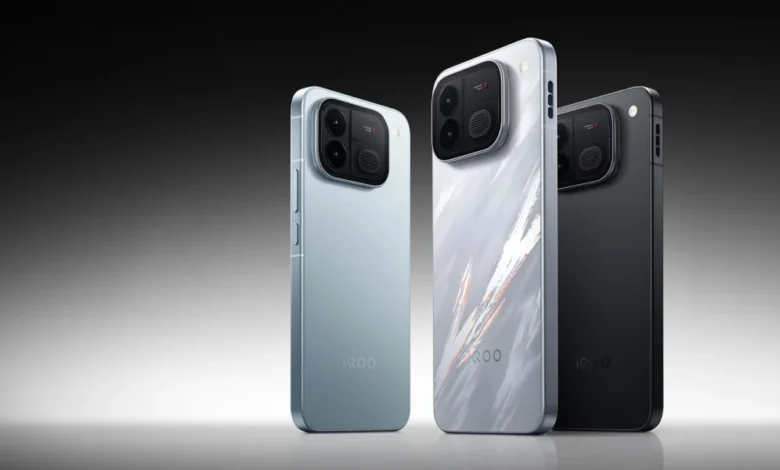
Photography duties on the iQOO Neo 12 are handled by a dual-camera array housed within a contemporary, raised camera island on the rear panel. The primary sensor is a 50-megapixel Sony IMX921, selected for its strong low-light performance and dynamic range capabilities. This sensor is complemented by an 8-megapixel ultra-wide-angle camera for capturing expansive landscapes and group photographs. For self-portraits and video calls, a 16-megapixel front-facing camera is integrated into a punch-hole cutout on the display.
Aesthetics and ergonomics have not been overlooked. The device is offered in three distinct colorways: Contender, Frost Blade Blue, and Shadow Black, catering to both understated preferences and aggressive gaming-inspired designs.
Background Context and Market Strategy
The launch of the iQOO Neo series fits into a broader, highly competitive trend within the Chinese smartphone market. Sub-brands and independent manufacturers frequently utilize aggressive pricing models to capture market share from traditional giants like Apple and Samsung. By focusing on raw performance metrics—such as benchmark scores, refresh rates, and battery capacity—these companies appeal directly to young professionals, tech enthusiasts, and mobile gamers who prioritize functional capability over brand heritage.

The inclusion of the Snapdragon 8 Elite Gen 5 in a mid-range contender underscores a shifting semiconductor landscape where chipmakers are widening the distribution of their flagship silicon. Furthermore, the incorporation of active cooling fans in non-niche devices signals that manufacturers are finding ways to make mechanical cooling solutions more reliable, durable, and commercially viable for the mass market, overcoming historical concerns regarding mechanical failure and dust accumulation.
Chronology of the Release and Availability
The iQOO Neo 12 made its official market debut in China, where pre-orders and immediate purchases opened through official channels, including the Vivo online store. While local availability is established, the manufacturer has maintained a cautious approach regarding international distribution. As of the initial release window, a formal global launch date has not been announced by iQOO, leaving international consumers awaiting confirmation of whether the device will cross over into markets in South Asia, Europe, or the Americas. Historically, select models within the Neo lineup find their way to international markets under modified branding or through specialized import channels, but official broader availability remains unconfirmed.
Industry Implications and Market Analysis
The release of the iQOO Neo 12 carries several important implications for the broader mobile industry. First, it exerts downward pressure on flagship pricing models. When consumers can access top-tier processing power, high-refresh-rate displays, and massive batteries at a fraction of the cost of traditional flagships, mainstream manufacturers may find it increasingly difficult to justify four-figure price tags for incremental annual upgrades.

Second, the normalisation of active cooling and extreme battery capacities in non-traditional gaming phones suggests that consumer expectations are evolving. As mobile games and applications demand more sustained processing power, the traditional passive cooling architecture of thin smartphones is increasingly inadequate. Devices like the iQOO Neo 12 demonstrate that thermal management will likely become a standard design consideration across a wider variety of product categories rather than remaining confined to niche gaming ecosystems.
Finally, the inclusion of an IP69 rating alongside a mechanical cooling fan proves that advanced durability and high-performance engineering are no longer mutually exclusive. As supply chains mature and manufacturing tolerances tighten, consumers can expect future mid-range devices to offer robust physical protection alongside uncompromising internal specifications, fundamentally redefining what constitutes value in the modern smartphone marketplace.