Microsoft expands its AI ecosystem with the public preview of the Copilot harness in Foundry Agent Service to streamline complex automation

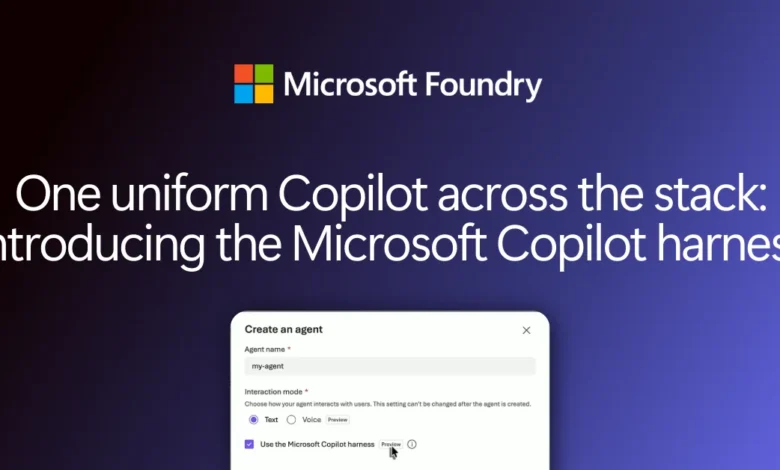
The landscape of enterprise artificial intelligence is shifting from simple chat-based interactions toward autonomous agents capable of performing multi-step, long-running tasks. To address the infrastructure challenges inherent in this transition, Microsoft has officially introduced the Microsoft Copilot harness within the Foundry Agent Service. This new offering, now in public preview, provides developers with a managed execution environment designed to orchestrate reasoning, tool utilization, and file management, effectively offloading the "plumbing" of agent development to the cloud provider.
The Evolution of Agentic Workflows
For years, the primary challenge for developers working with Large Language Models (LLMs) was prompting. However, as the industry moves toward agentic architectures, the focus has shifted to the "execution loop"—the machinery that connects a model to external data sources, code execution environments, and long-term memory. Previously, engineering teams were forced to build bespoke orchestration layers to manage state, handle tool-call retries, and ensure persistence across multiple steps. This redundant engineering work often detracted from the core value proposition of the software being built.
The Microsoft Copilot harness addresses this by providing a unified, opinionated foundation. By utilizing this framework, developers can define their agents declaratively, allowing the Foundry Agent Service to manage the underlying sandbox, model coordination, and context maintenance. This shift mirrors a broader trend in cloud computing: the move from Infrastructure as a Service (IaaS) to more specialized, high-level abstractions that handle the complexities of AI orchestration out of the box.
Chronology of the Foundry Ecosystem
The release of the Copilot harness is the latest in a series of strategic moves by Microsoft to consolidate its AI development tools. Since the launch of Microsoft Foundry, the company has sought to create a cohesive environment that balances the need for developer control with the convenience of a managed platform.
- Early 2024: Microsoft signals a shift toward agentic AI, emphasizing the need for agents that can perform tasks rather than just answer questions.
- Mid-2024: Introduction of broader "Hosted Agents" capabilities, allowing developers to bring their own frameworks to the Azure AI infrastructure.
- Late 2024: General availability (GA) of long-running resilience for hosted agents, ensuring that complex workflows can survive system interruptions.
- Current Date: Announcement of the Microsoft Copilot harness in public preview, providing a streamlined, managed path for building agents that utilize pre-configured skills and tools.
Technical Foundations and Resilience
A critical component of this rollout is the general availability of long-running resilience for hosted agents. In a production environment, agent tasks often span hours or days—such as processing massive datasets, conducting multi-source research, or coordinating supply chain negotiations. Without resilience, an unexpected server restart or network interruption could cause a total failure of the workflow.
The new resilience features allow for state checkpoints. When a system failure is detected, the agent can resume from its last completed stage rather than restarting from the beginning. This requires developers to design their workflows with idempotency in mind—ensuring that re-running a step (such as sending an email or updating a database) does not lead to duplicate actions. By providing the recovery foundation, Microsoft allows developers to focus on the business logic of "what" needs to be saved, while the infrastructure handles the "how."
Industry Impact: From Research to Production
The shift toward managed harnesses is expected to significantly shorten the time-to-market for enterprise AI solutions. Early adopters have already reported substantial efficiency gains. Chris Evans, Chief Technology Officer at Confluence Technologies, noted that his team was able to move from concept to a functional solution in less than a week by leveraging the new harness, allowing them to prioritize design and capability over backend infrastructure.
The implications for sectors like logistics and manufacturing are particularly noteworthy. Orlando Ribas Fernandes, CEO of Fashable, highlighted how these tools enable "governed, measurable agent workflows." By utilizing the Copilot harness, companies can automate complex sourcing and negotiation processes while keeping human oversight as a constant. The agents act as the engine of discovery and calculation, while the final commercial decisions remain anchored to human accountability.
Comparative Analysis of Deployment Options
Microsoft has structured its Foundry offering to provide a tiered approach to agent development, acknowledging that a one-size-fits-all model does not exist. The platform currently supports three distinct levels of abstraction:
- Prompt Agents (Standard): Ideal for straightforward tasks where the agent’s instructions and basic tool access are sufficient for the desired outcome. This represents the lowest level of complexity and overhead.
- Prompt Agents with Copilot Harness: The middle tier, recommended for developers who need sophisticated tool coordination, file handling, and sub-agent management but wish to avoid the burden of building a custom execution loop.
- Hosted Agents: The highest level of flexibility. This option is designed for advanced teams that need to implement custom middleware, unique agent loops, or specific runtime behaviors that the standard harness cannot accommodate.
This tiered approach allows organizations to start with the simplest viable architecture and migrate toward more complex frameworks only as the specific requirements of their applications demand.
Economic Considerations and Pricing
As of the current announcement, Microsoft has provided clear guidance on the cost structure of these new services. To encourage experimentation, the runtime usage of the Copilot harness will remain free until December 1, 2026. After this date, the company will transition to a consumption-based pricing model.
The pricing for the sandbox environment—which includes compute and memory—is set at $0.0994 per vCPU-hour and $0.0118 per GiB-hour. It is important to note that these costs are separate from standard model inference fees and the costs associated with specific connected tools or external APIs. This granular billing structure allows enterprises to forecast costs based on the duration and intensity of their agentic workloads.
Future Implications for Developer Tooling
The introduction of the Copilot harness represents a broader shift in the software engineering discipline. As AI agents become ubiquitous, the role of the developer is evolving from writing procedural code to defining declarative "skills" and "instructions." By housing these definitions in version-controlled files—such as the SKILL.md and azure.yaml structures demonstrated in the preview—Microsoft is standardizing how agents are developed, tested, and deployed.
This standardization is likely to foster a more robust ecosystem of reusable AI components. As more developers use the Microsoft Foundry toolkit, the ability to share and iterate on "skills" (such as research briefs, data analysis, or web navigation) will increase, potentially leading to a marketplace of pre-built capabilities that can be plugged into the Copilot harness.
Furthermore, the integration with tools like the Azure Developer CLI (azd) and the Foundry Toolkit for Visual Studio Code indicates a push to keep AI development within the traditional DevOps workflow. By keeping the agent definition alongside application code, Microsoft is minimizing the friction between AI development and traditional software engineering.
Conclusion
The public preview of the Microsoft Copilot harness in Foundry Agent Service is a strategic evolution in the enterprise AI space. By providing a robust, managed execution environment for agentic workflows, Microsoft is lowering the barrier to entry for building reliable, long-running, and scalable agents. While the market for AI agents is still in its infancy, the move toward managed infrastructure and standardized orchestration is a necessary step for the widespread adoption of AI in mission-critical business processes. As organizations move beyond simple chatbots, the infrastructure provided by the Copilot harness will likely serve as a foundational element in the next generation of enterprise software.
Related posts: