Strava expands AI integration to Google Gemini to provide personalized fitness insights for subscribers

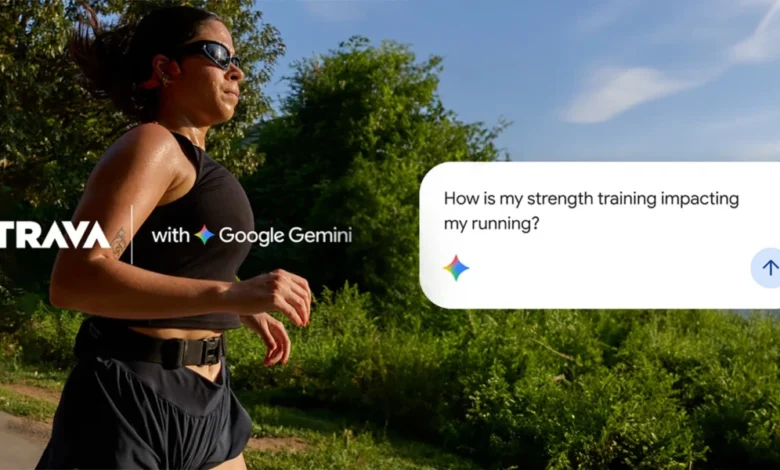
The fitness tracking industry is currently undergoing a significant paradigm shift as leading platforms move beyond simple data logging toward sophisticated, AI-driven performance coaching. This week, Strava, the world’s most prominent social network for athletes, announced a major expansion of its artificial intelligence strategy by integrating its data ecosystem with Google’s Gemini. This development allows Strava subscribers to bridge the gap between their raw workout statistics and actionable, personalized training guidance through natural language interactions. By leveraging the Model Context Protocol (MCP), Strava is positioning itself at the forefront of "agentic" fitness technology, where AI assistants act as proactive partners in a user’s health journey rather than mere calculators of distance and pace.
The Evolution of Strava’s AI Strategy
The integration with Google Gemini is not an isolated experiment but rather the latest milestone in a broader roadmap initiated by Strava earlier this year. The company’s trajectory toward AI-augmented fitness began in earnest with its adoption of the Model Context Protocol (MCP), an open-source standard originally championed by Anthropic. By adopting MCP, Strava created a standardized way for external AI models to interface with its private user databases, ensuring that data could be retrieved securely and efficiently without compromising user privacy.
When Strava first launched its Claude integration via MCP a few months ago, it set a new precedent for how fitness data could be queried. Instead of manually filtering through spreadsheets or navigating complex mobile app dashboards, users could simply ask the AI, "How has my interval training volume changed over the last three months?" or "Did my heart rate variability suggest I was overtraining during my last week of marathon preparation?" The success of this pilot program proved that users were hungry for a more conversational, intuitive way to interact with their biometric data.
The expansion to Google Gemini this week represents a scaling of this philosophy. By providing Gemini with access to the same contextual "knowledge base" of a user’s training history, Strava is enabling a more diverse range of users—particularly those already embedded in the Google ecosystem—to benefit from sophisticated performance analysis.
Understanding the Model Context Protocol (MCP)
To understand why this development is significant, one must understand the underlying technology. Historically, AI models like Gemini or Claude were "siloed." They possessed vast knowledge of the world, but they knew nothing about a specific user’s running pace, cycling power zones, or recovery patterns. If a user asked, "Should I run hard today?", a general AI would give a generic answer based on broad athletic principles.

The Model Context Protocol changes this dynamic. By acting as a secure "connector" or "bridge," MCP allows an AI to request specific, relevant snippets of data from the Strava API in real-time. Crucially, this integration is read-only. Strava has emphasized that the AI cannot alter, delete, or upload data to a user’s profile; it can only interpret the data provided to it to answer specific queries. This architecture is designed to address growing consumer concerns regarding data privacy and the autonomy of AI agents. By donating the MCP to the Linux Foundation’s Agentic AI Foundation, the developers have signaled an intent to make this a universal standard, suggesting that future fitness trackers, smartwatches, and health platforms will likely follow suit.
Chronology of AI Integration at Strava
The timeline of Strava’s digital transformation is illustrative of the rapid acceleration of AI in consumer health tech:
- Q1 2024: Strava begins exploring AI-assisted data analysis to help users interpret "hidden" trends in their activity logs.
- Mid-2024: Development begins on a secure API architecture compatible with the emerging Model Context Protocol.
- August 2024: Strava announces its initial integration with Anthropic’s Claude, allowing beta testers to query their workout history using natural language.
- October 2024: Following positive feedback from the initial rollout, Strava officially expands its AI partnership ecosystem to include Google’s Gemini.
- Current Status: The integration is live for Strava subscribers in the United States, with a focus on refining the "grounding" of AI answers to ensure they remain anchored in verified user activity history.
The Data-Driven Advantage for Athletes
For the casual athlete, the benefit of this integration is the transformation of "data fatigue" into "data clarity." Strava houses millions of data points—GPS tracks, elevation gain, power output, heart rate, and cadence. However, the sheer volume of this data can be overwhelming.
The Gemini integration allows for complex queries that were previously impossible without a professional human coach. Users can now ask questions such as:
- "Based on my last four long runs, am I maintaining my target marathon pace?"
- "Compare my cycling performance on hilly routes versus flat routes over the last month."
- "I’ve been feeling fatigued; can you show me if my total training load has increased significantly compared to last month?"
By grounding the AI’s answers in the user’s specific history, the platform provides "contextualized" advice. If a user is training for a specific race, the AI can cross-reference the user’s training load against standard training volume guidelines, providing a level of insight that was previously locked behind paywalls of proprietary coaching software.
Official Stance and Privacy Considerations
Strava’s leadership has been careful to frame this feature as an "optional" and "controlled" experience. The company’s announcement highlights that the integration is strictly opt-in, meaning no user data is fed into large language models (LLMs) without explicit user consent. Furthermore, the company has underscored the read-only nature of the connection to reassure users who are sensitive to the security of their location data and health metrics.

"Our goal is to make the data on Strava work for the athlete, not just sit in a static list," a representative from the company’s product team noted during the internal briefing. By positioning the AI as an assistant that helps interpret the "why" behind the "what," Strava aims to increase the retention of its subscription base. In an increasingly crowded market, where competitors like Garmin, Wahoo, and Apple are also bolstering their health insights, Strava’s ability to leverage LLMs to provide a conversational interface provides a unique value proposition that is difficult to replicate with traditional algorithmic dashboards.
Broader Implications for the Fitness Industry
The shift toward AI-integrated fitness platforms has profound implications for the sports technology industry.
- Democratization of Coaching: High-quality, data-driven coaching has historically been reserved for elite athletes who could afford human coaches. The marriage of AI and platforms like Strava effectively democratizes this access, allowing amateur athletes to receive professional-level analysis at a fraction of the cost.
- Increased User Engagement: By making data conversational, platforms can increase the frequency of user engagement. When an app becomes a "partner" that provides helpful insights, users are more likely to return to that platform, increasing the "stickiness" of the subscription model.
- The Rise of Agentic Tech: We are moving away from the era of "passive" apps that simply record data and toward "agentic" apps that take initiative. The future of this integration likely involves the AI proactively notifying the user, such as: "You have been increasing your intensity too quickly over the last two weeks; you might want to consider a recovery day."
- Data Integrity and Accuracy: As AI takes a more central role in health analysis, the accuracy of the underlying data becomes paramount. If a user’s wearable device records faulty GPS or heart rate data, the AI’s advice will be flawed. This creates a new pressure on hardware manufacturers to ensure that their data collection is precise enough to support AI interpretation.
Market Challenges and Future Outlook
While the rollout is currently limited to the United States, the scalability of this technology suggests a rapid global expansion. However, Strava faces several challenges. First, the accuracy of LLMs can be inconsistent; "hallucinations" in an athletic context could lead to poor training decisions or even injury if the AI suggests an aggressive training load that the user is not physically prepared for. Consequently, the company must ensure that its integration includes appropriate disclaimers and safety guardrails.
Second, there is the ongoing challenge of platform fragmentation. With integrations for both Claude and Gemini, users may be confused about which AI assistant to use. As the market matures, we may see a "choice architecture" where users can select their preferred AI model to act as their primary coach.
Finally, the success of this initiative will be measured by user retention and the actual improvement in athletic performance among subscribers. If the AI insights lead to more consistent training and fewer injuries, the investment in this technology will likely pay off. If, however, users find the insights repetitive or inaccurate, it could lead to "AI fatigue."
In conclusion, Strava’s expansion into the Google Gemini ecosystem is a bold step toward the future of personalized, AI-augmented health. By embracing open standards like the Model Context Protocol, the company is not only enhancing the utility of its platform but also setting the standard for how the broader tech industry should handle the intersection of private health data and public AI models. As these tools become more sophisticated, the line between a digital fitness log and a personal coach will continue to blur, fundamentally changing how we approach our health and training goals in the digital age.