Decoding the 2026 Labor Market: Which AI Skills Are Employers Actually Screening For Right Now

The contemporary global job market is undergoing a structural transformation characterized by an unprecedented integration of artificial intelligence across nearly every occupational sector. A cursory glance at any digital employment board reveals ubiquitous references to artificial intelligence, yet a profound operational gap persists between vague keyword requirements and the rigorous competencies employers actively evaluate during recruitment. This disconnect presents a critical challenge for professionals seeking to cultivate marketable capabilities rather than merely populating their resumes with fleeting technological buzzwords. Comprehensive employment data compiled across late 2025 and mid-2026 indicates that artificial intelligence has rapidly transitioned from an elite technical specialization into a ubiquitous baseline expectation, reshaping compensation structures, functional expectations, and hiring velocity on a global scale.
The Genesis and Acceleration of AI Hiring Metrics
To understand the current hiring landscape, one must examine the staggering velocity at which artificial intelligence requirements have proliferated across corporate recruitment pipelines. Comprehensive tracking of over 360,000 job listings gathered between late 2025 and mid-2026 establishes that artificial intelligence now ranks as the second most requested competency across all occupational categories, appearing in approximately twenty percent of total postings. This positions AI demand directly behind foundational communication skills while outstripping traditional technical mainstays such as Python, Structured Query Language (SQL), and enterprise cloud computing environments like Amazon Web Services (AWS).
The trajectory of this demand highlights an exponential acceleration. Longitudinal research conducted by Dice, which evaluated seven million technology-focused job listings in the United States, documented a dramatic surge in AI skill requirements, escalating from 15 percent of postings in January 2024 to an extraordinary 75 percent by mid-2026. Complementing these findings, labor analytics firm Lightcast—in data highlighted by the Bipartisan Policy Center—reported a 144 percent year-over-year increase in listings explicitly mandating artificial intelligence competencies. Within specialized data and analytics domains, the footprint of artificial intelligence is even more pronounced, surfacing in nearly 45 percent of all available opportunities.
This rapid ascension signals a fundamental shift in the global labor economy. Artificial intelligence fluency is no longer viewed merely as a professional differentiator; it has crossed the threshold into a foundational baseline expectation. Because this evolution has outpaced traditional educational and corporate upskilling timelines, professionals face mounting pressure to accurately identify and acquire the precise capabilities that hiring managers prioritize.
Categorizing Employer Demand: The Four Pillars of AI Competency
An analysis of contemporary recruitment data reveals that market demand is far from uniform. Employer expectations vary significantly across functional areas, clustering into four distinct capability categories: general artificial intelligence literacy and prompt engineering, agentic workflows and automation, machine learning foundations, and governance and responsible deployment.
AI Literacy and Prompt Engineering
At the broadest level, general AI literacy represents the most widely requested capability, extending across administrative, operational, and executive populations. This competency encompasses a functional understanding of the operational boundaries of generative models, effective execution strategies for daily tasks, and the capacity to critically evaluate machine-generated outputs rather than accepting them at face value.
Within this category, prompt engineering has experienced unprecedented growth. Dice market intelligence identified prompt engineering among the fastest-accelerating technical skills, registering a 253 percent year-over-year expansion. Furthermore, labor market insights published by LinkedIn in 2026 demonstrated a 70 percent annual increase in U.S. vacancies requiring AI literacy and prompting capabilities. Across aggregate datasets, specific proficiencies consistently surface: prompt engineering appears in seven percent of all listings, ChatGPT proficiency in six percent, and foundational familiarity with large language models in four percent.
Industry analysts emphasize a vital nuance: modern organizations are rarely recruiting standalone prompt engineers. Instead, prompting capability is increasingly integrated as a supplementary component within established occupational roles, functioning much like spreadsheet proficiency or advanced internet research skills. Workforce strategists frequently designate this phenomenon as "prompting plus domain expertise," where generative tools amplify existing professional proficiencies rather than replacing them.
Agentic AI and Workflow Automation
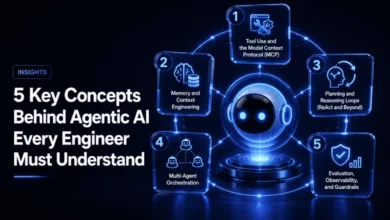
Representing the most rapidly expanding category by percentage change, agentic artificial intelligence and workflow automation are presently concentrated within advanced technical divisions. According to the 2026 Artificial Intelligence Index published by Stanford University, the proportion of technical job listings incorporating agentic AI rose from a mere 0.69 percent to 18.9 percent within a single twelve-month cycle. Dice’s broader analysis corroborates this expansion, documenting a 587 percent year-over-year increase in demand for agentic systems, alongside a 503 percent surge for specialized AI agents.
In practical operational environments, this translates to an urgent corporate need for professionals capable of configuring autonomous digital systems capable of executing multi-step workflows. These implementations frequently leverage advanced architectures such as retrieval-augmented generation (RAG), specialized vector databases, and sophisticated agent orchestration frameworks. A focused review of 390 specialized AI engineering listings in 2026 revealed that 56 percent demanded expertise in artificial intelligence evaluation, 50 percent required experience with autonomous agents, and 26 percent mandated direct proficiency in RAG protocols.
For non-technical personnel, the primary implication is not an expectation to architect these systems independently, but rather a requirement to comprehend agentic workflows sufficiently to collaborate effectively alongside dedicated engineering units.
Machine Learning Foundations
Despite the meteoric rise of newer generative frameworks, machine learning remains the most consistently requested foundational technical competency across the historical span of AI recruitment. These capabilities are primarily concentrated within software engineering, data science, and advanced research divisions, though the underlying terminology has permeated broader organizational tiers.
The distinguishing feature of the 2026 market is a heightened demand for specialization. While historical listings frequently treated machine learning as a monolithic requirement, contemporary employers actively recruit for discrete phases of the machine learning lifecycle. Particular emphasis is placed on rigorous model evaluation, fine-tuning protocols, and machine learning operations (MLOps)—the complex infrastructure and methodological pipelines required to transition experimental models into stable production environments.
Concurrently, data engineering has emerged as a critical bottleneck. Recruiter search metrics from platforms such as SignalHire indicate that demand for data engineering professionals frequently outpaces vacancies for dedicated AI engineers and data scientists. This trend underscores a pragmatic corporate realization: organizations investing heavily in artificial intelligence capabilities frequently encounter insurmountable infrastructure challenges at the foundational data layer long before reaching the modeling phase.
AI Governance, Ethics, and Responsible Implementation
The domain of artificial intelligence governance occupies a complex position within contemporary labor metrics. On one hand, LinkedIn’s 2026 analyses position responsible AI and governance as paramount priorities for enterprise-side leadership. Microsoft’s 2026 Work Trend Index underscores this urgency, revealing that nearly half of all corporate interactions with digital assistants now center on complex cognitive tasks—including advanced data analysis, strategic evaluation, and decision support—thereby elevating the financial and operational stakes of output accuracy and ethical compliance.
Conversely, direct keyword analysis of general job postings reveals a more subdued landscape, with governance and responsible AI terminology appearing in approximately 1.5 percent of total listings. This discrepancy suggests that while corporate leadership recognizes the long-term imperative of ethical oversight, formal hiring pipelines remain in nascent stages. Projections from the World Economic Forum indicate that 22 percent of current jobs will undergo structural transformation by 2030, a shift that will inevitably force organizations to institutionalize compliance and ethics frameworks.
At present, governance capabilities rarely serve as an entry-level hiring filter; instead, they function as an essential differentiator for senior and principal-level appointments. Data from Qarera demonstrates that artificial intelligence competencies appear in nearly 40 percent of principal-level listings, doubling the baseline average across all tiers.
Cross-Functional Penetration: Beyond the Technology Sector
One of the most profound developments documented in 2026 labor data is the widespread migration of artificial intelligence requirements outside traditional information technology departments. Lightcast metrics reveal that 51 percent of job postings mandating AI competencies originate outside computer science and IT, penetrating deep into healthcare, financial services, corporate marketing, and human resources.
Within product management, artificial intelligence proficiency was identified as a core requirement in 37 percent of listings evaluated by Qarera. Corresponding figures registered at 23.1 percent for professional design roles and 19.1 percent for business analysis functions. These roles do not require software development capabilities; rather, they reflect a pervasive corporate expectation that non-technical professionals must possess the analytical literacy required to direct, evaluate, and integrate automated systems within their daily operational workflows.
Economic Implications: Compensation Premiums and Return on Investment
Labor market analytics consistently demonstrate a tangible financial premium associated with artificial intelligence proficiency. Aggregated data across multiple major recruitment platforms indicates that job postings incorporating AI competencies command base salaries approximately 28 percent higher than equivalent roles devoid of these requirements. Within non-technical disciplines—where AI fluency is layered atop established professional expertise—reported compensation uplifts range between 35 and 43 percent.
In specialized technical domains, compensation packages reflect acute talent scarcity. Roles positioned at the intersection of data infrastructure and machine learning, particularly data engineering, command national U.S. midpoint salaries averaging approximately $153,750. While specialized AI and machine learning engineering roles continue to command robust compensation, the market has undergone a degree of junior-level normalization as the educational pipeline produces a larger volume of qualified candidates.
Hiring executives emphasize that this compensation premium rewards tangible business outcomes rather than superficial technical familiarity. Recruitment professionals consistently advise candidates to highlight quantifiable efficiencies on their resumes—such as detailing how a specific automated workflow reduced process execution times from hours to minutes—rather than merely enumerating software proficiencies.
Dispelling Common Misconceptions in the Modern Hiring Market
An examination of comprehensive recruitment datasets helps dispel several widespread myths regarding artificial intelligence in the contemporary workplace.
First, prevailing industry data refutes the assumption that all valuable AI skills necessitate computer programming capabilities. Many of the most sought-after competencies—including general AI literacy, domain-specific prompt engineering, workflow automation, and governance frameworks—can be mastered entirely without code. Workforce development research suggests that foundational literacy and prompting proficiency can be acquired through as little as 30 hours of focused, practical application.
Second, the data challenges the notion that standalone credentials or certifications are sufficient to secure employment. Modern job descriptions overwhelmingly demand a hybrid profile, where artificial intelligence capabilities serve to amplify existing domain expertise rather than supplant fundamental professional qualifications.
Third, market indicators dismantle the belief that professionals enjoy the luxury of a gradual, protracted transition period. The rapid escalation of technical job postings requiring AI capabilities from 15 percent to 75 percent in an eighteen-month span indicates that the window for securing a competitive advantage via artificial intelligence fluency is closing rapidly.
Strategic Outlook and Future Implications
Ultimately, comprehensive labor market data indicates that the optimal skill development strategy is inextricably linked to an individual’s specific occupational trajectory. Technical professionals engaged in building production-grade infrastructure will derive maximal career return from mastering MLOps, model evaluation, retrieval-augmented generation, and agentic frameworks. Conversely, business and operational professionals will secure immediate professional leverage through rigorous AI literacy, domain-specific workflow optimization, and foundational governance comprehension.
Across all sectors, a unified principle emerges: the modern labor market rewards the synthesis of artificial intelligence capability with deep, demonstrable domain expertise. Rather than replacing traditional professional knowledge, AI proficiency has established itself as an indispensable operational layer, redefining the parameters of productivity, compensation, and career advancement in the global economy.