AWS Announces Public Preview of Well-Architected Agent: An AI-Powered Evolution in Cloud Infrastructure Optimization

Amazon Web Services (AWS) has officially announced the public preview of the AWS Well-Architected Agent, an advanced, AI-driven service designed to autonomously analyze complex cloud environments and deliver targeted, contextual recommendations for optimizing application cost, security, performance, and resilience. Moving beyond traditional manual audits and rigid, generic checklists, the newly introduced agent evaluates an organization’s infrastructure with the sophisticated reasoning of an experienced cloud architect, aligning technical configurations directly with declared business goals and providing ready-to-implement remediation packages.
The introduction of the AWS Well-Architected Agent marks a significant milestone in the ongoing evolution of automated cloud governance. For years, enterprises have relied on the AWS Well-Architected Tool, a framework that requires teams to manually answer questionnaires and assess their workloads against established cloud best practices. While immensely valuable, manual reviews can often become outdated rapidly in fast-paced DevOps environments where infrastructure changes daily. By harnessing artificial intelligence to continuously evaluate resource configurations, utilization metrics, and application topology against best practices across more than 65 AWS services, the Well-Architected Agent bridges the gap between high-level architectural guidelines and day-to-day operational execution.
Understanding the Mechanics and Core Features of the Agent
At its operational core, the AWS Well-Architected Agent functions by evaluating an enterprise’s cloud environment holistically. Rather than examining isolated resources in a vacuum, the AI service correlates utilization metrics, configuration data, and application dependencies to understand the broader architectural context. It then cross-references this information against the established pillars of the AWS Well-Architected Framework: operational excellence, security, reliability, performance efficiency, and cost optimization.
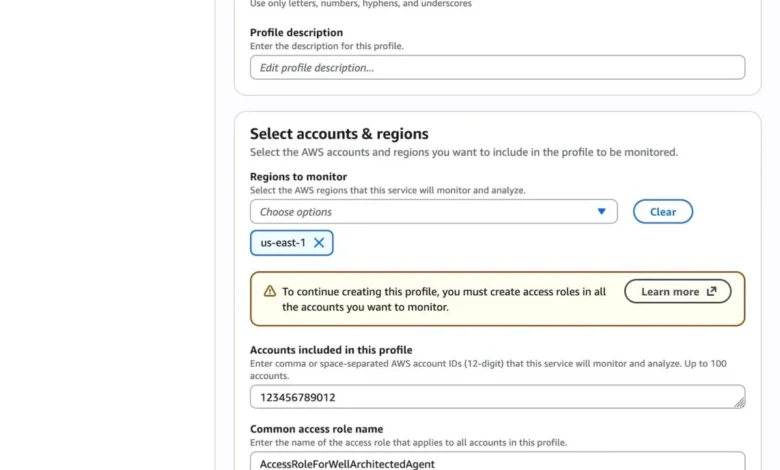
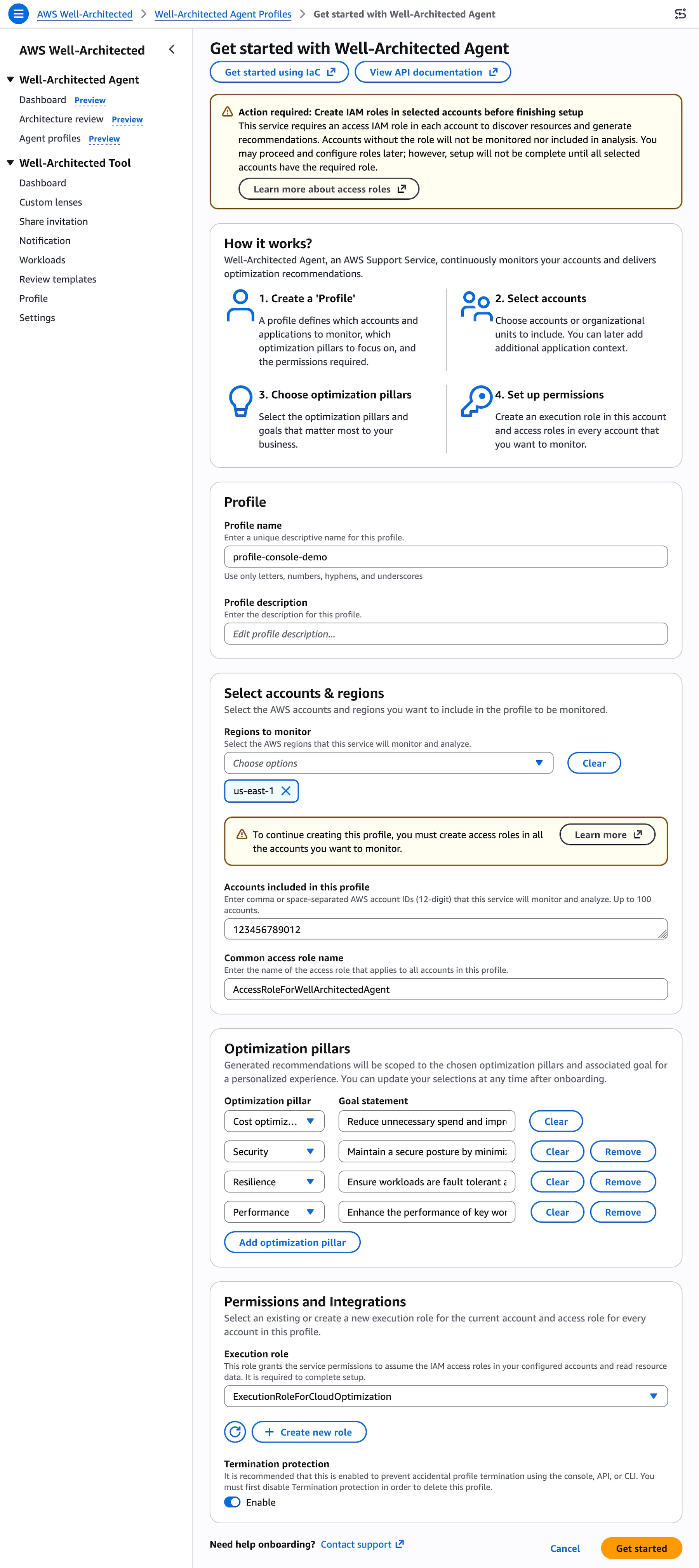
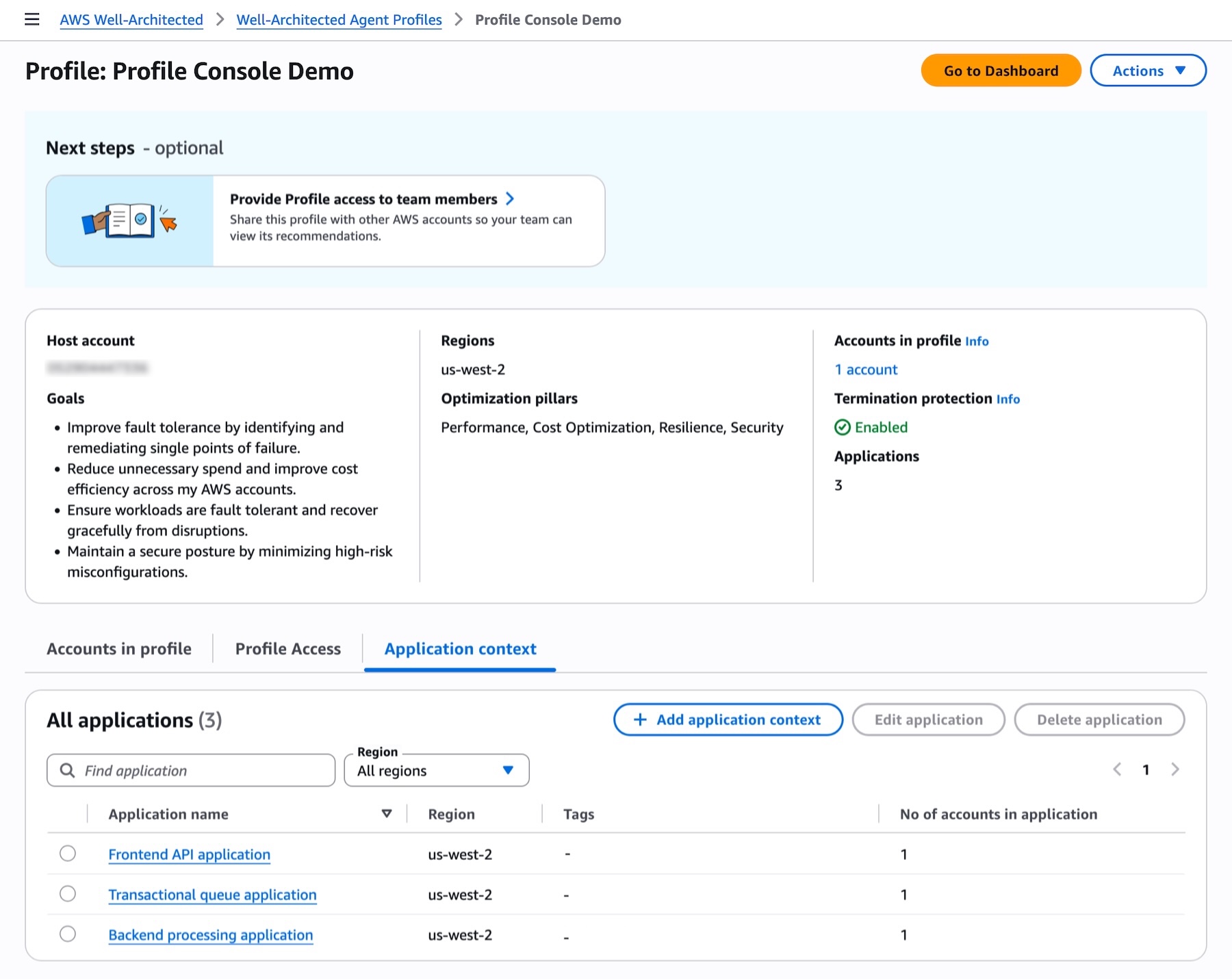
To deploy and utilize the service, cloud administrators begin by creating a customized agent profile within the AWS Well-Architected console. This profile allows organizations to explicitly define the operational scope, specifying precisely which AWS accounts, regions, and applications the agent is permitted to monitor and analyze. Furthermore, teams can designate optimization pillars of paramount importance to their specific business models and establish customized goals for each pillar.

Once the profile is established, security access is provisioned through customer-managed Identity and Access Management (IAM) roles, granting the agent read-only access to necessary resource configurations, utilization metrics, and topology maps. Within twenty-four hours of initial profile creation, the agent generates its first comprehensive wave of resource and application recommendations.
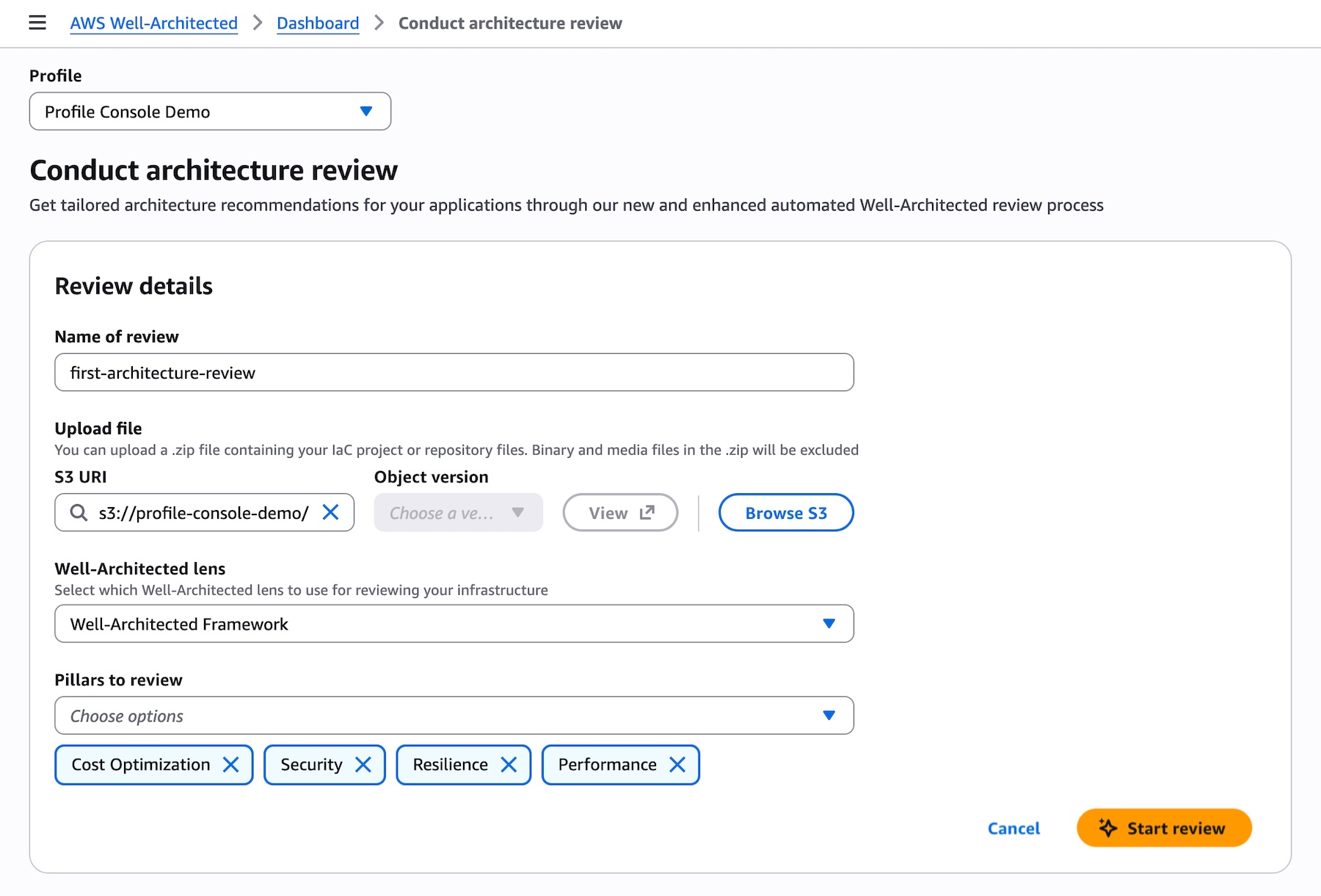
Beyond runtime environment analysis, the agent also addresses pre-deployment workloads through Infrastructure as Code (IaC) reviews. Development and engineering teams can upload a compressed ZIP file containing an IaC project—supporting popular frameworks such as Terraform, AWS CloudFormation, or the AWS Cloud Development Kit (CDK)—directly into the dashboard. The agent analyzes these templates against chosen Well-Architected lenses, catching potential architectural flaws, security misconfigurations, or scalability bottlenecks before code ever reaches production environments.
To ensure recommendations are as relevant and actionable as possible, the service incorporates an application context feature. By associating specific AWS accounts, regions, services, and resource tags with defined business applications, the agent tailors its insights to match organizational boundaries.
Prioritized Recommendations and Streamlined Remediation
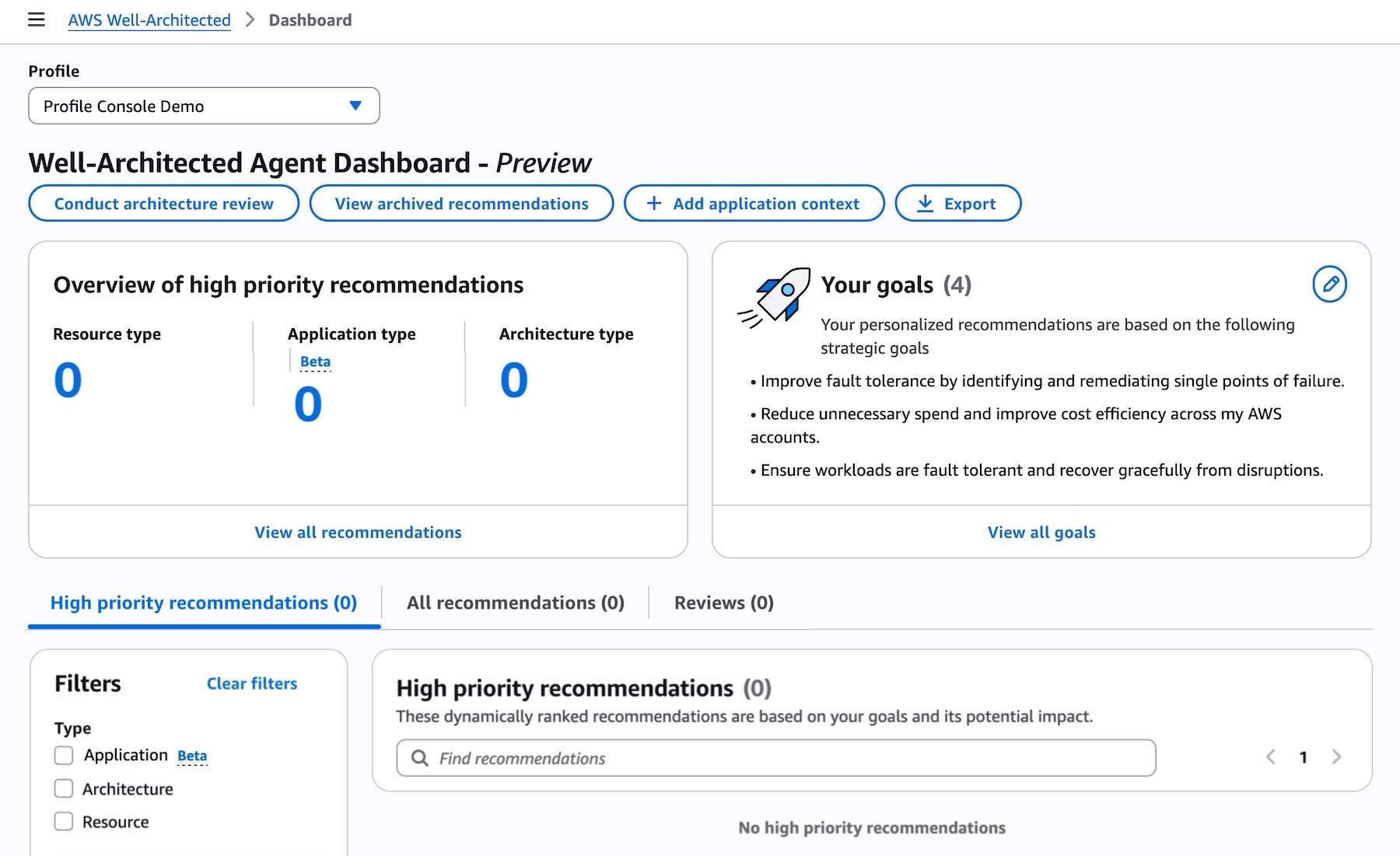
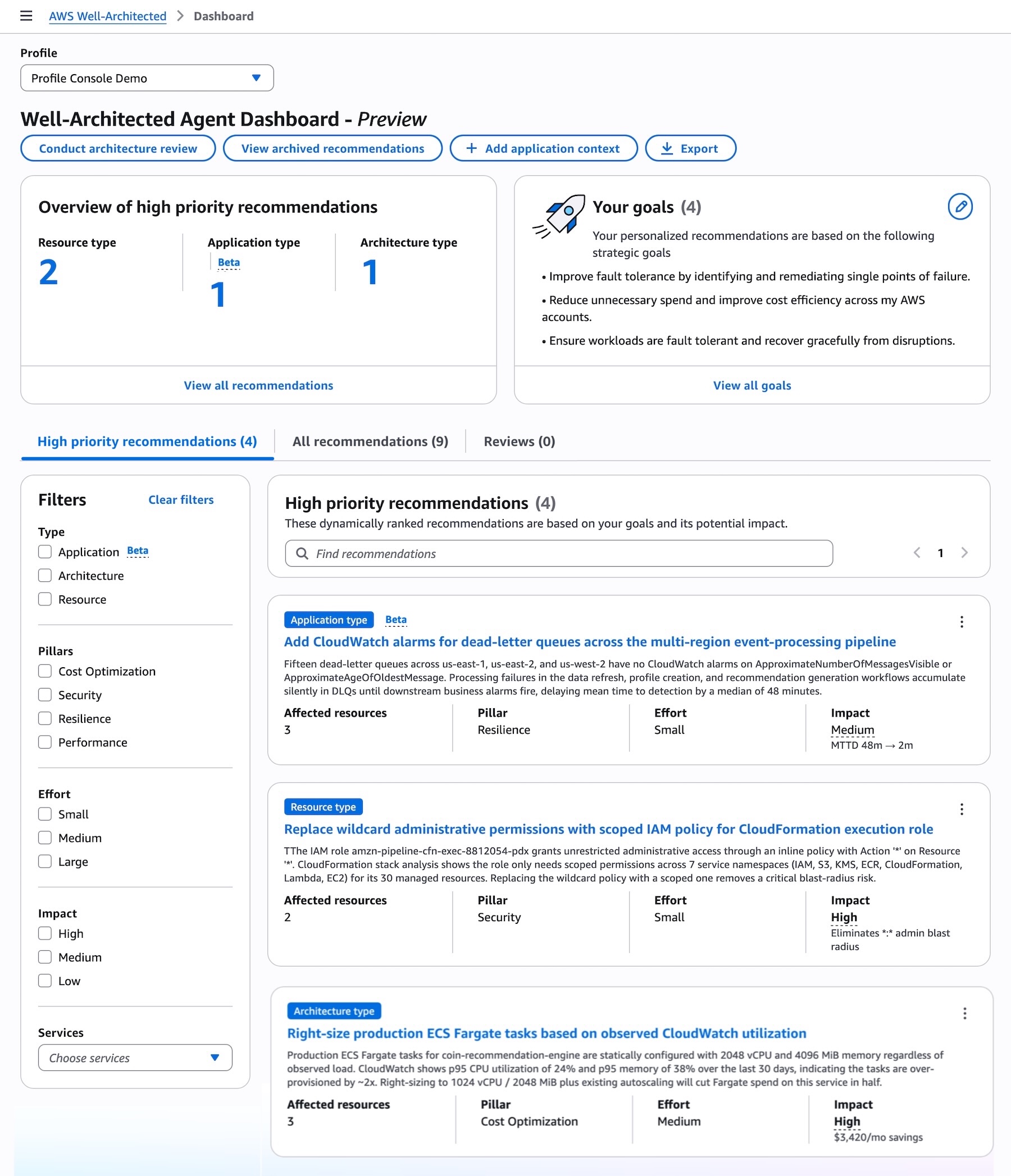
One of the primary challenges IT and engineering departments face when reviewing automated cloud assessment reports is alert fatigue. Modern cloud environments generate thousands of optimization findings daily, making it difficult to determine which issues pose genuine operational risks or financial drains. The AWS Well-Architected Agent mitigates this issue by producing a prioritized list of recommendations ranked directly against the organization’s declared business goals.
When an engineer selects a specific recommendation within the console, the service provides an exhaustive breakdown of the finding. This includes deep insights into the underlying rationale for the suggestion, an analysis of potential cross-pillar trade-offs—such as how a security enhancement might impact cost or performance—and pinpointed fixes affecting specific AWS resources.
Crucially, the agent does not merely identify problems; it facilitates immediate action through its streamlined remediation pathways. Users can choose to execute fixes via the AWS Management Console, CLI commands, or by integrating updated IaC templates directly into their version control systems. For example, if the agent detects a suboptimal resource configuration defined in an AWS CDK script, it automatically generates the necessary code modifications. Engineers can simply copy these validated code snippets into their codebase, significantly accelerating the remediation lifecycle.
Furthermore, development and operations teams can configure API access to ingest these recommendations directly into existing enterprise workflows. By leveraging the AWS Model Context Protocol (MCP) Server and associated plugins, developers can interact with the agent programmatically and query documentation using their preferred AI-assisted coding tools.
Background Context, Availability, and Deployment Prerequisites
The launch of the Well-Architected Agent arrives amid a broader industry push toward autonomous IT operations and generative AI integration across enterprise software stacks. As multi-cloud and hyper-scale cloud environments grow exponentially in scale and complexity, human-only oversight of cloud architecture has become increasingly unsustainable. AWS has steadily introduced automation layers to assist engineers, but the Well-Architected Agent represents the first time deep architectural reasoning has been productized into an autonomous agentic workflow capable of cross-correlating metrics, codebases, and business objectives.
During its initial public preview phase, the AWS Well-Architected Agent is available in three specific AWS Regions: US East (N. Virginia), US East (Ohio), and US West (Oregon). However, organizations are not restricted to these regions for their source material; customers can onboard and analyze workloads originating from any commercial AWS Region globally.
Access to the service is tied to AWS Support, meaning the capability is available to customers maintaining an active AWS Support plan. While the new agentic service offers advanced automated intelligence, AWS has confirmed that the legacy AWS Well-Architected Tool will remain fully operational, allowing users to continue conducting manual evaluations and employing custom user-defined lenses tailored to bespoke internal best practices.
Broader Industry Implications and Fact-Based Analysis
The introduction of specialized architectural AI agents carries profound implications for the cloud computing landscape, particularly regarding the roles of Cloud Architects, Site Reliability Engineers (SREs), and FinOps practitioners. Historically, maintaining strict adherence to architectural best practices required dedicated periodic reviews, expensive external audits, or continuous manual oversight by senior engineering talent. By automating the correlation of topology, metrics, and IaC templates, AWS is effectively democratizing enterprise-grade architectural governance.
For small and medium-sized enterprises (SMEs) that may lack the resources to employ full-time dedicated cloud architects, the Well-Architected Agent acts as an affordable, always-on virtual consultant. It provides proactive guardrails that prevent common pitfalls, such as unencrypted storage buckets, over-provisioned compute instances, or single points of failure within critical application paths. Meanwhile, for large enterprises managing thousands of distributed microservices, the agent reduces the cognitive load on internal platform engineering teams, allowing them to focus on feature delivery and strategic innovation rather than routine infrastructure hygiene.
However, industry analysts note that the rise of autonomous remediation tools also places a heightened premium on robust testing and validation pipelines. Because the agent can generate updated Infrastructure as Code templates and suggest direct configuration changes, organizations must ensure their automated CI/CD deployment pipelines maintain stringent unit and integration testing. Unsupervised or blindly accepted automated code changes, even those generated by sophisticated AI models, carry inherent risks of introducing breaking changes if not properly vetted by human engineers.
Next Steps for Cloud Practitioners
Organizations interested in evaluating the new service can begin immediately by accessing the AWS Well-Architected console within the supported US regions. To ensure a smooth onboarding process, administrators must ensure that appropriate IAM permissions are established to grant the agent read access to the designated cloud inventory. Feedback regarding the public preview can be submitted directly through standard AWS Support channels, enabling the engineering teams to refine capabilities, expand regional availability, and incorporate user insights ahead of the service’s eventual general availability release.
Related posts: