What happens when your organization scales from dozens of AI agents running on a handful of platforms to hundreds or thousands of agents?


This transition represents the next frontier in enterprise digital transformation, moving beyond the era of isolated, experimental chatbots toward an interconnected ecosystem of "agentic" workers capable of performing complex, multi-step business processes. As organizations move from small-scale pilots to mass deployment, they face significant operational challenges regarding governance, reliability, and the sheer complexity of managing non-deterministic systems.
The Rise of the Agentic Workforce
The momentum behind this shift is substantial. An August 2026 report indicates that 66% of enterprises are expected to invest heavily in digital workers within the next 12 months. This surge is driven by the widening industrial workforce capacity gap, where AI agents are increasingly tasked with filling roles that require high-speed data processing, consistent decision-making, and round-the-clock availability.
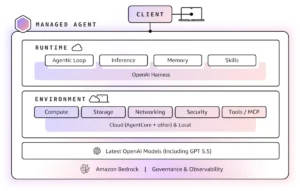
However, moving to this scale is not merely a matter of deploying more code. It requires a fundamental shift in infrastructure. As the number of agents grows, IT, data, and security leaders are turning to AI agent orchestration platforms—a category that has ballooned to over 60 commercial and open-source solutions. These platforms serve as the central control plane, managing the intricate web of agent-to-agent and human-to-agent interactions that define a modern, automated enterprise.
The Imperative of Open Standards
The long-term viability of these ecosystems rests on interoperability. Jonathan von Ruden, chief AI officer and head of platform and AI at SAP, emphasizes that the future of agent orchestration depends on openness. Without common, interoperable standards, organizations risk creating fragmented, "siloed" AI environments that are difficult to manage and prone to security vulnerabilities. Open standards are essential for maintaining control over how agents access enterprise data and ensuring that governance policies remain consistent across different clouds and applications.
Financial Accountability and Tokenomics
As organizations scale, the "black box" nature of AI spending can quickly become a liability. The concept of "tokenomics"—the rigorous tracking of costs alongside the business value delivered—is becoming a critical FinOps capability. Leaders are now evaluating AI agents against the same financial metrics used for traditional business units, including revenue growth, customer retention, cost reduction, and capacity gains.
Rob Scudiere, CTO at Verint, highlights the necessity of this alignment: "Every agent has to be measured against revenue growth, customer retention, cSAT, cost reduction, eNPS, and capacity gains—the same numbers a CFO already tracks. Gaps in measurement mean you can’t prove ROI, optimize routing, or determine where to invest further." Failure to implement these controls leads to "AI cost debt," a significant risk for companies that prioritize speed of deployment over financial visibility.
The Shift to Continuous Testing and Evaluation
In traditional software engineering, CI/CD pipelines are the bedrock of stability. In the world of AI agents, this role is filled by "evals"—natural language expressions used to determine an agent’s accuracy, reasoning capability, and adherence to quality factors.
Vishal Sood, president of R&D at Typeface, notes that orchestrating agents without evaluation is akin to running a CI/CD pipeline without tests. "Evals and telemetry tell you whether the output was good and feed that back into the next run. A pipeline that ships without checking isn’t resilient; it’s just fast." Today’s top platforms are increasingly integrating "LLM judges" and evaluation feedback loops, mirroring the automated testing standards that became industry norms during the cloud migration era.
Runtime Governance and Security
The most significant hurdle to scaling AI agents is the risk of unauthorized access to sensitive information. Unlike deterministic applications, AI agents interact with data in unpredictable ways. Therefore, static access controls are insufficient. Modern orchestration requires "governance built into execution," where the request context is evaluated against security policies at runtime.
Chetak Shankar of UiPath argues that governance must be proactive, not retroactive. "Policy enforced and audit trails captured the moment an agent acts, not reconstructed after something breaks," he states. This sentiment is echoed by Gil Elbaz of Onyx Security, who points out that runtime protection must understand user intent to ensure agents stay within permitted paths. For developers, this means utilizing APIs that grant short-lived, narrowly scoped access to resources, ensuring that every action taken by an agent is fully attributable and auditable.
Standardizing Decision Observability
Observability for AI is a departure from traditional monitoring. While IT teams are accustomed to tracking latency and error rates, AI agents require a "decision trail." This involves logging the thought process, the data retrieved, the connections made to external resources, and the reasoning behind each action.
Morgan McLean, senior director of product management at Splunk, notes that for generative AI, the quality of the response is as important as the performance of the service. "Not only do you want to see that a service call is performant, but you want to make sure that the behavior is actually what you would expect."
This level of detail is vital for incident response. Michael Castro, CISO at Liferaft, warns that without a decision trail, incident reviews at scale become mere guesswork. By standardizing observability, organizations can move toward automated remediation, where the system identifies a failing agent and provides engineers with a hypothesis for the error rather than a mountain of raw data.
Flexibility and Resilient Operations
Resilience in orchestration also means avoiding vendor lock-in and ensuring that systems can recover from failure. Babak Pahlavan, CEO of NinjaTech AI, suggests that organizations should not "hardwire" workflows to a single model. By using orchestration platforms that support dynamic model selection—routing high-stakes reasoning tasks to powerful models and high-volume tasks to cost-effective open-weight models—organizations can remain agile in the face of model deprecation and pricing shifts.
Furthermore, "durable execution" is emerging as a requirement for mission-critical workloads. Mark Fussell, CEO of Diagrid, explains that the ability for an agent to detect a failure and resume from the exact point of interruption—rather than restarting from the beginning—is a key factor in enterprise adoption. This capability reduces waste and ensures that long-running processes remain reliable.
Human-in-the-Loop Collaboration
Despite the push for automation, human oversight remains a critical component of the agentic architecture. Sanjay Gidwani of Kosmos emphasizes that a human check between an agent’s findings and its next action serves three purposes: it prevents the propagation of errors, provides an approved foundation for downstream agents, and establishes a clear audit trail for compliance.
As organizations refine their "context layer"—the knowledge graphs and semantic rules that inform agent behavior—the role of human subject matter experts will evolve from manual intervention to high-level validation. Organizations that invest in these human-to-AI collaboration loops are better positioned to build the trust necessary for large-scale, production-grade AI deployment.
Implications for the Future
The path to scaling hundreds or thousands of agents is paved with the necessity of infrastructure, governance, and observability. The transition from "can AI do this?" to "how will I know for sure that AI did this correctly?" marks the maturation of the industry. As companies move beyond the hype, the winners will be those who treat AI agents not as disposable gadgets, but as core infrastructure components—managed, measured, and governed with the same rigor as any other critical business system.
Related posts: