JMGO N3 Ultimate Review: A Powerhouse Portable Projector That Shines Bright, Despite Contrast Compromises


The home entertainment projector market has undergone a remarkable technological renaissance, driven heavily by advances in laser illumination and automated setup technologies. Among the leading innovators in this space is JMGO, a brand known for pushing the boundaries of portable high-definition display hardware. The newly released JMGO N3 Ultimate represents the company’s flagship attempt to bridge the gap between flexible, go-anywhere convenience and high-end living room performance. Priced at a competitive $2,999 / £2,499—though frequently spotted at discounted rates hovering around $2,349 / £2,119—this top-tier projector arrives with impressive specifications, including a massive specified brightness of 5,800 lumens, a 3-laser DLP optical engine, and native Google TV integration. However, while its luminous output and vibrant RGB laser colors make it an exceptional choice for brightly lit spaces and casual viewing, its performance reveals specific compromises that prospective buyers must weigh carefully, particularly regarding dark-room contrast and motion handling.
Design, Build Quality, and Motorized Ergonomics
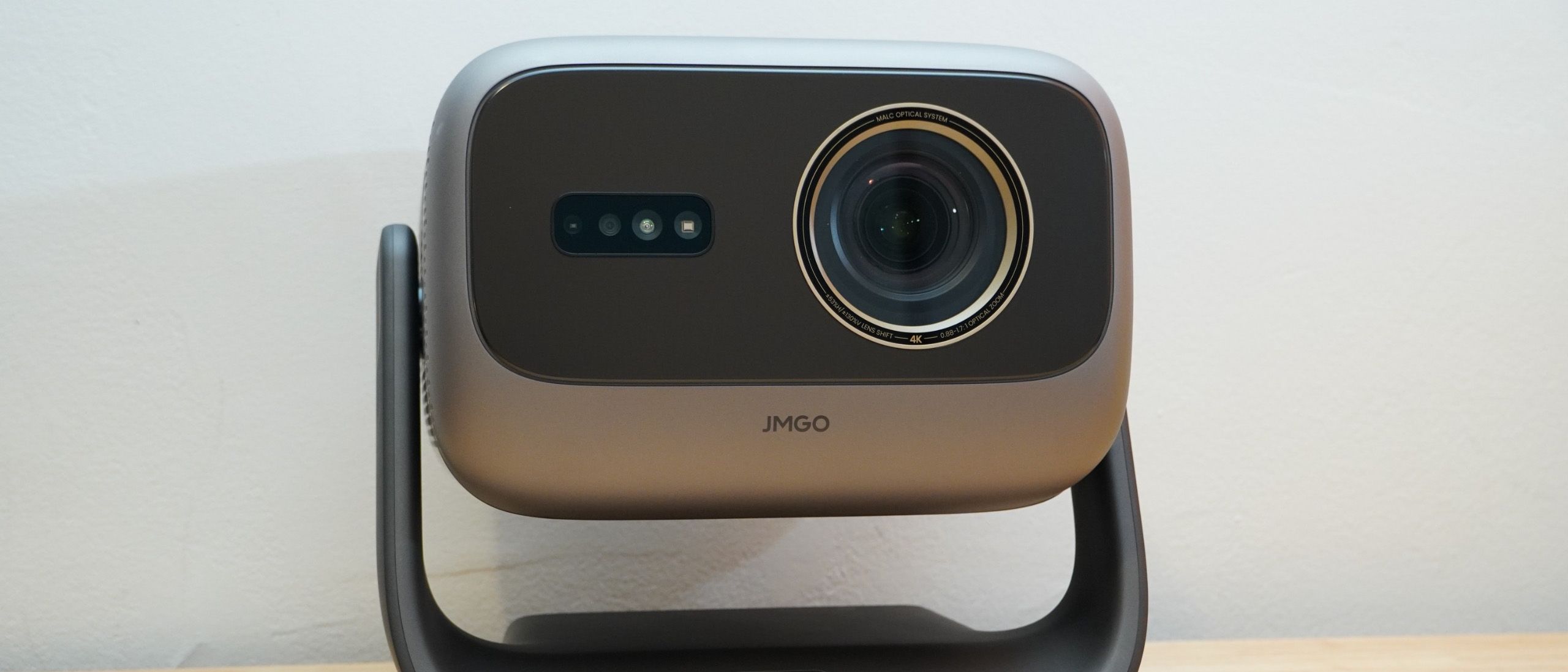
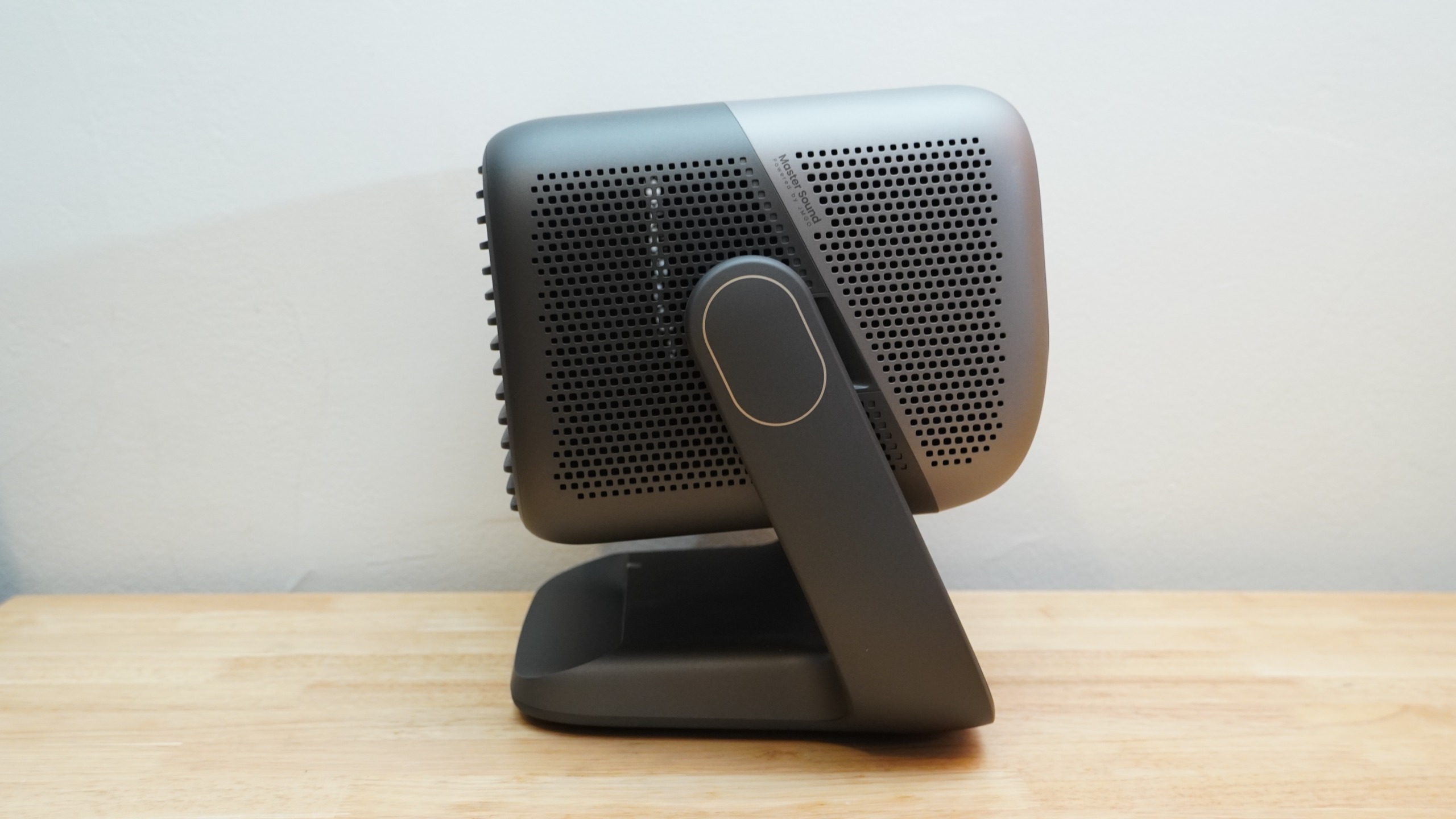
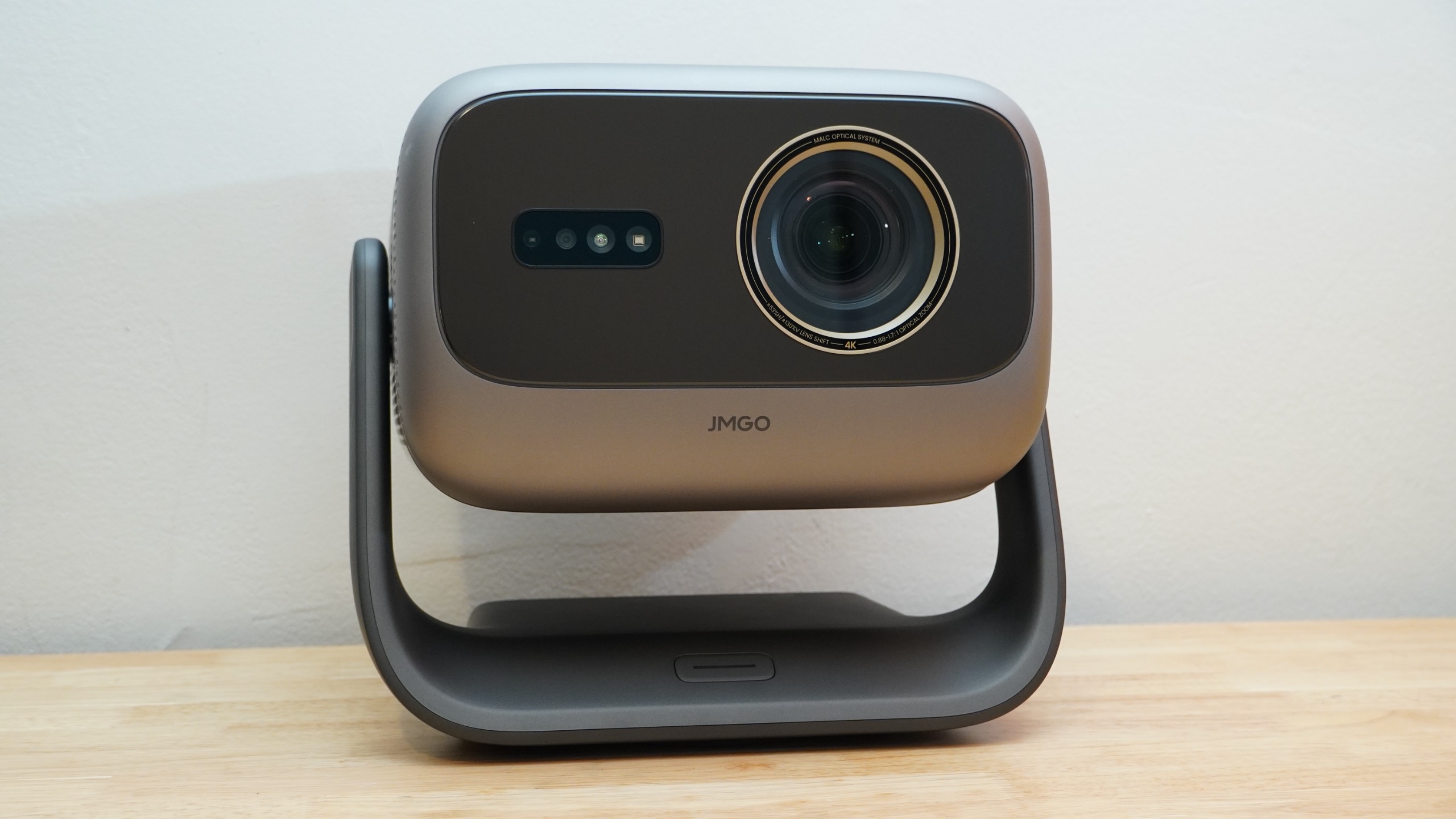
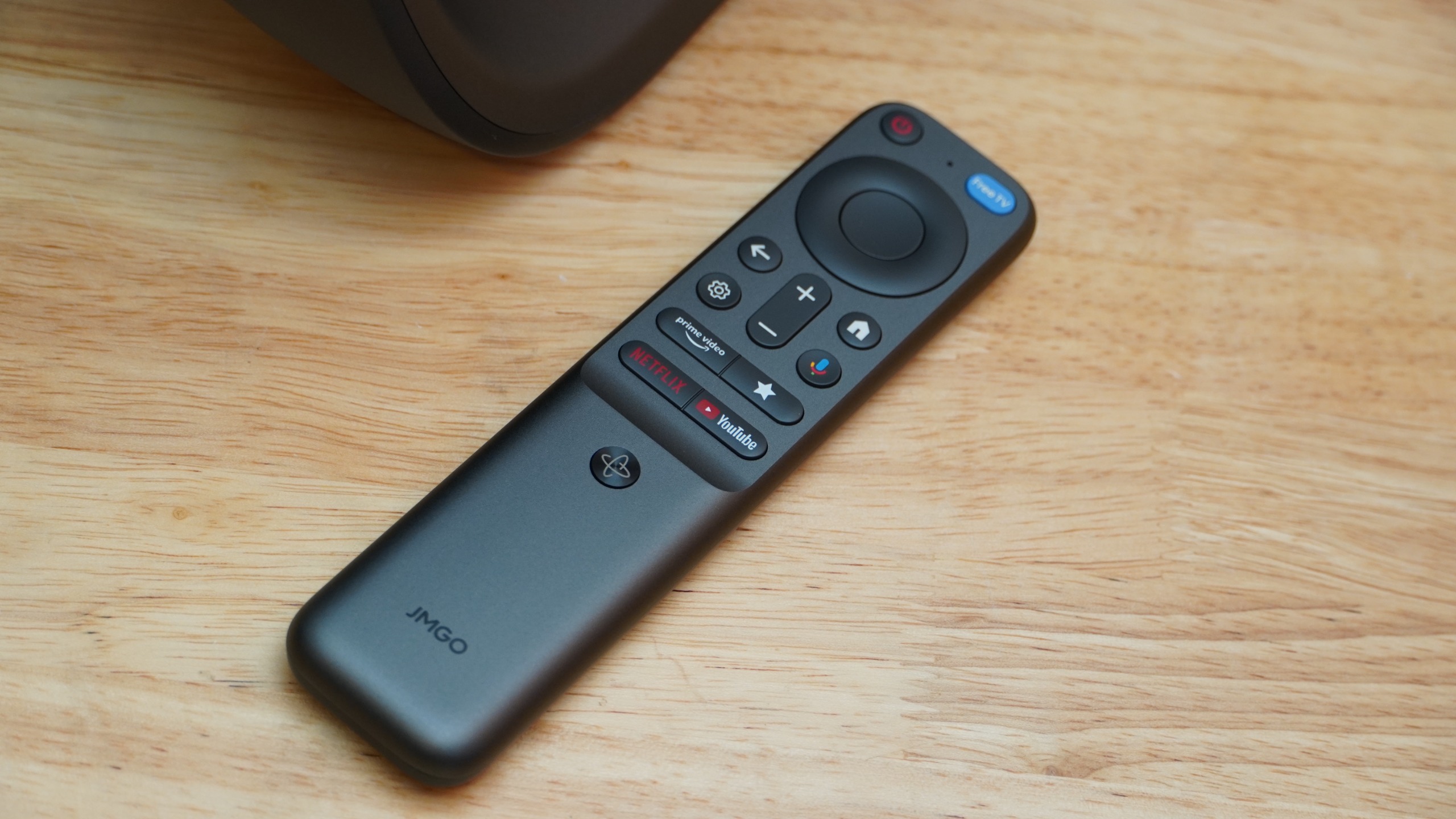
Carrying forward the design language that JMGO has refined over recent product generations, the N3 Ultimate adopts a relatively compact, two-tone rounded chassis perched atop an integrated gimbal stand. This mechanical foundation features a rotating base and motorized electronic control, allowing users to alter the tilt and rotation of the projection unit smoothly. By holding a dedicated button on the remote control and leveraging internal gyroscope controls, operators can rapidly adjust the orientation of the image. While this motorized positioning system is undeniably convenient for quick realignments in dynamic environments, it serves primarily as a gross adjustment tool rather than a precision fine-tuning mechanism.
Ironically, the N3 Ultimate is perhaps the device in JMGO’s lineup that least requires such external motorized gimmicks due to its sophisticated onboard optical system. The projector incorporates advanced internal zoom and lens shift capabilities, offering a flexible throw ratio ranging from 0.88:1 to 1.7:1. Furthermore, its physical lens shift enables the projected image to be repositioned vertically by up to 130% and horizontally by 53%. Consequently, users can place the projector roughly perpendicular to a wall or screen and manipulate the picture geometry natively, drastically reducing the reliance on digital keystone correction, which can occasionally degrade overall image integrity.
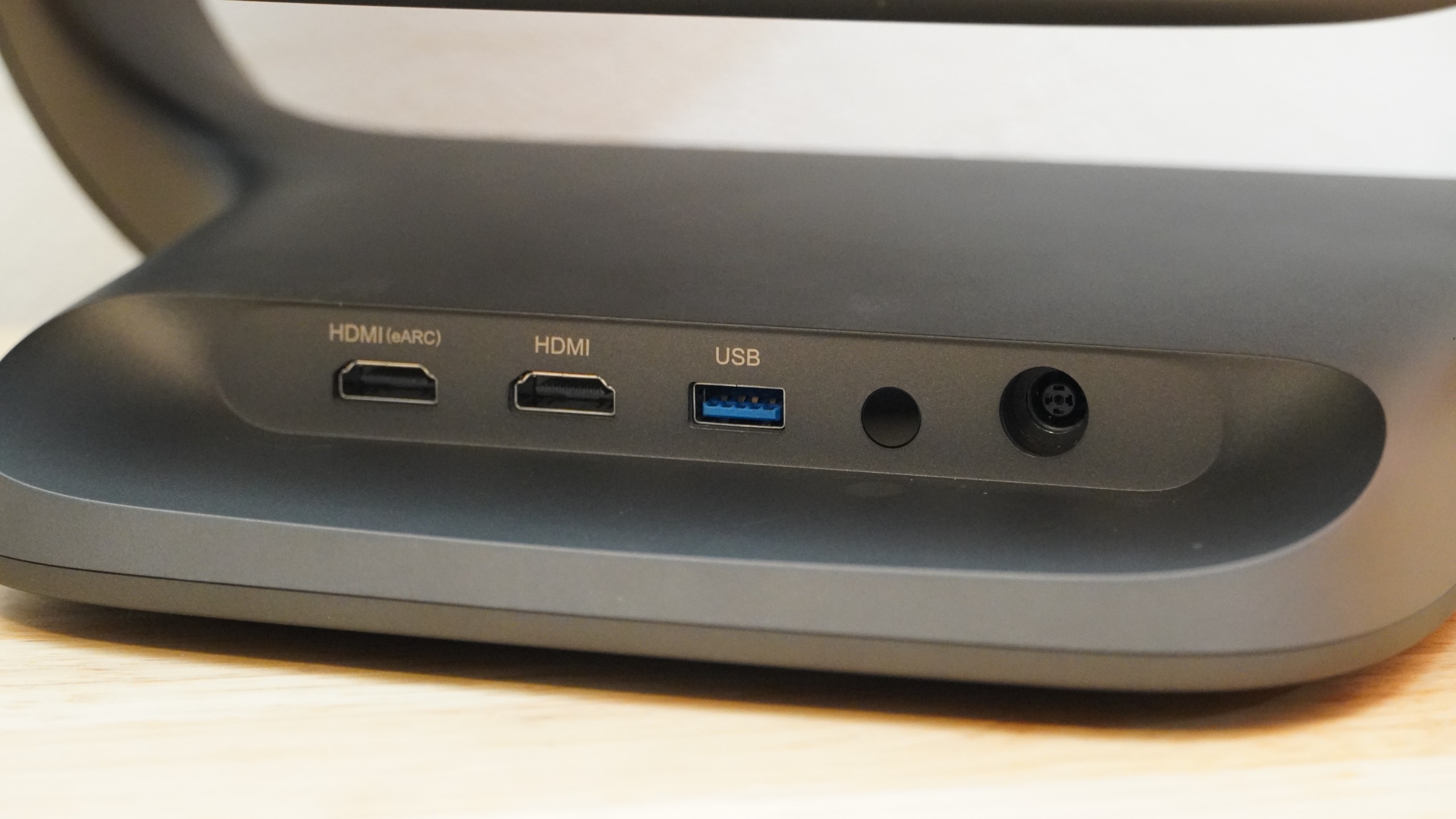
To accommodate the wide range of motion permitted by the gimbal stand, JMGO has relocated all primary input ports to the base of the device rather than the rear of the projection housing. This engineering choice prevents cables from tangling or straining during vertical tilt adjustments, though horizontal rotation can still occasionally cause cable clearance issues. The physical connectivity suite, however, remains somewhat sparse. The unit features two HDMI 2.1 ports—one equipped with eARC functionality—alongside a single USB-A port. Audiophiles and home theater enthusiasts may find the absence of supplementary legacy inputs or a dedicated 3.5mm audio jack frustrating, as utilizing the eARC port for a soundbar or external audio receiver effectively locks down one of the primary high-bandwidth video connections.
Smart Integration and Streaming Capabilities
Operating as a standalone entertainment hub, the JMGO N3 Ultimate bypasses the need for external streaming sticks by integrating the Google TV operating system natively. Powered by robust internal hardware featuring 4GB of memory and an exceptionally generous 64GB of onboard storage, the system navigates menus briskly and accommodates a wide variety of downloaded applications without bottlenecking. Network connectivity is bolstered by Wi-Fi 6 support, ensuring stable, high-bandwidth data transmission crucial for buffer-free 4K streaming.
Media compatibility is broad, extending to major high dynamic range formats including HDR10, HLG, and Dolby Vision. For gamers, the N3 Ultimate introduces impressive flexibility, supporting 4K resolution at 60Hz alongside a high-refresh-rate 1080p mode scaling up to 240Hz. Variable Refresh Rate (VRR) is also included to minimize latency and screen tearing during fast-paced interactive sessions. Nevertheless, testing reveals minor trade-offs: engaging VRR introduces slight clarity artifacts resembling chroma subsampling, which can make fine text on a Windows desktop appear marginally less sharp, even though standard gaming performance remains exceptionally fluid and responsive.
Picture Quality, Brightness, and Real-World Performance
The defining characteristic—and primary selling point—of the JMGO N3 Ultimate is its staggering luminous output. Rated at 5,800 lumens, real-world measurements easily validate a robust delivery exceeding 5,200 lumens without necessitating overly aggressive or color-compromised display presets. This high brightness output transforms how a projector can be utilized, allowing the N3 Ultimate to maintain vivid color saturation and crisp detail even in moderately lit living rooms with ambient daylight filtering through windows.
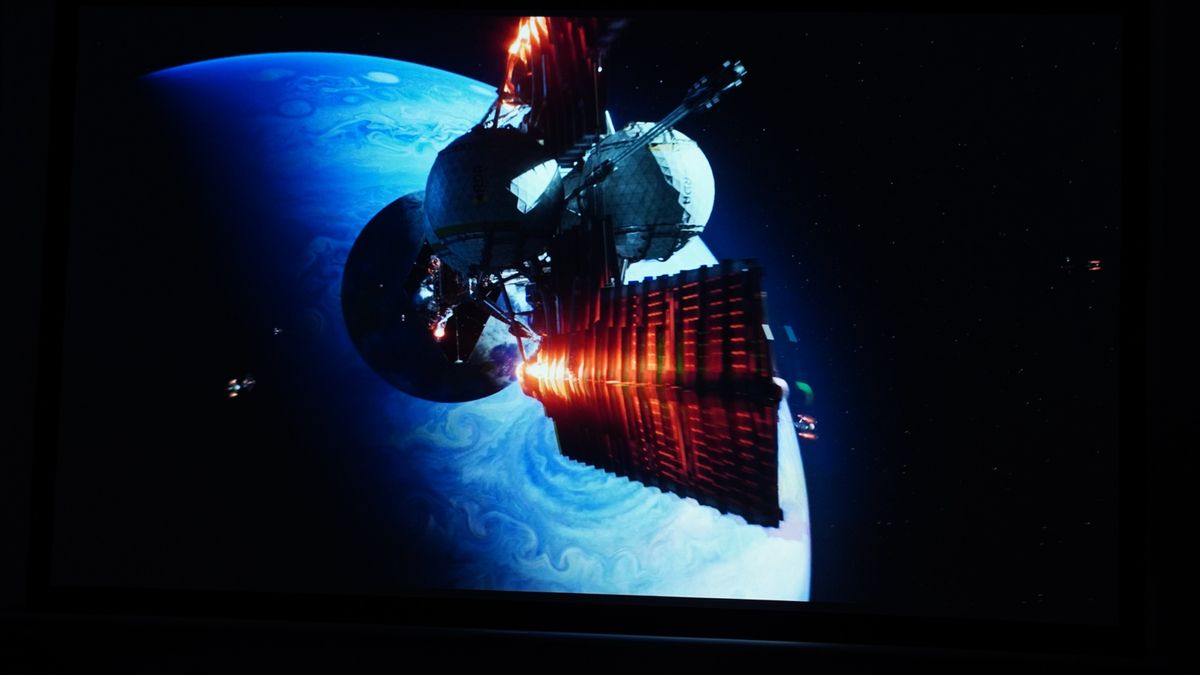
When displaying colorful, dynamic content, the 3-laser DLP engine shines brilliantly. Green spectra, such as those found in superhero features, exhibit striking depth, while saturated reds and complex palettes—like the lush environment of Pandora in science-fiction epics—are rendered with remarkable fidelity. Furthermore, the optical sharpness remains remarkably uniform from corner to corner, even when the image is scaled up to a massive 150-inch diagonal display.
Despite these stellar attributes in bright environments, the projector encounters notable limitations when transitioning to dark-room viewing conditions. Because of its inability to achieve deep, inky black levels, dark cinematic scenes suffer from noticeably raised grays. Letterbox bars appear washed out rather than true black, and neither Dolby Vision metadata nor onboard adaptive brightness processing entirely mitigates the issue. Consequently, cinephiles aiming to construct a dedicated, pitch-black home theater environment featuring high-contrast masterworks may find the black-level performance underwhelming compared to modern OLED televisions or specialized dark-room projectors.

Motion processing also presents a mixed performance profile. By default, the projector applies aggressive motion interpolation, producing noticeable digital artifacts and a hyper-smooth "soap opera effect." Reducing the Motion Estimation, Motion Compensation (MEMC) setting to its lowest tier successfully avoids these distracting artifacts while mitigating the stutter that occurs when motion smoothing is completely disabled. Additionally, while the subtle DLP "rainbow effect" common to single-chip laser projectors has been successfully minimized in recent hardware cycles, faint traces can still occasionally be spotted, primarily concentrated around high-contrast subtitles.
Audio Performance and Portability
Audio capabilities on the JMGO N3 Ultimate are handled by dual 12.5-watt built-in speakers. While these drivers deliver adequate volume and surprising low-end punch for casual dialogue and impromptu viewing sessions, their stereo imaging is severely constrained by the physical confines of the hardware. True fidelity and immersive soundstages remain elusive unless the listener is seated in the exact sweet spot centered directly in front of the projection plane. For serious movie-watching, an external soundbar or dedicated surround sound system is strongly recommended.
Recognizing the mobile nature of the device, JMGO bundles the projector with a fitted foam carrying case. While not excessively rugged or armored, the case comfortably houses the projector, the remote control, and the power adapter, offering a compact and secure transport solution that far surpasses a standard backpack.
Market Positioning and Value Analysis
At its standard retail price of $2,999 / £2,499, the JMGO N3 Ultimate occupies a fiercely contested market segment populated by high-performance rivals such as the Hisense C2 Ultra, the Valerion VisionMaster Max, and the Xgimi Horizon 20 Max. However, because the JMGO unit frequently appears with substantial promotional discounts—dropping closer to $2,349 / £2,119—its value proposition increases dramatically.
For consumers who prioritize extreme brightness, rapid setup flexibility, motorized positioning, and the ability to enjoy large-format entertainment without blacking out their living spaces, the JMGO N3 Ultimate offers a compelling, all-in-one hardware package. Conversely, purists seeking uncompromising dark-room contrast or gamers requiring flawless desktop text clarity alongside an extensive array of physical input ports may wish to explore alternative display technologies. Ultimately, the JMGO N3 Ultimate stands as a versatile, highly capable display instrument tailored for modern, flexible living spaces where convenience and illumination matter most.