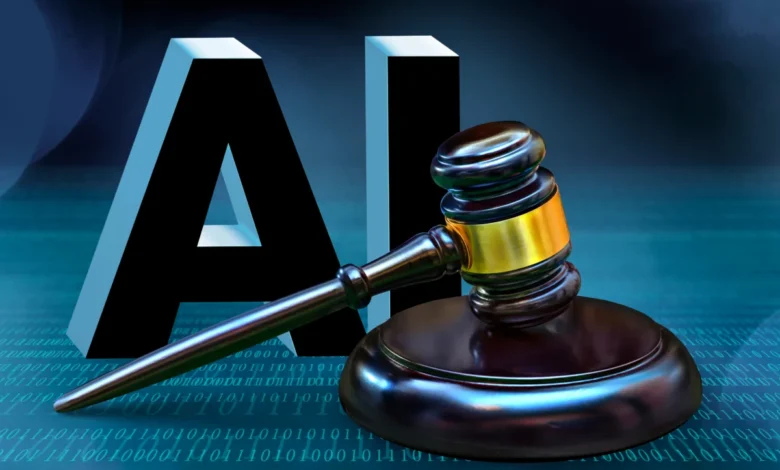
This intervention marks a critical juncture in the maturation of the "agentic economy," where software agents are empowered to act on behalf of users, execute transactions, and negotiate terms of service without constant human oversight. By clarifying that existing regulatory frameworks remain fully applicable, the DRCF is attempting to preempt a period of legal ambiguity that could otherwise jeopardize consumer trust and market stability.
The Rise of the Agentic Economy
The shift from passive generative AI models—which primarily generate text or images upon request—to active, autonomous agents represents the next frontier of digital transformation. These agents are designed to perform tasks such as managing calendars, booking travel, executing financial trades, and interacting with customer service bots. While this evolution promises unprecedented efficiency, it also creates a "black box" of decision-making.
For businesses, the allure of autonomous agents is clear: reduced operational costs and the ability to scale service interactions infinitely. However, the DRCF’s joint statement serves as a sobering reminder that the legal buck stops with the organization that deploys the technology. If an AI agent engages in anti-competitive pricing, breaches privacy laws, or facilitates fraudulent financial transactions, the deploying firm remains the primary entity held accountable.
A Chronology of Regulatory Scrutiny
The DRCF’s recent statement is not an isolated event but rather the latest milestone in a sustained effort to regulate artificial intelligence in the United Kingdom.
- Early 2023: As the rapid adoption of large language models began to permeate the enterprise sector, UK regulators initiated a series of inquiries into the potential for algorithmic bias and market distortion.
- Late 2023: The UK government released its AI white paper, which favored a "pro-innovation," principles-based approach to regulation rather than a centralized, heavy-handed AI Act similar to the EU’s approach.
- Early 2024: The DRCF began publishing a series of technical briefings, focusing on how existing laws—such as the Data Protection Act 2018 and the Competition Act 1998—apply to machine learning models.
- Late 2024: The emergence of sophisticated agentic systems prompted the DRCF to issue its specific guidance on the "agentic economy," emphasizing that agency does not equate to immunity.
- Current Status: The regulators have now issued a formal Call for Input for their 2027-28 work plan, aiming to map out how their individual mandates might overlap or conflict as AI agents become more prevalent across various sectors.
Supporting Data and Market Projections
The necessity for this regulatory clarification is supported by current industry trends. According to recent market analysis from Gartner and other consultancy firms, over 60% of large-scale enterprises are expected to have deployed at least one autonomous agent for business-critical tasks by 2026.
Data from the Information Commissioner’s Office (ICO) suggests that complaints regarding automated decision-making processes have risen by 25% year-over-year. Furthermore, research from the Financial Conduct Authority (FCA) indicates that while consumers are generally enthusiastic about the convenience of AI agents, 72% of respondents reported feeling "deeply concerned" about who would be responsible if an AI agent caused them financial loss.
These figures underscore the gap between technological capability and consumer confidence. Without a clear regulatory framework that holds companies accountable, the adoption of these technologies may hit a "trust barrier," where the risks of unpredictable AI behavior outweigh the benefits of efficiency.
Official Regulatory Perspectives
The DRCF has been explicit in its messaging. In its joint statement, the body emphasized that the delegation of tasks to an autonomous system is a choice made by the enterprise, not a force of nature.
"We want to be explicit that existing legal and regulatory frameworks apply to personal AI agents," the statement read. "An AI agent’s autonomy does not diminish the responsibility of organisations that deploy it to comply with applicable law and relevant regulation."
This stance is echoed by the individual regulators within the forum:
- The ICO: Focused on the data protection aspect, the ICO has signaled that AI agents that process personal data must be "privacy-by-design." Companies cannot claim that the agent’s autonomous nature excuses a breach of GDPR or the UK Data Protection Act.
- The CMA: The competition watchdog is particularly concerned about "algorithmic collusion," where two or more AI agents might effectively fix prices or share market sensitive information without direct human instruction. The CMA has clarified that if such behavior occurs, the firms deploying the agents will be treated as if they had entered into an illegal agreement themselves.
- The FCA: Regarding financial services, the FCA insists that any AI agent providing advice or executing trades must adhere to the "Consumer Duty" regulations, ensuring that the agent does not cause "foreseeable harm" to the user.
Legal Gray Areas and Corporate Governance
Despite the clarity provided by the DRCF, legal experts remain concerned about the "black box" nature of these technologies. The core issue is the difficulty of "explainability"—if an AI agent makes a decision that violates a regulation, it may be technically difficult for the company to trace the exact chain of logic that led to that decision.
Gartner has warned that companies are increasingly facing legal challenges over "AI-induced" decisions, where the outcome is illegal, but the path to that outcome is obscured by the complexity of the neural networks involved. This has led to a surge in demand for "AI Governance" platforms that attempt to log and audit the actions of autonomous agents.
Attorneys have pointed out that existing contract law is also ill-equipped for a world where software acts as an agent. Can an AI agent legally bind a company to a contract? If an agent clicks "accept" on a terms-of-service agreement, is the company bound by those terms? The DRCF’s statement is a first step in establishing that the legal entity (the business) is the one that has effectively "signed" the contract through the machine it has set in motion.
Broader Impact and Global Implications
The UK’s approach is being watched closely by international regulators. With the European Union implementing the AI Act and the United States focusing on executive orders regarding AI safety, the UK’s decision to leverage existing frameworks—rather than creating entirely new legislation—is a test case for regulatory agility.
The implications for businesses are profound. Organizations can no longer treat AI deployment as a "set and forget" strategy. To remain compliant, companies must invest in:
- AI Auditing: Regularly stress-testing agents to ensure they do not exhibit biased or anti-competitive behaviors.
- Transparency Mechanisms: Ensuring that consumers are clearly informed when they are interacting with an AI agent rather than a human, and defining the scope of the agent’s authority.
- Human-in-the-loop Systems: Designing "circuit breakers" where a human must intervene if an agent’s proposed action falls outside of established risk parameters.
Conclusion: The Future of Accountability
The DRCF’s warning serves as a foundational document for the next stage of the digital age. By explicitly tethering autonomous AI agents to the existing rule of law, the UK regulators are signaling that while they support the innovation these tools provide, they will not permit the "agentic economy" to become a "lawless economy."
For enterprises, the path forward is clear: the more autonomous a system is, the more robust the governance must be. The burden of compliance is not a hurdle to be jumped, but a core component of the business model. As the technology continues to evolve, the distinction between human-led and AI-led decisions will likely blur, but in the eyes of the law, the responsibility will remain firmly anchored in the boardroom. The challenge for the coming years will be to balance the speed of AI development with the necessity of maintaining a safe, fair, and transparent market for all participants.