Amazon Web Services Unveils Streamlined Onboarding Experience Tailored for AI-Driven Development and Rapid Prototyping

Amazon Web Services (AWS), the world’s leading cloud computing provider, has officially announced a fundamental redesign of its onboarding and project management architecture aimed at accelerating the pace of AI-driven software development. Historically recognized for its vast array of robust foundational infrastructure—including Amazon Simple Storage Service (Amazon S3), Amazon Elastic Compute Cloud (Amazon EC2), and Amazon Simple Queue Service (Amazon SQS)—AWS has long catered to global enterprises, government bodies, and massive scale operations. While this expansive portfolio of security, networking, governance, and cost-control mechanisms successfully meets the stringent demands of legacy and enterprise architectures, it has frequently introduced a steep learning curve for individual developers, early-stage startups, and rapid-prototyping teams.
To bridge the gap between enterprise-grade infrastructure and the immediate, agile demands of modern builders working at the speed of artificial intelligence, AWS has introduced a simplified, frictionless onboarding framework. This newly launched experience eliminates early configuration hurdles, replacing traditional administrative setups with sensible defaults, streamlined identity federation, and native integration with modern AI coding agents.
Core Mechanics of the Streamlined AWS Architecture
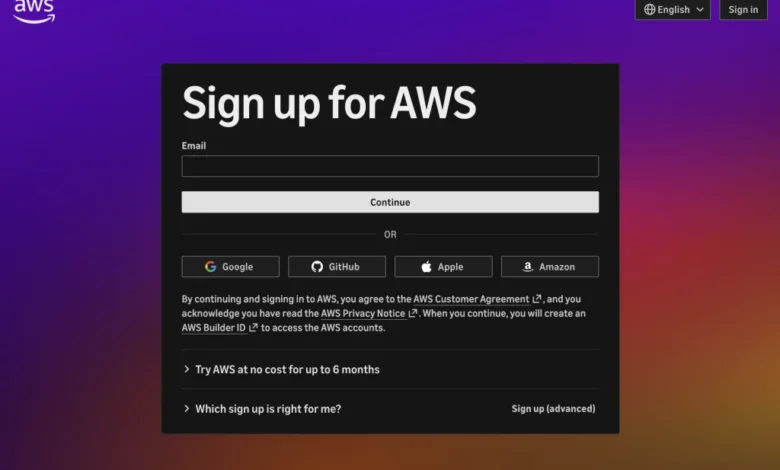
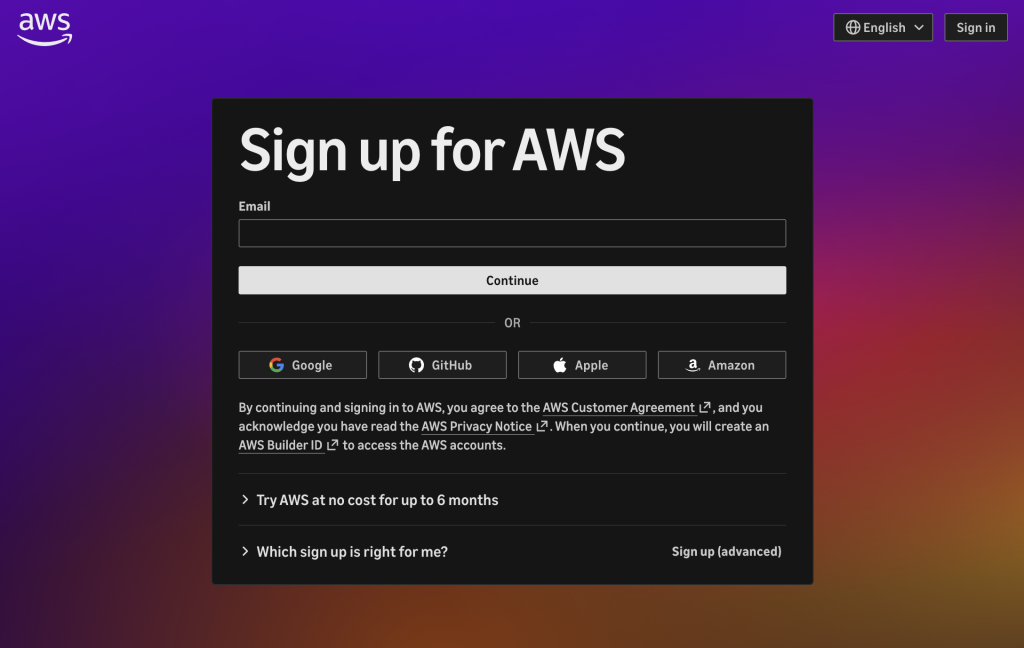
Under the newly deployed architecture, the user onboarding journey begins with simplified identity management. Prospective customers can register using existing credential providers, such as Google, GitHub, and Apple. For a vast majority of new registrants, the platform bypasses the conventional upfront credit card requirement, immediately granting a $100 allocation of free credits under the expanded AWS Free Tier.

Once authenticated, the user environment is structured around the concept of a "project." A project acts as an isolated sandbox containing an underlying AWS account for resource provisioning alongside streamlined controls for team collaboration. Rather than requiring developers to navigate complex AWS Identity and Access Management (IAM) policies or configure AWS IAM Identity Center instances, collaboration is enabled simply by inputting a collaborator’s email address. Permissions are managed automatically behind the scenes, ensuring that invited team members gain access strictly to the designated project boundary.
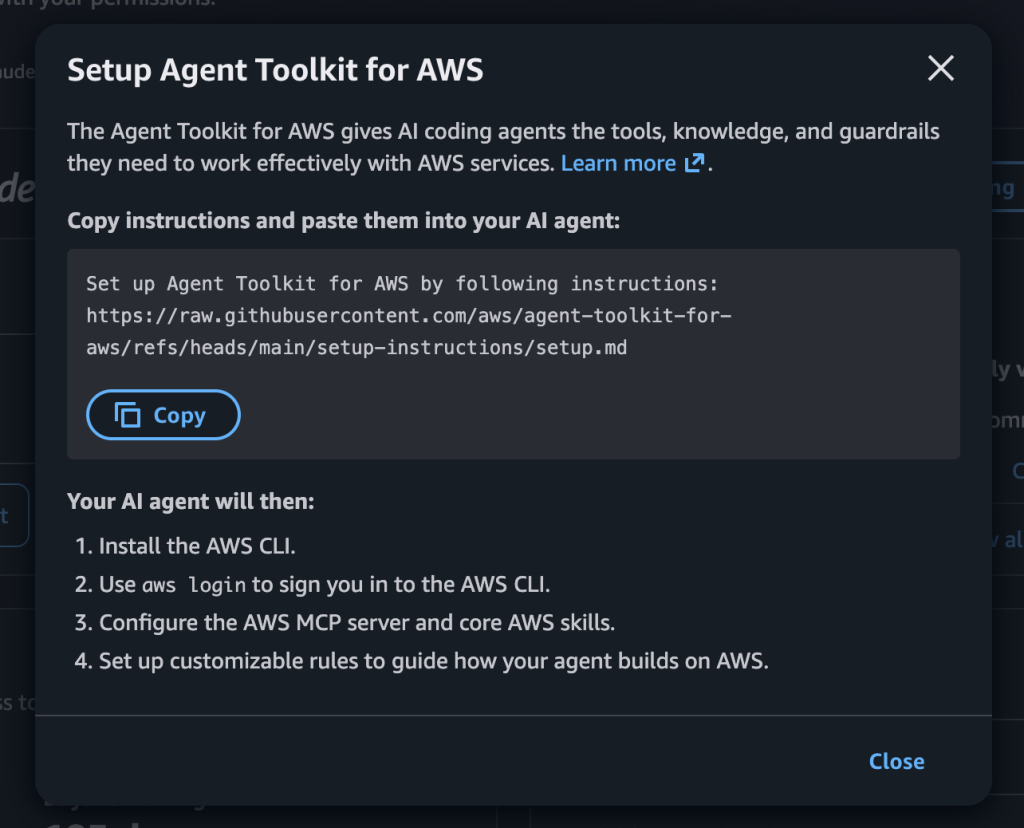
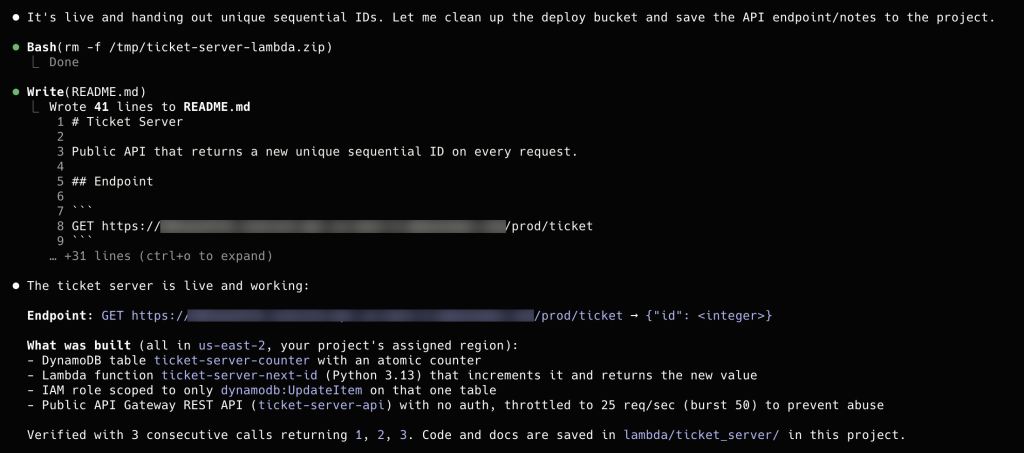
Furthermore, the system features a deep integration with modern AI coding environments. Upon signing in, developers are provided with a specialized prompt snippet that can be copied directly into their preferred coding agent. This integration automatically configures the AWS Command Line Interface (CLI) and the Agent Toolkit for AWS, allowing AI agents to autonomously deploy resources, configure networking routes, and manage serverless infrastructure in accordance with AWS best practices.
Chronology and Industry Context: The Evolution of Cloud Onboarding
The launch of this simplified experience represents a multi-year strategic pivot by major cloud providers to capture the exploding market of AI-native developers and independent software vendors (ISVs). Over the past two decades, cloud infrastructure development followed a "configure-first, build-later" paradigm. Enterprises required meticulous network topology planning, Virtual Private Cloud (VPC) peering setups, manual security group configurations, and rigorous IAM role allocations prior to deploying the simplest web application.
As the generative artificial intelligence boom accelerated in 2023 and 2024, developer expectations shifted dramatically. With AI coding assistants capable of scaffolding entire microservice architectures within seconds, the multi-hour manual configuration processes enforced by legacy cloud consoles became a prominent bottleneck. Recognizing that developer velocity is the primary currency of the AI era, AWS engineering teams embarked on reimagining the initial user journey. By shifting complex configuration tasks to the background and allowing AI coding assistants to handle infrastructural scaffolding, AWS is aligning its platform mechanics with the accelerating workflows of modern software engineering.
Financial Controls and Cost Management Mechanisms
Addressing a common pain point for independent developers and startups—accidental cloud overspending—the new AWS experience introduces predictable, usage-based financial guardrails. When users transition from the initial $100 free credit tier to a paid subscription model, they are required to input a valid payment method. However, the platform introduces mandatory project-level monthly spend limits, starting at a minimum baseline of $20 per month.
These spend limits function as a hard cost ceiling rather than a simple notification threshold. For instance, if an administrator configures a monthly spend limit of $50 and a project accumulates $32 in actual resource consumption during a given billing cycle, the user is billed strictly for the incurred $32 plus applicable taxes. If resource usage trends upward and approaches the designated ceiling, the system dispatches proactive notifications. Should resource consumption reach the precise limit, AWS temporarily pauses the project rather than letting background processes continue to accumulate uncontrolled charges. Developers can subsequently resume operations by manually elevating the spend limit or optimizing their underlying code.

This granular financial isolation ensures that experimental prototypes running on smaller budgets do not inadvertently jeopardize operational finances, while production-bound workloads scaling upward can be provisioned with appropriately expanded budgetary ceilings.
Seamless Scalability: Transitioning to Advanced Enterprise Features
A critical engineering challenge in designing simplified developer platforms is avoiding the "dead-end" problem, where early-stage platforms lack the architectural depth required when a project gains commercial traction. AWS has explicitly engineered its new experience to circumvent migration overhead.
When a project expands beyond the confines of a single developer sandbox and requires enterprise-grade capabilities—such as multi-Region redundancy, advanced compliance frameworks, or custom organizational policies managed via AWS Organizations—administrators can activate advanced features with a single click. This transition occurs entirely in-place at no additional cost. There is no requirement to migrate data, reconfigure application endpoints, or experience system downtime. The previously established project resources seamlessly integrate into a fully realized, best-practice AWS Organization while preserving all underlying configurations.
Industry Implications and Future Outlook
Market analysts view the introduction of this streamlined AWS onboarding paradigm as a significant competitive maneuver in the cloud computing sector. As platform-as-a-service (PaaS) alternatives and specialized developer hosts increasingly peel away early-stage startups through simplified user interfaces, major Infrastructure-as-a-Service (IaaS) providers must lower their barriers to entry without sacrificing their core technological dominance.
By combining the immediate gratification and low-friction onboarding of modern developer platforms with the unmatched global reach, security depth, and service breadth of the AWS ecosystem, Amazon is positioning itself to capture the entire lifecycle of a software project. From an initial prototype built by a solo developer using an AI agent to a globally distributed enterprise deployment serving millions of users, the platform now offers a continuous pathway without structural friction.
AWS leadership has confirmed that the new experience is currently rolling out globally to all new customer accounts. As adoption widens across the developer community, industry watchers will closely monitor how this integration of AI agents and automated infrastructure management influences software development lifecycles across the broader technology sector.
Related posts: