The Economics of Context and State
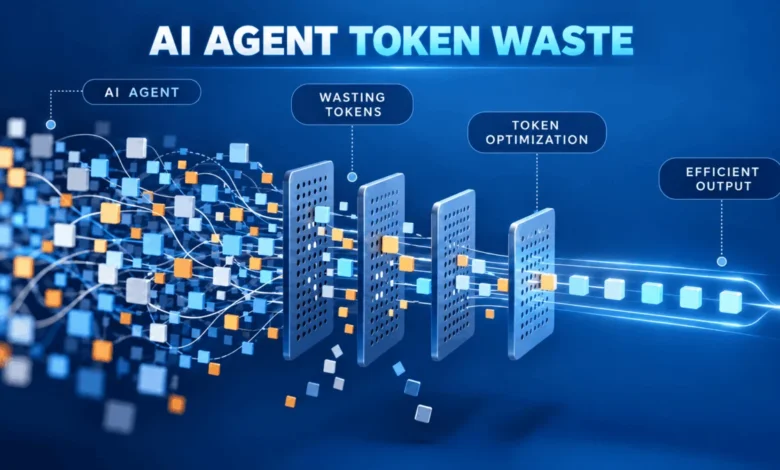
The root of this systemic failure lies in the conflation of context and state. In modern software engineering, context is defined as the ephemeral token payload transmitted over the wire per inference request, while state represents the durable, serialized representation of an agent’s progress. When developers fail to maintain this distinction, they inadvertently force the system to perform redundant database reads during every inference cycle.
According to industry benchmarks, organizations operating at scale have reported that up to 40% of their monthly AI spend is attributed to redundant token processing. This waste is not merely a financial oversight; it is a technical debt that degrades model performance, as excessive context dilutes the "attention" of the model, leading to increased hallucination rates and slower response times.
The Evolution of Agentic Architectures
The evolution of AI agents has followed a predictable trajectory: from simple request-response bots to complex, multi-step autonomous systems capable of browsing the web, executing code, and interacting with enterprise APIs. However, the architecture supporting these systems has often lagged behind their capabilities.
In early 2024, the "Append-Only Trap" emerged as the primary bottleneck for production agents. By mid-2024, as token costs for frontier models remained relatively high, developers began implementing "sliding context windows." The transition from monolithic, state-heavy prompts to refined, state-managed architectures marks the second major wave of LLM application development. This shift mirrors the transition in web development from stateful server-side sessions to stateless, database-backed microservices.
Seven Patterns of Token Inefficiency
1. The Append-Only Trap
The most pervasive error in agent design is the "Context Window Accumulation" pattern. By treating the prompt array as a repository of every historical action, developers ensure that by the 20th turn, the model is re-processing the entire history of the session. The architectural fix involves implementing a sliding context window combined with semantic rolling summarization. By retaining only the last N turns verbatim and compressing older history into a dense background summary, engineers can maintain performance without the linear cost growth.
2. Uncompressed Tool Result Ingestion
Agents interacting with external APIs—such as Stripe, Jira, or AWS—often consume massive amounts of tokens by ingesting raw, machine-readable JSON payloads. Much of this data is redundant for the model’s reasoning process. The solution is the implementation of a middleware transformation layer that strips null values, filters non-essential keys, and reformats deep JSON into dense YAML or Markdown. While effective, engineers must remain cautious: aggressive filtering can inadvertently remove critical pagination cursors or metadata, potentially breaking the agent’s ability to navigate large datasets.
3. Retrieval Thrash and Grep-and-Dump
In RAG-heavy systems, a common mistake is the "Grep-and-Dump" method, where entire files are injected into the context window to answer a single question. This is analogous to reading an entire encyclopedia to find a single definition. The fix is a transition to chunked, Abstract Syntax Tree (AST)-aware retrieval. By utilizing tools like Tree-sitter to parse code into live call graphs, developers can ensure the agent receives only the specific function signature and its dependencies, rather than the entire 4,000-line source file.
4. Static Tool Schema Bloat
As agents grow in capability, their tool registries often expand to include dozens of functions. Injecting these schema definitions on every call creates significant "schema bloat." The optimal architecture employs context-aware tool pruning governed by a finite state machine. By injecting only the tools relevant to the current operational state—such as "discovery" vs. "execution"—engineers can reduce the input token overhead by thousands of tokens per request.
5. Unbounded Chain-of-Thought Loops
Autonomous agents occasionally encounter logic loops where they repeatedly fail to execute a task and retry indefinitely. Without circuit breakers, these loops can exhaust token budgets in seconds. Orchestrator-level circuit breakers, which enforce strict maximum retry counts and output token caps, are now considered a mandatory guardrail for production-grade systems.
6. Ignoring KV Cache and Prompt Prefixing
LLM providers allow for the caching of "prompt prefixes"—the static portions of a prompt. Developers often defeat this by injecting dynamic variables, such as timestamps or user IDs, at the very beginning of the prompt. By restructuring requests to ensure all static content (system prompts, organizational style guides) precedes any dynamic variables, developers can significantly improve cache-hit rates, leading to both latency reduction and cost savings.
7. Monolithic Routing
The final common inefficiency is the use of expensive, frontier-tier models for simple tasks like log summarization or intent classification. The implementation of a cascaded LLM router—using small, high-speed models for routine tasks and reserving frontier models for complex multi-step reasoning—allows for a significant optimization of the cost-to-performance ratio.
Broader Implications for Enterprise AI
The move toward token optimization is fundamentally a move toward system reliability. As companies move past the "proof-of-concept" phase, they are discovering that token waste is not just a billing issue, but a primary driver of model performance degradation. When an agent’s context is cluttered with irrelevant or redundant data, the model’s ability to reason effectively is compromised.
Industry experts suggest that as we move into 2026, the focus will shift from simply "getting the agent to work" to "optimizing the agent for long-term stability." The technical decisions made during the initial architecture phase of an AI deployment—such as how to handle state and how to route tasks—will determine the longevity of the application.
Analysis and Future Outlook
The trade-offs inherent in these architectural fixes are significant. For example, dynamic tool pruning (Pattern 4) can interfere with prompt caching (Pattern 6), as changes in the toolset shift the cache boundary. Engineers must therefore rely on production traces rather than theoretical models to determine the optimal balance for their specific use case.
Ultimately, the goal of these optimizations is to move toward a more deterministic agentic framework. By limiting the context window, enforcing circuit breakers, and streamlining data ingestion, organizations can create a more predictable and robust AI infrastructure. As the industry matures, the ability to manage these "hidden costs" will likely differentiate successful enterprise AI integrations from those that become too costly or unreliable to maintain at scale.
In conclusion, the path to sustainable AI agents lies in the rigorous application of software engineering principles to the ephemeral nature of LLM tokens. By treating tokens as a finite, expensive resource rather than an infinite utility, developers can ensure that their agents remain performant, cost-effective, and aligned with the operational requirements of the modern enterprise.