Scikit-Ollama Bridges Scikit-learn Interface with Local Ollama Models for Zero-Shot Text Classification, Eliminating Cloud API Dependency.

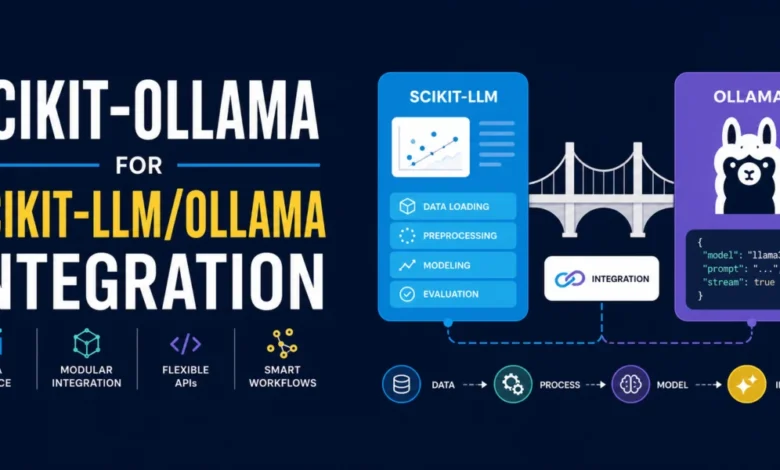
The burgeoning landscape of large language models (LLMs) has witnessed a significant shift towards localized deployment, driven by escalating concerns over data privacy, operational costs, and the desire for greater control over computational resources. In a pivotal development addressing these challenges, scikit-ollama has emerged as a critical library, seamlessly integrating the familiar and robust scikit-learn interface with locally hosted Ollama models to facilitate zero-shot text classification without reliance on external cloud APIs. This innovation promises to democratize access to advanced AI capabilities, empowering developers and organizations to leverage powerful LLMs within their secure, on-premises environments.
The Rise of Local LLMs and the Need for Integration
For years, the integration of advanced machine learning models, particularly large language models, into practical applications often necessitated reliance on commercial cloud-based APIs. These services, while offering immense computational power and ease of access, frequently present significant hurdles. Chief among these are the recurring costs associated with per-token usage, potential latency issues inherent in network communications, and perhaps most critically, profound data privacy and sovereignty concerns. Transmitting sensitive or proprietary data to third-party cloud providers raises complex questions about compliance, intellectual property, and security.
This environment fostered a growing demand for robust, local LLM solutions. Projects like Ollama have rapidly gained traction by providing an accessible platform for downloading, running, and managing a wide array of open-source LLMs directly on user hardware. This paradigm shift offers substantial advantages: data remains on local machines, eliminating transfer risks; inference costs are contained within existing infrastructure; and developers gain greater flexibility and control over their AI workflows. However, integrating these powerful local models into existing machine learning pipelines, particularly for specific tasks, often required bespoke coding and a departure from standardized frameworks.
Scikit-Ollama: A Bridging Innovation
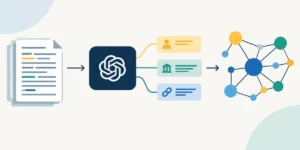
scikit-ollama, largely inspired by the architecture of scikit-llm, addresses this integration gap directly. It extends the widely adopted scikit-learn API – a de facto standard for machine learning in Python – to interact with Ollama-managed local LLMs. This approach is revolutionary because it allows data scientists and machine learning engineers to apply the familiar fit() and predict() methods to LLM-driven tasks, abstracting away the complexities of prompt engineering and model interaction with a locally hosted LLM. The library essentially re-frames the LLM’s inherent language understanding capabilities into a structured, predictable output format, mirroring traditional machine learning models.
The core utility of scikit-ollama lies in its ability to enable zero-shot text classification. In traditional machine learning, classification models require extensive labeled datasets for training. Zero-shot learning, however, allows a model to classify inputs into categories it has never explicitly seen during training, relying on its general understanding of language and context. When combined with a powerful LLM like Llama 3 running locally via Ollama, this capability becomes immensely practical for tasks such as sentiment analysis, topic labeling, or intent recognition, all without the need for a costly, domain-specific labeled dataset or external API calls.
A Step-by-Step Implementation Overview
Implementing scikit-ollama follows a straightforward, scikit-learn-esque methodology, requiring minimal deviation from standard Python machine learning workflows. The initial prerequisite involves ensuring a compatible Python environment (version 3.9 or higher), followed by a simple pip install scikit-ollama command. This low barrier to entry underscores the library’s commitment to accessibility.
The process then moves to data preparation. While scikit-ollama can work with any text data, scikit-llm (its foundational library) provides convenient dataset modules for demonstration. For instance, a sentiment analysis dataset comprising movie reviews can be loaded with just a few lines of code, providing a clear illustration of the input format: raw text (X) and corresponding sentiment labels (y), if available for evaluation purposes. A typical example might reveal a review like, "I was absolutely blown away by the performances in ‘Summer’s End’. The acting was top-notch, and the plot had me gripped from start to finish. A truly captivating cinematic experience that I would highly recommend," paired with a ‘positive’ label.
The critical step involves setting up the local LLM environment. Users must have Ollama installed on their machine and pull the desired model, such as llama3:latest, using a command like ollama pull llama3. This local model then becomes the backbone of the ZeroShotOllamaClassifier. Instantiating this classifier involves simply specifying the model name: clf = ZeroShotOllamaClassifier(model="llama3:latest").
The Ingenuity of LLM-Backed Classification
It is crucial to understand the mechanism behind this integration. An LLM like Llama 3 is inherently a general-purpose language model, capable of diverse tasks from conversation to creative writing. When utilized for zero-shot classification via scikit-ollama, the library intelligently reformulates the classification task into a text-generation prompt. This prompt is syntactically constrained, directing the LLM to output only one of the predefined candidate labels (e.g., "positive", "negative", "neutral"). The LLM applies its vast language understanding and reasoning capabilities to interpret the input text and generate the most appropriate label, effectively mimicking a classical classifier’s output format while leveraging vastly more powerful, flexible reasoning.
The fit() method in this context deviates from traditional machine learning. Instead of updating model weights, clf.fit(None, ["positive", "negative", "neutral"]) serves to register the potential classification labels with scikit-ollama. This step is vital for in-context learning, informing the LLM about the permissible output categories and guiding its generation process. Subsequently, the predict() method takes the input texts (X) and, in conjunction with the local Ollama instance, processes each as a constrained prompt. The output is then parsed and validated to ensure it aligns with one of the registered zero-shot classification labels. This entire process, including model initialization and output parsing, occurs seamlessly under the hood, often accompanied by a progress bar on the first run as the model loads.
Illustrative Results and Performance Implications
Upon executing predictions = clf.predict(X), the local Ollama model processes the movie reviews and outputs the predicted sentiment. For the sample review mentioned earlier, the prediction would indeed be ‘positive’. The beauty of this system is that the local model, despite its general-purpose nature, outputs only the structured classification label it is instructed to provide. This demonstrates the powerful combination of LLM reasoning with the predictable, standardized output expected from a machine learning classifier.
The performance implications are significant. By running models locally, organizations can achieve lower latency for inference tasks, as there are no network delays. Furthermore, the operational cost is predominantly the initial hardware investment, with marginal costs for subsequent inferences, a stark contrast to the per-token billing models of cloud APIs. Data privacy is inherently guaranteed, as no sensitive information ever leaves the local computational environment. This is particularly crucial for industries dealing with confidential customer data, medical records, or proprietary business intelligence.
Broader Impact and Future Outlook
The introduction of scikit-ollama marks a significant milestone in the ongoing evolution of AI deployment. It not only simplifies the integration of powerful local LLMs into existing Python-based machine learning workflows but also democratizes access to advanced natural language processing capabilities.
- Enhanced Data Sovereignty: For organizations in regulated industries,
scikit-ollamaoffers a compelling solution for maintaining strict data governance and compliance, preventing sensitive information from traversing external networks. - Cost Efficiency: By leveraging local hardware, development and inference costs can be drastically reduced, making advanced AI more accessible to startups, researchers, and individuals with budget constraints.
- Offline Capabilities: The ability to run LLMs and perform classification tasks entirely offline opens doors for applications in remote areas, secure environments, or situations where internet connectivity is unreliable or unavailable.
- Accelerated Innovation: The
scikit-learninterface’s familiarity lowers the barrier to entry for experimentation with LLMs, encouraging more developers to build and iterate on new AI-driven applications. - Edge AI Potential: This local integration lays groundwork for powerful edge AI applications where real-time, on-device processing of language data is crucial, minimizing reliance on centralized cloud infrastructure.
Industry experts widely acknowledge the strategic importance of such tools. "The ability to run sophisticated LLMs locally with a familiar API like scikit-learn is a game-changer for many data scientists," notes Dr. Anya Sharma, a lead AI architect at a major tech firm. "It means we can prototype faster, ensure data privacy from the outset, and deploy AI solutions in environments where cloud access is simply not an option." Developers within the open-source community emphasize that scikit-ollama fosters greater transparency and control, aligning with the ethos of community-driven AI development.
In conclusion, scikit-ollama represents a pivotal advancement in the practical application of large language models. By elegantly encapsulating the complexities of local LLM integration within the scikit-learn framework, it empowers developers to perform sophisticated inference tasks like zero-shot text classification without the traditional trade-offs of cost, latency, or data privacy associated with cloud-based solutions. This library is not merely a technical utility; it is a catalyst for a more secure, cost-effective, and accessible future for AI development and deployment.