The Shift Toward Semantic Search
Traditional databases rely on keyword matching, which indexes documents based on the exact presence of terms. This methodology, while effective for structured data, frequently fails to capture the intent behind a user’s query. If a user searches for "cellular power source," a keyword-based system might struggle to retrieve documents about "mitochondria" unless those specific terms overlap.
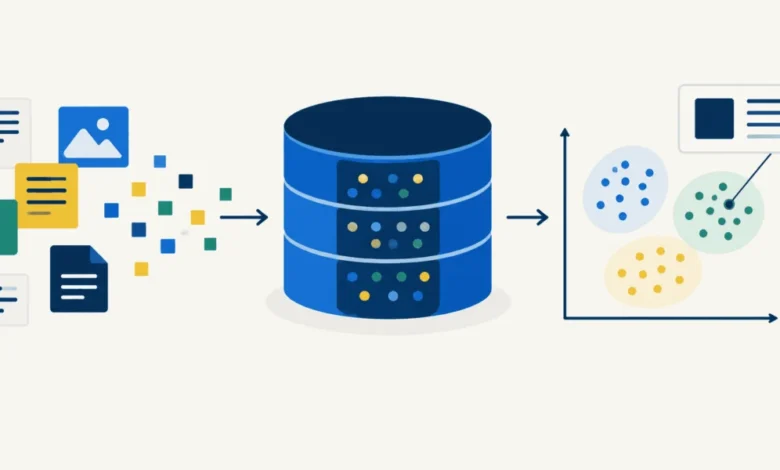
Vector databases solve this by representing data as high-dimensional numerical arrays, or "embeddings." Through a process of vectorization, documents are mapped into a multi-dimensional space where distance reflects semantic proximity. When a user executes a query, the system transforms that query into a vector and calculates the "cosine similarity" between the query vector and the document vectors in the database. The result is a system that understands meaning, context, and nuance, rather than just character matching.
Establishing the Technical Foundation
The tutorial utilizes a hands-on approach, leveraging NumPy for high-performance numerical computation and the sentence-transformers library for generating embeddings. By requiring no GPU or proprietary API keys, the guide ensures accessibility for developers who wish to experiment with vector operations locally.
The implementation process is broken down into a series of logical progressions:
- Environment Setup: Establishing the infrastructure and helper functions for data display.
- Indexing: Converting raw text into fixed-length numerical vectors.
- Semantic Retrieval: Demonstrating how the database ranks results by meaning.
- Contextual Search: Proving that the system retrieves accurate results even when query and document share no common vocabulary.
- Scoring Metrics: Explaining how confidence scores allow for threshold-based filtering.
- Metadata Filtering: Integrating structured data to narrow search scopes.
- Scaling and Constraints: Managing edge cases and input validation.
- Persistence: The importance of saving and loading index structures without losing semantic integrity.
- Performance Analysis: Benchmarking operations across large, synthetic datasets.
Data Integrity and Mathematical Precision
A critical takeaway from the tutorial is the rigid requirement for consistency. Because embeddings are generated relative to a specific model, a database index is strictly tied to that model. Mixing models—or failing to validate input formats—results in what developers describe as "confident nonsense."
The guide emphasizes that the size of the index remains predictable. Regardless of whether a document is a single sentence or a multi-page essay, the resulting vector occupies a fixed amount of space—typically 384 dimensions for the popular all-MiniLM-L6-v2 model. This predictability is a key architectural advantage, allowing engineers to estimate memory and storage requirements with high precision before deploying to production.
Performance and Scalability
One of the most enlightening sections of the guide addresses the performance implications of scaling. As the document corpus grows, the computational cost shifts from embedding generation to the matrix multiplication required for ranking.
Data derived from the benchmarking step shows that while small-scale searching (under 25 documents) is instantaneous, searching across 100,000 documents introduces measurable latency. However, because vector operations are essentially massive matrix multiplications, they are highly optimized in libraries like NumPy. This demonstrates that the fundamental logic of a vector database does not change as it scales from 25 to 25 million records; rather, the underlying infrastructure evolves from simple in-memory arrays to more sophisticated algorithms like HNSW (Hierarchical Navigable Small World) graphs or inverted file indexes (IVF).
Industry Implications
The surge in popularity of vector databases is directly correlated with the rise of Generative AI. Companies are increasingly using these databases to provide "long-term memory" to LLMs. By storing proprietary data in a vector database, an organization can retrieve relevant snippets to feed into a prompt, effectively grounding the AI in factual, domain-specific information and reducing the risk of hallucinations.
Industry experts note that while managed services like Pinecone, Milvus, and Weaviate offer robust production features—such as distributed computing, real-time updates, and high availability—the core functionality remains anchored in the same mathematical principles demonstrated in this ten-step tutorial. Understanding these fundamentals allows architects to make informed decisions about when to build custom solutions and when to leverage specialized, cloud-native vector search providers.
The Role of Metadata in Retrieval
A significant portion of the tutorial is dedicated to metadata filtering, which highlights a common misconception: that vector search is always the correct tool for every query. In reality, the most efficient systems employ "hybrid search."
By combining semantic vector similarity with traditional metadata filtering (e.g., "only show documents with the topic ‘biology’"), developers can achieve a balance between relevance and precision. The tutorial illustrates that filtering is not an afterthought but a primary mechanism for ensuring that the top-ranked results are not only semantically similar but also contextually relevant.
Conclusion: The Elegance of Simplicity
The concluding insight of the guide is that the complexity of vector databases is largely a matter of bookkeeping rather than advanced algorithmic mystery. At its heart, the process is a single mathematical operation: the dot product. By normalizing vectors to a length of one, the dot product becomes equivalent to cosine similarity, enabling rapid, accurate, and scalable searches.
For software engineers, data scientists, and AI researchers, this bottom-up approach provides a clear path to mastery. By moving from a blank text file to a functional, persistent, and metadata-aware vector database, participants gain the practical knowledge required to build the next generation of intelligent information systems. Whether one is working on a simple chatbot or a massive enterprise search engine, the principles outlined in this tutorial serve as the foundational architecture for modern AI data retrieval.
As the technology continues to mature, the ability to build and optimize these systems locally will remain a critical skill for developers looking to maintain control over their data pipelines, cost structures, and deployment strategies. This tutorial provides the necessary toolkit to navigate that landscape with confidence.