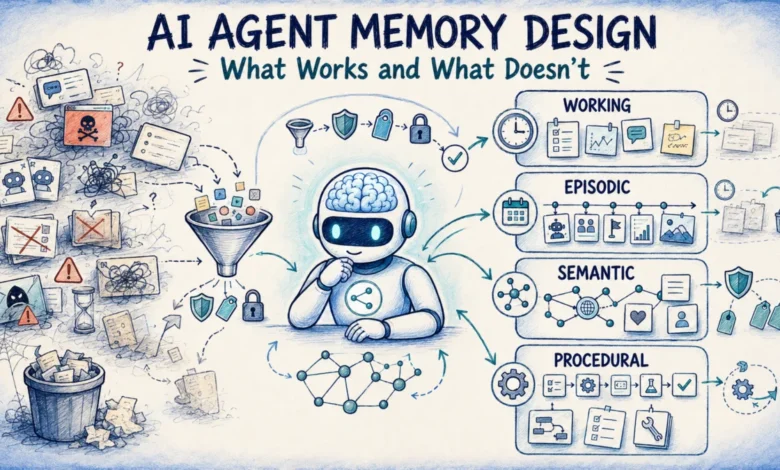
In the rapidly evolving landscape of autonomous systems, the transition from simple chatbots to complex AI agents hinges on one critical development: the transition from stateless processing to sophisticated, persistent memory architectures. As AI agents move from single-turn request-response cycles to multi-step, long-running task execution, the limitations of standard context windows have become a primary bottleneck. Architects are now forced to confront the reality that an agent without effective memory is an agent condemned to institutional amnesia, forced to "re-learn" user preferences and project constraints with every new session. This article examines the structural design patterns required to build reliable memory systems, identifies common architectural failures, and provides a blueprint for creating agents that possess true operational continuity.
The Evolution of Agentic Memory
The concept of memory in artificial intelligence has moved beyond simple caching. Historically, developers relied on basic session history to provide a semblance of continuity. However, modern AI agent design demands a more nuanced approach. True agentic memory is defined as information written to external storage during runtime and retrieved in later calls, across disparate steps or even distinct user sessions. This is distinct from system prompts—which are static configurations—or standard retrieval-augmented generation (RAG) pipelines, which treat external knowledge as a fixed read-only source.
The shift toward persistent, dynamic memory began in earnest as enterprises moved toward multi-agent systems (MAS). In these environments, the inability of an agent to retain information about its own previous actions often led to "looping" behavior, where an agent would repeatedly attempt to solve a problem using a method that had already failed. This resulted in wasted compute, increased API latency, and significant user frustration. By 2025, industry standards began coalescing around a four-pillar memory architecture: episodic, semantic, procedural, and working memory.
The Four Layers of Operational Memory
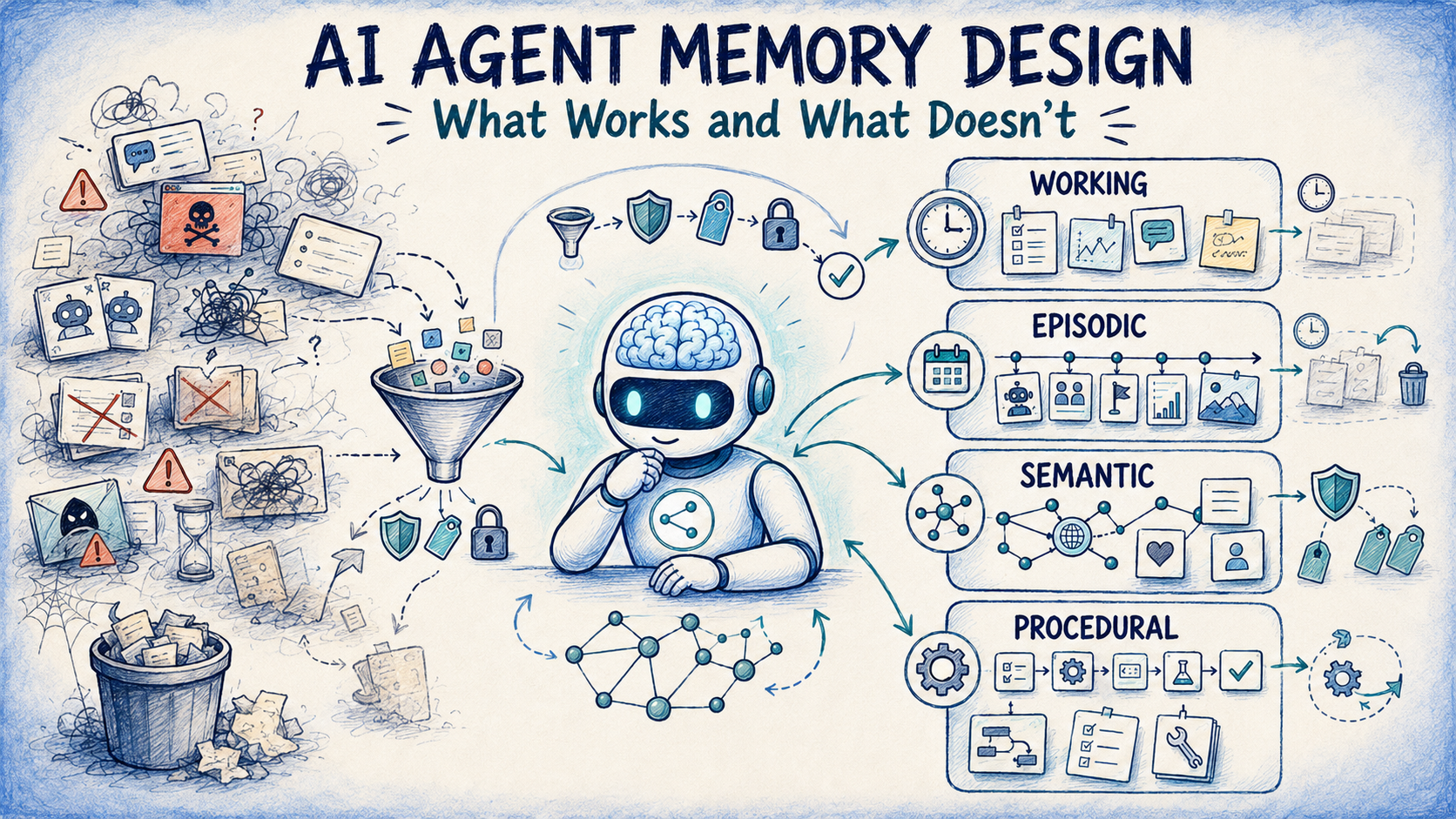
To build a resilient agent, developers must treat memory as a multi-layered stack. Collapsing these layers into a single vector database is a primary cause of system failure.
- Working Memory: This acts as the agent’s "scratchpad." It holds active task states, intermediate calculation results, and variables required for the immediate execution step. It is characterized by high-frequency read/write operations and short-lived persistence.
- Episodic Memory: This layer stores the "autobiography" of the agent. It tracks specific past interactions, the sequence of decisions made, and the outcomes of previous task runs. It is typically managed through vector databases to allow for semantic similarity searches.
- Semantic Memory: This is the agent’s "knowledge base" of facts, user preferences, and domain-specific rules. Unlike episodic memory, which records events, semantic memory records truth. This information is often retrieved via exact key lookups or curated semantic searches.
- Procedural Memory: This represents the "how-to" layer. It encodes successful workflows, tool-use patterns, and optimized strategies that the agent has discovered through trial and error.
Architectural Strategies for High-Reliability Systems
The most robust memory systems currently in production share common design principles that prioritize relevance over volume.
Importance Scoring and Hierarchical Persistence
A significant challenge in long-term memory is the "noise-to-signal" ratio. If an agent records every minor detail, the retrieval process becomes cluttered with irrelevant information, leading to degraded performance. A sophisticated solution is the implementation of importance scoring. By assigning a weight to every memory entry, the system can determine whether information is merely temporary—such as the result of a failed intermediate step—or durable—such as a permanent user preference. By gating writes behind a minimum importance threshold, developers ensure that the persistent storage remains clean and highly relevant for future queries.
Role-Based Memory Scoping
In multi-agent orchestration, a common failure point is the "shared flat namespace," where every agent in the system can read and write to the same central database. This often results in the "Research Agent" inadvertently corrupting the context required by the "Code Execution Agent." Best practice now dictates strict memory scoping. The orchestrator maintains global read/write access, while sub-agents are restricted to their own namespaces. This ensures that memory is siloed appropriately, preventing unintended cross-talk and reducing the likelihood of context pollution.
The "Write-Back" Protocol
Many early-stage agents only write to memory upon the successful completion of a task. This is a critical error; if the process crashes at the 90% mark, all intermediate progress is lost. Modern architectures employ a "write-back" protocol, where the agent commits results to working memory immediately after every individual step. Once a step is confirmed successful, it is promoted to episodic memory. This granular approach ensures that even if an agent fails, it can resume from the last known good state rather than starting from zero.
Lessons from Failed Architectures
Industry analysis of failed AI implementations highlights three recurring patterns that lead to long-term system instability.
1. The "Vector Database Only" Fallacy:
Treating a vector database as a universal solution is a frequent mistake. While vector search is excellent for similarity, it lacks the structure required for complex reasoning. Without a relational or key-value store to handle exact constraints, agents often struggle to retrieve precise facts, leading to hallucinations where the agent guesses a value rather than retrieving it accurately.
2. The Pitfalls of Context Summarization:
Compressing long conversation histories into a single summary block is an intuitive but dangerous practice. Summarization inherently involves information loss. When an agent relies on a summary as its "memory," it often discards the very edge cases or specific constraints that are vital for future decision-making. Furthermore, if the agent hallucinates a fact during the summarization process, that error is effectively "baked into" the long-term memory, becoming a permanent, high-confidence falsehood that the agent will continue to reference in future sessions.
3. Memory Poisoning and Trust Management:
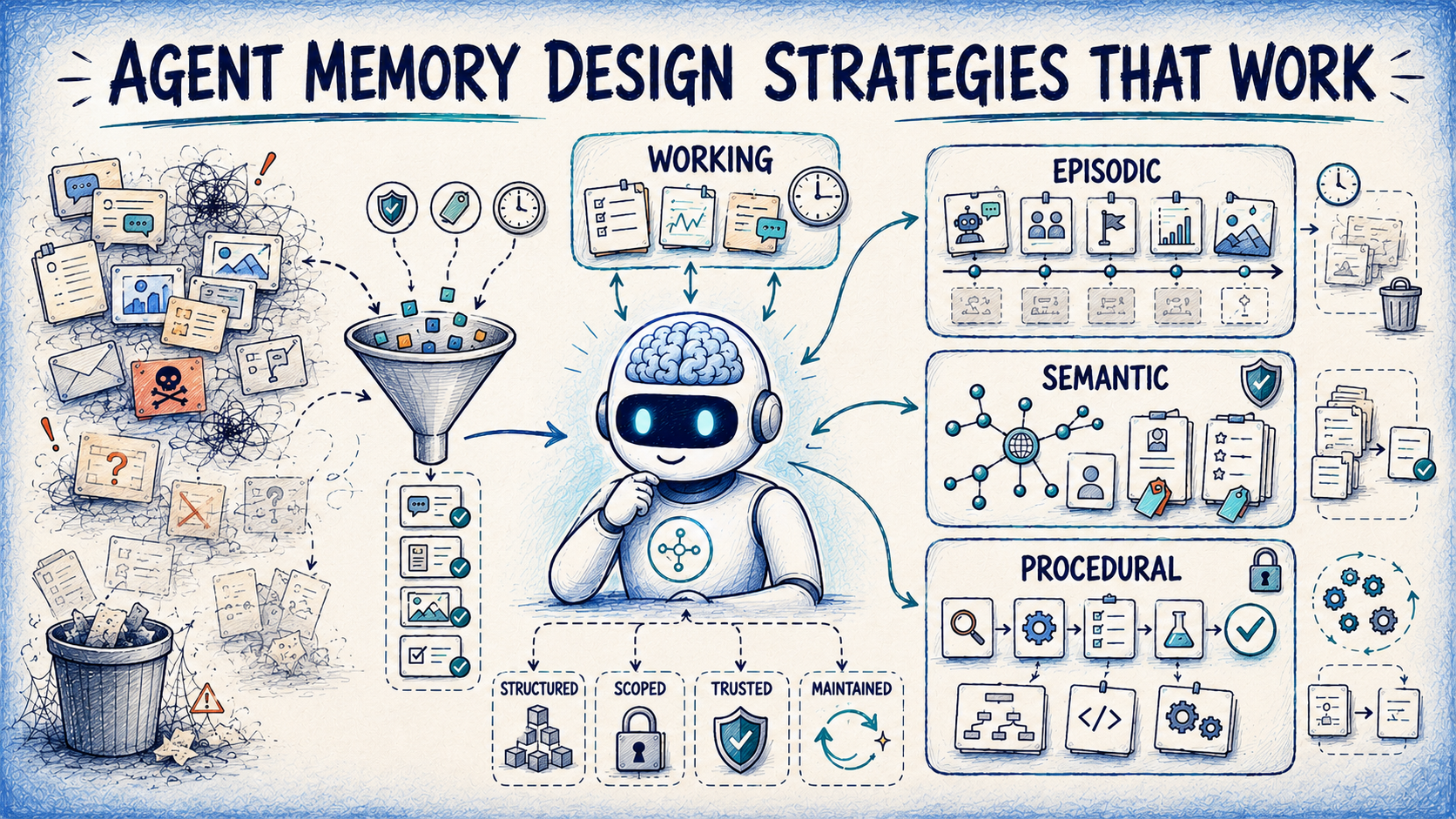
Perhaps the most pressing security concern is "Memory Grafting" or memory poisoning. If an agent is allowed to ingest external content—such as web pages or user-provided files—without sanitization, it may store hidden, malicious instructions within its long-term memory. Future retrievals can then trigger these instructions, causing the agent to behave in ways the developer never intended. To mitigate this, developers must implement a trust-level hierarchy for all incoming data. Information from internal, high-trust sources should be treated differently than external, untrusted content, which must be scanned for potential prompt injection directives before being permitted into the memory store.
The Path Toward Self-Maintaining Systems
As these systems scale, memory inevitably becomes a form of technical debt. Without proactive maintenance, databases grow exponentially, causing retrieval latency and costs to spiral. The most advanced agent architectures now include automated "janitor" routines that perform three essential tasks:
- Deduplication: Identifying and merging redundant memory entries that represent the same fact.
- Confidence Decay: Lowering the trust score of older, potentially stale facts, forcing the agent to verify the information before acting upon it in high-stakes scenarios.
- TTL (Time-To-Live) Management: Automatically purging temporary working memory entries after a set period, ensuring that only high-value, persistent information occupies the long-term storage.
Broader Implications for AI Development
The transition to memory-aware agent design marks a maturation point in the field of artificial intelligence. As agents move into critical sectors like finance, legal analysis, and software engineering, the reliability of their memory systems will become a key differentiator between toy models and enterprise-grade tools.
The industry is currently moving toward a standard where provenance—the ability to trace a fact back to the exact agent, tool, and input that created it—is considered a mandatory field for any memory entry. This shift towards transparency and structure is not merely a design preference; it is a fundamental requirement for building systems that are both accountable and predictable. As researchers continue to refine these memory architectures, the focus remains on balancing the need for deep, long-term context with the necessity of maintaining a secure, efficient, and accurate operational framework. In the coming years, the mastery of memory design will likely prove to be the most significant factor in the success of autonomous agent deployment at scale.