Apple is tightening macOS privacy controls to curb unauthorized AI agent data access in upcoming updates

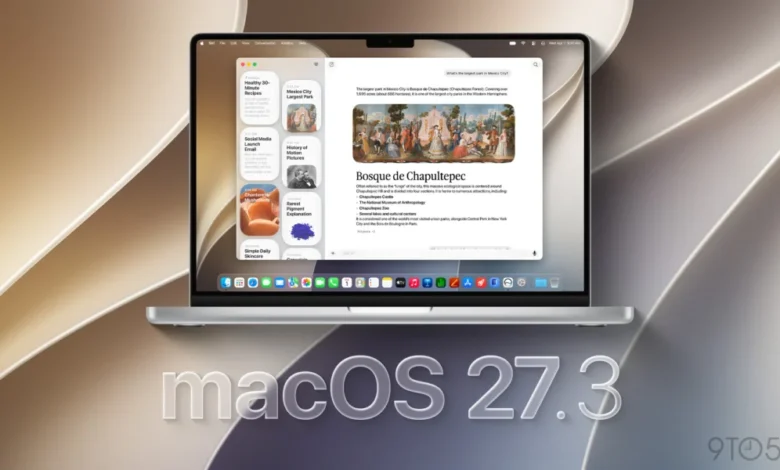
Apple is moving to fundamentally reshape how macOS handles high-level permissions, specifically targeting the controversial "Full Disk Access" (FDA) setting. This policy shift, set to arrive in macOS 27.3, is a direct response to the proliferation of AI-driven applications that have increasingly sought broad permissions to scrape user data under the guise of enhancing productivity. By effectively closing a long-standing system loophole, Apple aims to restore the principle of "least privilege" to the Mac operating system, ensuring that applications cannot gain sweeping access to a user’s private files without a deliberate and unmistakable action from the owner.
The Rise of AI Agents and Data Security Concerns
The catalyst for these changes lies in the recent surge of "AI agents"—software applications designed to automate complex workflows by interacting with other apps, reading emails, and managing files. While these tools offer significant efficiency gains, they require access to sensitive information to function. Throughout 2026, cybersecurity researchers and privacy advocates raised alarms regarding how easily these agents could gain Full Disk Access.
In many instances, applications would request permission to access specific files or directories. When the operating system denied these requests, the application would prompt the user to navigate to the System Settings to manually toggle the "Full Disk Access" switch. This process, while seemingly manual, was often facilitated by the OS itself, which would log the rejected request and add the app to a "waiting list" within the security settings, effectively inviting the user to grant blanket permissions. This design flaw created a friction-less path for developers to nudge users into compromising their own privacy.
Chronology of the Regulatory Pivot
The shift in Apple’s security posture began in late September 2026, when reports surfaced regarding the behavior of several third-party AI agents, most notably the Muse application. Analysts observed that once granted Full Disk Access, these agents often operated with little oversight, harvesting data from local databases, including iMessage transcripts, browser histories, and local document caches, without the user fully understanding the scope of that access.
On October 2, 2026, Apple issued a formal announcement outlining its intent to strengthen privacy controls. The company pledged that future macOS updates would require "very explicit user action" for any application seeking access to the entire file system. This statement served as the opening move in a broader strategy to mitigate the risks associated with AI-driven data scraping. By early November 2026, technical investigations into the macOS 27.3 beta confirmed the specific mechanisms through which Apple intends to enforce these new constraints.
Technical Implications of macOS 27.3
According to technical analysis conducted by security researchers, the update to macOS 27.3 effectively removes the "automatic logging" feature for denied file requests. In current versions of the operating system, if an app attempts to read a protected file and is blocked, the system creates a record that allows the app to appear in the Full Disk Access list in System Settings.

Starting with macOS 27.3, this behavior will be discontinued. When an application attempts to access a restricted file, the operating system will perform a silent denial. Crucially, the system will no longer record the application in the privacy settings menu. This change effectively forces developers to create a more transparent, legitimate path for requesting permissions, rather than relying on the system to act as a directory for "permission elevation."
Despite these changes, developers may still theoretically guide users to manually add an application to the Full Disk Access list by dragging and dropping an icon into the Settings panel. While this remains a "user action," it is a significantly higher hurdle than the previous system, which essentially curated a list of apps for the user to approve.
Broader Impact on the AI Ecosystem
The implications for the developer community are significant. For years, the lack of granular permission models in macOS forced developers to request "all-or-nothing" access to user data. For an AI agent to summarize a user’s recent text messages or organize their local documents, it required permission to read everything on the hard drive.
Security experts argue that the lack of "scoped" permissions is the root cause of the current friction. If a developer only needs access to a specific folder—such as an iMessage database—there is currently no standard API that allows them to request that specific, limited access without triggering a Full Disk Access request.
Industry analysts suggest that Apple’s focus on "Private Folders" may be the long-term solution. If Apple introduces a framework where users can grant an app access to a single directory or a specific set of files, the necessity for Full Disk Access will evaporate. Until that infrastructure is fully realized, however, the tension between AI functionality and user privacy will persist.
Industry and Expert Analysis
Data privacy advocates have largely welcomed the move, noting that Apple is attempting to mitigate the risks posed by "shadow AI" applications. However, some developers have expressed concern that the tightening of these controls could hinder the development of legitimate, user-friendly AI agents that require deeper system integration to be effective.
From a security perspective, the change is viewed as a necessary evolution. "The current model relies too heavily on user intent, which is often manipulated by software design," says one independent software engineer who monitors macOS security updates. "By removing the system-level suggestions for Full Disk Access, Apple is placing the burden of responsibility back onto the developer to explain why they need such extensive access, rather than letting the operating system act as a facilitator for mass data collection."

Future Outlook and Policy Trends
As Apple continues to iterate on its privacy frameworks, the focus is expected to shift toward more granular control. The integration of artificial intelligence into the operating system itself—often referred to as Apple Intelligence—suggests that the company is trying to solve these problems at the hardware and kernel level rather than relying solely on third-party compliance.
The transition to macOS 27.3 represents a critical juncture. It signals that Apple is no longer willing to accommodate the "move fast and break things" mentality that has characterized the rapid growth of the AI agent market. By narrowing the aperture of accessibility, Apple is effectively forcing the AI industry to mature its security models.
For the average user, the impact will be a noticeable reduction in the number of applications requesting, or being prompted for, broad system access. For enterprise users and power users, the update will require a more disciplined approach to security management, as the "quick toggle" methods of the past are systematically dismantled.
Ultimately, the efficacy of these changes will depend on whether Apple provides developers with the necessary tools to perform their tasks through safer, more granular APIs. If the only way to perform a basic, expected task—such as accessing a specific communication log—remains a request for Full Disk Access, then the security gains will be temporary. The true success of the macOS 27.3 initiative will be measured not just by how many doors it closes to rogue agents, but by how effectively it opens new, safer pathways for functional, privacy-respecting software.
The industry will be watching closely as the update rolls out, specifically to see if Apple introduces further refinements to the "Private Folders" concept. This feature, if implemented with robust security and clear user interfaces, could represent the most significant change to macOS permission management in a decade, moving the platform toward a more secure, sandboxed future where data is only as accessible as the user explicitly intends.