The evolution of home and enterprise networking is taking an unprecedented leap forward with the unveiling of the TP-Link Archer 8 Ultra, widely recognized as the world’s first proof-of-concept Wi-Fi 8 router. While mainstream adoption of Wi-Fi 7 is still ongoing and final technical specifications for the IEEE Wi-Fi 8 standard (officially designated as IEEE 802.11bn or Ultra High Reliability) are not slated for final ratification until 2028, hardware manufacturers are already laying the groundwork for the next generation of wireless connectivity. TP-Link’s aggressive entry into the pre-standard hardware market signals a major strategic shift in the networking industry. Rather than chasing ever-higher peak theoretical data rates, the upcoming generation of wireless technology pivots fundamentally toward maximizing signal reliability, expanding coverage range, and optimizing device density across complex, congested environments.
Priced at a steep £699 (approximately $950) for UK pre-orders ahead of its official November 15, 2026 launch—with prices scheduled to jump to £899.99 (roughly $1,199) thereafter—the Archer 8 Ultra is undeniably an enthusiast-grade and enterprise-leaning piece of hardware. It costs nearly double the price of top-tier, current-generation Wi-Fi 7 routers. Yet, examining its architectural framework and performance metrics offers a fascinating look at the technologies that will define digital communication infrastructure for the next decade.
Understanding the Wi-Fi 8 Timeline and Industry Context
To understand the significance of the Archer 8 Ultra, one must examine the timeline of wireless networking standards. Wi-Fi 7 (IEEE 802.11be) introduced revolutionary concepts like multi-link operation (MLO) and wider 320MHz channels in the 6GHz spectrum, pushing raw potential speeds to extraordinary heights. However, real-world deployment exposed lingering challenges related to signal attenuation, wall penetration, and connection stability in densely populated environments or sprawling multi-story buildings.
Recognizing these operational bottlenecks, the IEEE and the Wi-Fi Alliance initiated development on the next iteration, tentatively referred to as Wi-Fi 8 or Ultra High Reliability (UHR). Although the standard will not achieve official ratification until 2028, foundational protocols are already stable enough for tier-one manufacturers to begin prototyping silicon and firmware. TP-Link’s proactive hardware release strategy positions the company at the vanguard of this transition. Alongside the Archer 8 Ultra, the manufacturer has announced intentions to roll out a broader ecosystem of Wi-Fi 8-compatible mesh routers and range extenders through 2027.
Design and Build: Built Like an Industrial Obelisk
The engineering philosophy behind Wi-Fi 8 directly dictates the physical form factor of the Archer 8 Ultra. Because the new standard places a heavy premium on beamforming precision, range extension, and interference mitigation, internal hardware requirements are exceptionally demanding.
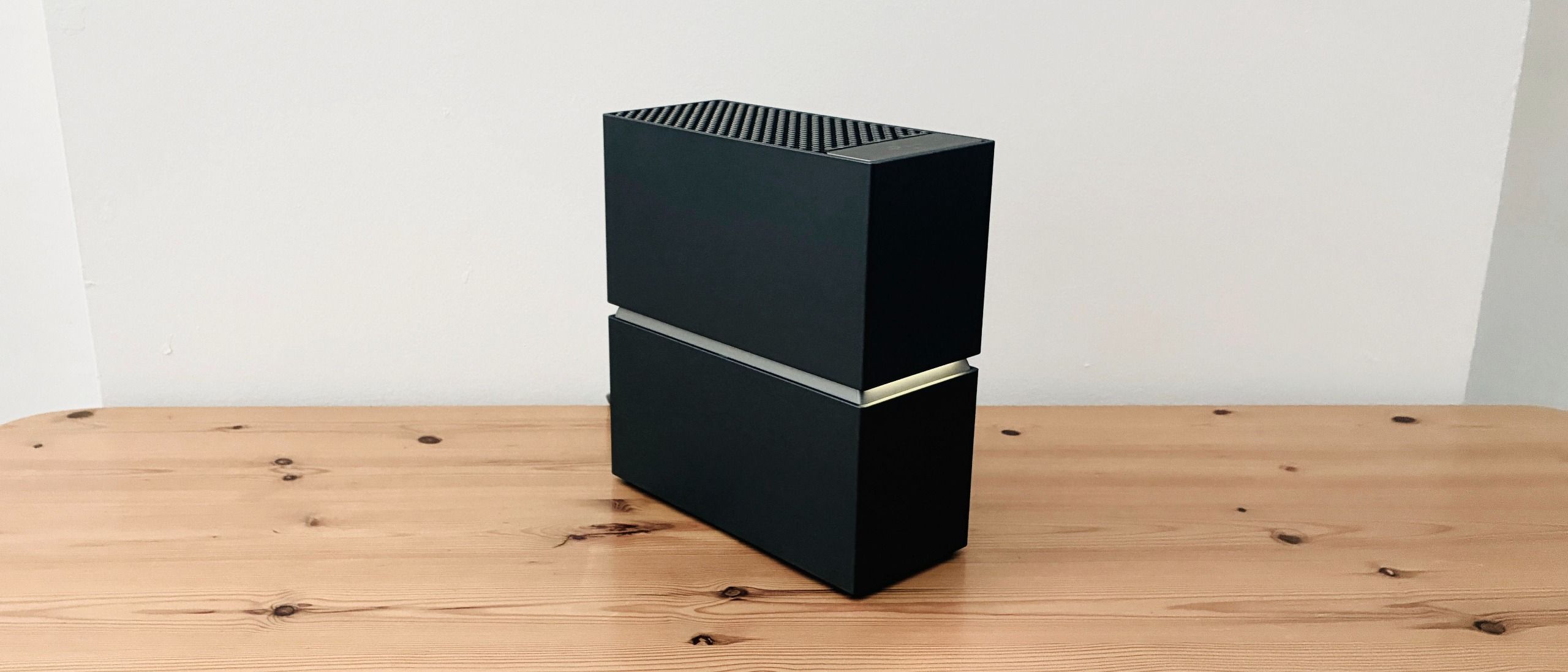
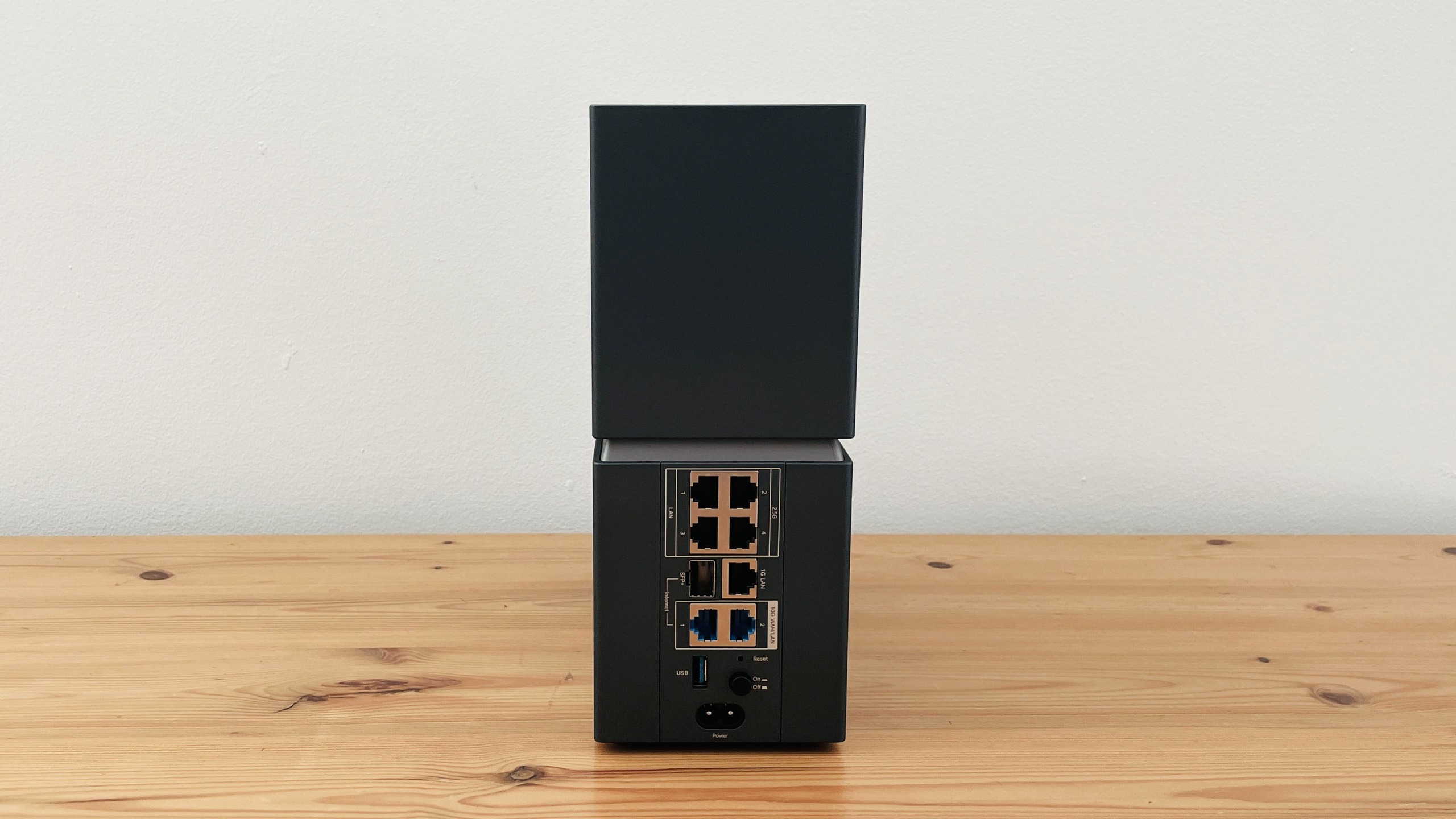
The router cuts an imposing silhouette. Shaped as a matte-black vertical obelisk, it measures 245mm in height, 98mm in width, and 226mm in depth. This substantial chassis houses no fewer than 18 internal antennas, meticulously arranged to project and steer wireless signals across expansive floor plans.
Connectivity options on the Archer 8 Ultra reflect its high-end positioning. It features two ultra-fast 10Gbps ports capable of handling multi-gigabit fiber broadband inputs while simultaneously serving as high-speed wired local area network (LAN) backhauls for bandwidth-intensive devices like desktop gaming rigs or network-attached storage (NAS) enclosures. In addition to these ports, the device includes four 2.5Gbps LAN ports and, somewhat curiously, a legacy 1Gbps port. This robust port selection ensures that wired infrastructure can keep pace with the wireless transmission speeds.
Software Setup and Ecosystem Integration
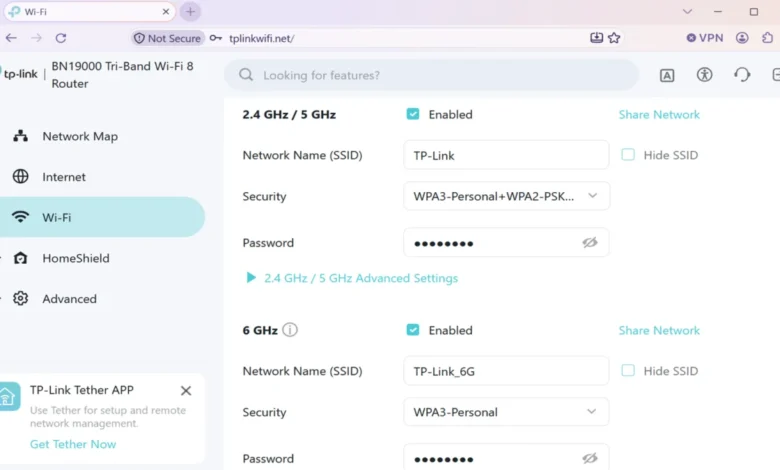
Setting up a bleeding-edge router can often be an intimidating task for average consumers, but TP-Link mitigates this friction through its refined Tether mobile application. Initial configuration is streamlined via a QR code scan that immediately pairs the user’s smartphone with the router’s initial network matrix.
By default, the application institutes a dual-pronged network architecture. It establishes a dedicated, high-performance network exclusively for the 6.0GHz frequency band—optimized for modern mobile devices and computers—while simultaneously combining the 2.4GHz and 5.0GHz bands into a unified smart-connect SSID to ensure seamless backwards compatibility with older legacy hardware. For power users and network administrators requiring granular control over Quality of Service (QoS), firewall rules, and security protocols, a comprehensive web browser-based interface remains fully accessible.
Deconstructing Wi-Fi 8: Core Technological Enhancements
While a peak throughput speed of 19Gbps on the Archer 8 Ultra sounds staggering, it is important to note that this figure does not surpass the theoretical maximum speeds achievable by top-tier Wi-Fi 7 devices. Furthermore, the router operates across the familiar 2.4GHz, 5.0GHz, and 6.0GHz frequency bands. The true innovation of Wi-Fi 8 lies not in raw speed, but in how efficiently data is managed across challenging physical spaces.
Industry literature surrounding Wi-Fi 8 introduces several complex acronyms and architectural concepts, including:
- MAPC (Multi-Access Point Co-ordination): Allows multiple access points to coordinate transmissions dynamically, drastically reducing co-channel interference in crowded neighborhoods or office buildings.
- ELR (Enhanced Long Range): Optimizes power allocation and receiver sensitivity to maintain stable connections at extreme distances from the router.
- DRU (Distributed Resource Units): Enhances resource allocation efficiency across multi-user environments, ensuring consistent latency even when hundreds of devices are communicating simultaneously.
Through these advancements, a single Archer 8 Ultra unit is rated to cover up to 3,600 square feet (varying slightly by regional regulatory compliance) and support up to 200 concurrently connected devices. Additionally, the inclusion of a dedicated Multi-Floor Mode automatically adjusts transmission parameters to optimize coverage in multi-level residential or commercial properties. For users residing in standard apartments or small homes, the device represents an extreme case of technological over-provisioning.
Performance Analysis and Real-World Implications
Because consumer devices featuring native Wi-Fi 8 chipsets are not yet commercially available, evaluating the Archer 8 Ultra requires leveraging its complete backwards compatibility with Wi-Fi 7 hardware. Testing environments typically reveal how effectively the router’s enhanced range and reliability protocols translate into practical utility.
In environments plagued by architectural dead zones—such as distant back offices separated by multiple concrete partition walls—the Archer 8 Ultra demonstrates exceptional signal retention. While the high-frequency 6.0GHz band traditionally suffers from severe range limitations compared to lower frequencies, the advanced beamforming and ELR protocols integrated into the Wi-Fi 8 framework allow the 6.0GHz stream to maintain maximum throughput over significantly greater distances. Ookla SpeedTest benchmarks and heavy file transfers conducted via Steam consistently saturate standard multi-gigabit local connection caps, exhibiting zero packet loss or latency spikes even when moving dynamically between distant zones.
Implications for Consumers and the Enterprise Sector
The launch of the TP-Link Archer 8 Ultra serves a dual purpose: it acts as a functional high-end networking product for affluent early adopters and as a tangible proof-of-concept for the trajectory of global wireless standards.
For the average household streaming video or browsing the web, investing in a Wi-Fi 8 router at this stage is unnecessary. Current Wi-Fi 6E and Wi-Fi 7 hardware already outpaces the bandwidth delivery of standard residential internet service providers by a wide margin.
However, for enterprise environments, hospitality venues, large public spaces, and ultra-high-end smart homes managing dense ecosystems of IoT devices, the reliability-first philosophy of Wi-Fi 8 represents a monumental leap forward. By prioritizing sustained connectivity over headline-grabbing speed metrics, TP-Link and the broader networking industry are building the digital highway required for the increasingly hyper-connected society of the late 2020s and beyond.