Avast SecureLine VPN Review 2024: A Capable Consumer Privacy Tool Hindered by Inconsistent Features and Lack of Audits


Avast SecureLine VPN occupies a unique space in the crowded virtual private network market, functioning as an accessible, consumer-oriented privacy application that leverages backend infrastructure from the HideMyAss! network, another subsidiary under the broader Avast corporate umbrella. While the software delivers commendable connection speeds via the modern WireGuard protocol and demonstrates strong performance when unblocking major streaming platforms, it faces significant scrutiny from cybersecurity analysts due to inconsistent feature distribution across operating systems and a total absence of independent, third-party security audits.
Understanding the positioning of Avast SecureLine requires examining the evolution of its parent company, Avast Software. Originally founded as a Czech-based cybersecurity pioneer in 1988 by Eduard Kučera and Pavel Baudiš, the company grew into a heavyweight in the antivirus industry. In July 2021, British cybersecurity firm NortonLifeLock (now known as Gen Digital) announced a multi-billion-dollar merger agreement to acquire Avast. Following regulatory approvals, the transaction was finalized in 2022, placing Avast under a corporate structure with major operational hubs in Tempe, Arizona, and Prague, the Czech Republic. Within this corporate evolution, Avast SecureLine was developed less as a standalone, industry-leading privacy suite and more as a convenient bundled utility meant to complement broader security suites like Avast One.
When evaluating the financial commitment required for Avast SecureLine VPN, potential subscribers must navigate a tiered subscription model that offers one-, two-, and three-year durations. The pricing structure bills the two- and three-year options at $3.99 per month, resulting in upfront totals of $95.76 and $143.64, respectively. Meanwhile, the single-year subscription carries a higher monthly rate of $4.99, amounting to $59.88 annually. A critical detail for consumers to monitor is the automatic renewal policy: regardless of whether a user initiates a multi-year commitment, subscriptions automatically renew into standard annual billing rates upon expiration.
When measured against premier industry competitors, Avast’s pricing model sits on the expensive side, particularly given its feature limitations. For instance, top-tier rivals such as Surfshark offer comprehensive plans starting at significantly lower monthly rates while including advanced productivity and privacy tools like alternative ID generators. Avast does not provide tiered feature packages or specialized add-ons; users receive the same core application regardless of subscription length. However, consumers seeking comprehensive protection often find it more cost-effective to purchase the Avast One "Ultimate" tier, which bundles the VPN alongside a wider array of anti-malware, system optimization, and identity protection tools.
Functionally, the server infrastructure supporting Avast SecureLine spans 116 distinct locations across 74 countries. While this geographic spread is competitive with mid-tier providers like Windscribe and CyberGhost, Avast notably refrains from publishing its total server count, making it difficult for technical analysts to gauge potential network congestion. Geographically, the network is heavily weighted toward Europe. Users residing in North America and Europe will experience robust server availability, whereas those situated in Asia and Oceania may encounter a limited selection of connection nodes compared to market leaders like ExpressVPN or NordVPN.
Under the hood, Avast SecureLine employs industry-standard AES-256-bit encryption to safeguard user data packets from interception. Furthermore, the inclusion of the WireGuard protocol ensures that users benefit from modern cryptographic standards and high throughput capabilities. To protect users against unexpected data leaks during sudden network disruptions, the application incorporates a kill switch. However, the implementation of this vital security feature is fragmented across operating systems. Desktop users on Windows and macOS receive standard kill-switch protections, and Android users benefit from an "always-on VPN" setting. Conversely, the iOS application completely lacks a dedicated kill switch, leaving Apple mobile users vulnerable to unencrypted data exposure if the VPN tunnel drops unexpectedly.
Privacy advocates closely scrutinize the data collection practices of any virtual private network, and Avast maintains a formal "no-logs guarantee." According to the company’s privacy documentation, the service refrains from logging user browsing history, visited websites, original IP addresses, or the content of online communications. Nevertheless, the provider does collect minimal connection metadata, including timestamps for connection establishment and disconnection, as well as the total session duration.

The most prominent critique regarding Avast SecureLine’s privacy architecture is the complete absence of public third-party security audits. While industry giants routinely submit their infrastructure, server configurations, and no-logs policies to independent verification firms—such as Deloitte, PricewaterhouseCoopers, or Cure53—Avast has never commissioned an independent audit specifically for SecureLine VPN. Consequently, privacy-conscious consumers must rely entirely on corporate self-certification rather than verifiable cryptographic or forensic proof.
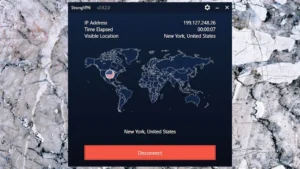
Usability and application design reveal further inconsistencies across platforms. Avast provides native applications for Windows, macOS, Android, and iOS, alongside browser extensions tailored for Google Chrome, Microsoft Edge, and Mozilla Firefox. The user interface adheres to standard industry conventions, featuring a prominent central connection toggle, a dropdown menu for server selection, and a gear icon directing users to the settings panel. Despite these superficial similarities, subtle discrepancies frustrate power users. For instance, the Windows client alters terminology found in the macOS version without clear technical justification, changing status notifications from "VPN is off/on" to "Not connected/Connected."
Feature parity is another notable challenge within the ecosystem. The Windows desktop client delivers a respectable array of advanced tools, including split-tunneling capabilities, multi-hop (double VPN) routing, and a manual IP rotation feature designed to bypass stubborn geo-blocks. In stark contrast, the iOS mobile application is severely stripped down. It omits split-tunneling, multi-hop routing, Wi-Fi auto-protection, ad and tracker blocking, and the aforementioned kill switch. Torrenting and peer-to-peer (P2P) file sharing, however, are officially supported, with dedicated P2P servers integrated directly into the desktop and Android clients to ensure stable download rates.
Accessibility remains one of Avast’s strongest operational domains. The applications support 44 distinct languages and incorporate robust keyboard navigation controls, allowing users to execute primary functions—such as establishing connections, terminating sessions, and selecting server nodes—entirely through keyboard inputs. Customer support infrastructure is similarly comprehensive. Users can consult an extensive online knowledge base, participate in community forums, interact with an automated chatbot, or access 24/7 telephone support lines. User review metrics present a polarized picture: while the iOS application enjoys favorable ratings in the Apple App Store, the Android client has historically accumulated critical feedback on the Google Play Store regarding intermittent connection instability and minor software bugs.
Performance testing places Avast SecureLine firmly in the upper mid-range of the commercial VPN market. When utilizing the WireGuard protocol, download speeds in controlled testing environments ranged from 874 Mbps to 1.2 Gbps, depending heavily on physical proximity to the chosen server node. Legacy OpenVPN connections proved stable, maintaining throughput speeds between 245 Mbps and 280 Mbps. These throughput metrics align Avast with competitors such as AirVPN, VyprVPN, and Hotspot Shield, ensuring that everyday activities like high-definition video conferencing, large file downloads, and web browsing proceed without noticeable latency.
In the realm of digital entertainment, Avast SecureLine demonstrates commendable aptitude in bypassing geographic content restrictions. During evaluations, the service successfully unlocked major streaming ecosystems, including Netflix, Amazon Prime Video, Disney+, and the British Broadcasting Corporation’s BBC iPlayer. However, inconsistencies emerged when attempting to access YouTube Premium across various international regions, with successful bypasses largely restricted to specific Asian server nodes.
Ultimately, Avast SecureLine VPN presents as a thoroughly average digital privacy product. While its pricing remains acceptable—if not aggressively competitive—its download speeds, streaming capabilities, and feature sets rarely exceed industry baselines. The software often feels like a secondary utility engineered primarily to fulfill a checklist requirement for inclusion within broader security bundles like Avast One. For casual consumers seeking a straightforward, reliable tool to encrypt public Wi-Fi traffic and unseat regional streaming blocks, Avast SecureLine is entirely functional. Conversely, advanced users requiring granular security configurations, absolute cross-platform feature parity, and independently audited privacy guarantees will find superior value in specialized alternatives such as Surfshark, Windscribe, or Proton VPN.