Vivo’s ‘wide fold’ may launch in 2027 with a more compact screen — joining the iPhone Duo, Galaxy Z Fold…


The Shift Toward Compact Foldable Engineering
For the past several years, the "book-style" foldable market—characterized by a device that opens like a book to reveal a larger internal screen—has converged on a standard form factor. Industry leaders, most notably Samsung with its Galaxy Z Fold series and various Chinese manufacturers, have largely settled on internal display sizes of approximately 7.6 inches. This dimension has been widely accepted as the "sweet spot" for productivity, multitasking, and media consumption.
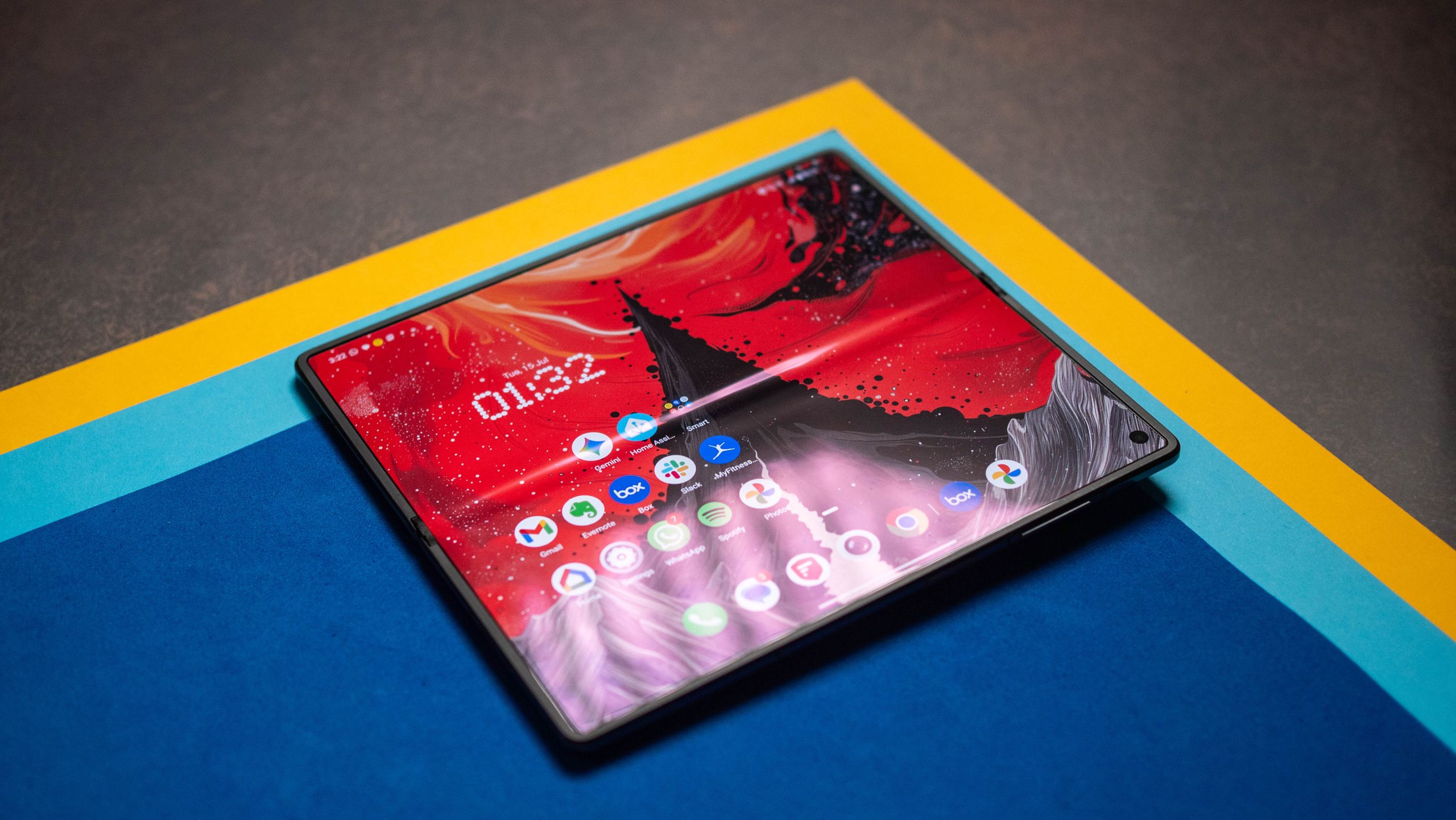
However, the latest intelligence indicates that Vivo is charting a different course. Reports suggest the company is engineering a device with an internal screen measuring under 6.5 inches. By opting for a smaller footprint, Vivo is effectively creating a new sub-category of foldable devices: the compact wide-fold. While traditional foldables aim to replace a tablet, this proposed Vivo device appears designed to offer the benefits of a dual-screen configuration without the bulk and weight associated with larger displays.
The implications of this design choice are substantial. A sub-6.5-inch inner screen would potentially allow for a significantly thinner chassis and a lighter weight profile, addressing the two most common consumer complaints regarding current-generation foldables: portability and pocketability.
A Strategic Timeline for 2027
The rumored release window for this device is set for 2027. This timeline suggests a calculated, long-term development cycle rather than a rushed attempt to capture market share. In the fast-paced world of mobile technology, a three-year development horizon is an eternity. It implies that Vivo is not merely iterating on existing hardware but is likely waiting for advancements in display material science, hinge durability, and battery density.
Historically, Vivo has maintained a reputation for high-end hardware integration, particularly in its X Fold series. The decision to finalize the majority of hardware components this far in advance of the projected 2027 launch date indicates that the manufacturer is prioritizing structural stability and thermal management—areas where compact devices traditionally struggle due to the lack of internal volume for heat dissipation and large-capacity battery cells.
Comparative Landscape: The Race for Foldable Dominance
To understand the significance of Vivo’s strategy, one must look at the competitive landscape. Samsung continues to dominate the global foldable market, with the Galaxy Z Fold 8 having solidified its position as the standard-bearer for wide-foldable experiences. The consistency of Samsung’s hardware—leveraging a 7.6-inch internal display—has provided a reliable baseline for app developers to optimize their software.
Conversely, competitors like Honor and OPPO are pursuing a strategy that aligns more closely with the established standard. Rumors regarding Honor’s upcoming wide-foldable hardware suggest the company is aiming for a 7.6-inch internal display, paired with a 5.5-inch cover screen and a high-capacity battery in the 7,000mAh range. Similarly, recent leaks surrounding potential OPPO hardware indicate a focus on premium silicon, specifically the Qualcomm Snapdragon 8 Elite Gen 6, and a focus on high-performance specifications consistent with the 7.6-inch form factor.
Vivo’s decision to diverge from this "larger is better" philosophy is a high-stakes gamble. If the company can successfully deliver a device that provides a premium, flagship-tier experience in a more manageable form factor, it could attract a segment of the market that has thus far remained skeptical of the current generation of bulky foldables.
Technical Challenges and Hardware Realities
Developing a smaller foldable presents unique engineering hurdles. As displays become smaller, the curvature of the fold becomes more pronounced, which can place greater stress on the organic light-emitting diode (OLED) layers and the protective ultra-thin glass (UTG). Furthermore, accommodating the internal components of a high-end smartphone—such as periscope zoom lenses, advanced cooling chambers, and the latest generation of mobile processors—within a significantly thinner and smaller body requires miniaturization of the motherboard and battery technology.
Industry analysts suggest that the "compact" nature of the device may rely heavily on advancements in silicon efficiency. If the device is indeed released in 2027, it will likely coincide with the maturity of 2nm (nanometer) chip manufacturing processes, which offer higher performance-per-watt ratios than today’s 3nm and 4nm chips. This would be essential for a smaller device, as it would need to deliver high performance without requiring the massive cooling systems found in larger, more traditional flagship phones.
The Role of User Feedback and Market Reception
Initial sentiment from tech enthusiasts and industry observers on platforms like Weibo suggests a cautious optimism. While some users express concerns about the loss of screen real estate—which is critical for complex tasks like video editing or dual-app multitasking—others have lauded the prospect of a device that is truly portable.
The consensus among early adopters is that if Vivo can maintain its industry-leading camera arrays and display quality, the reduction in screen size might be a welcome trade-off. Vivo has, in previous iterations of the X Fold series, consistently pushed the boundaries of camera sensor size and optics. Maintaining this performance in a smaller body would be the ultimate test of the company’s engineering prowess.
Implications for the Broader Mobile Industry
The potential arrival of a compact wide-foldable in 2027 could catalyze a shift in the entire smartphone industry. If successful, it would force other manufacturers to reconsider whether the "bigger is better" approach to foldable screens is the only viable path to success. We may see a bifurcation in the market: one side focusing on "Max" or "Ultra" foldables for power users, and the other side, led by this potential Vivo device, focusing on "Compact" foldables for the general consumer.
Furthermore, this development highlights the maturation of the supply chain. As foldable displays, hinges, and flexible batteries become more commoditized, the barrier to entry for unique form factors decreases. We are moving out of the "experimental" phase of foldable technology and into a period of refinement and niche-filling.
Looking Ahead to 2027
While the wait until 2027 may seem extensive, the development cycle for mobile hardware is rigorous. Vivo’s current trajectory suggests they are focused on perfecting the hinge mechanism and internal layout to ensure that a smaller, thinner device does not sacrifice the structural integrity users expect from a premium device.
As the industry moves toward 2027, the focus will likely shift from raw screen size to the integration of artificial intelligence, specialized software interfaces for compact foldables, and the continued improvement of battery life. Vivo’s strategy to go smaller could be the catalyst that finally makes foldable phones a mass-market reality rather than a niche product for tech enthusiasts.
Whether this device will be branded under the existing X Fold series or emerge as a new sub-brand remains to be seen. However, one thing is clear: the industry is watching, and the next few years of research and development will determine whether the future of the foldable phone is expansive or compact. Vivo, by choosing to innovate at the smaller end of the spectrum, is positioning itself to define that future.