Apple CEO John Ternus demands urgent shift in software strategy amid concerns over AI development speed and internal management culture

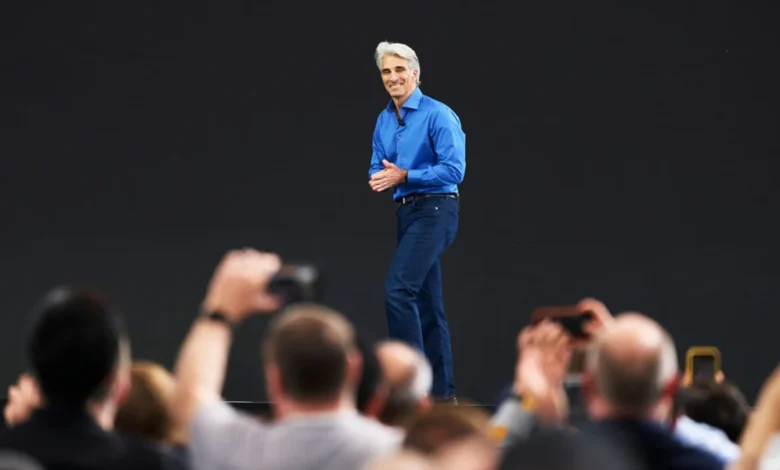
The landscape of consumer technology is undergoing a seismic shift, with artificial intelligence serving as the primary catalyst for market dominance. For Apple, long heralded as the gold standard for integrated hardware and software ecosystems, the current era has presented a unique set of challenges. As competitors like OpenAI, Google, and Microsoft accelerate their deployment of generative AI and agentic software, internal pressure is mounting within Apple to pivot its development philosophy. Recent reports indicate that CEO John Ternus is spearheading a push to overhaul the company’s software roadmap, specifically targeting the management style and long-term planning horizons of Senior Vice President of Software Engineering, Craig Federighi.
The Mandate for Acceleration
The core of this internal friction stems from a perceived lack of urgency regarding Apple’s AI ambitions. While Apple introduced its "Apple Intelligence" suite to bolster its ecosystem, market observers have frequently cited a lag in delivering the advanced, agent-based capabilities that define the current AI arms race. In a series of high-level meetings, John Ternus has reportedly expressed frustration with the status quo, urging leadership to move beyond iterative improvements to Siri and embrace a more aggressive, transformative approach to artificial intelligence.
This directive marks a significant moment for Ternus, who took the helm at Apple with the expectation of guiding the company through a post-Tim Cook transition period. By challenging Federighi—the primary architect of Apple’s software experience for over a decade—Ternus is signaling that the company’s traditional, cautious approach to software deployment may no longer be compatible with the rapid iteration cycles demanded by modern AI.
The Federighi Management Style: A Double-Edged Sword
Craig Federighi’s tenure has been characterized by an intensely hands-on approach. Known for his deep technical expertise and his charismatic, public-facing presentations, Federighi has maintained a tight grip on Apple’s software engineering department. However, this level of control has become a point of contention.
Internal reports suggest that Federighi’s management style, while effective for maintaining the high-quality standards for which Apple is known, has inadvertently created a bottleneck. Employees within the software design and engineering teams have noted that the culture often leaves little room for competing ideas to gain traction. Federighi is known for his vigorous defense of his technical vision, a process that, while intellectually stimulating, can stifle innovation from lower-level contributors who feel their influence is limited.
Furthermore, the operational window for Apple’s software development has traditionally been confined to a 12-to-18-month cycle. In contrast, the company’s hardware engineering division operates on a multi-year roadmap, allowing for long-term planning that aligns with manufacturing and supply chain constraints. Critics within the organization argue that this misalignment prevents Apple from anticipating technological shifts three to five years down the line, a timeframe that is critical in the development of sophisticated AI agents.
Leadership Instability and the Role of Mike Rockwell
The management challenges extend beyond the software division’s central leadership. Mike Rockwell, a pivotal figure who oversaw the creation of the Apple Vision Pro and currently heads the development of Siri AI, is reportedly considering stepping down.
Rockwell’s potential departure represents a significant risk for the company. His leadership was instrumental in the eventual, albeit delayed, arrival of the current iteration of Siri. Given that Siri is the primary interface through which Apple intends to deliver its AI capabilities, the loss of its engineering lead during a critical period of transition could disrupt the development pipeline. The "embarrassing two-year delay" that plagued the initial launch of the current Siri AI project serves as a stark reminder of the risks associated with high-level personnel turnover during complex engineering cycles.
A New Pipeline for Engineering Efficiency
In an effort to mitigate these systemic issues, Apple is reportedly experimenting with a revamped development pipeline. A central component of this shift is the integration of AI-assisted coding tools. By leveraging internal coding agents, the company aims to reduce the time engineers spend on manual integration tasks by approximately 50%. This reallocation of time is designed to allow developers to dedicate more resources to creative exploration and high-level architectural design, rather than getting bogged down in the minutiae of code maintenance.
This move is indicative of a broader industry trend toward "AI-augmented software engineering," where the development process itself is accelerated by the very technology it seeks to produce. If successful, this could provide the breathing room necessary for Apple’s engineering teams to innovate at a pace more consistent with the market’s current expectations.
Broader Implications for Apple’s Ecosystem
The implications of these management and structural changes are profound. For over a decade, Apple’s competitive advantage has been its "walled garden," where hardware and software are perfectly synchronized. However, in the age of AI, the cloud-based, data-heavy nature of large language models (LLMs) requires a different set of competencies.

If Apple fails to evolve its software management culture, it risks falling into a state of "feature stagnation," where its devices are physically superior but functionally behind in the AI capabilities that users increasingly view as essential. Conversely, if Ternus succeeds in forcing a shift toward a more decentralized, long-term-focused software strategy, Apple could leverage its unparalleled hardware integration to offer a superior, privacy-focused AI experience that its competitors—who rely on data-mining business models—cannot replicate.
Historical Context and Future Outlook
Apple’s history is defined by periods of intense internal reorganization that precede major product breakthroughs. From the return of Steve Jobs in the late 1990s to the transition toward Apple Silicon, the company has repeatedly demonstrated a capacity to force internal change when faced with an existential threat.
The current situation with Federighi and the software team mirrors past periods of transition where the company had to weigh its traditional commitment to perfection against the need for speed. As Apple prepares for its next major software cycles—including potential overhauls in iOS—the industry will be watching closely to see if the company can maintain its signature user experience while simultaneously accelerating its pace of innovation.
For now, there is no official indication that a leadership change at the top of the software engineering organization is imminent. Federighi remains a foundational figure in the company’s hierarchy. However, the requirement for a "change in thinking" as requested by Ternus suggests that the era of Apple’s software development being defined solely by a single, central voice may be drawing to a close.
As the company moves into 2026 and beyond, the success of its AI roadmap will likely depend on its ability to foster a culture where technical debate is encouraged rather than suppressed, and where long-term vision is prioritized over short-term release cycles. Whether Apple can achieve this balance while maintaining the "Apple quality" that defines its brand remains the defining question of the John Ternus era. The integration of AI agents into the software development lifecycle is merely the first step; the true challenge lies in the human element—the ability to evolve management structures to meet the demands of a rapidly changing technological frontier.